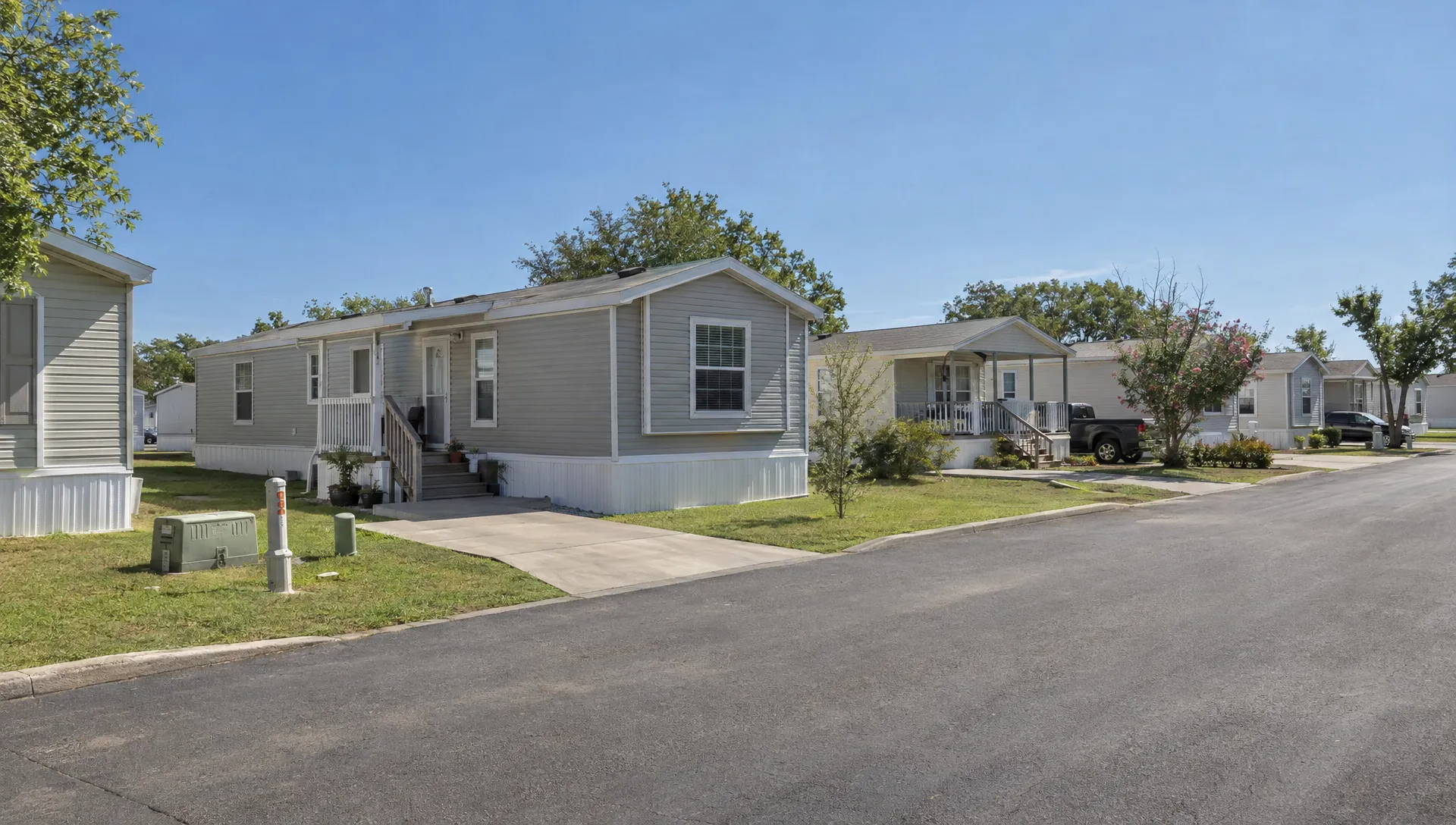

All-age mobile homes for rent can be a smart option if you want more space than an apartment, a neighborhood feel, and a more affordable path into a single-family style home. But the word “all-age” does not mean “anything goes.” It usually means the community is not restricted to residents 55 and older, while normal screening, lease terms, community standards, pet rules, parking limits, and fees still apply.
For renters in San Antonio and nearby South Texas areas, the best decision is not just about finding the lowest monthly rent. It is about understanding the full cost, reading the rules before you apply, and deciding whether the home and community fit your daily life.
What “all-age” really means
An all-age mobile home community generally accepts qualified residents of different ages, including families with children, working adults, retirees, and multigenerational households. This is different from age-restricted communities, which may operate under federal rules for housing intended for older persons.
The U.S. Department of Housing and Urban Development explains that the Fair Housing Act protects people from discrimination based on several protected characteristics, including familial status. In simple terms, a regular all-age community should not market itself as “adults only” or exclude families with children unless it legally qualifies for an exemption, such as certain 55+ housing.
Still, an all-age community can have rules. It can screen applicants, set reasonable occupancy standards, enforce quiet hours, require pet approval, limit vehicles, and expect residents to maintain the lot. That is why you should treat “all-age” as a starting point, not the final answer.
First, identify what type of rental you are considering
The phrase “mobile home for rent” can describe several different arrangements. Each one affects your monthly cost, repair responsibilities, and long-term flexibility.
| Rental setup | What it usually means | What to verify before applying |
|---|---|---|
| Home and lot rented together | You rent the manufactured home and the space it sits on, often from a community or private owner | Whether rent includes lot rent, trash, water, sewer, lawn care, and community fees |
| Privately owned home in a community | A homeowner rents out their home, but the community still controls lot rules and resident approval | Whether both the owner and community must approve you |
| Home on private land | You rent a manufactured home located on an individual parcel, not in a park or community | Who handles utilities, septic, well service, yard care, and access roads |
| Rent-to-own or lease option | Part of your payment may be presented as going toward future purchase | Purchase terms, total price, title transfer process, refund rules, and what happens if you move out |
This distinction matters because renting the home is not always the same as renting the land. In a manufactured home community, there may be a home lease, community rules, and a lot agreement involved. Ask for every document in writing before you pay an application fee or deposit.
If you are still comparing rental quality and pricing, this guide on how to find nice mobile homes for rent without overpaying can help you evaluate condition, location, and value more carefully.
Rules to review before you fall in love with the home
Rules are not automatically a bad thing. Clear community standards can help protect residents from unsafe parking, neglected lots, noise problems, and poorly maintained homes. The problem is when renters do not see the rules until after they have already applied or paid money.
Start with the basics: occupancy limits, application requirements, income verification, background checks, pet rules, guest policies, parking restrictions, exterior appearance standards, and maintenance expectations. If you have children, pets, work vehicles, multiple cars, or relatives who visit often, these details are not minor.
Common all-age community rules may cover:
- How many vehicles can be parked at the home
- Whether commercial vehicles, trailers, boats, or RVs are allowed
- Breed, weight, and number limits for pets
- Quiet hours and guest parking rules
- Lawn care, trash bin storage, and exterior decorations
- Playground, pool, clubhouse, or amenity rules
- Whether residents can install sheds, fences, decks, ramps, or satellite dishes
Pay close attention to wording. A listing may say “pet friendly,” but the actual policy may limit dogs by breed, weight, or number. A home may have a driveway, but the rules may prohibit parking on the street. A community may allow guests, but long-term guests may need approval.
For a broader look at park-level rules and warning signs, see this Homes2Go SA guide to local mobile home parks, fees, rules, and red flags.
Fees: how to calculate the real monthly cost
The advertised rent is only one part of the budget. With all-age mobile homes for rent, the total monthly cost may include utilities, lot-related charges, trash service, pet rent, insurance, and other fees.
Before applying, ask for a written fee sheet that shows what is due upfront, what is due every month, and what can change at renewal. Do not rely on a verbal estimate.
| Fee or cost | Why it matters | Question to ask |
|---|---|---|
| Base rent | This is the advertised home rental amount | Does this include the lot, or is lot rent separate? |
| Lot rent | Common in manufactured home communities | Is lot rent included in the lease payment? |
| Utilities | Electricity, water, sewer, gas, and trash can add up quickly | Which utilities are tenant-paid, billed by the city, or billed by the community? |
| Application fee | Often nonrefundable | Is every adult applicant required to pay? |
| Security deposit | Protects the landlord against damage or unpaid rent | What conditions affect the refund? |
| Pet deposit or pet rent | Can be refundable, nonrefundable, or monthly | Are there breed, size, or number restrictions? |
| Admin or move-in fee | Sometimes charged in addition to deposits | Is this refundable or nonrefundable? |
| Parking or storage fees | May apply for extra vehicles or storage areas | Is extra parking available and approved in writing? |
| Late fees | Can increase the cost of a missed payment | When is rent considered late and what fees apply? |
| Renters insurance | Often recommended and sometimes required | What coverage amount is required, if any? |
In San Antonio, electricity can be a major part of the real monthly cost during long hot seasons. If you are comparing two rentals with similar rent, the more efficient home may be the better deal. Ask about HVAC age, insulation, window condition, thermostat type, and whether the home has had recent air sealing or duct repairs.
Homes built to modern manufactured housing standards can include energy-conscious features, but condition and maintenance still matter. If utility costs are a concern, this article on energy-efficient manufactured homes in Texas heat explains the features that can make a home more comfortable and less expensive to cool.
Lease terms that deserve a close read
A clean, well-kept home can still be a bad rental if the lease is unclear. Before you sign, slow down and review the terms that affect your money and stability.
Look for the lease length, renewal process, rent increase language, move-out notice requirement, repair process, late fee schedule, and any rule violations that could lead to termination. If the home is inside a community, confirm whether the community rules are part of the lease. If they are, violating a community rule may be treated like violating the lease.
The Texas Law Help renter resources are a useful starting point for understanding general tenant issues in Texas. For manufactured homes, your exact rights and responsibilities can depend on whether you rent the home, own the home and rent the lot, or have a lease-purchase agreement. If something is unclear or a lot of money is involved, consider getting legal advice before signing.
Pay special attention to repairs. Ask who handles appliances, HVAC, plumbing, roof leaks, skirting, steps, pest control, smoke detectors, and storm damage. In South Texas, air conditioning is not just a comfort issue. If the home has an older system, ask how emergency repairs are handled during extreme heat.
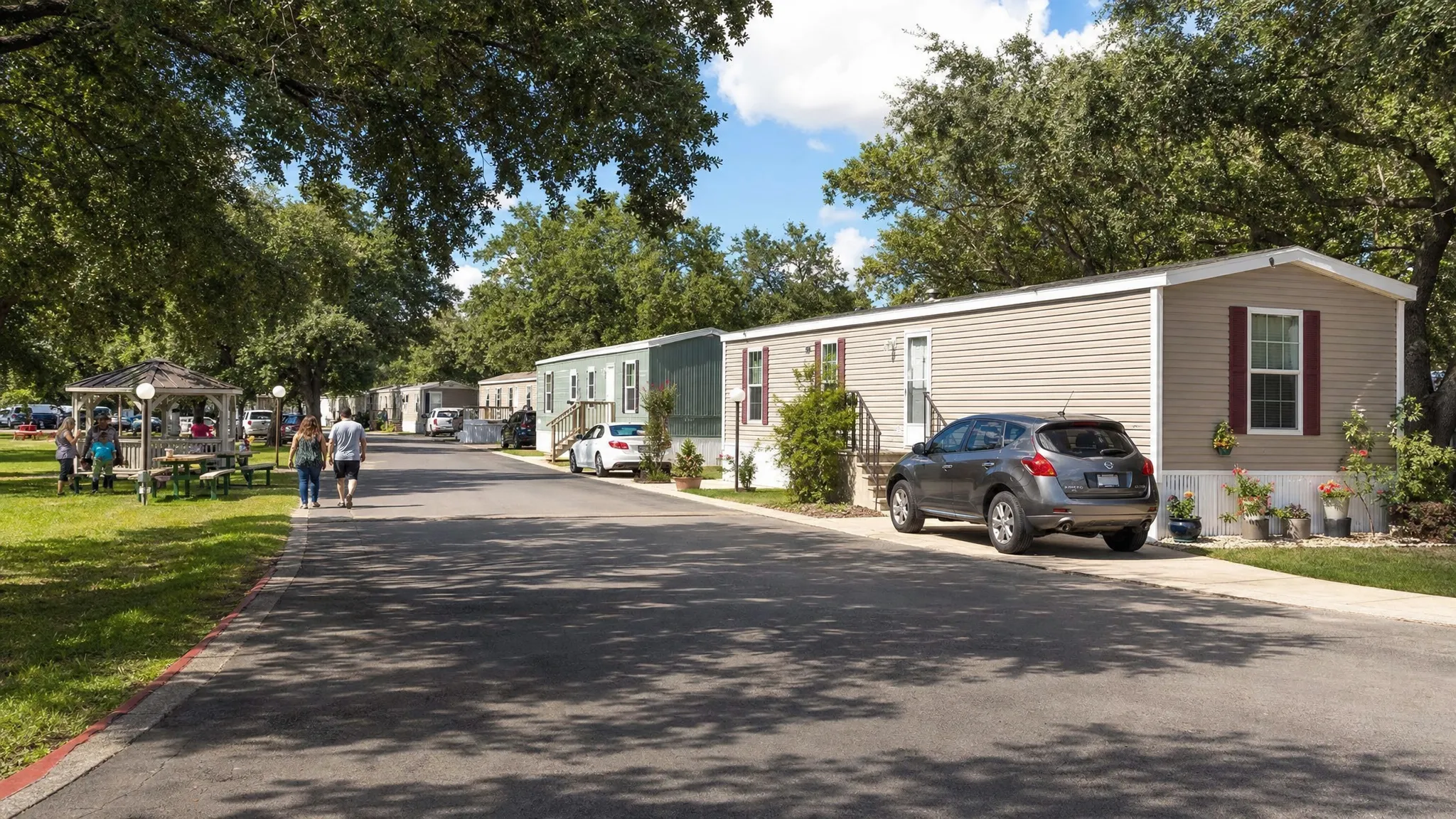
How to decide whether the community is a good fit
The right rental should fit your budget, household, commute, and lifestyle. A home can look great online but still be frustrating if the parking is too tight, the commute is too long, or the rules do not match how you live.
For families, school access, safe walking areas, bus routes, and nearby parks may matter as much as the floor plan. For pet owners, the pet policy should be clear and realistic. For multigenerational households, bedroom separation, bathroom count, entry steps, and parking may be the deciding factors.
A good fit usually comes down to three questions: Can you afford the full monthly cost? Can you live comfortably under the rules? Does the location support your daily routine?
If the answer is not clearly yes, keep looking. All-age does not always mean family-friendly, quiet, affordable, or flexible. It simply means the community is not age-restricted.
San Antonio-specific details to check
San Antonio renters should pay extra attention to heat, drainage, commute patterns, and utility setup. A few details can make a big difference in day-to-day comfort.
Ask how the home performs in summer. Look at the windows, insulation, shade, HVAC system, ceiling fans, and thermostat. If possible, tour during a warm part of the day so you can feel whether the home cools evenly.
Drainage is another major issue. After heavy rain, low spots around the home, soft ground, standing water, or damaged skirting can signal future problems. Check the driveway, steps, crawlspace area, and the path from the parking space to the front door.
Commute also matters. A rental that looks affordable may be less attractive if it adds significant fuel costs or daily travel time. Compare routes during the hours you actually drive, especially if you commute toward Loop 410, Loop 1604, I-35, I-10, or major employment areas.
For community comparisons, this guide on family mobile home parks near you covers many of the same practical issues renters and buyers should review before moving in.
Red flags to take seriously
Most rental problems are easier to avoid before you sign than to fix later. If a landlord, owner, or community manager cannot answer basic questions in writing, slow down.
| Red flag | Why it can be a problem |
|---|---|
| No written lease | You may have no clear record of rent, deposits, rules, or responsibilities |
| Pressure to send money before touring | Scammers often use urgency to collect deposits from renters |
| Unclear lot rent or utility billing | The real monthly cost may be much higher than advertised |
| “Rent-to-own” with no purchase terms | You may be paying extra without a clear path to ownership |
| Refusal to provide community rules | You could discover restrictions after paying fees |
| Poor drainage or visible exterior damage | Moisture issues can affect comfort, safety, and repair costs |
| Vague repair responsibilities | You may end up arguing over who pays for essential fixes |
| Rules that are enforced inconsistently | This can create conflict and uncertainty after move-in |
A legitimate rental should allow you to tour the home, review written terms, understand upfront costs, and ask questions without pressure. If the deal feels rushed or confusing, trust that instinct.
Renting vs. buying: when ownership may be worth comparing
Renting can make sense if you need flexibility, are new to the area, are rebuilding credit, or do not want responsibility for long-term home ownership yet. It can also be a practical way to learn whether manufactured home living fits your household.
Buying may be worth exploring if you plan to stay in the San Antonio area, want more control over your home, or are tired of rent increases. Modern manufactured homes can offer open layouts, energy-efficient designs, and move-in ready options, depending on the model and placement. Monthly costs still depend on financing, insurance, taxes, utilities, and whether the home is placed in a community or on private land.
| Renting may fit if… | Buying may fit if… |
|---|---|
| You need short-term flexibility | You want a longer-term housing plan |
| You are testing a new area | You already know where you want to live |
| You do not want major maintenance responsibility | You want more control over features and finishes |
| You are not ready for financing | You want to compare loan options with trusted local lenders |
| You prefer a simpler move-in process | You want to build a path toward ownership |
If buying is on your radar, Homes2Go San Antonio offers a wide selection of manufactured and mobile home models, detailed floor plans, expert guidance, flexible financing options, and access to top home communities. You can also start with this quick buyer guide to mobile homes in San Antonio to understand the basics before making a decision.
Questions to ask before applying
Before you pay an application fee, ask direct questions and request written answers when possible. This helps you compare rentals fairly and avoid surprises after move-in.
A strong pre-application conversation should cover the total move-in cost, full monthly cost, lease length, renewal terms, utility billing, repair responsibilities, pet rules, parking rules, guest policies, community approval, and what happens if you need to move before the lease ends.
Also ask whether every adult occupant must apply, whether application fees are refundable, how long approval takes, and what documents are required. If the home is in a manufactured home community, confirm whether you need approval from both the home owner and the community office.
Frequently Asked Questions
Are all-age mobile homes for rent the same as family mobile home parks? Not always. “All-age” means the community is not limited to older residents, but it does not guarantee family-focused amenities, school proximity, playgrounds, or flexible rules. Always review the community’s policies and tour in person.
Can an all-age community deny my rental application? Yes, if the denial is based on lawful screening criteria such as income, rental history, background checks, or incomplete application materials. Screening rules should be applied consistently and should not violate fair housing laws.
Is lot rent included when renting a mobile home? Sometimes, but not always. Some rentals include the home and lot in one payment, while others separate home rent, lot rent, utilities, and community fees. Ask for a written breakdown before applying.
Are utilities usually included in mobile home rent? Utility arrangements vary. Electricity is often tenant-paid, while water, sewer, trash, or gas may be billed by the city, landlord, or community. Ask how each utility is billed and whether there are monthly service fees.
Should I rent or buy a manufactured home in San Antonio? Renting may be better if you need flexibility or are not ready for financing. Buying may be worth comparing if you plan to stay long term, want more control over the home, and can qualify for a payment that fits your budget.
Looking beyond rentals in San Antonio?
If you are comparing all-age mobile homes for rent but starting to wonder whether ownership might fit your budget, Homes2Go San Antonio can help you explore the next step. Our team can walk you through available manufactured home models, floor plans, community options, and flexible financing paths with trusted local lenders.
Visit Homes2Go San Antonio to compare options and get guidance from a local team that understands manufactured home living in the San Antonio area.
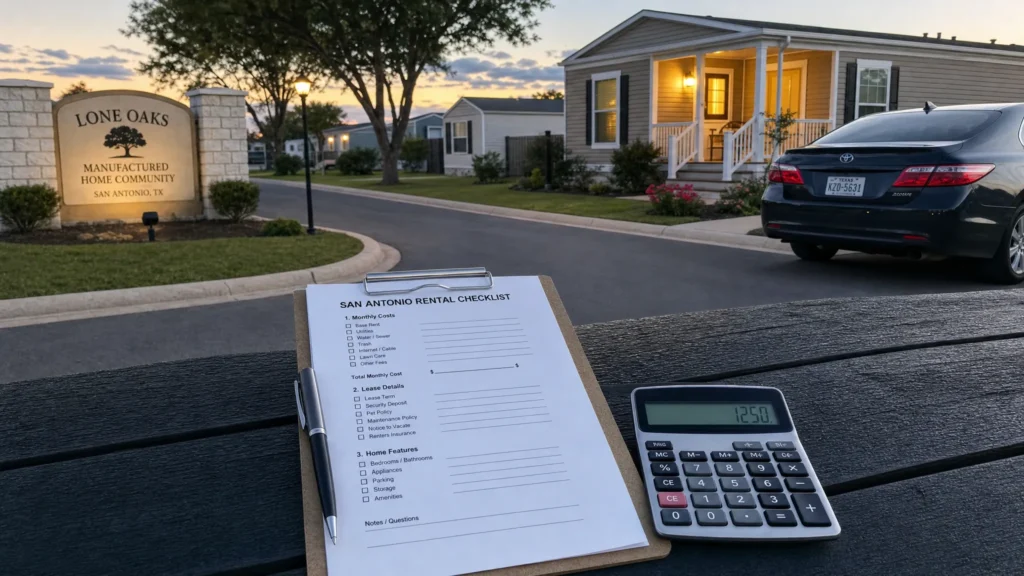 How to Find Nice Mobile Homes for Rent Without Overpaying
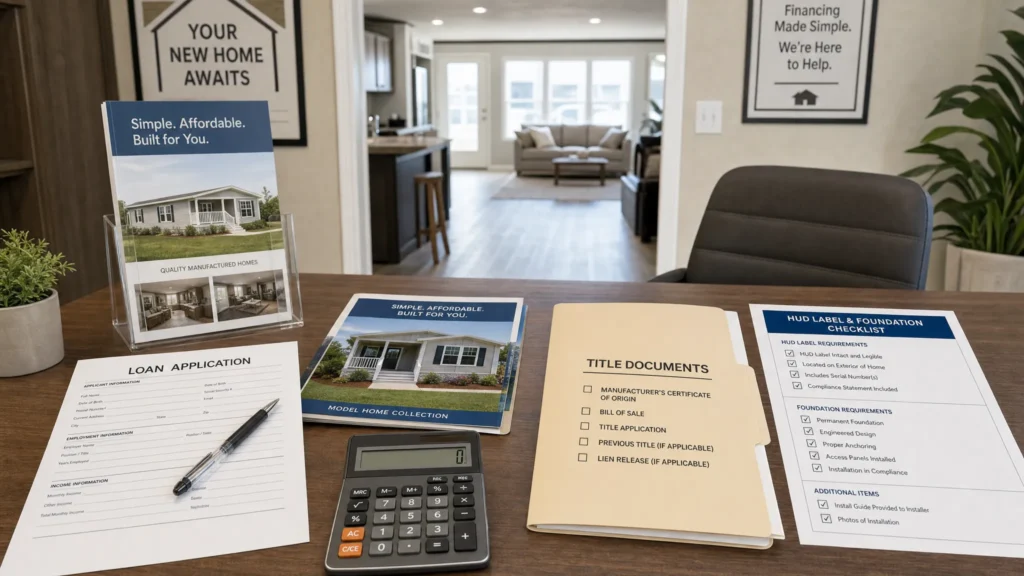 FHA Loan Requirements for Manufactured Homes Made Simple