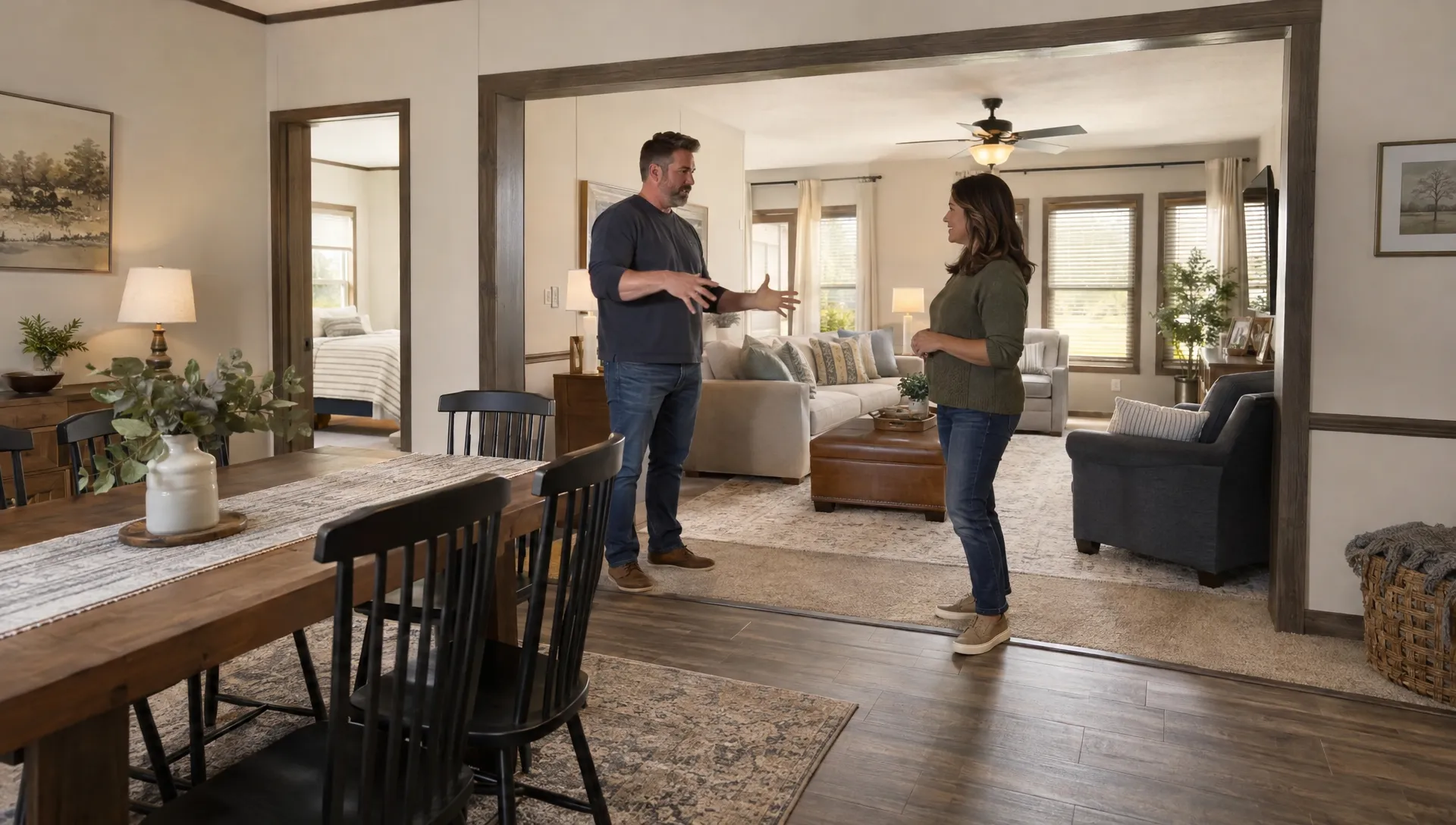

For many Texas owners, a mobile home state inspection sounds like a simple final walk-through. In practice, it is more specific. The state is usually concerned with whether a manufactured home has been properly installed, identified and documented under Texas manufactured housing rules. That is different from a private home inspection that checks the roof, appliances, cosmetic condition or everyday wear.
This distinction matters. A home can look beautiful inside but still run into delays if the setup, tie-downs, paperwork or local permits are incomplete. It also works the other way around: a home may pass a state-related installation inspection but still have maintenance items a buyer should review separately.
Below is what Texas mobile and manufactured home owners should know before buying, moving, installing, selling or refinancing a home in San Antonio and the surrounding area.
What a Texas mobile home state inspection usually means
In Texas, manufactured housing is regulated by the Texas Department of Housing and Community Affairs Manufactured Housing Division. The division handles areas such as licensing, consumer complaints, installation rules and Statements of Ownership.
For homes built on or after June 15, 1976, the more precise legal term is manufactured home because those homes are built to the federal HUD Code. HUD explains that manufactured homes are built in factories to federal construction and safety standards through its Manufactured Housing Program. Many Texans still use mobile home in everyday conversation, so you will hear both terms.
A Texas mobile home state inspection most often focuses on installation compliance. Inspectors are looking at whether the home was placed and secured according to applicable standards, the manufacturer’s installation instructions and Texas rules. They are not there to perform a full buyer’s inspection of every cabinet, faucet or finish.
Texas does not treat manufactured homes like cars with a yearly state safety sticker. Instead, state involvement usually appears when a manufactured home is installed, moved, reinstalled or reviewed through a specific compliance process.
When owners are most likely to need one
You are most likely to deal with a state-related inspection or inspection documentation in these situations:
- A new manufactured home is delivered and installed on private land or in a community.
- A used manufactured home is moved from one location to another.
- A home is reinstalled after relocation, storm damage or major setup work.
- A lender, title company, insurer or local authority asks for proof that the home was properly installed.
- A complaint, warranty issue or compliance question leads to a formal review.
If you are buying an existing home that will stay in place, the state inspection history may still matter, but it does not replace a buyer’s due diligence. For a broader pre-purchase walkthrough, Homes2Go has a separate mobile home inspection checklist for Texas buyers that focuses on condition, paperwork and visible red flags.
State inspection vs. private inspection vs. local permits
One of the biggest sources of confusion is that several different inspections can apply to the same home. Each one answers a different question.
| Inspection or review | Who may require it | Main purpose | What it does not fully cover |
|---|---|---|---|
| Texas manufactured housing inspection | State manufactured housing process or related compliance review | Verify proper installation, identification and setup compliance | Cosmetic condition or a complete maintenance review |
| Private home inspection | Buyer, seller, lender or owner | Evaluate visible condition of the home and systems | Official state approval or ownership documentation |
| Local permit inspection | City, county, utility district or local authority | Confirm local requirements for utilities, zoning, septic, floodplain or placement | State manufactured housing title records |
| Foundation or engineering certification | Lender, insurer or loan program | Confirm foundation details for financing or risk review | General home condition unless separately included |
This is why a seller saying the home passed inspection can mean several different things. Ask what inspection they mean, who performed it, what date it was completed and whether a written report is available.
What inspectors typically look for
A state-related installation inspection is mainly about safety, stability and documentation. The exact scope can vary based on the home, site and reason for the inspection, but these areas commonly matter.
Home identification and documents
The home should be identifiable through its HUD labels, serial numbers and data plate. The data plate usually includes key information such as the manufacturer, wind zone, thermal zone and roof load information. Owners should never remove HUD labels or cover the data plate during remodeling.
Inspectors or reviewers may also look for the Statement of Ownership, purchase documents, installer information, installation manuals and any required local permits.
Site preparation and drainage
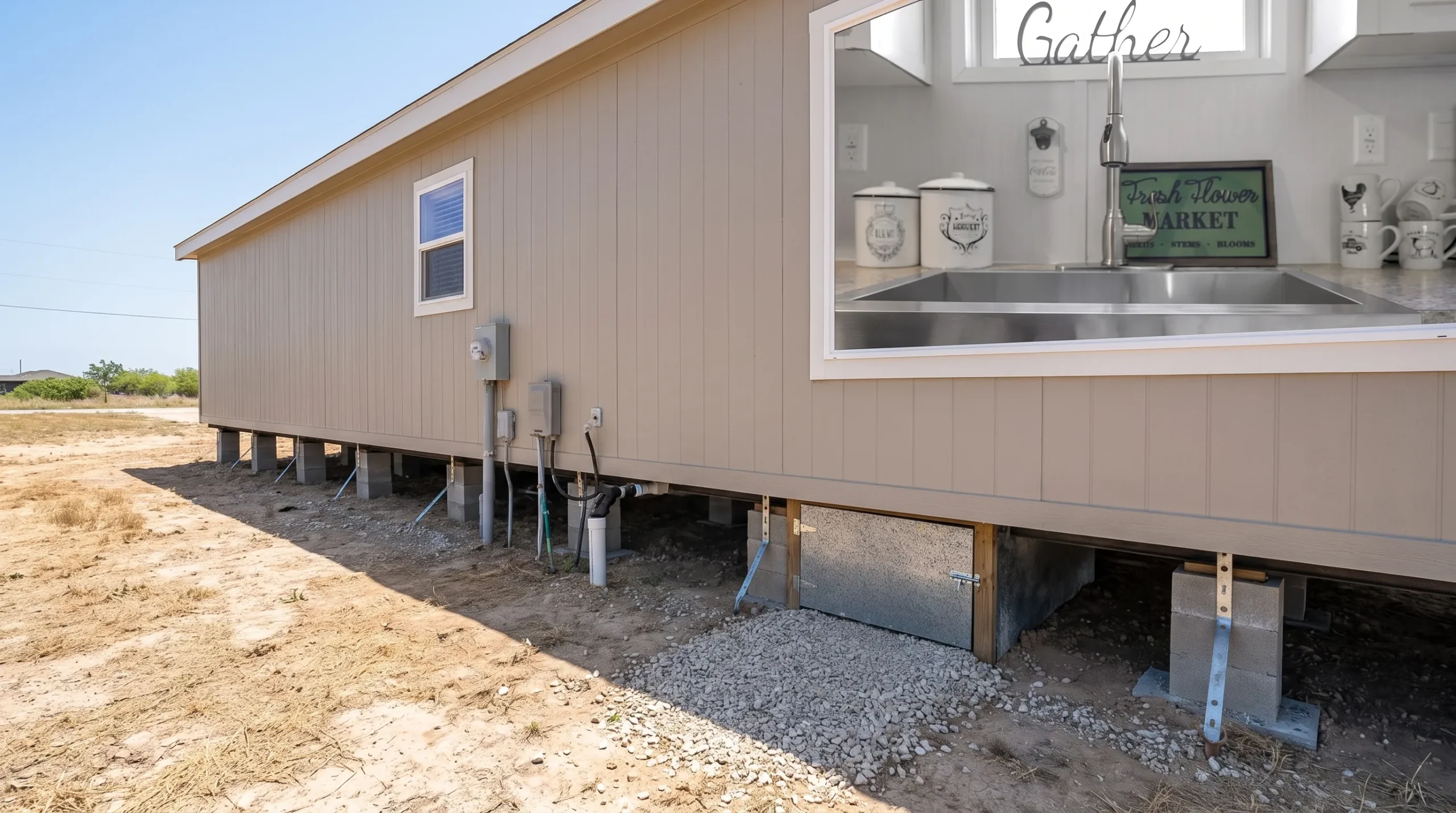
Manufactured homes need a site that supports the home and sheds water away from the foundation area. Poor drainage is a common cause of long-term problems, especially around San Antonio where heavy rain can arrive quickly and soil movement can affect support systems.
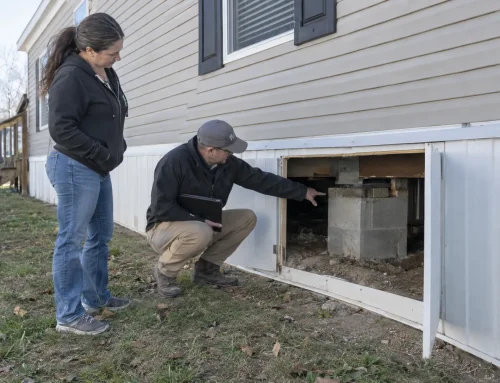
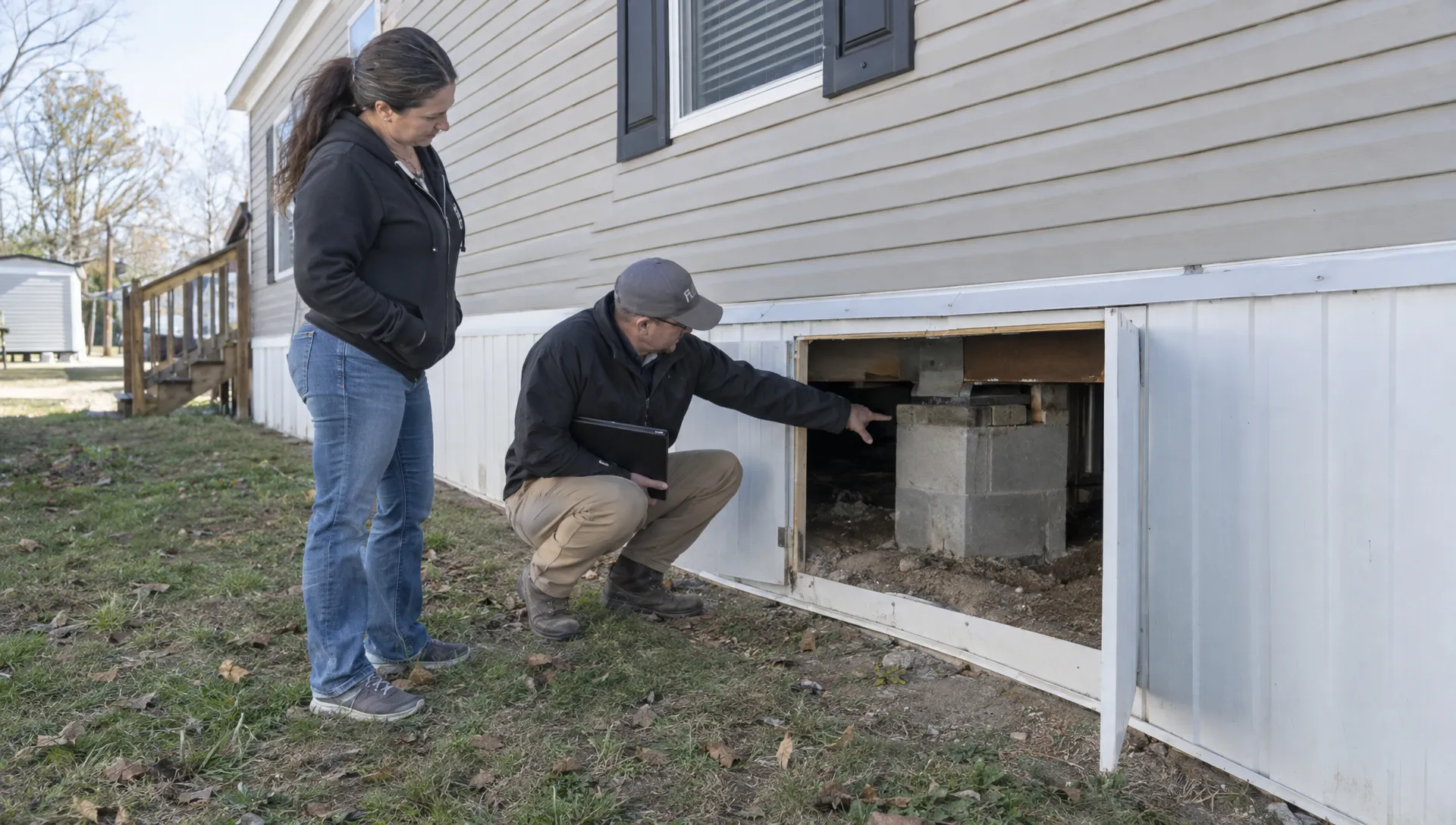
Inspectors may look at grading, clearance under the home, standing water, soil conditions, access around the perimeter and whether the site appears ready for stable installation.
Foundation, piers and leveling
The support system must match the home, site and manufacturer’s instructions. Inspectors may review pier spacing, footing size, shims, marriage line supports for doublewide homes and whether the home is level.
A home that feels solid inside can still have setup concerns underneath. Doors that swing open by themselves, cracked interior seams or uneven floors can sometimes point to leveling or support issues, though those signs require a closer evaluation.
Anchoring and tie-downs
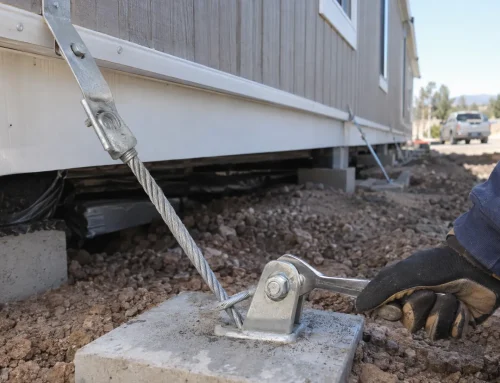
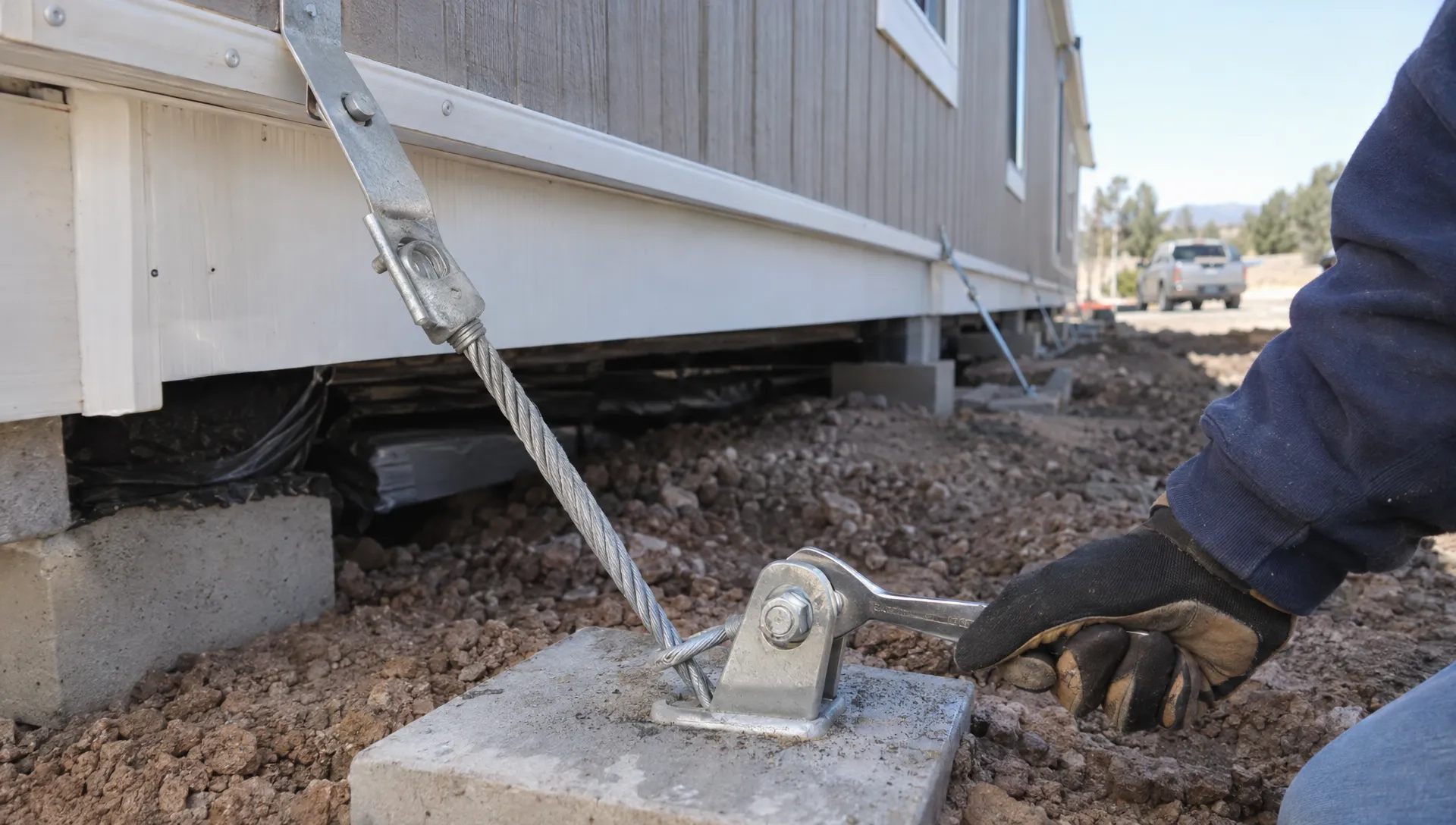
Tie-downs are one of the most important parts of a Texas mobile home state inspection. The anchoring system helps resist wind forces and keeps the home secured to the site. Inspectors may review anchor type, spacing, strap condition, tension, corrosion and whether the system fits the home’s design and wind zone requirements.
If this is the area you are most concerned about, review Homes2Go’s guide on how to pass a mobile home tie-down inspection before the appointment.
Utility connections and exterior access
Electrical, water, sewer, gas and HVAC connections may involve both manufactured housing rules and local code requirements. Depending on where the home is placed, utility providers or local authorities may also need to inspect certain connections before service is active.
Inspectors may also look at safe exterior access, including steps, landings, decks and doors. Any porch, carport or room addition should be built so it does not improperly load the manufactured home or block access to required areas.
Paperwork owners should keep
Good paperwork prevents delays when you sell, refinance, insure or move the home. Keep digital and printed copies when possible.
| Document | Why it matters |
|---|---|
| Statement of Ownership | Shows ownership and key home information in Texas records |
| HUD label and serial number records | Confirms the home’s identity and HUD Code status |
| Data plate information | Lists manufacturer specifications such as wind zone and roof load |
| Installation documents | Shows who installed the home and what standards were used |
| Inspection reports or correction notices | Provides proof of inspection results and completed repairs |
| Local permits and approvals | Helps confirm placement, utilities or site work met local requirements |
| Foundation or tie-down documentation | Supports lender, insurer or future buyer requests |
| Warranty and service records | Helps track repairs, claims and ongoing maintenance |
If you are missing documents, start with the Texas Manufactured Housing Division for ownership records and speak with the retailer, installer or prior owner for installation records. Missing paperwork is easier to address before a sale or loan deadline than during one.
How to prepare before the inspector arrives
Preparation is mostly about access, documentation and avoiding last-minute surprises. A clean, accessible site makes the process easier for everyone involved.
- Confirm the appointment details, site address and contact information.
- Keep the Statement of Ownership, installer paperwork, permits and manuals available.
- Make sure the inspector can access the full exterior and under-home area safely.
- Do not install skirting in a way that blocks inspection access before the setup is reviewed.
- Remove debris, stored materials or standing water from around the crawl space.
- Confirm utilities are connected only by qualified parties and only when allowed.
- Check that steps, decks and landings do not interfere with doors, vents, anchors or access panels.
If you are buying a new home, ask about inspection steps early in the process, not after delivery. Site access, pad preparation, utility routing and local permits can all affect timing.
San Antonio factors owners should think about
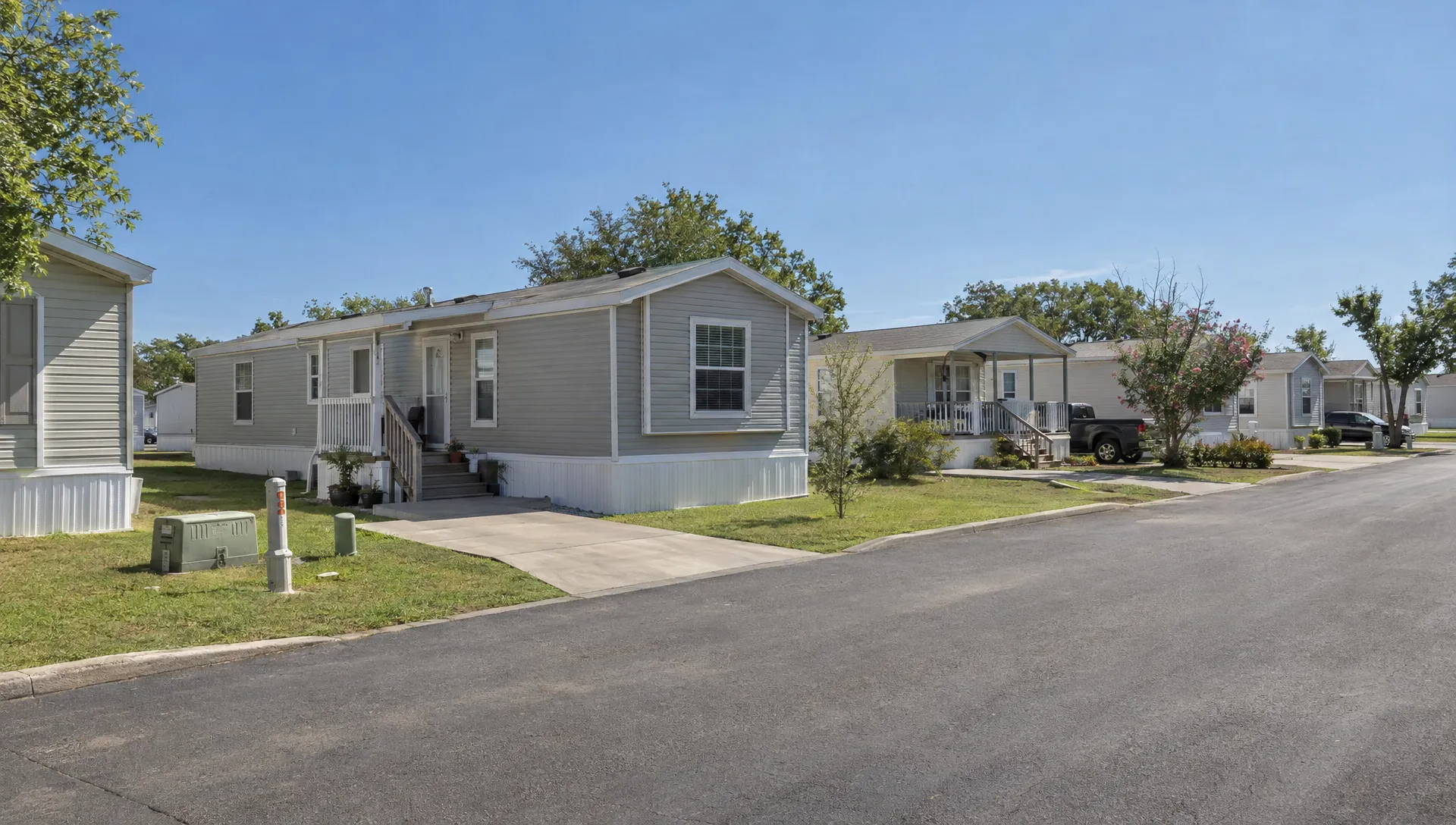
Manufactured homes in the San Antonio area face a few practical site concerns. Heat, intense sun, sudden rain, expansive clay soils and occasional high-wind storms can all affect the home over time. A good inspection process starts with installation, but long-term performance depends on maintenance after the home is occupied.
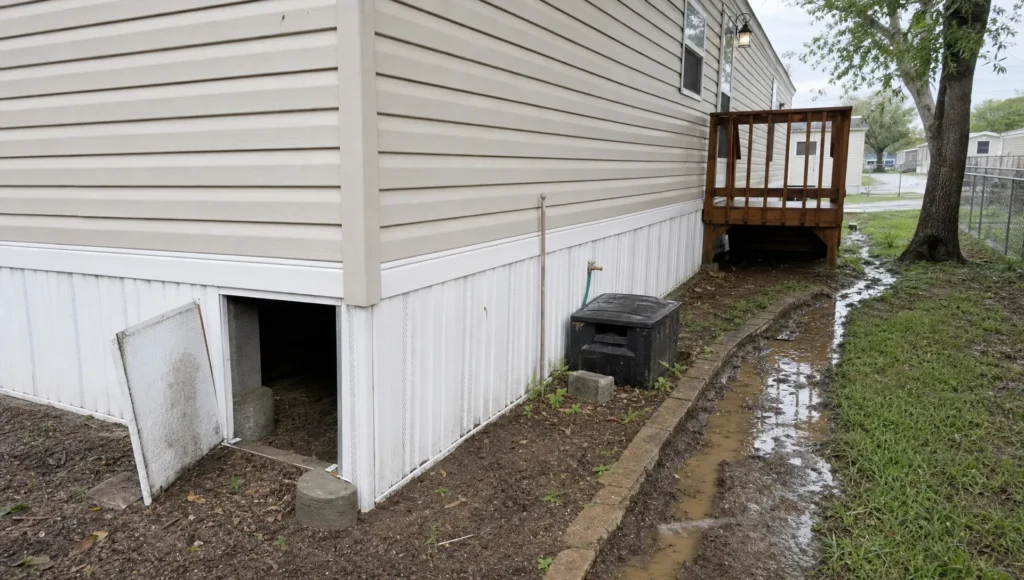
Drainage deserves special attention. Water should not pool under the home, against skirting or near support piers. Gutters, downspouts, grading and splash blocks can help move water away from the foundation area when they are properly installed and maintained.
Local requirements also vary depending on whether the home is going on private land, leased land or in a manufactured home community. A home placed outside city limits may still be subject to county, floodplain, septic, utility or deed restriction requirements. A home inside city limits may involve additional permitting or zoning review. Always verify the rules for the exact property before scheduling delivery.
The model you choose can also affect inspection planning because size, layout and site access influence installation logistics. For example, a 3 bedroom, 2 bathroom doublewide such as the Cavco Abeline, a 1,493 sq ft Cavco Homes Valu 28563U floor plan, may have different site access and setup needs than a larger 4 bedroom option. A home like the Legacy Heritage H-3256-42A, a 1,622 sq ft, 32' x 56' doublewide, gives families more space but still needs the same careful attention to foundation layout, utility planning and anchoring.
What happens if the inspection does not pass
A failed inspection is frustrating, but it is usually a correction process rather than the end of the road. The key is to get a written list of issues and address them through the proper installer, contractor or professional.
Common correction items can include missing documentation, blocked access, improper pier setup, loose or insufficient tie-downs, drainage problems, incomplete utility work or additions that interfere with the home’s structure. Do not guess at repairs, especially under the home. An unqualified fix can create bigger problems and may not satisfy the next review.
Ask these questions before work begins:
- What specific item failed?
- Which rule, document or installation instruction applies?
- Who is responsible for correcting it?
- Does the correction require a licensed installer, contractor, engineer or local permit?
- Will a reinspection or written clearance be required?
Keep every invoice, photo, correction notice and final approval. Those records may matter when you refinance, insure or sell the home later.
After passing, keep the home inspection-ready
Passing an installation inspection does not mean the home can be ignored. Manufactured homes perform best when the owner keeps the site dry, the supports stable and the exterior protected.
Walk the perimeter after heavy rain and look for standing water, shifted soil, damaged skirting or blocked vents. Check that access panels remain usable. Look for rusted straps, loose skirting, cracked sealants around roof penetrations and signs that animals have entered the crawl space.
Roof care is especially important in Texas heat. Sun exposure, storms and debris can shorten the life of sealants and roof components. For a focused maintenance review, use this mobile home roof inspection checklist for Texas buyers as a practical guide even if you already own the home.
Frequently Asked Questions
Is a Texas mobile home state inspection the same as a regular home inspection? No. A state-related inspection usually focuses on manufactured home installation, setup compliance and documentation. A regular private home inspection focuses on visible condition, systems and maintenance issues.
Does every mobile home in Texas need an annual state inspection? No. Texas manufactured homes do not receive annual state inspection stickers like vehicles. State inspection issues usually come up during installation, relocation, compliance reviews, complaints or certain transaction requirements.
Who regulates manufactured homes in Texas? The Texas Department of Housing and Community Affairs Manufactured Housing Division regulates manufactured housing in the state, including licensing, Statements of Ownership and installation-related requirements.
Can I move a used manufactured home without a new inspection? Moving a manufactured home usually creates new installation and documentation requirements. Before moving a home, confirm state rules, local permits, transport requirements and installer obligations for the destination site.
Will the inspector check plumbing, electrical and HVAC? An installation inspection may review utility connections as part of setup, but it is not the same as a full private inspection of every system. Local authorities or utility providers may also require separate inspections.
What should I do if the seller cannot provide inspection paperwork? Ask for the Statement of Ownership, installer records, permits and any prior reports. If records are missing, verify ownership through the state and consider hiring a qualified inspector before closing.
Planning a manufactured home in San Antonio?
A smooth inspection starts before delivery. The right floor plan, properly prepared site, clear paperwork and qualified guidance can prevent delays that are easier to avoid than fix later.
Homes2Go San Antonio helps buyers compare manufactured home models, review floor plans, understand setup considerations and explore flexible financing options with trusted local guidance. If you are preparing to buy or place a manufactured home in the San Antonio area, visit Homes2Go San Antonio to start planning with a team that understands the local process.
 Mobile Home Termite Inspections: When and Why You Need One
 Chattel Loan Requirements for Manufactured Home Buyers