
A mobile home tie down inspection is one of those steps that feels small until it delays your move-in, financing, park approval, or utility connection. The good news is that most failed inspections come down to preventable issues: missing paperwork, incorrect anchor spacing, loose straps, poor drainage, or work done outside the approved installation plan.
If you are buying, moving, or setting up a manufactured home in the San Antonio area, preparing before the inspector arrives can save you time, rework, and stress. This guide explains what inspectors typically look for, how to get ready, and which questions to ask before you close on a home or schedule installation.
What a Mobile Home Tie Down Inspection Is Really Checking
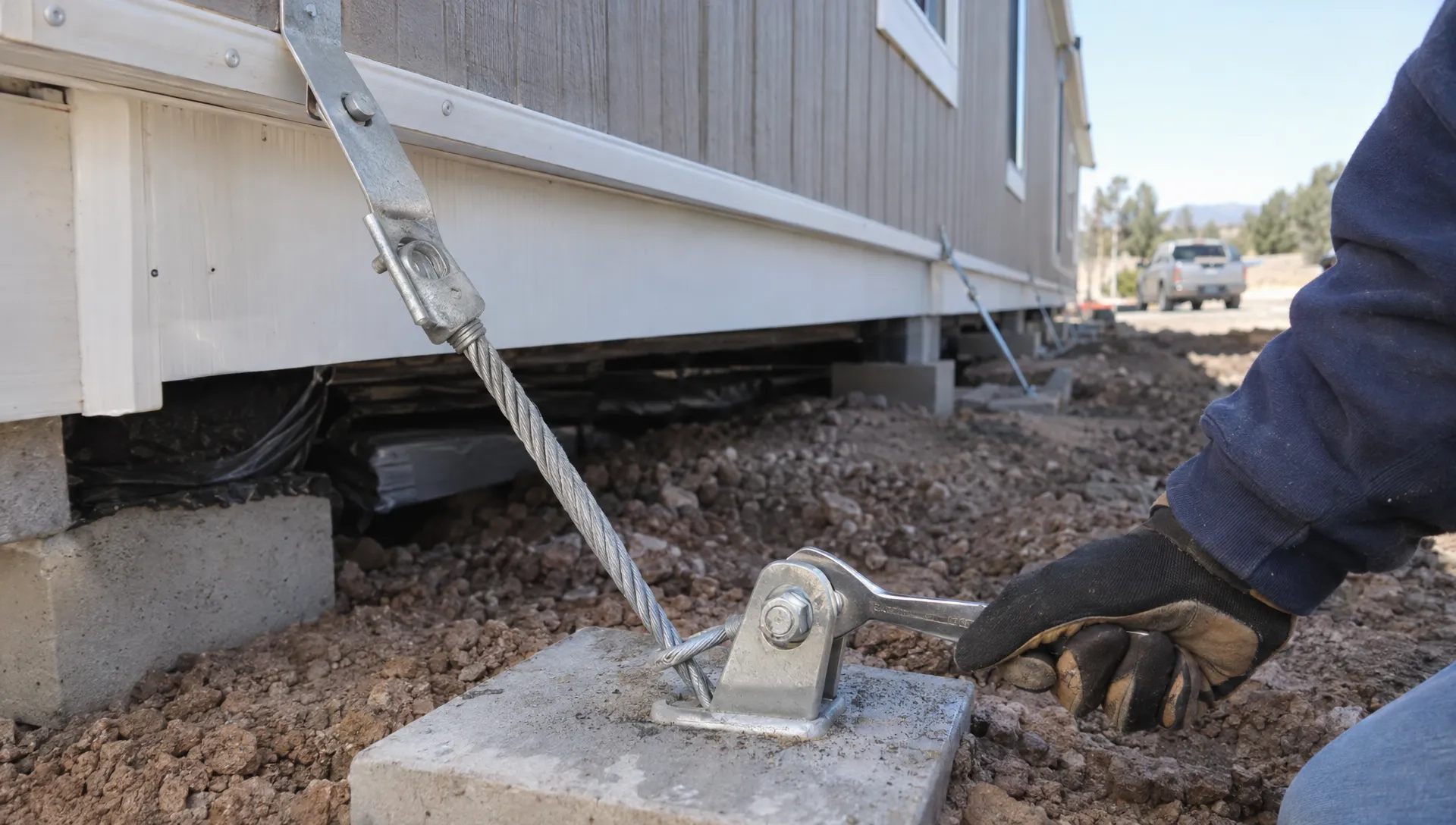
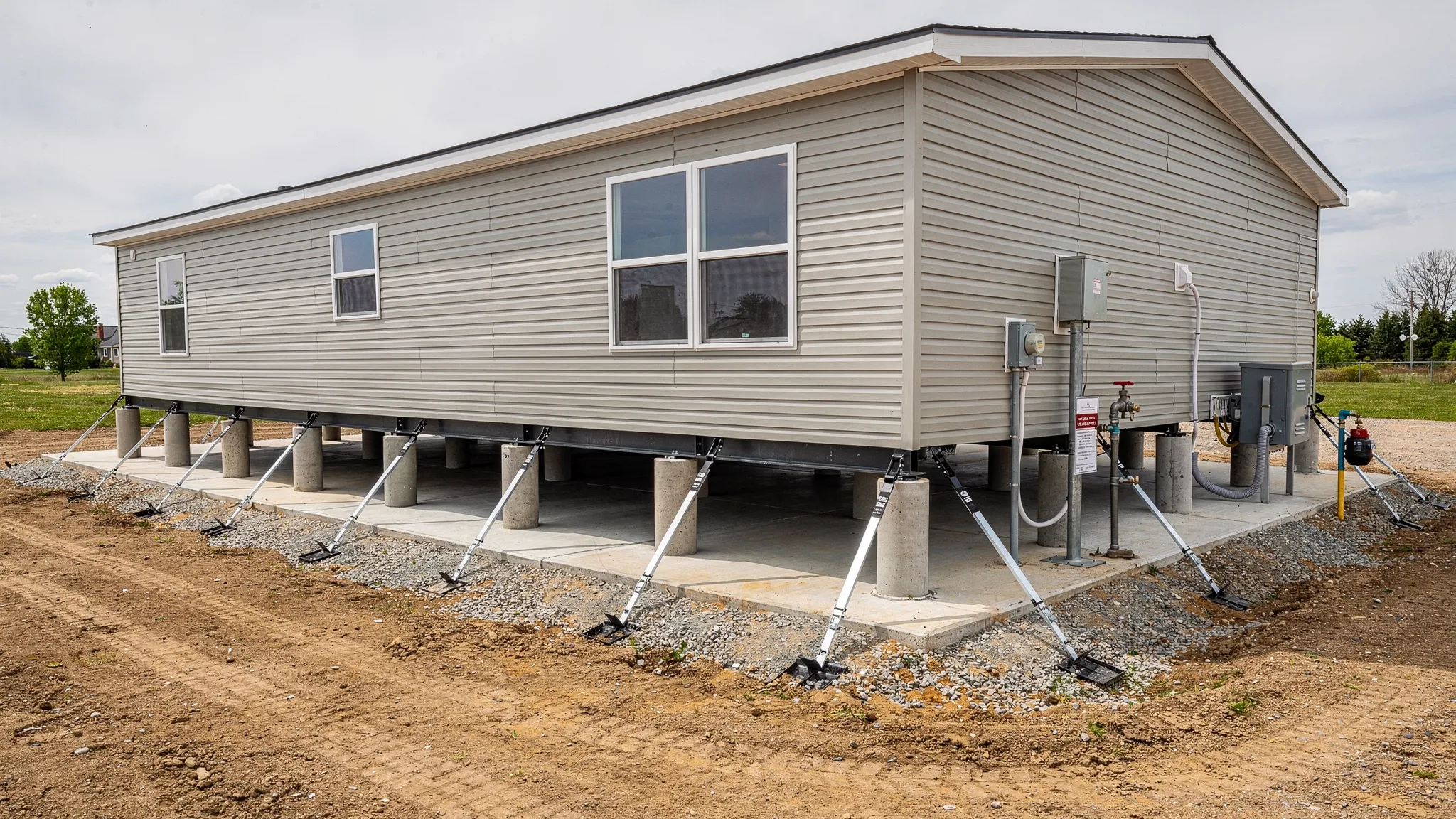
Tie downs are part of the anchoring system that helps keep a manufactured home stable during high winds and shifting weather conditions. They connect the home’s frame, and in some cases the walls or roof system, to approved anchors or a foundation system below.
For newer homes, the correct term is usually “manufactured home,” because homes built after June 15, 1976 are constructed under the federal HUD Code. Many buyers still search for “mobile home tie down inspection,” so the phrase remains common, but the standards and paperwork usually refer to manufactured housing.
A tie down inspection is not just a quick look at a few straps. Depending on the property, home type, lender, and local requirements, the inspection may review:
- Whether the anchoring system matches the manufacturer’s installation instructions.
- Whether the anchors, straps, stabilizer plates, and fasteners are properly rated and installed.
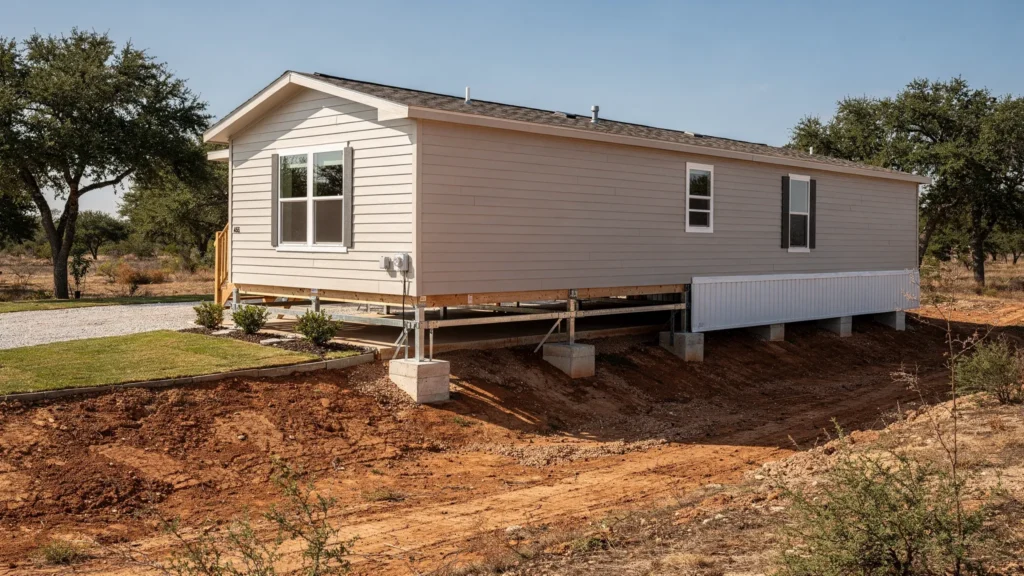
- Whether the home is level and supported by an approved pier or foundation system.
- Whether the site has proper drainage and clearance beneath the home.
- Whether the installation was completed by qualified professionals under applicable Texas rules.
- Whether the home’s wind zone, data plate, and setup documents match the location and installation plan.
HUD’s manufactured home installation standards are found in 24 CFR Part 3285, and Texas manufactured housing installation is regulated through the Texas Department of Housing and Community Affairs Manufactured Housing Division. Local permitting offices, communities, lenders, and insurers may also have requirements.
When You May Need a Tie Down Inspection in Texas
A tie down inspection is most common during a new manufactured home installation, but that is not the only time it can come up. In and around San Antonio, you may need documentation or inspection when a home is installed on private land, placed in a manufactured home community, moved from another site, refinanced, insured, repaired after storm damage, or sold to a new buyer.
You may also need a review if the home has been releveled, if anchors were replaced, if skirting or additions blocked access, or if a lender requests a foundation or installation certification. FHA, VA, USDA, and conventional financing paths can have different documentation expectations, especially when the home and land are financed together.
The key point is simple: do not wait until the end of the process to ask about tie downs. If you are buying a home, choosing land, or planning a move, ask early who is responsible for installation, who schedules inspection, what paperwork is needed, and whether the home’s installation manual is available.
The Main Parts of a Tie Down System
Tie down systems vary by home design, wind zone, soil conditions, and manufacturer instructions. That is why guessing is risky. A system that passes for one home may not pass for another home on a different lot.
| Component | What it does | What inspectors may look for |
|---|---|---|
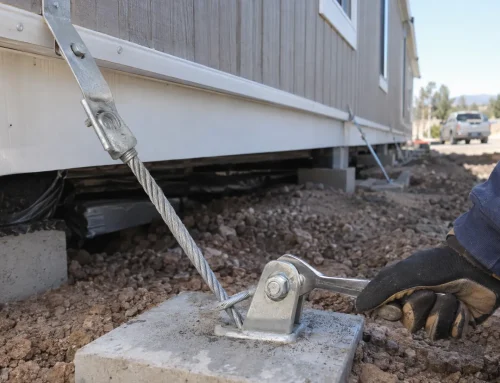
| Ground anchors | Secure the home to the soil or foundation area | Proper type, depth, angle, load rating, and spacing |
| Steel straps | Connect the home frame or structure to anchors | Correct tension, no twisting, no damage, no severe corrosion |
| Frame ties | Attach the home’s steel frame to anchors | Secure connection to approved frame points |
| Over-the-top ties | Used on some homes to resist uplift forces | Correct placement and protection where required |
| Stabilizer plates | Help prevent anchor movement under load | Proper installation against undisturbed soil where required |
| Piers or supports | Carry the vertical load of the home | Level, plumb, properly spaced, and built with approved materials |
| Marriage line supports | Support the connection area on multi-section homes | Proper alignment and support under the joined sections |
| Drainage and grading | Move water away from the home | No standing water, erosion, or soil washout near anchors |
The manufacturer’s installation manual is the most important document. It tells the installer and inspector how that specific home should be supported and anchored. If the manual is missing, damaged, or ignored, the inspection can become harder than it needs to be.
How to Prepare Before the Inspector Arrives
The best way to pass the first time is to treat the inspection as the final step of a well-documented installation, not as a problem-solving visit. Before the appointment, confirm that the home, site, and paperwork are all ready.
Start with the documentation. You should have the home’s manufacturer installation instructions, HUD labels or identifying information, data plate information when available, permits or placement approvals, installer information, and any lender or community requirements. If your home is being set in a community, confirm whether the community manager has a separate checklist.
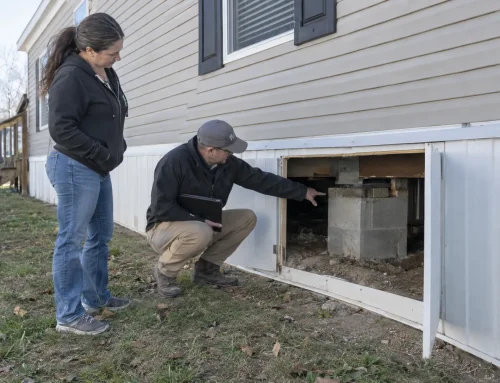
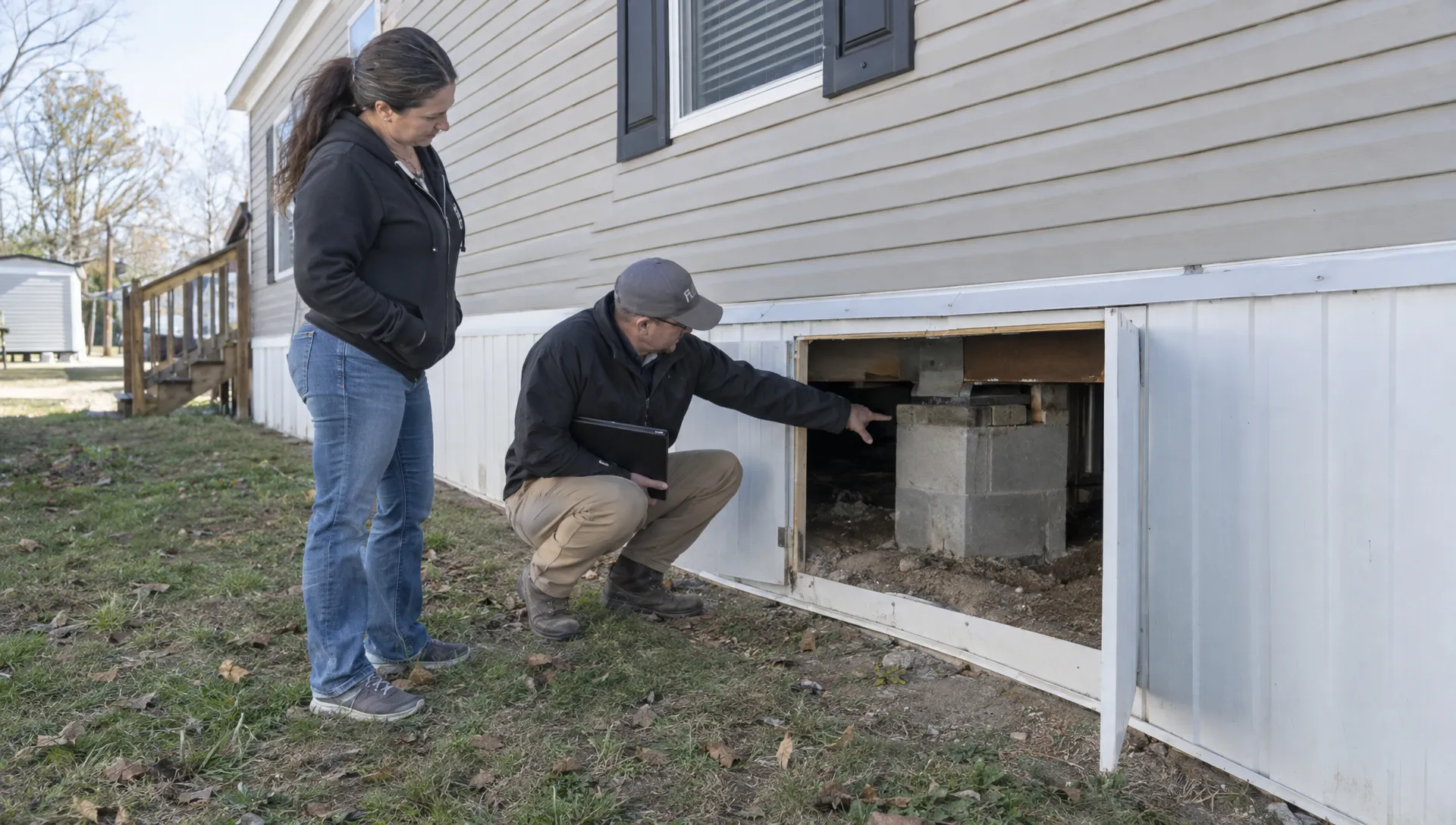
Next, walk the site. The inspector must be able to see the relevant components. Skirting, decks, porches, storage items, landscaping, and utility work should not block access to anchors, straps, piers, or the under-home area. If skirting has already been installed, access panels should be easy to open.
Then look for obvious physical issues. Straps should not be loose, kinked, sharply bent, cut, or wrapped around the wrong part of the frame. Anchors should not be leaning badly, pulling out of the soil, or installed in disturbed fill without proper stabilization. Piers should not be cracked, leaning, or sitting in standing water.
Finally, confirm who will be available if the inspector has questions. It helps when the installer, site coordinator, or knowledgeable seller can answer questions about the setup method and documentation.
First-Time Pass Checklist
Use this checklist before scheduling your mobile home tie down inspection. It is not a substitute for the manufacturer’s manual or official code requirements, but it can help you catch common problems early.
- Confirm the home’s installation manual is available on site or easily accessible.
- Verify the HUD label and data plate information, especially the wind zone and model details.
- Make sure permits, placement approvals, and installer information are organized.
- Check that all required anchors and straps are installed, visible, and accessible.
- Look for loose, twisted, damaged, or severely corroded straps.
- Confirm the home appears level and that piers or supports are properly aligned.
- Remove stored items, debris, or temporary materials from the crawlspace area.
- Make sure skirting access panels open freely and do not hide inspection points.
- Check that water drains away from the home and does not pool around anchors or piers.
- Keep pets secured and gates unlocked so the inspector can move around the site safely.
If anything looks questionable, ask your installer before the inspection. A quick correction before the appointment is usually easier than a failed report and a rescheduled visit.
Common Reasons Tie Down Inspections Fail
Most inspection failures are not mysterious. They usually happen because the installation did not match the approved plan, the site was not ready, or access was limited.
One of the most common issues is missing documentation. The inspector may need to verify the home’s design, wind zone, foundation plan, or setup instructions. Without that information, even a physically solid installation may not be easy to approve.
Loose or improperly tensioned straps are another frequent problem. Tie down straps are meant to resist movement, so slack, twisting, or poor attachment can raise concerns. Damage matters too. Straps and fasteners exposed to moisture, soil contact, or long-term weathering may need closer review.
Anchor problems can also stop an inspection. The wrong anchor type, shallow installation, poor spacing, weak soil conditions, or missing stabilizer plates can all lead to rework. In parts of South Texas, soil and drainage conditions can vary significantly from one lot to the next, so the installer should evaluate the actual site rather than assume every property is the same.
Blocked access is another avoidable failure. Beautiful skirting, decks, porches, and landscaping can create problems if they prevent the inspector from seeing the anchors or crawlspace. Additions should never be attached in a way that compromises the home’s structural system or hides required inspection points.
Finally, unpermitted or unqualified work can create delays. Manufactured home installation is regulated, and lenders or communities may require proof that the work was done correctly. Saving a little money on setup can become expensive if it leads to rework, failed inspections, or financing delays.
San Antonio Site Conditions That Matter
San Antonio buyers should pay close attention to site prep. A tie down system is only as reliable as the ground and support system around it.
Drainage is a major concern. Heavy rain can wash soil away from anchors, soften the ground near piers, and create standing water under the home. Before installation, the lot should be graded so water moves away from the home. After installation, gutters, splash blocks, driveways, patios, and landscaping should not redirect water beneath the structure.
Soil conditions also matter. Some lots in the region include clay-heavy soils that expand and contract with moisture changes. Others may have fill material, uneven grades, or drainage swales. Your installer should understand the site conditions and use the anchoring method required for that home and property.
Wind exposure is another factor. A home on an open rural lot may experience wind differently from a home in a more sheltered community. The home’s wind zone rating, installation manual, and local requirements should all be reviewed before setup.
If the property is outside a city limit or in a developing area, do not assume there are no rules. Counties, utility providers, subdivision restrictions, floodplain requirements, and lenders can all affect the installation timeline. Checking early is much easier than correcting a setup after the home is delivered.
What Buyers Should Ask Before Closing
If you are purchasing a manufactured home, the tie down inspection should be part of your buying conversation from the beginning. Ask clear questions before signing final documents or scheduling delivery.
Who is responsible for installation? A home price and a completed installed price are not always the same thing. Delivery, setup, foundation work, utility connections, permits, and inspections may be separate line items depending on the purchase structure.
Who provides the installation manual and documents? For a new home, these should be part of the normal paperwork package. For a pre-owned home, documentation can be harder to locate, so ask early.
What type of site is the home going on? A private land installation may involve different steps than a land-lease community. A land-home package may involve lender requirements that go beyond a basic setup review.
What happens if the inspection fails? Ask whether the installer handles corrections, how quickly reinspection can be scheduled, and whether any correction costs are included or separate.
These questions protect your timeline and your budget. They also help you compare homes more accurately, because the lowest sticker price is not always the best deal if installation responsibilities are unclear.
Tie Downs, Financing, and Insurance
Tie down and foundation documentation can affect financing and insurance. Lenders want to know that the home is properly installed, legally placed, and suitable collateral for the type of loan being used. Insurers may also ask about anchoring, age, condition, location, and storm exposure.
For chattel loans, the lender may focus on the home as personal property, plus community approval if it is placed in a park. For land-home financing, the lender may review the home, land, foundation, title, taxes, permits, and sometimes an engineer’s certification. FHA and VA loans can include additional manufactured housing requirements, especially when the home is treated as real property.
Do not assume a tie down inspection and an engineer foundation certification are the same thing. They may overlap, but they serve different purposes. If your lender asks for a specific certification, get the exact wording and requirements in writing before ordering inspections or repairs.
Should You Inspect Tie Downs Yourself?
You can do a basic visual check, but you should not treat a DIY review as a substitute for professional installation or an official inspection. Tie down systems are structural safety components. Incorrect anchor type, spacing, depth, tension, or attachment can create real risk during severe weather.
A homeowner or buyer can still be proactive. You can look for missing straps, blocked access, standing water, visible corrosion, leaning piers, or loose skirting. You can also verify that documentation is organized and that the installer is prepared for inspection.
For anything beyond a basic visual review, rely on qualified manufactured housing professionals. If you are unsure whether someone is properly licensed or registered, check with the appropriate Texas manufactured housing authority or ask your sales team, lender, or community manager for guidance.
Frequently Asked Questions
What is a mobile home tie down inspection? A mobile home tie down inspection is a review of the anchoring and support system that secures a manufactured home to the ground or foundation. It commonly checks anchors, straps, piers, site drainage, access, and installation documents.
How many tie downs does a mobile home need? The number depends on the home size, design, wind zone, soil conditions, and manufacturer’s installation instructions. Do not rely on a generic number. The correct count and spacing should come from the approved setup plan for that specific home.
Can a mobile home fail inspection because of missing paperwork? Yes. Even if the physical installation looks good, missing installation instructions, permits, home identification, installer information, or lender-required documents can delay approval.
Do double-wide manufactured homes need tie downs? Yes. Multi-section manufactured homes still need an approved anchoring and support system. The inspection may also review marriage line supports, alignment between sections, and the way the frame is secured.
Are tie downs required for homes in manufactured home communities? In most cases, yes. Communities commonly require homes to be properly installed and anchored, and they may have their own setup rules in addition to state, local, lender, and manufacturer requirements.
Can skirting be installed before the tie down inspection? It can create problems if it blocks access to anchors, straps, piers, or the crawlspace. If skirting is installed before inspection, make sure access panels are easy to open and inspection points remain visible.
Get Your Manufactured Home Setup Right From the Start
Passing a mobile home tie down inspection the first time starts long before the inspector arrives. The right home, the right site plan, the right installer, and the right paperwork all work together.
Homes2Go San Antonio helps buyers navigate manufactured home ownership with a wide selection of models, detailed floor plans, flexible financing options, and guidance throughout the buying process. Whether you are comparing homes, planning a land-home package, or preparing for placement in a local community, our team can help you understand the steps ahead and ask the right questions before installation.
Ready to find a manufactured home that fits your budget and your San Antonio lifestyle? Browse Homes2Go San Antonio or contact our team to get started.
 Manufactured Home Foundation Inspection: What Matters
 Cheap Mobile Homes for Rent by Owner: Avoid Bad Deals