
A mobile home can look clean, updated, and move-in ready from the curb, but the foundation tells you whether the home is sitting safely, draining properly, and likely to qualify for the financing you want. For buyers in San Antonio, where soil movement, heavy rain, heat, and site grading can all affect performance, a careful foundation review is one of the smartest steps before you sign.
This mobile home foundation inspection checklist is designed for buyers, not contractors. It will help you understand what to request, what to look for during a walkthrough, what a qualified inspector should verify, and which red flags deserve a pause before closing.
Why a mobile home foundation inspection matters
Manufactured and mobile homes rely on a foundation system to transfer the weight of the home into the ground and resist movement from wind, soil shifts, and everyday use. Depending on the home and site, that system may include piers, footings, pads, anchors, tie-downs, skirting, drainage improvements, and sometimes a permanent foundation.
A weak or poorly maintained foundation can lead to sloping floors, doors that will not latch, cracked finishes, roof stress, plumbing problems, moisture damage, and failed financing inspections. It can also become expensive if the home needs re-leveling, drainage corrections, or anchoring work after you buy.
The key is not to become your own engineer. The goal is to know enough to spot concerns early, ask better questions, and bring in the right professional before your option period or closing deadline expires.
Start with the paperwork before you inspect the home
Before anyone crawls under the home, request documents that explain how the home was installed, modified, maintained, and financed. Paperwork can reveal whether the foundation was installed correctly, whether repairs were permitted, and whether the setup may satisfy lender requirements.
| Document or record | Why buyers should ask for it |
|---|---|
| Installation records | Helps confirm who installed the home and whether the setup followed applicable requirements. |
| Foundation or engineer certification | Often important for FHA, VA, USDA, or conventional loan review when a permanent foundation is required. |
| Repair invoices | Shows whether re-leveling, pier replacement, drainage work, or anchoring repairs were completed. |
| Permit records, if applicable | Helps verify that major foundation or utility work was approved by the local authority. |
| Floodplain or drainage information | Important in parts of Texas where heavy rain and poor grading can create water problems. |
| Seller disclosure | May reveal known settlement, drainage, water intrusion, or structural concerns. |
For homes that may be financed with FHA, the foundation standard is especially important. FHA generally requires the manufactured home to be permanently affixed to an eligible site and to meet specific property standards. Homes2Go has a helpful overview of FHA mobile home requirements buyers should know if financing is part of your purchase plan.
You can also review federal installation standards through the HUD Manufactured Home Model Installation Standards, which outline how manufactured homes should be installed. Local requirements, lender rules, and the age of the home can still affect what is needed, so treat HUD guidance as a baseline rather than your only checklist.
Buyer walkaround checklist before the professional inspection
You do not need special tools to do a first-pass review. Walk around the home slowly, take photos, and write down anything that looks uneven, wet, damaged, or recently patched.
Check these items from the exterior:
- Soil slopes away from the home rather than toward it.
- Water is not pooling near the skirting, steps, driveway, or utility penetrations.
- Skirting is intact, ventilated, and not pushed inward by soil or debris.
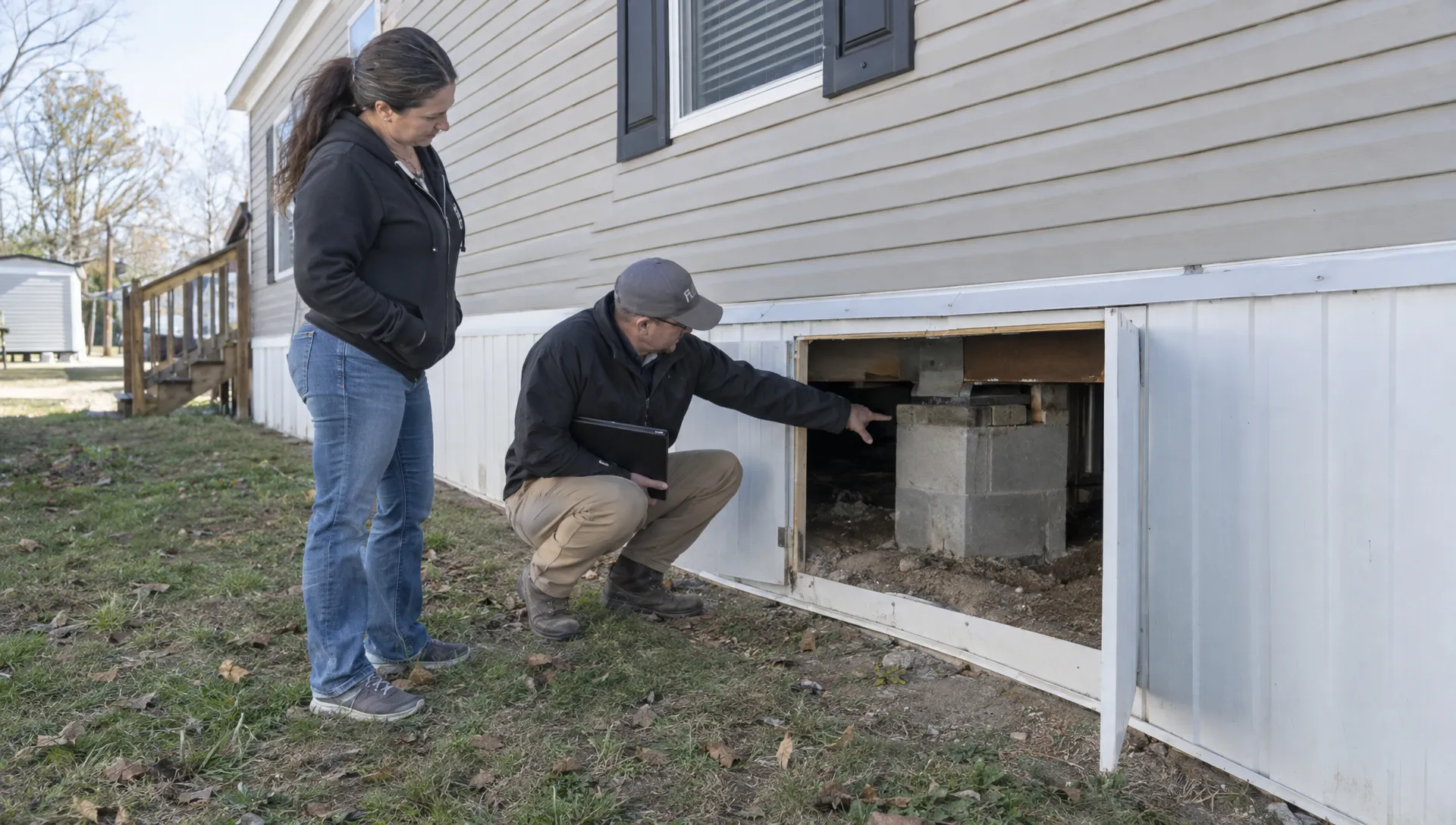
- Access panels are present and large enough for an inspector to enter safely.
- Steps, porches, decks, and ramps are not pulling away from the home.
- Gutters, downspouts, and splash blocks move roof water away from the foundation area.
- The home appears level from a distance, without visible sagging along the sidewalls.
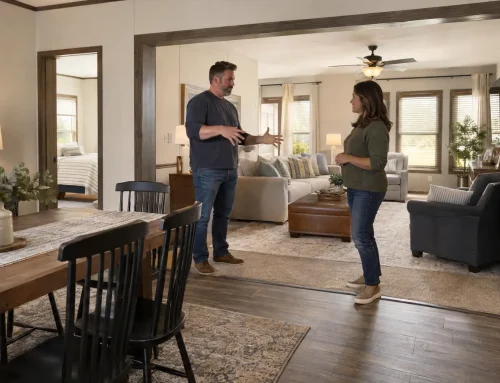
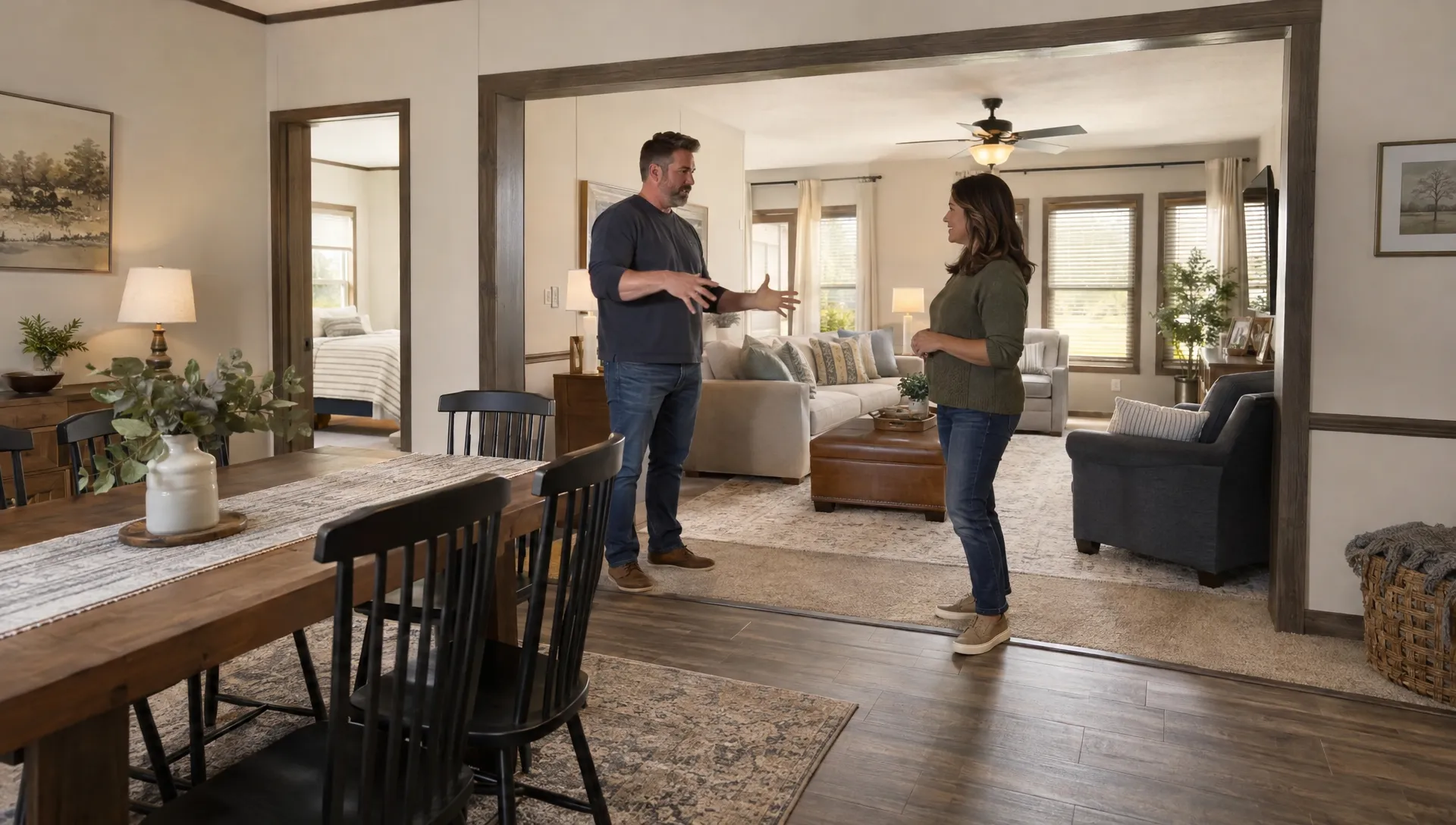
Then step inside and pay attention to how the home feels. Soft floors near bathrooms, kitchens, exterior doors, and utility rooms can indicate plumbing leaks or moisture below the home. Doors that swing open on their own, windows that bind, cabinet gaps, and long cracks in drywall or trim may point to settlement or an out-of-level condition.
None of these issues automatically means you should walk away. They do mean you should ask for a closer inspection and, when needed, written repair estimates before committing.
What a qualified inspector should check under the home
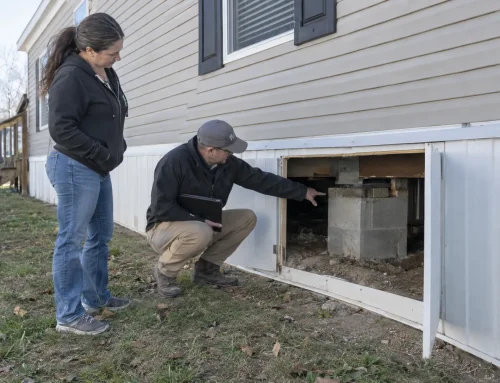
The underside of a mobile home is where the most important foundation clues are found. Buyers should not crawl under a home if the access is unsafe, the ground is wet, electrical wiring is exposed, animals may be present, or the structure appears unstable. Hire a licensed home inspector, manufactured home inspector, qualified installer, or engineer when the purchase depends on foundation condition.
A thorough mobile home foundation inspection should evaluate the following areas.
Levelness and structural alignment
The inspector should determine whether the home is level within acceptable tolerances and whether the frame, marriage line, floors, walls, and roofline show signs of movement. A home that is significantly out of level may need re-leveling, pier adjustment, or deeper correction if the underlying soil or footings are failing.
Inside symptoms matter too. If the inspector notices interior signs such as door misalignment, uneven flooring, cracked wall finishes, or separation at the marriage line, those should be compared with what is visible below the home.
Piers, pads, footings, and shims
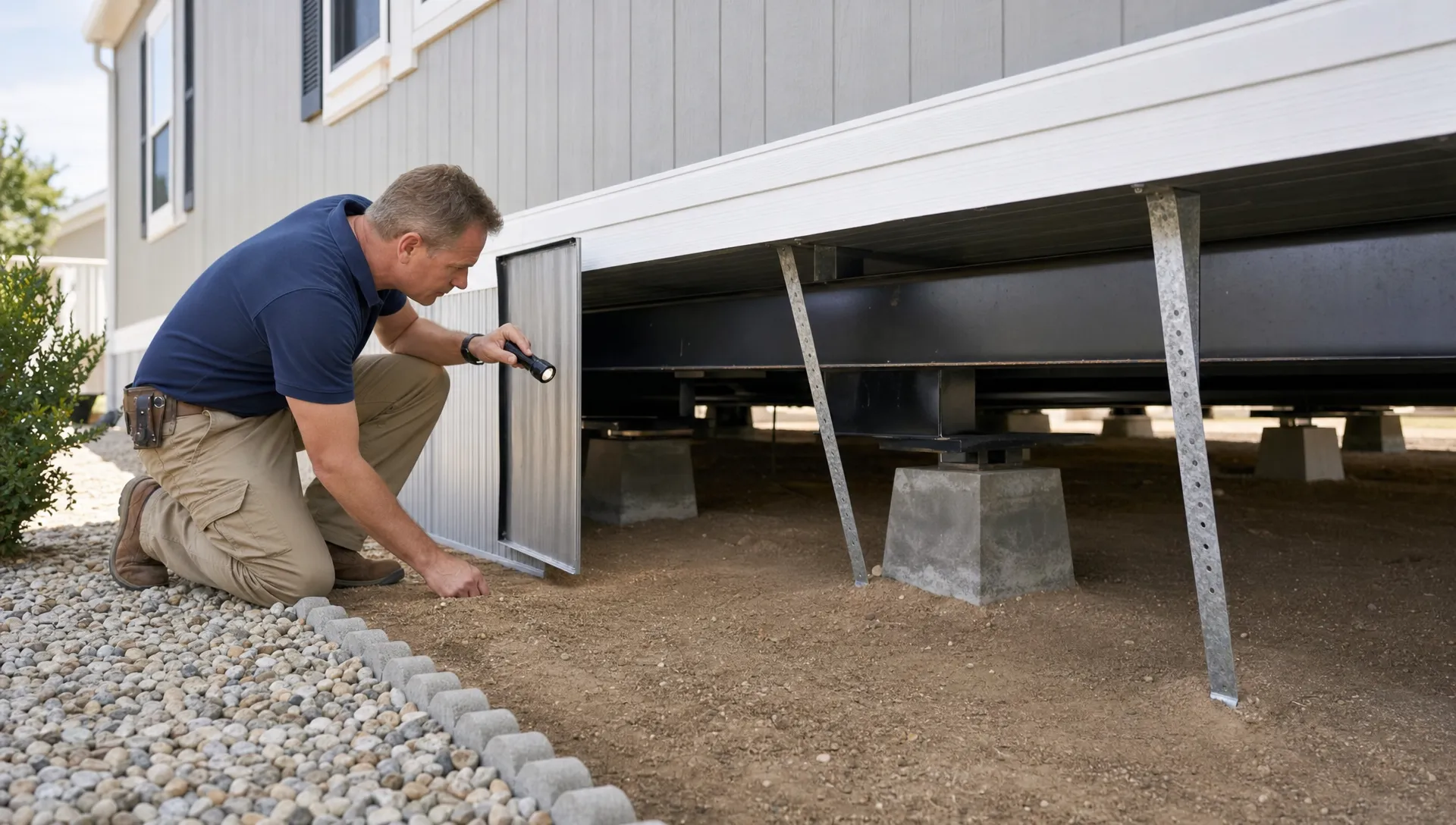
Many manufactured homes use a pier system, often with concrete blocks or approved supports placed under the frame at required intervals. The inspector should look for cracked blocks, leaning piers, missing supports, unstable stacks, improper shimming, or pads that have sunk into the soil.
Wood shims, if present, should be tight, properly placed, and not crushed, rotted, or loose. Gaps between the frame and support points are a warning sign because they suggest the home is no longer bearing evenly.
Anchors and tie-downs
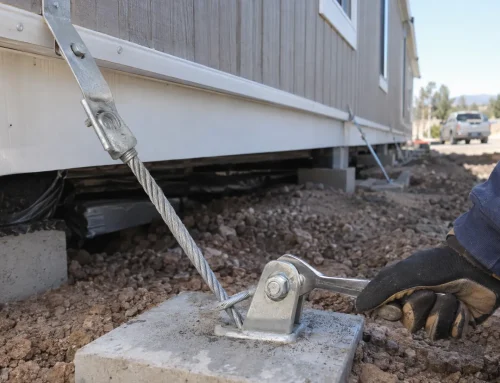
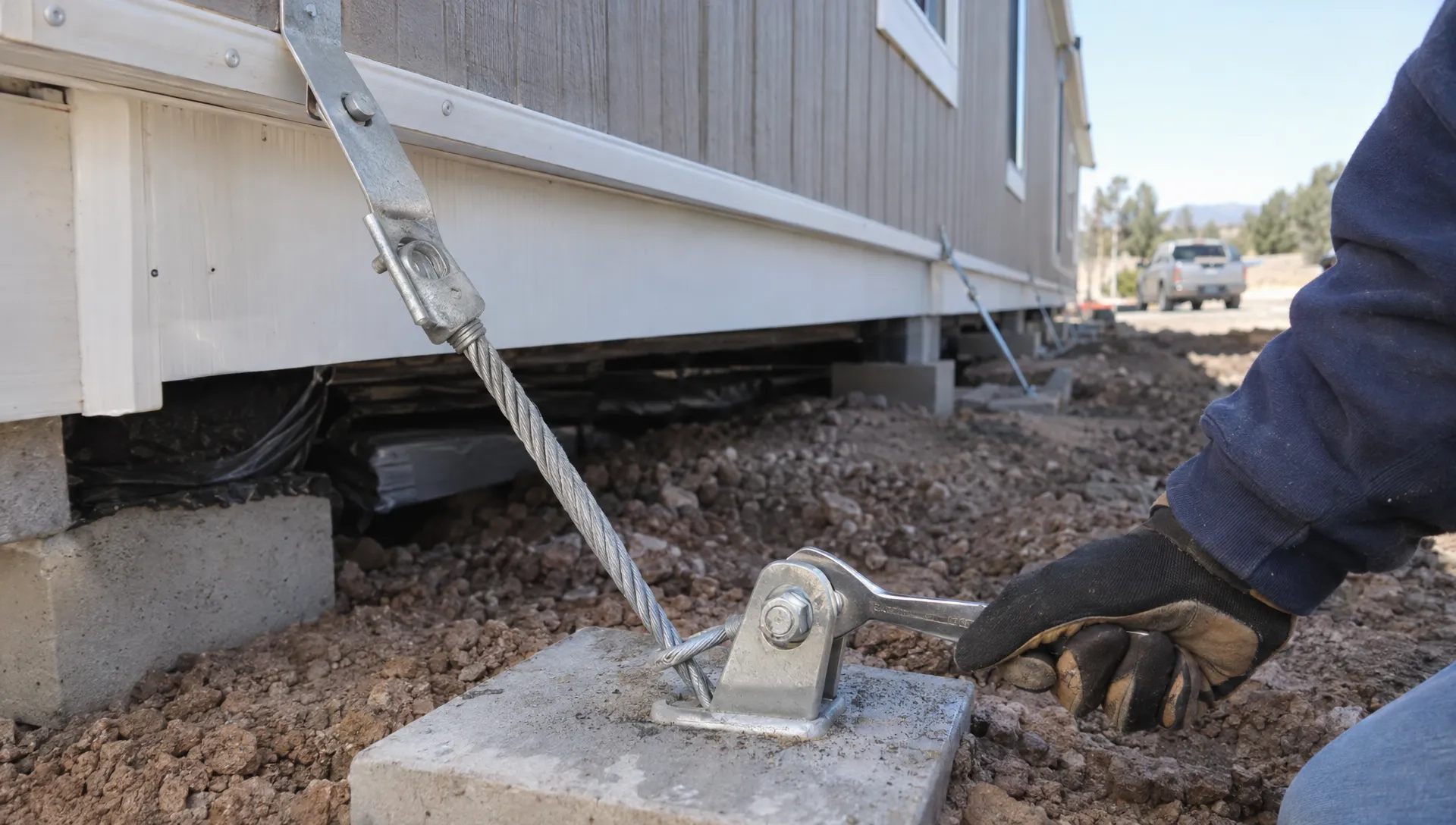
Tie-downs help resist wind uplift and lateral movement. In Texas, anchoring is a major inspection item because storms and high winds can place significant stress on manufactured homes. The inspector should check whether anchors, straps, stabilizer plates, and connections appear present, properly tensioned, corrosion-free, and correctly aligned.
If you want a deeper look at anchoring issues, Homes2Go explains how to prepare for a mobile home tie-down inspection and avoid common reasons for failure.
Drainage and moisture control
Water is one of the biggest long-term threats to a mobile home foundation. Poor drainage can soften soil, shift supports, corrode metal components, damage insulation, and create mold-friendly conditions under the home.
The inspector should look for wet soil, standing water, muddy crawlspace areas, stains on piers, rusted anchors, damaged vapor barrier, plumbing leaks, disconnected drain lines, and evidence that rainwater runs underneath the home. In San Antonio, where intense rain can follow long dry periods, drainage should be judged by site grading and water paths, not just how dry the ground looks on inspection day.
Skirting and ventilation
Skirting protects the underside of the home from animals, debris, wind-driven rain, and temperature swings. But it should not trap moisture. Inspectors should check for damaged panels, blocked vents, missing access points, soil piled against skirting, and signs that airflow is restricted.
Proper ventilation helps the crawlspace dry out after rain or humidity. If skirting has been sealed too tightly or installed without adequate airflow, moisture can build up even when the exterior looks neat.
Utilities and penetrations
Plumbing, electrical, gas, and HVAC lines often run below or through the foundation area. A foundation inspection should note whether pipes and conduits are supported, protected, and not placing stress on the structure. Leaking drain lines, loose supply lines, exposed wiring, or ducts lying on wet soil can turn a foundation concern into a health, safety, or repair-cost issue.
Foundation types buyers may encounter
Not every mobile or manufactured home sits on the same type of foundation. Your financing, property type, local rules, and long-term plans may determine whether the existing setup is acceptable.
| Foundation setup | What it usually means for buyers |
|---|---|
| Pier and pad system | Common for manufactured homes, but condition, spacing, drainage, and anchoring must be verified. |
| Slab or runners with supports | Can provide a stable base when properly designed, graded, and installed. |
| Crawlspace or perimeter foundation | May offer better access and appearance, but moisture control and ventilation remain critical. |
| Permanent engineered foundation | Often important for certain loan programs and real property classification. Documentation matters. |
If you are comparing options or trying to understand what inspectors focus on, Homes2Go also has a more detailed guide on what matters in a manufactured home foundation inspection.
Red flags that should slow down the purchase
Some foundation issues are routine repair items. Others can affect safety, financing, insurance, and resale. When you see one of the concerns below, do not rely on verbal promises. Ask for written findings, licensed repair recommendations, and a reinspection if repairs are completed before closing.
| Red flag | Why it matters |
|---|---|
| Standing water under the home | Can weaken soil, damage supports, and create moisture problems. |
| Leaning or cracked piers | Indicates load transfer may be compromised. |
| Loose or missing tie-downs | Can affect wind resistance and inspection approval. |
| Large gaps between supports and frame | Suggests the home may be out of level or settling. |
| Recent patching with no invoices | May hide a recurring issue rather than prove it was fixed. |
| Strong mildew odor or damaged insulation | Points to moisture intrusion that may extend beyond the foundation. |
| Porches or decks attached improperly | Can pull on the home or conceal foundation and drainage problems. |
| No access to the crawlspace | Prevents a meaningful inspection of critical components. |
A seller who refuses access to the underside of the home or cannot provide basic setup information is not always hiding something, but buyers should proceed carefully. Limited access creates uncertainty, and uncertainty should be reflected in your negotiation, inspection contingency, or repair budget.
Questions to ask your inspector or seller
Good questions can help you turn an inspection report into a practical buying decision. Ask the inspector to explain which items are urgent, which are maintenance issues, and which could affect financing.
Useful questions include:
- Is the home level, and if not, how significant is the movement?
- Are the piers, pads, shims, and footings properly supporting the frame?
- Are tie-downs present and in acceptable condition?
- Is there evidence of water collecting under or around the home?
- Are any repairs needed before closing, or can they be budgeted after purchase?
- Should an engineer, licensed installer, plumber, or drainage contractor review the issue?
- Could the current foundation condition affect FHA, VA, USDA, or conventional financing?
For sellers, ask when the home was last re-leveled, who performed the work, whether drainage improvements were made, and whether any prior buyer, lender, or inspector requested foundation repairs.
What to do after the foundation inspection
Once you receive the report, do not focus only on whether the home passed or failed. Foundation findings exist on a spectrum. A few minor skirting repairs are very different from a wet crawlspace, missing supports, and failed anchoring.
Start by separating the findings into three categories: safety and structural concerns, financing or code concerns, and normal maintenance items. Safety and financing issues should be resolved before closing whenever possible. Maintenance items can often become part of your first-year homeownership plan, provided you understand the cost.
If repairs are needed, request written estimates from qualified professionals. If the seller agrees to complete repairs, ask for receipts, photos, and a follow-up inspection before final approval. If you are financing the purchase, keep your lender informed because certain repairs or certifications may be required before closing.
Also remember that foundation repairs should address the cause, not just the symptom. Re-leveling a home without fixing drainage can lead to the same problem returning after the next major rain.
San Antonio buyer considerations
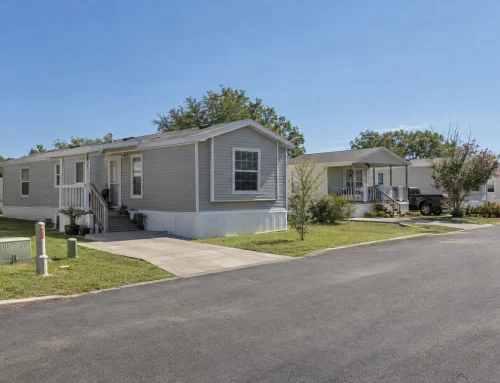
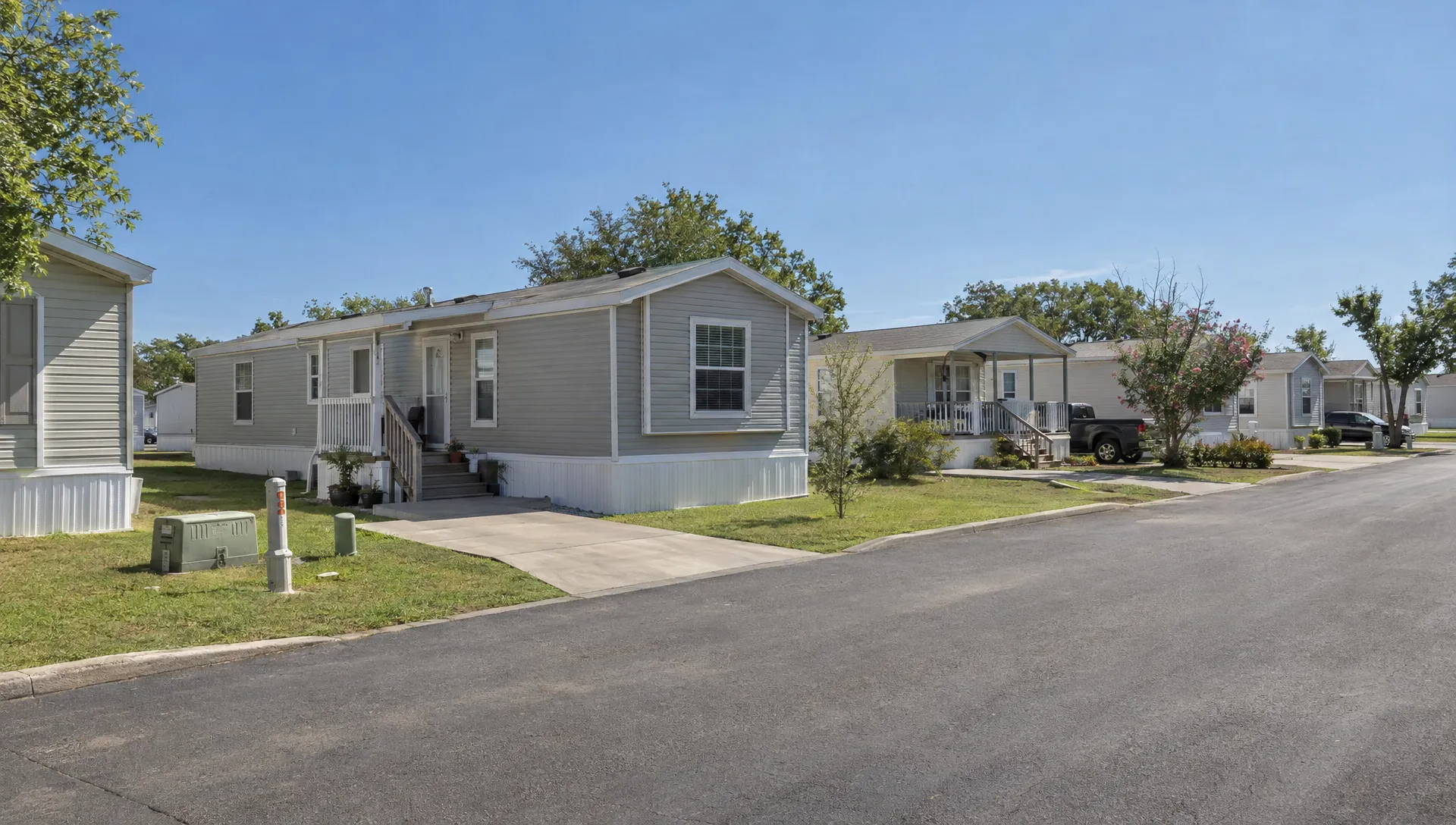
San Antonio-area buyers should pay close attention to grading, soil movement, drainage paths, and community requirements. Some homes are located on private land, while others are placed in manufactured home communities with their own setup standards, utility rules, and approval processes.
If you are buying a new manufactured home, foundation and site preparation should be discussed early, not after you have chosen a floor plan. A buildable site, proper drainage, utility access, and clear installation expectations can prevent delays and surprise costs. Homes2Go helps buyers explore manufactured home options in the San Antonio area, including models, financing paths, and access to home communities.
For resale homes, the biggest risk is assuming that an older setup is acceptable just because the home has been there for years. Conditions change. Soil shifts, drainage patterns evolve, anchors corrode, plumbing leaks develop, and past repairs may not meet current lender expectations.
Frequently Asked Questions
How much does a mobile home foundation inspection cost? Costs vary by location, property condition, home size, and whether you need a general home inspector, manufactured home specialist, or engineer. Ask for a written scope so you know whether the inspection includes levelness, crawlspace access, tie-downs, drainage, and repair recommendations.
Can I buy a mobile home if the foundation needs repairs? Yes, but you should understand the cost, timing, and financing impact before closing. Some repairs may be negotiable, while others may be required by a lender or insurer before the transaction can move forward.
Is a permanent foundation always required? Not always. Requirements depend on the loan type, property classification, local rules, and whether the home is being treated as personal property or real property. FHA and some other financing programs may require a permanent foundation that meets specific standards.
What is the difference between a foundation inspection and a tie-down inspection? A foundation inspection looks broadly at support, levelness, drainage, moisture, piers, skirting, and related structural concerns. A tie-down inspection focuses specifically on anchors, straps, stabilizer components, and wind-resistance connections.
Should I inspect the foundation on a new manufactured home? Yes. New homes still need proper site preparation, installation, anchoring, drainage, and final walkthrough review. A new home is only as solid as the setup beneath it.
Buy with confidence, not guesswork
A mobile home foundation inspection is one of the best ways to protect your budget and your peace of mind. Before you buy, review the paperwork, walk the site, hire the right inspector, and make sure any repair plan addresses both the visible issue and the underlying cause.
If you are searching for an affordable manufactured home in the San Antonio area, Homes2Go San Antonio can help you compare models, understand financing options, and move through the buying process with local guidance.
 Chattel Dwelling Loans Explained for Home Buyers
 How to Compare Rental Mobile Home Parks Locally