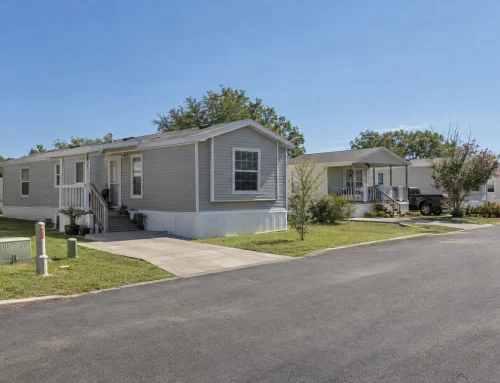

A manufactured home can look beautiful from the street and still have problems underneath. That is why a manufactured home foundation inspection matters so much, especially in the San Antonio area where heat, heavy rain, clay soils, and site drainage can all affect long-term performance.
For buyers, the foundation is not just a construction detail. It can influence safety, comfort, financing approval, insurance, resale value, and whether the home remains level over time. For current owners, a foundation issue caught early is usually easier to address than one discovered after doors stop closing, floors slope, or moisture collects under the home.
This guide explains what matters during a foundation inspection, what inspectors typically look for, which documents may be needed for financing, and how to think about foundation questions before buying a manufactured home in San Antonio.
Why the Foundation Matters More Than Many Buyers Realize
Manufactured homes are built to federal construction standards, transported to the home site, then installed on a support and anchoring system. That installation step is critical. Even a well-built home can develop problems if the foundation, piers, anchors, drainage, or site preparation are not appropriate for the home and location.
A proper foundation helps the home:
- Stay level and structurally stable
- Resist wind uplift and lateral movement
- Transfer weight safely to the soil
- Protect plumbing, ductwork, and underfloor systems
- Reduce moisture problems beneath the home
- Meet lender, insurer, and local permitting expectations
The federal government publishes manufactured home installation standards in 24 CFR Part 3285, and Texas manufactured housing is overseen by the Texas Department of Housing and Community Affairs Manufactured Housing Division. Local permitting and inspection requirements may also apply, depending on where the home is placed.
In practical terms, a good inspection answers one central question: is the home properly supported, anchored, drained, and documented for its intended use?
Foundation Basics for Manufactured Homes
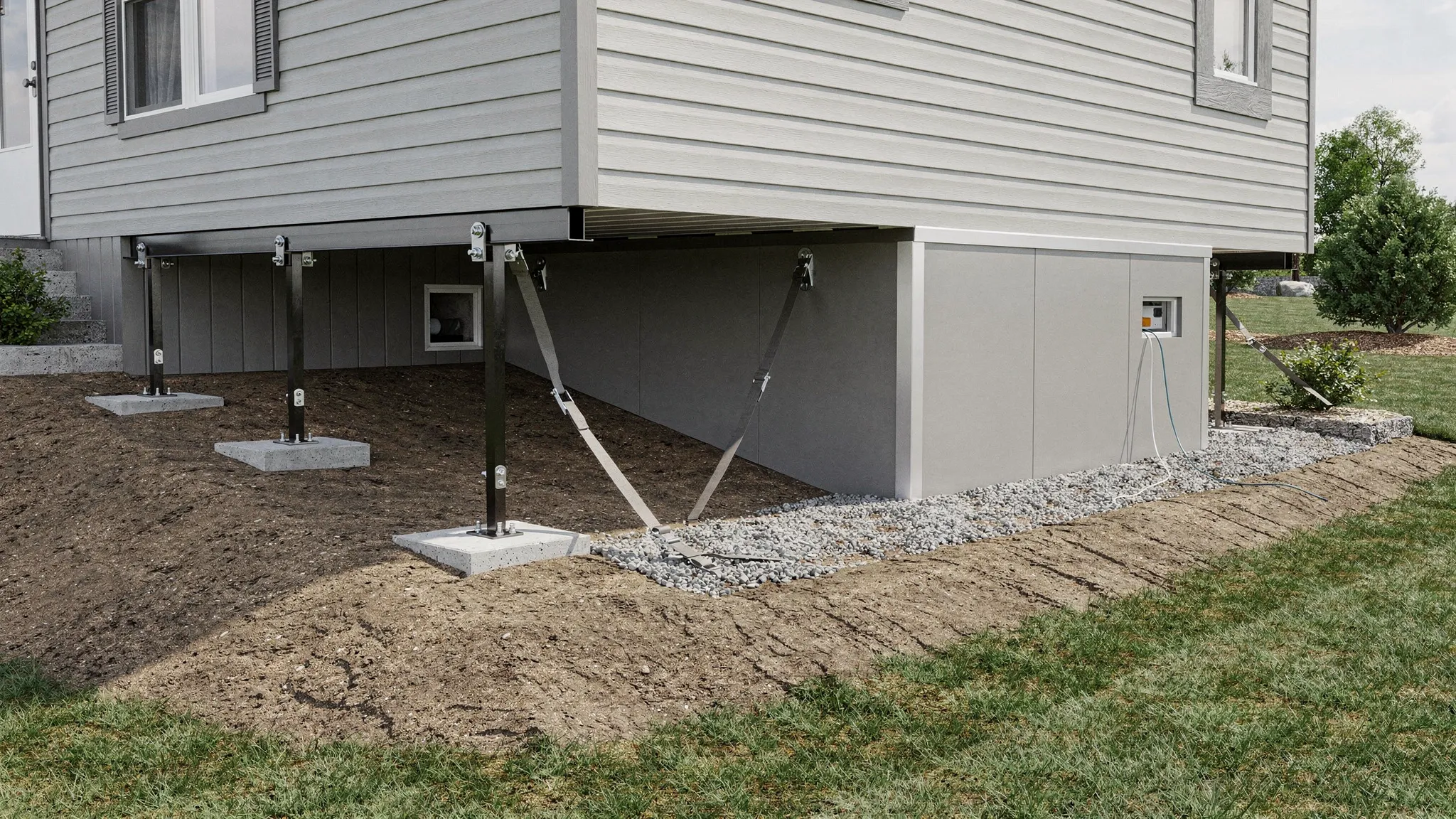
A manufactured home foundation is not always the same as a site-built home foundation. Many manufactured homes sit on engineered pier systems with ground anchors and tie-downs. Others are installed on concrete runners, slabs, crawlspace foundations, or permanent foundation systems designed for mortgage financing.
The right approach depends on the home model, soil conditions, local rules, lender requirements, and whether the home is placed in a land-lease community or on private land.
| Foundation or support type | Common use | What inspection focuses on |
|---|---|---|
| Pier and anchor system | Common in manufactured home communities and private lots | Pier spacing, footings, shims, tie-downs, levelness, drainage |
| Concrete runners or strip footings | Sites needing more durable bearing support | Concrete condition, alignment, load transfer, soil movement |
| Slab-related installation | Some private land and land-home setups | Elevation, anchoring method, drainage, utility access |
| Crawlspace or perimeter foundation | More common in permanent foundation scenarios | Ventilation, access, moisture control, structural support |
| Engineered permanent foundation | Often used for FHA, VA, USDA, or conventional mortgage needs | Compliance with engineering requirements and lender documentation |
One important point: permanent foundation does not simply mean there is concrete somewhere under the home. For many loans, a permanent foundation must meet specific engineering and documentation standards. HUD’s Permanent Foundations Guide for Manufactured Housing is often referenced when lenders require a professional foundation certification.
What a Manufactured Home Foundation Inspection Should Check
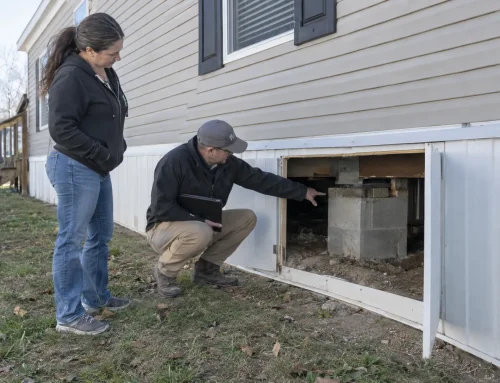
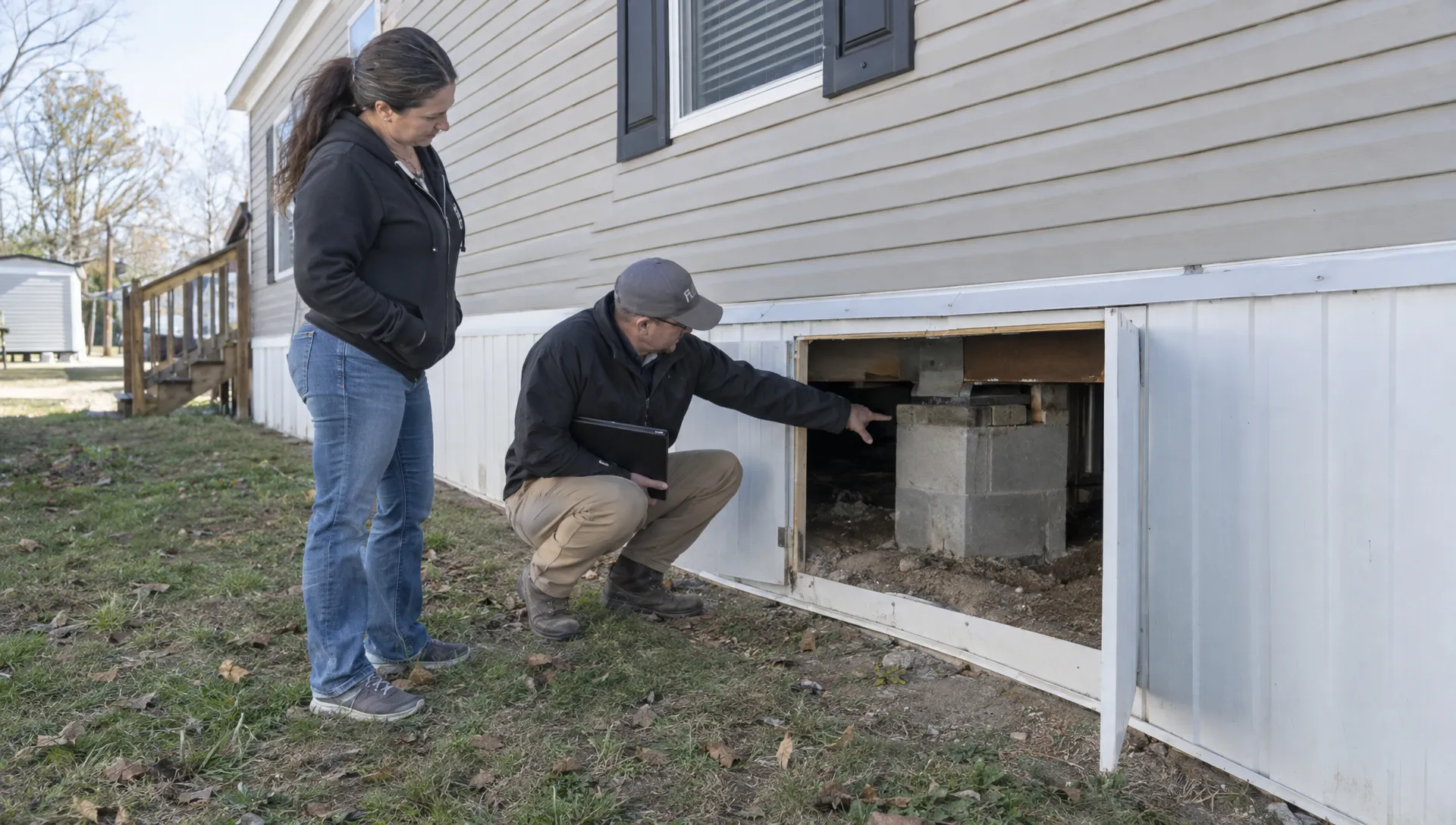
A thorough inspection looks beyond one or two visible supports. The inspector should evaluate the full system: the home, the chassis, the piers, the soil, the anchors, the drainage, and any signs that the structure has shifted.
Levelness and Alignment
Levelness is one of the first things inspectors evaluate. A manufactured home that is not level may show symptoms inside and outside the structure. Common signs include sticking doors, uneven floors, cracks around wall openings, gaps at trim, or windows that do not operate smoothly.
For multi-section homes, the marriage line is especially important. This is where the sections join together. Inspectors may look for uneven ridgelines, separation, interior cracking, or support issues beneath the connection points.
A home can settle slightly after installation, but noticeable or continuing movement should be investigated. Re-leveling may be needed in some cases, but the underlying cause matters. If poor drainage, inadequate footings, or unstable soil caused the movement, simply adjusting the home may not solve the problem.
Piers, Footings, and Load Support
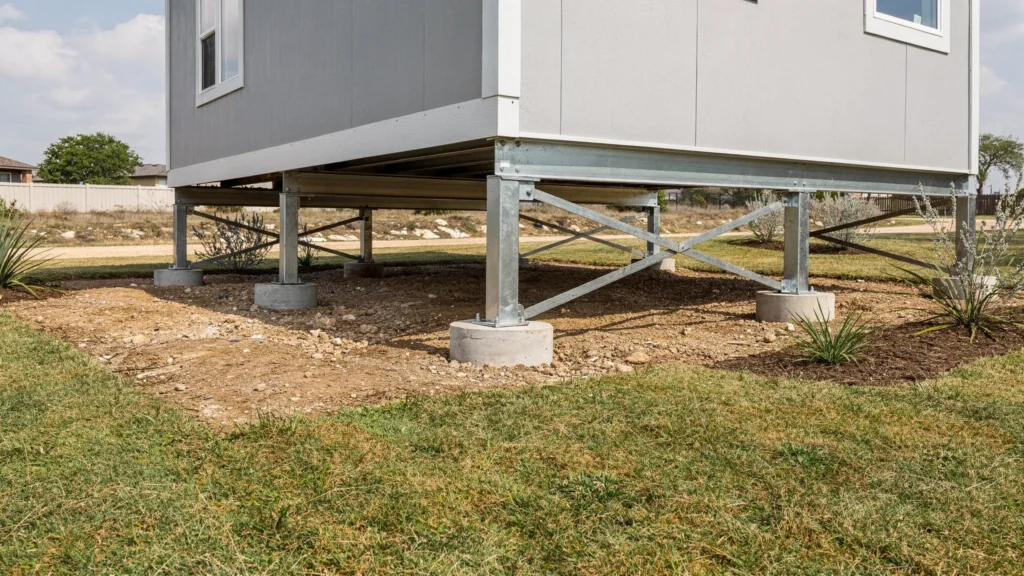
Piers carry the weight of the home down to the soil or foundation pads. During an inspection, the support system should be compared against the manufacturer’s installation instructions and any engineered foundation plan.
Inspectors typically look for:
- Piers that are plumb, stable, and properly positioned
- Footings or pads that are bearing on firm soil
- No crushed, cracked, or leaning blocks
- Proper support under high-load areas, such as marriage lines and large openings
- Acceptable shimming and cap materials
- No makeshift supports using scrap wood, loose bricks, or unstable materials
The spacing and design should not be guessed. Manufactured homes have specific load paths, and the support system should match the home’s design and installation requirements.
Anchors, Tie-Downs, and Wind Resistance
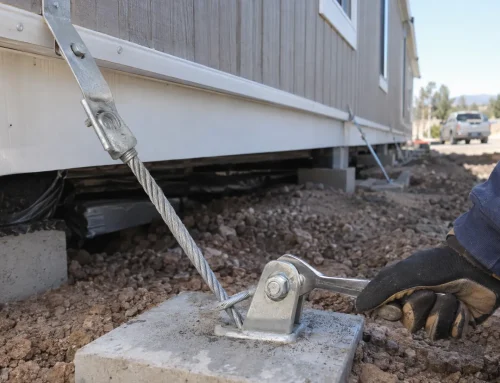
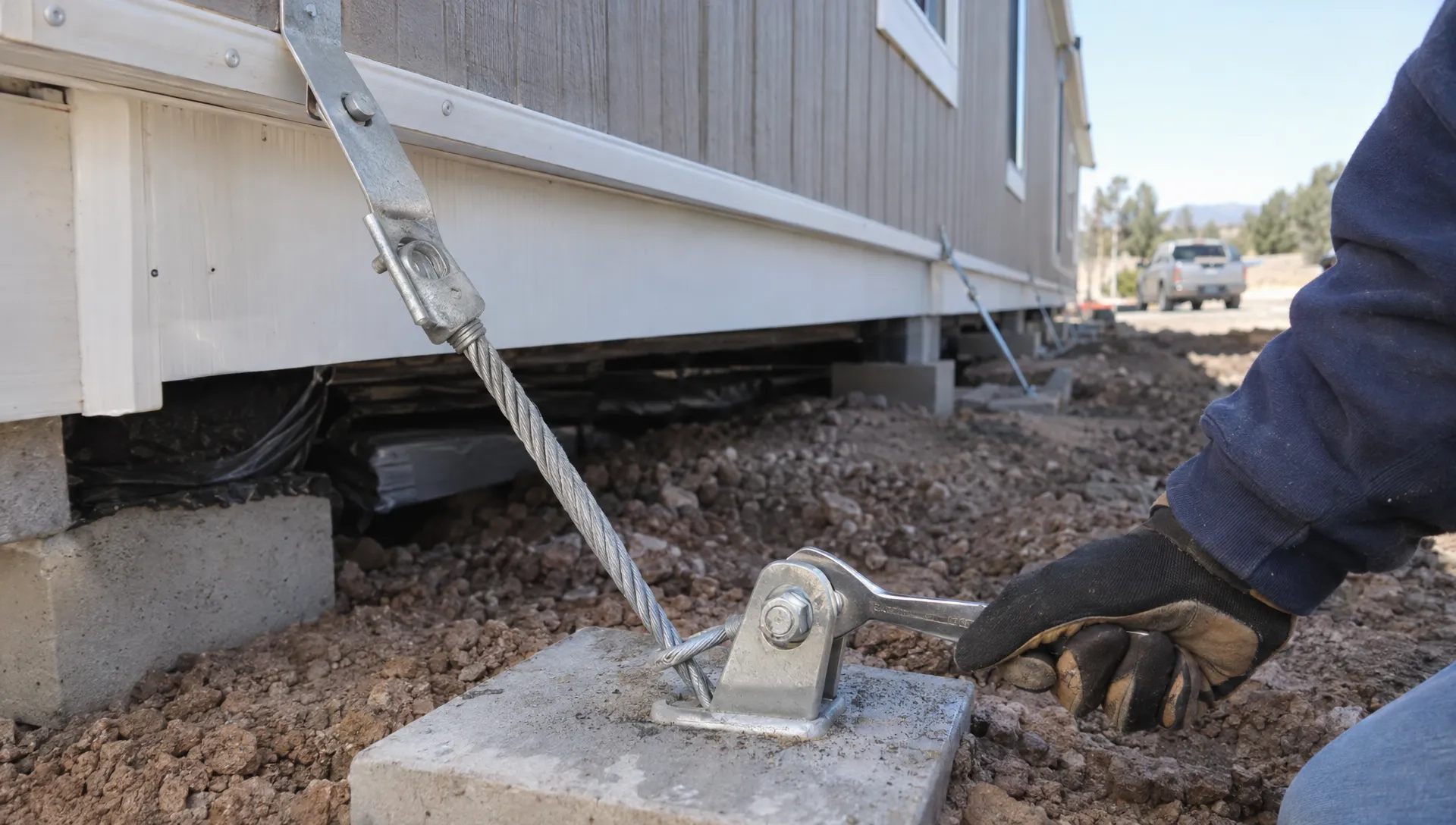
Anchoring is critical in South Texas, where severe thunderstorms and high winds can occur. Anchors and tie-downs help resist uplift and lateral movement. A foundation inspection should confirm that straps, anchors, stabilizer plates, and related components are present, properly aligned, and not heavily corroded or damaged.
Inspectors may also check whether straps are too loose, twisted, cut, missing, or attached incorrectly. Over time, soil movement, corrosion, and previous repairs can affect the anchoring system.
If the home has been moved from another location, anchoring deserves extra attention. Relocation can change installation requirements, and old assumptions may not apply to the new site.
Drainage, Moisture, and Site Grading
Water is one of the biggest enemies of a manufactured home foundation. In San Antonio, short periods of heavy rain can expose weak grading quickly. Standing water under a home can soften soil, contribute to settlement, accelerate corrosion, encourage pests, and create moisture issues in the subfloor.
A foundation inspection should evaluate whether water drains away from the home. The inspector may look at the site slope, gutters, downspouts, erosion patterns, low spots, and evidence of ponding beneath the structure.
Skirting can make a home look finished, but it should not trap moisture or hide drainage problems. If the underside of the home smells musty, has visible standing water, or shows corrosion and sagging insulation, drainage and ventilation should be reviewed carefully.
Skirting, Crawlspace Access, and Ventilation
Skirting is often considered cosmetic, but it affects inspection access and moisture control. Inspectors need safe access to the underside of the home. If access panels are missing, blocked, or too small, important defects can go unseen.
Ventilation also matters. A crawlspace or enclosed under-home area that cannot dry out properly may contribute to condensation, mold risk, wood deterioration, and corrosion. Requirements can vary by installation type, so the inspector should consider the manufacturer’s instructions, local rules, and any engineered plan.
Utility Connections and Underfloor Systems
A foundation inspection is not the same as a full plumbing, electrical, or HVAC inspection, but underfloor utilities can reveal foundation-related issues. Sagging ductwork, strained water lines, damaged sewer connections, or electrical conduit pulled out of alignment may indicate movement or poor installation.
Flexible utility connections are often used to allow for normal movement, but they should not be leaking, kinked, unsupported, or exposed to damage. If the inspection finds utility concerns, a licensed trade professional may need to review the issue separately.
Additions, Decks, Porches, and Carports
Many foundation problems begin after the original installation. Decks, porches, patio covers, ramps, and room additions can create stress if they are attached improperly or supported by the home instead of their own foundation.
A good inspector will look for additions that appear to pull on the manufactured home, block drainage, hide anchors, restrict access, or transfer loads in ways the home was not designed to handle. In many cases, additions should be independently supported or professionally engineered.
Inspection, Certification, Appraisal: What Is the Difference?
Buyers often hear several similar terms during the purchase process. They are not interchangeable.
| Term | Main purpose | Who may be involved |
|---|---|---|
| General home inspection | Reviews visible home systems and condition | Home inspector with manufactured home experience |
| Foundation inspection | Evaluates support, anchoring, levelness, drainage, and visible foundation components | Experienced inspector, installer, or engineer depending on scope |
| Engineer foundation certification | Documents whether the foundation meets specific engineering or lender standards | Licensed professional engineer |
| Appraisal | Estimates value for lender or transaction purposes | Licensed or certified appraiser |
| Local or state inspection | Confirms compliance with applicable installation or permitting rules | Authority having jurisdiction or approved inspector |
If you are using mortgage financing, ask your lender exactly what is required before ordering inspections. FHA, VA, USDA, and conventional lenders may have different documentation requirements. If an engineer certification is required, a standard home inspection report may not be enough.
Homes2Go San Antonio works with buyers who are comparing models, communities, and financing paths. If you are still deciding between a home-only purchase, a community placement, or a land-home package, review the Homes2Go financing resources early so you understand how foundation expectations may affect your path.
When Should You Schedule a Foundation Inspection?
The best time to ask foundation questions is before you commit to the purchase, not after move-in. A foundation inspection is especially important in these situations:
- You are buying a used manufactured home
- The home has been moved or will be relocated
- The home is being placed on private land
- You are applying for FHA, VA, USDA, or conventional mortgage financing
- You notice sloping floors, sticking doors, cracks, or gaps
- There is standing water or erosion around the home
- The home has decks, additions, or attached structures
- The property is in or near a flood-prone area
- The seller cannot provide installation or foundation documentation
For a new manufactured home, the focus is slightly different. You want the installation completed correctly from the beginning, with the proper site prep, foundation plan, permits, and lender documentation when applicable. If you are shopping for a new home, the Homes2Go guide to manufactured homes in San Antonio can help you understand how the home, site, and setup costs fit together.
What Buyers Should Ask Before Closing
A foundation inspection is more useful when you have the right documents. Before closing, ask the seller, retailer, community manager, or installer for any available records related to the home’s placement and foundation.
Useful documents may include:
- Manufacturer installation instructions, if available
- HUD certification label and data plate information
- Site plan or foundation plan
- Permits and final inspection records
- Previous engineer foundation certification
- Re-leveling or repair records
- Floodplain information or elevation documentation
- Details about additions, decks, ramps, or carports
If the home is in a manufactured home community, ask about community rules for setup, skirting, drainage, steps, additions, and maintenance access. If the home will be placed on land you own, ask about site access, utility connections, septic or sewer requirements, driveway placement, and grading.
For buyers considering private land, the Homes2Go land and home package guide is a helpful starting point because it explains how land, home selection, financing, and installation fit together.
San Antonio Foundation Considerations
Foundation concerns are local. A setup that performs well in one region may need adjustments in another. In the San Antonio area, buyers should pay close attention to heat, rain, drainage, and soil behavior.
Expansive Soils and Settlement
Parts of South Central Texas have clay-rich soils that can expand when wet and shrink when dry. This movement can affect piers, pads, and grading over time. A foundation inspection should look for evidence of settlement, erosion, leaning supports, and changes in floor level.
Good site preparation is essential. Proper grading, stable bearing surfaces, and drainage planning can reduce future movement.
Heavy Rain and Flash Drainage
San Antonio storms can drop a large amount of rain quickly. Even if a lot looks dry during a showing, ask where water goes during a heavy storm. Look at neighboring lots, roadside ditches, drainage swales, gutters, and low areas around the home.
A home pad should not act like a bowl. If water collects beneath the home, the foundation system may be at risk even if the piers look acceptable on a dry day.
Heat, Drought, and Soil Shrinkage
Long dry periods can also affect soil. When soil shrinks away from footings or pads, support conditions may change. Inspectors may look for gaps, tilting, cracking, or uneven bearing conditions. Landscaping and irrigation should be managed carefully so water is not concentrated at only one part of the foundation.
Floodplain and Site Elevation
Before placing a manufactured home on private land, check whether the property is in a floodplain or drainage-sensitive area. Floodplain status can affect permits, insurance, foundation design, and lender approval. This is especially important for land-home purchases around creeks, low-water crossings, or rural properties outside the urban core.
Red Flags You Should Not Ignore
Some foundation issues are minor maintenance items. Others can affect safety, financing, or the cost of ownership. Pay special attention if you see any of the following:
- Piers leaning, missing, cracked, or sitting on unstable materials
- Tie-down straps missing, loose, corroded, or improperly attached
- Standing water, mud, or erosion under the home
- Floors that slope noticeably from one side to the other
- Doors or windows that suddenly stop operating correctly
- Gaps at the marriage line or roofline irregularities on multi-section homes
- Skirting that blocks access or traps moisture
- Additions attached in a way that appears to pull on the home
- No permits, installation records, or foundation documentation available
A red flag does not always mean you should walk away. It means you should slow down, get the right professional opinion, and understand the repair scope before moving forward.
What Happens After the Inspection?
A foundation report should help you make a decision, not leave you guessing. After the inspection, review the findings carefully and separate them into categories.
Some items may be routine maintenance, such as improving drainage extensions or replacing damaged skirting access panels. Others may require a licensed installer, contractor, or professional engineer. If financing is involved, certain findings may need to be corrected before the loan can close.
Ask these questions after receiving the report:
- Does the foundation meet the manufacturer’s installation instructions or engineered plan?
- Are repairs needed before closing or can they be completed later?
- Will the lender require an engineer certification?
- Are there drainage problems that could cause the issue to return?
- Do additions or decks need separate support or modification?
- Is there enough documentation for insurance, resale, and future refinancing?
If the report is unclear, ask the inspector to explain the practical impact. A good report should identify what was observed, why it matters, and what type of professional should evaluate or repair the issue.
How Foundation Planning Fits Into a Smart Home Purchase
Foundation planning should not be treated as an afterthought. It belongs in the same conversation as floor plan, financing, site choice, utilities, and move-in timeline.
For first-time buyers, this is where expert guidance can make the process less stressful. A beautiful home model still needs the right site and installation plan. A lower purchase price may not be the best deal if the site requires major grading, drainage improvements, utility extensions, or foundation upgrades.
Homes2Go San Antonio helps buyers compare manufactured home models, review floor plans, explore financing options, and understand placement choices in and around San Antonio. If you are considering a move-in ready home, a community placement, or a private land setup, ask foundation questions early so your budget reflects the full project.
Frequently Asked Questions
What is included in a manufactured home foundation inspection? A foundation inspection typically reviews levelness, piers, footings, anchors, tie-downs, drainage, crawlspace access, visible structural movement, and signs of moisture or settlement. The exact scope depends on the inspector and whether an engineer certification is required.
Do all manufactured homes need a permanent foundation? Not always. Some homes in land-lease communities use pier and anchor systems that are acceptable for that placement. However, many mortgage programs and land-home purchases may require a permanent foundation and specific documentation.
Who can certify a manufactured home foundation for a lender? If a lender requires a foundation certification, it is commonly provided by a licensed professional engineer. Always ask the lender what type of report is required before ordering an inspection.
Can a manufactured home foundation be repaired? Many foundation issues can be corrected, such as re-leveling, replacing damaged piers, improving drainage, correcting anchors, or upgrading supports. The right repair depends on the cause of the problem and should be handled by qualified professionals.
Is a foundation inspection needed for a new manufactured home? New homes should still be installed and inspected according to applicable requirements, manufacturer instructions, and local rules. If financing requires special documentation, buyers should confirm that early in the process.
What foundation issues are most common in San Antonio? Common concerns include poor drainage, soil movement, settlement, leaning piers, corrosion from moisture, and site grading that allows water to collect under the home.
Talk Through Foundation Questions Before You Buy
A manufactured home foundation inspection protects more than the structure. It protects your budget, your financing timeline, and your confidence in the home you choose.
If you are shopping for a manufactured home in San Antonio, Homes2Go SA can help you compare models, explore flexible financing options, review placement choices, and ask the right site-prep questions before you move forward. Start by browsing available options and connecting with the Homes2Go team at Homes2Go San Antonio.
 Mobile Homes in TX: What Buyers Need to Know
 Mobile Home Tie Down Inspection: Pass the First Time