
For many San Antonio buyers, the true cost of a home is not just the purchase price. It is the monthly payment plus the electric bill, especially during long stretches of Texas heat. That is where modern manufactured homes can offer a practical advantage. When selected and installed thoughtfully, manufactured homes reduce heating and cooling costs through efficient layouts, factory-built consistency, improved insulation, better windows, and correctly matched HVAC systems.
The key phrase is thoughtfully selected. Not every manufactured home will perform the same way, and the lowest sticker price is not always the lowest monthly cost. A home with poor insulation, oversized air conditioning, leaky ducts, or weak skirting can lose money every month through wasted energy. A home designed for efficiency can feel more comfortable while helping keep utility bills more predictable.
Below is a practical look at how manufactured homes can reduce heating and cooling costs, what features matter most in South Texas, and what buyers should ask before choosing a model.
Why heating and cooling costs matter so much in San Antonio
San Antonio has a cooling-heavy climate. Air conditioning is not a luxury for most households, it is part of staying safe and comfortable through spring, summer, and early fall. Even though winters are generally mild, cold fronts can still create short periods of high heating demand.
That means a home needs to perform well in both directions. In summer, it should keep heat out and hold conditioned air in. In winter, it should retain warmth without forcing the heating system to run constantly. The better the home does those jobs, the less strain there is on the HVAC system.
Heating and cooling costs are shaped by several factors:
- How much air leaks through gaps, seams, vents, and ducts
- How well the roof, walls, and floor resist heat transfer
- Whether windows reduce solar heat gain
- Whether the HVAC system is properly sized for the home
- How the home is installed, shaded, skirted, and maintained
Manufactured homes are well suited to address many of these points because much of the construction happens in a controlled factory setting before the home arrives on-site.
Factory-built construction can improve energy consistency
Manufactured homes are built to the federal HUD Code, which sets standards for construction, safety, strength, transportability, energy efficiency, and performance. Because the home is constructed indoors, builders can work in a more controlled environment than a traditional outdoor jobsite. That can help reduce weather-related delays, material exposure, and some of the inconsistencies that happen when framing, sealing, and finishing are done outside.
This does not automatically make every manufactured home energy efficient. However, factory construction can make it easier to repeat efficient building practices from one home to the next. When insulation, wall assemblies, window installation, and duct placement are handled through a standardized process, buyers have a clearer path to comparing models and efficiency packages.
For buyers, the takeaway is simple: ask what is included in the home as built, not just what can be added later. A home designed with energy efficiency from the start is usually easier to live with than a home that needs major upgrades after move-in.
If your main concern is staying comfortable in Texas heat, Homes2Go has a helpful guide to energy-efficient manufactured homes in San Antonio that goes deeper into cooling-focused features.
Smaller, smarter layouts mean less space to condition
One of the most overlooked ways manufactured homes reduce heating and cooling costs is through efficient floor planning. Many manufactured homes are designed to maximize usable square footage without adding unnecessary hallways, oversized formal spaces, or complicated rooflines.
That matters because your HVAC system does not cool the price of the home, it cools the volume of air inside it. A well-designed 1,400-square-foot home may be less expensive to condition than a larger home with underused rooms, high ceilings, and poor airflow.
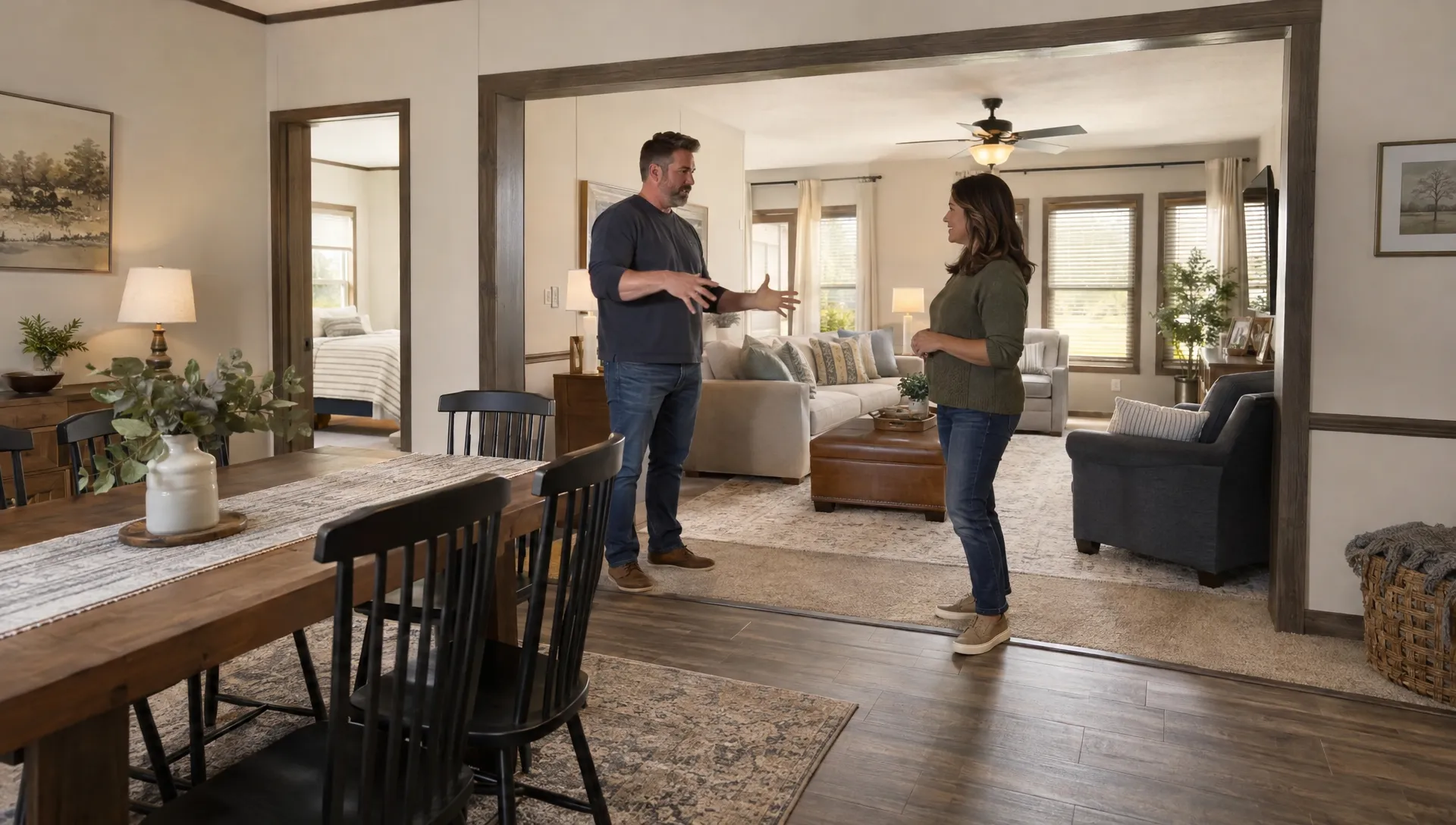
Efficient layouts can also help distribute air more evenly. Open kitchen and living areas, well-placed bedrooms, and shorter duct runs can make it easier to maintain comfort without setting the thermostat extremely low in summer or high in winter.
When touring manufactured homes, pay attention to how the space works for everyday life. A smaller home that fits your family well can reduce energy use while still feeling open, modern, and comfortable.
The building envelope does most of the work
The building envelope is the barrier between the conditioned interior and the outdoor environment. It includes the roof, ceiling, walls, floors, windows, doors, insulation, and air sealing. In San Antonio, this envelope is your first defense against heat.
According to ENERGY STAR, homeowners can typically save around 15% on heating and cooling costs by air sealing and adding insulation in key areas of the home. The exact savings depend on the home, climate, and existing condition, but the principle is clear: the less air and heat that move through the shell, the less your HVAC system has to work.
Here are the major envelope features to compare when shopping for a manufactured home:
| Feature | How it helps reduce heating and cooling costs | What to ask before buying |
|---|---|---|
| Ceiling and roof insulation | Slows heat gain from the sun and helps retain warmth during cold fronts | What insulation levels are included in the ceiling or roof assembly? |
| Wall insulation | Reduces heat transfer through exterior walls | Is an upgraded insulation package available for this model? |
| Floor insulation | Helps prevent heat loss in winter and improves comfort over crawlspace areas | How is the floor insulated and protected after installation? |
| Air sealing | Reduces leaks around joints, penetrations, doors, and windows | What air sealing practices are used during construction and setup? |
| Low-E windows | Helps limit solar heat gain while still allowing natural light | Are low-E windows included or optional? |
| Exterior doors | Reduces drafts and improves comfort near entry points | Are doors insulated and weatherstripped? |
For San Antonio buyers, ceiling and roof performance are especially important. The roof takes the strongest solar exposure, so insulation, attic design, roof color, ventilation, and radiant heat control can all affect indoor comfort.
Efficient windows help control Texas sun
Windows can make a manufactured home feel bright and inviting, but they can also allow unwanted heat to enter. This is especially true on west-facing walls, where afternoon sun can make rooms warmer and force the air conditioner to run longer.
Low-E windows are designed to reduce heat transfer through the glass. In a hot climate, the right window package can help limit solar heat gain without making the home feel dark. Good window installation also matters. Even efficient glass will underperform if air leaks around the frame.
When comparing floor plans, look at window placement as well as window quality. Large windows can be beautiful, but their direction matters. South and west exposures usually need more attention in Texas, especially if there is little shade.
Right-sized HVAC systems use less energy and improve comfort
A common misconception is that a bigger air conditioner is always better. In reality, an oversized system can cool the air quickly without running long enough to remove humidity properly. That can leave the home feeling clammy, uneven, or uncomfortable, even when the thermostat reads the right temperature.
A properly sized HVAC system should match the home’s square footage, insulation, window package, duct design, and local climate. This is especially important in manufactured homes because floor plans are often efficient and compact. A system that is too large may cycle on and off too often, while a system that is too small may run constantly during peak heat.
Heat pumps are also worth discussing with your home professional or HVAC contractor. The U.S. Department of Energy explains that heat pump systems can provide both heating and cooling by moving heat rather than generating it directly. In mild-winter climates like San Antonio, that can make them a strong option for year-round comfort.
Ductwork matters too. Leaky, crushed, poorly insulated, or badly connected ducts can waste conditioned air before it reaches the rooms. Ask how ducts are installed, sealed, and protected, especially if ductwork runs below the home.
Site setup can protect or weaken energy performance
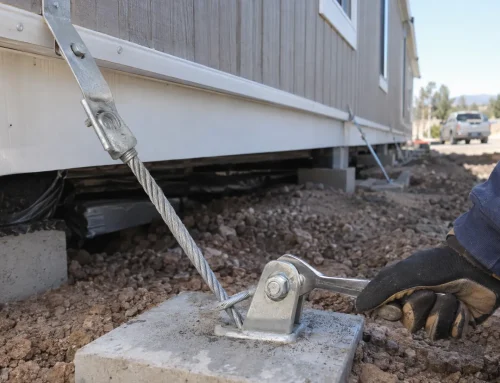
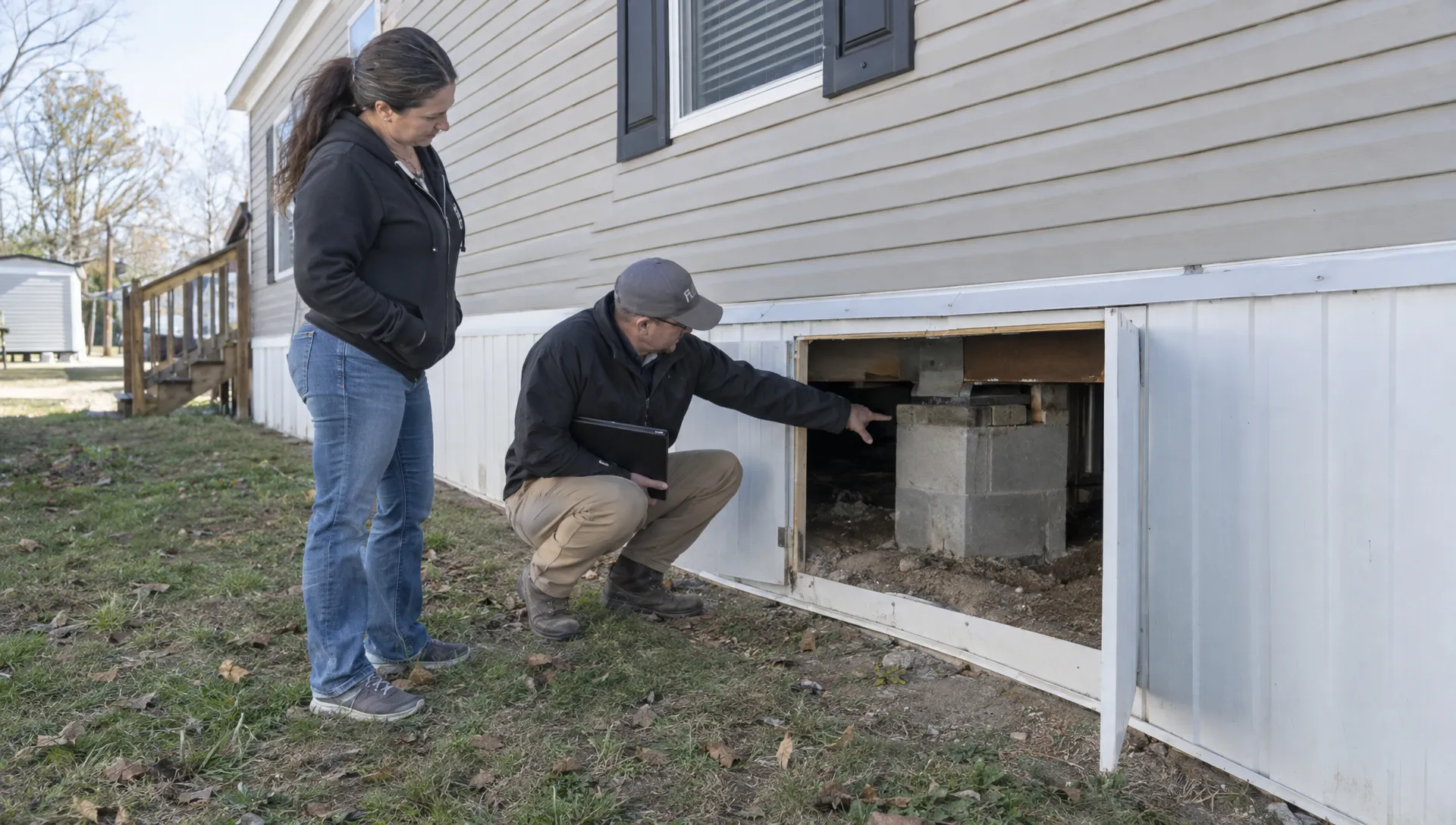
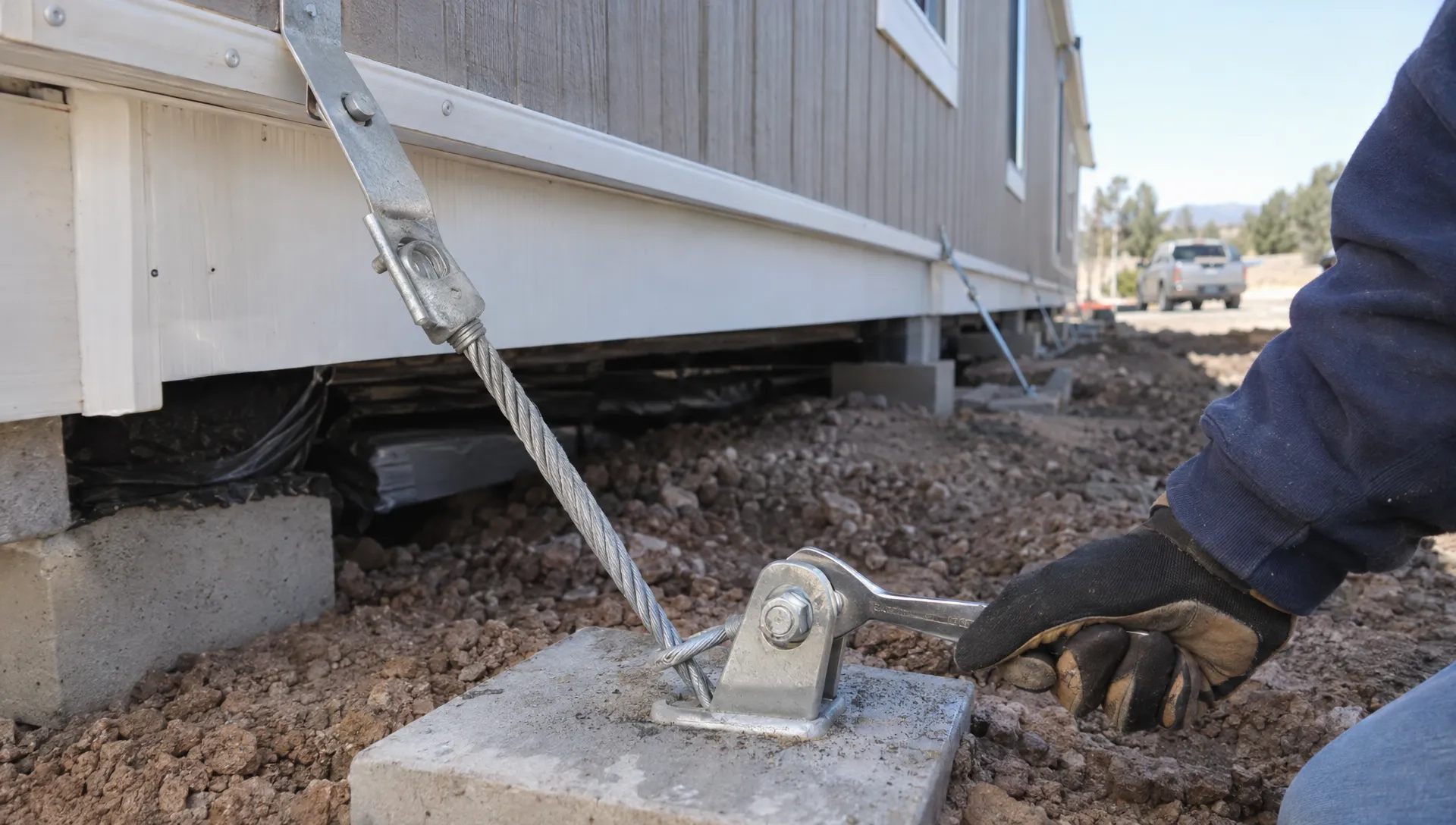
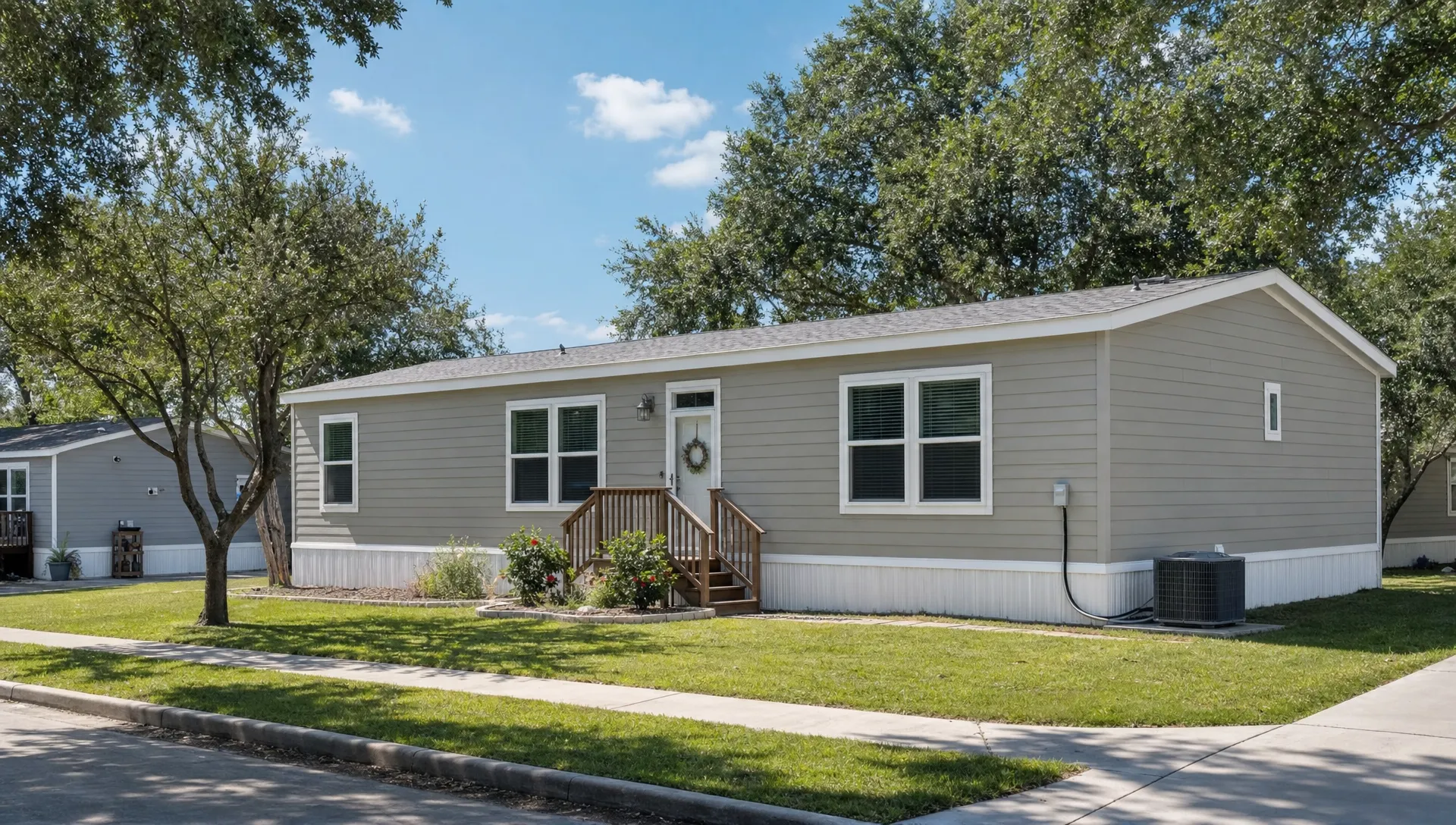
A manufactured home’s efficiency does not stop at the factory. Installation and site preparation can have a major effect on heating and cooling costs. Even a well-built home can underperform if it is not properly leveled, sealed, skirted, ventilated, and connected.
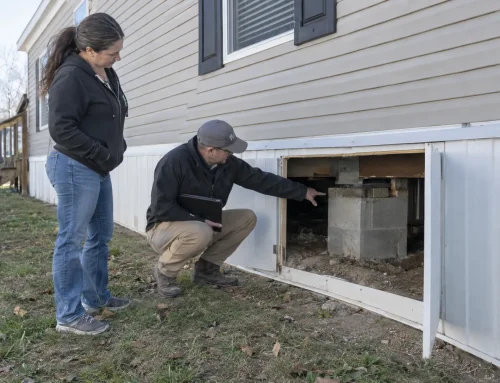
Skirting is a good example. Quality skirting helps protect the underside of the home from wind, animals, debris, and temperature swings. It can also support better comfort by reducing air movement under the floor. However, skirting still needs proper ventilation and access for maintenance, so it should be installed correctly rather than treated as a purely cosmetic feature.
Home orientation also matters. If the site allows flexibility, positioning the home to reduce harsh afternoon sun can improve comfort. Shade trees, covered porches, awnings, and exterior shading can also help, especially on west-facing windows.
Buyers should also think about drainage. Water problems under or around the home can damage insulation, weaken materials, and create long-term performance issues. A dry, stable, well-prepared site supports both comfort and durability.
Energy-efficient features can reduce total monthly cost
When shopping for a manufactured home, it is easy to focus on the sales price first. Price matters, but total monthly cost matters more. A slightly cheaper home that costs more to cool every month may not be the better deal over time.
A more useful comparison includes the home payment, insurance, land or community costs, maintenance expectations, and estimated utilities. Energy-efficient features can help reduce the utility portion of that equation, which is especially valuable for first-time buyers trying to keep monthly expenses manageable.
This is why affordability and efficiency should be viewed together. If you are comparing options, Homes2Go’s overview of affordable manufactured homes can help you think beyond the sticker price and focus on practical long-term value.
ENERGY STAR and efficiency packages can be worth comparing
Some buyers want a clear benchmark when comparing homes. ENERGY STAR programs and efficiency-focused packages can help, as long as you understand what is included. The value is not in the label alone, but in the features behind it: insulation, air sealing, windows, HVAC efficiency, duct performance, and verified construction standards.
If you are interested in certification language or want to understand what ENERGY STAR can mean in a factory-built home context, this Homes2Go article on ENERGY STAR modular homes and lower bills is a useful next step.
Even when a specific model is not ENERGY STAR certified, you can still ask smart questions about the same performance categories. The goal is to understand how the home is built, how it will be installed, and how it will perform in South Texas weather.
Everyday habits still affect heating and cooling costs
A manufactured home can be built for efficiency, but occupant habits still matter. The best insulation and HVAC system cannot fully offset open windows during peak heat, clogged filters, blocked vents, or thermostat settings that force the system to run nonstop.
Simple habits can help protect the savings your home is designed to deliver. Change HVAC filters on schedule, keep supply and return vents clear, use ceiling fans to improve comfort, close blinds during intense afternoon sun, and schedule maintenance before the hottest part of the year.
Smart or programmable thermostats can also help when used consistently. The goal is not to sacrifice comfort, but to avoid cooling an empty home more than necessary.
Questions to ask before choosing a manufactured home
The best time to think about heating and cooling costs is before you choose a home, not after the first high utility bill arrives. When comparing models, ask questions that reveal how the home will actually perform.
- What insulation levels are included in the roof, walls, and floor?
- Are low-E windows included in the standard package?
- What HVAC options are recommended for this floor plan?
- How is ductwork sealed, insulated, and protected?
- Is an energy efficiency upgrade package available?
- How will skirting, ventilation, and site preparation be handled?
- Can I review the floor plan and understand airflow before choosing a model?
These questions are especially useful for first-time buyers. They shift the conversation from appearance alone to comfort, monthly cost, and long-term livability.
Common mistakes that increase utility bills
Manufactured homes can reduce heating and cooling costs, but only if buyers avoid choices that work against efficiency. The most common mistake is choosing the lowest upfront price without asking what is included. A low-cost model may still be a good choice, but buyers should understand whether efficiency features are standard, optional, or missing.
Another mistake is ignoring installation quality. Poor site prep, gaps in skirting, damaged insulation, and duct problems can all reduce performance. A home that looks move-in ready should also be set up to perform well once the HVAC system is running every day.
Finally, do not overlook maintenance access. If filters, ducts, skirting panels, or HVAC equipment are hard to access, routine upkeep is less likely to happen. Easy maintenance supports lower costs over the long term.
Frequently Asked Questions
Do manufactured homes really reduce heating and cooling costs? They can, especially when they include good insulation, air sealing, efficient windows, properly sized HVAC equipment, and quality installation. Savings depend on the specific home, site, climate, and household habits.
Are manufactured homes harder to cool in Texas heat? Not necessarily. Modern manufactured homes designed for hot climates can be comfortable and efficient. The most important features are roof and ceiling insulation, low-E windows, air sealing, duct performance, and correct HVAC sizing.
Is a bigger air conditioner better for a manufactured home? No. An oversized system can short-cycle, waste energy, and remove humidity poorly. The HVAC system should be sized for the home’s floor plan, insulation, windows, and local climate.
What feature matters most for lowering cooling bills? There is no single feature that does all the work. In San Antonio, strong ceiling or roof insulation, air sealing, efficient windows, and a properly sized HVAC system usually work together to reduce cooling demand.
Can site setup affect my utility bills? Yes. Skirting, leveling, drainage, duct protection, and sealing after installation can all affect energy performance. A well-installed home is more likely to deliver the efficiency built into the model.
Find a manufactured home built for comfort and value
Reducing heating and cooling costs starts with choosing the right home, asking the right questions, and working with people who understand San Antonio’s climate. Homes2Go San Antonio helps buyers compare manufactured home models, review floor plans, explore flexible financing options, and find homes that fit both comfort needs and budget goals.
If you are ready to look for a manufactured home that can stay comfortable through Texas heat while supporting lower monthly costs, visit Homes2Go San Antonio and start exploring your options today.
 Benefits of Owning a Mobile Home in San Antonio
 Manufactured Homes vs Traditional Cost in 2026