
Buying a home should feel exciting, not confusing. If you are searching for double wide manufactured homes for sale in or around San Antonio, the smartest move is to compare more than the floor plan. The right home also depends on your land or community choice, financing path, setup needs, utility connections, warranty coverage, and long-term comfort.
Double wide manufactured homes are popular because they offer more living space than many single section homes while still keeping homeownership within reach for many buyers. This guide walks through what to review before you buy, what questions to ask, and how to move from browsing models to choosing a home with confidence.
What counts as a double wide manufactured home?
A manufactured home is built in a factory to the federal HUD Code, then transported to the home site for installation. The U.S. Department of Housing and Urban Development explains that manufactured homes built after June 15, 1976 must meet federal construction and safety standards under the HUD Manufactured Home Construction and Safety Standards.
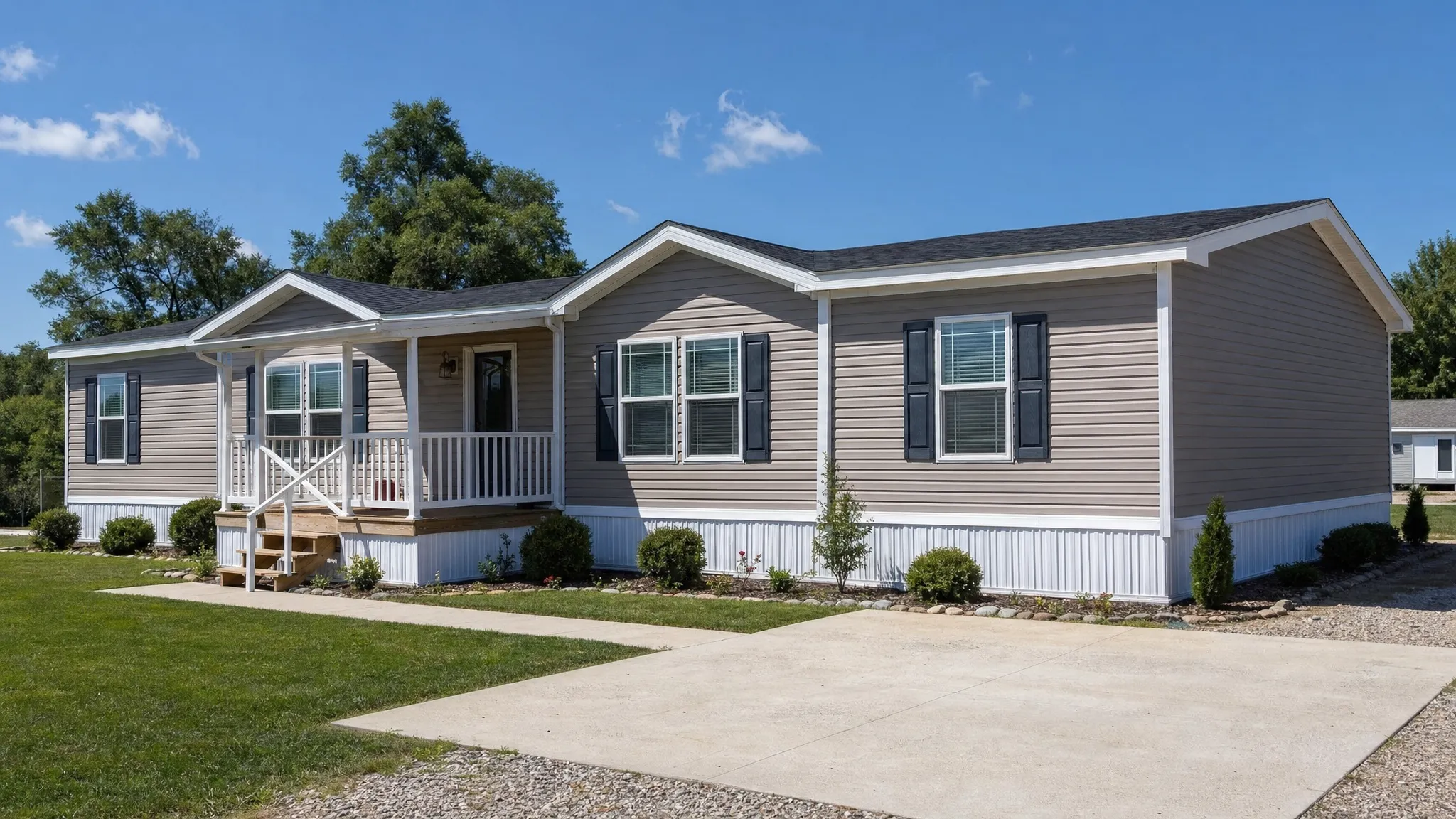
A double wide manufactured home is typically built in two sections that are transported separately and joined together on-site. Because the home is wider than a single section home, buyers often get a more traditional residential layout, with larger living areas, more separation between bedrooms, and more room for features like kitchen islands, utility rooms, walk-in closets, and spacious primary suites.
People may casually call these homes double wide mobile homes, but the modern term is manufactured home when the home is built to HUD Code. That distinction matters because lenders, insurers, inspectors, and local officials may use specific terminology during the buying process.
Why buyers choose double wide manufactured homes
Double wide homes are often attractive to buyers who want the feel of a larger home without taking on the cost and timeline of a traditional site-built project. They can be especially practical for growing families, first-time buyers, retirees, and anyone who wants more square footage, but still wants a more manageable path to ownership.
Common advantages include larger shared spaces, flexible bedroom layouts, modern interior finishes, and the ability to place the home in a manufactured home community or on suitable private land. If you are still comparing options, Homes2Go has a helpful breakdown of why more buyers choose double wide homes that explains the appeal in more detail.
The key is to match the home to your real lifestyle. A beautiful kitchen matters, but so do storage, parking, utility access, school zones, commute times, and the cost of preparing the site.
Decide first: community living or private land
Before you fall in love with a model, decide where the home will go. This choice affects financing, setup costs, timelines, monthly expenses, and what rules you must follow.
| Buying path | Best fit | What to verify before buying |
|---|---|---|
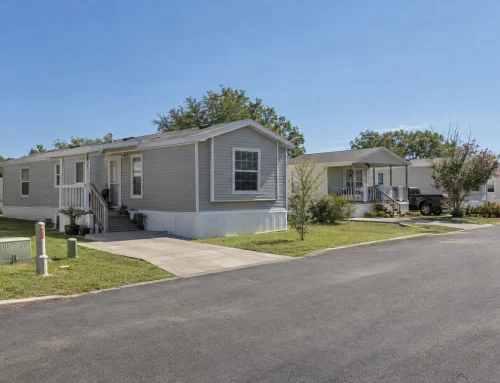
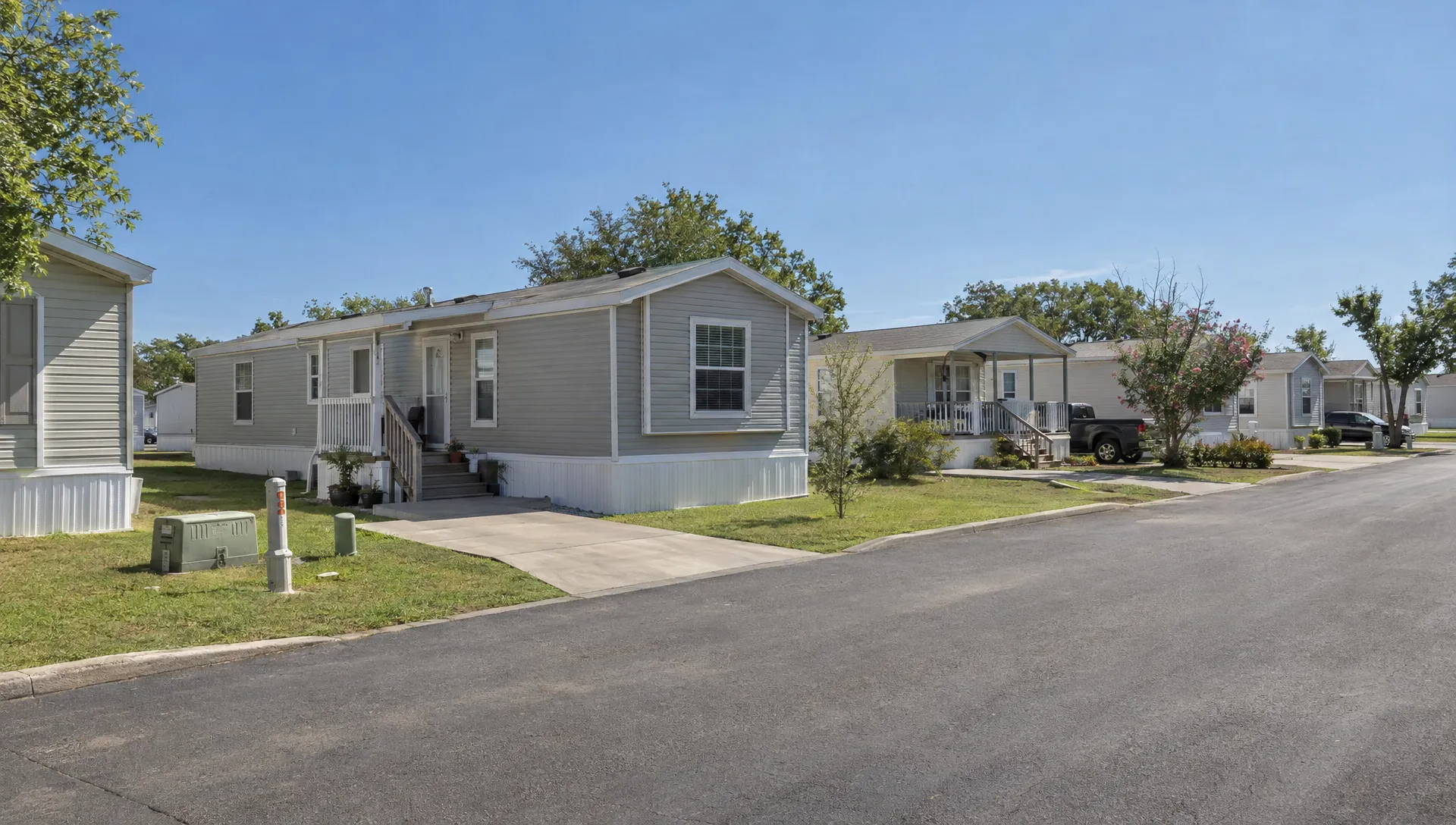
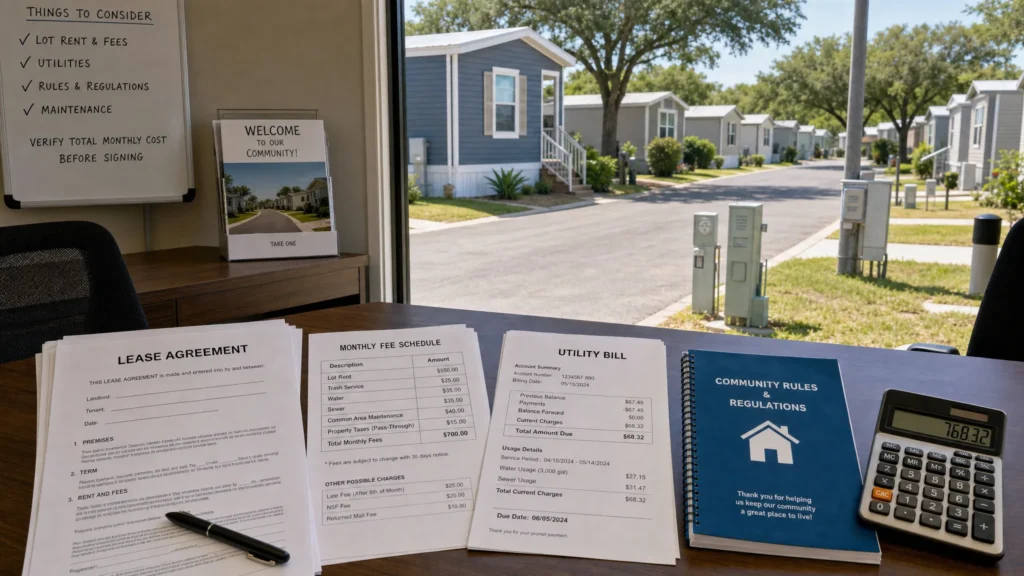
| Manufactured home community | Buyers who want an established neighborhood setting and may not own land | Lot rent, community rules, utility billing, pet policies, parking, home size requirements, and approval process |
| Private land | Buyers who own land or want more control over the property | Zoning, deed restrictions, permits, utility access, driveway access, soil or foundation needs, and delivery clearance |
| Home and land package | Buyers who want one coordinated purchase path when available | Financing structure, land title, site prep responsibilities, taxes, insurance, and closing timeline |
In San Antonio and surrounding areas, location can shape your total cost as much as the home itself. A home placed on private land may require utility connections, septic or sewer evaluation, grading, driveway work, permits, and a foundation plan. A home in a community may reduce some site preparation concerns, but you still need to understand monthly lot costs and community rules.
How to compare floor plans without getting distracted
It is easy to focus on finishes first. Cabinets, flooring, lighting, and countertops are important, but the layout determines how the home will live every day.
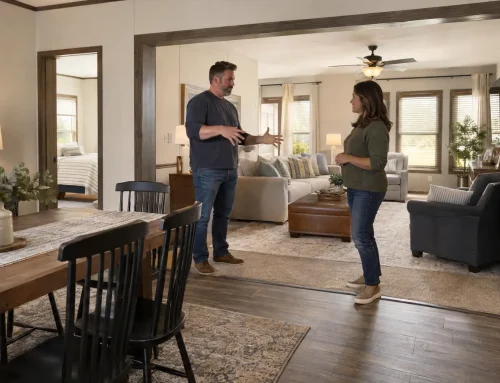
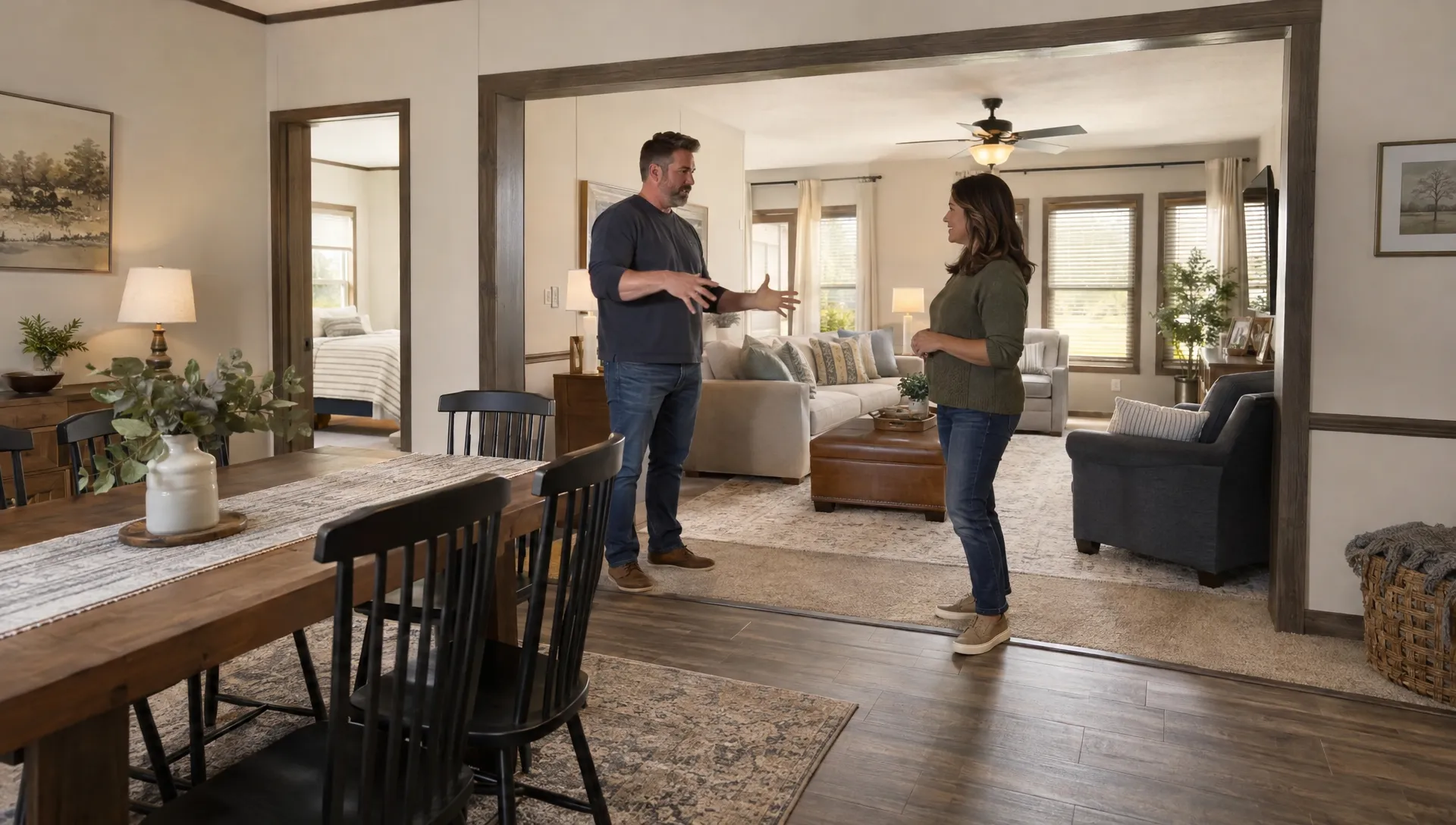
Start with how your household actually uses space. A split-bedroom floor plan may be ideal if you want privacy between the primary suite and secondary bedrooms. An open kitchen and living room can work well for entertaining, but some buyers prefer a defined dining area or a quieter living space. If you work from home, a third bedroom, den, or flex area may be more valuable than a larger living room.
Pay attention to storage, too. Closets, pantry space, laundry room layout, linen storage, and room for seasonal items can make a major difference after move-in. A double wide home often gives you more room to solve these everyday problems, but not every floor plan uses space the same way.
When comparing models, ask what is standard and what is optional. A display home may include upgrades that affect the final price. Review the written specifications, not just the model you toured. If you want to study a real example, the Legacy Heritage H-3264-32A floor plan shows a 1,865-square-foot, 3-bedroom, 2-bath double wide layout that can help you visualize the scale and room arrangement.
Understand the full budget, not just the advertised price
The sales price of the home is only one part of the total purchase. Your final cost can depend on the model, selected options, delivery distance, installation needs, foundation requirements, utility connections, permits, land preparation, taxes, insurance, and financing terms.
Ask for a clear written estimate that separates the home price from other project costs. This helps you compare homes more accurately and avoid surprises later.
| Cost category | What to ask | Why it matters |
|---|---|---|
| Home price | What model, size, features, and options are included? | Display homes may show upgrades that change the final price |
| Delivery and setup | Is transportation, joining the sections, leveling, and anchoring included? | Setup requirements can vary by location and home type |
| Foundation or support system | What foundation is required for this site and financing type? | Some loans and local requirements may require specific foundation standards |
| Utilities | Who handles water, sewer or septic, electric, and other connections? | Utility work can affect both cost and move-in timing |
| Exterior items | Are steps, decks, skirting, driveway work, or porches included? | These items may be necessary for access, safety, and final approval |
| Land or lot costs | Will you pay for land, lot rent, taxes, or community fees? | Monthly affordability depends on more than the home payment |
A strong budget should include both move-in costs and monthly costs. Monthly affordability may include loan payment, lot rent if applicable, utilities, insurance, property taxes, and maintenance.
Know your financing options early
Financing for double wide manufactured homes can vary depending on whether the home is titled as personal property or real property, whether land is included, and whether the home will be installed on a permanent foundation. Your credit profile, income, debt, down payment, home model, and site details can also affect approval.
Some buyers finance the home only. Others finance both the home and land. FHA, VA, conventional, chattel, and other loan options may be available depending on the buyer and the property. The Consumer Financial Protection Bureau notes that manufactured home buyers may encounter different loan types, including mortgage loans and personal property loans, depending on how the home and land are structured.
If you are considering FHA financing, review the requirements before you choose a home or site. Homes2Go explains the key FHA approval steps for double wide homes, including why HUD labels, foundation standards, and property status can matter.
The most important step is to speak with qualified lenders early. A lender can help you understand what you may qualify for, what documents you need, and whether your preferred home and location fit the loan program.
Inspect the home, paperwork, and setup plan
A double wide manufactured home is a major purchase, so do not rely on appearances alone. Review the home, the site, and the documents before making a final decision.
Important items to verify include:
- The exact model name, size, bedroom count, bathroom count, and included features.
- Whether displayed finishes are standard or optional upgrades.
- Delivery, installation, and setup responsibilities.
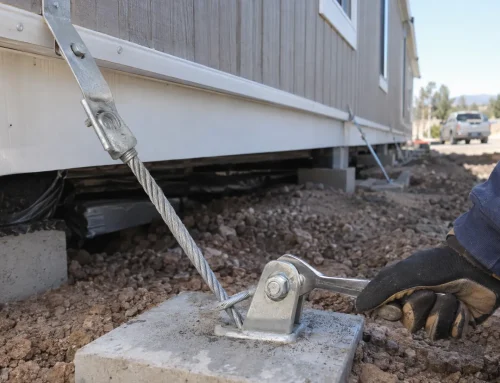
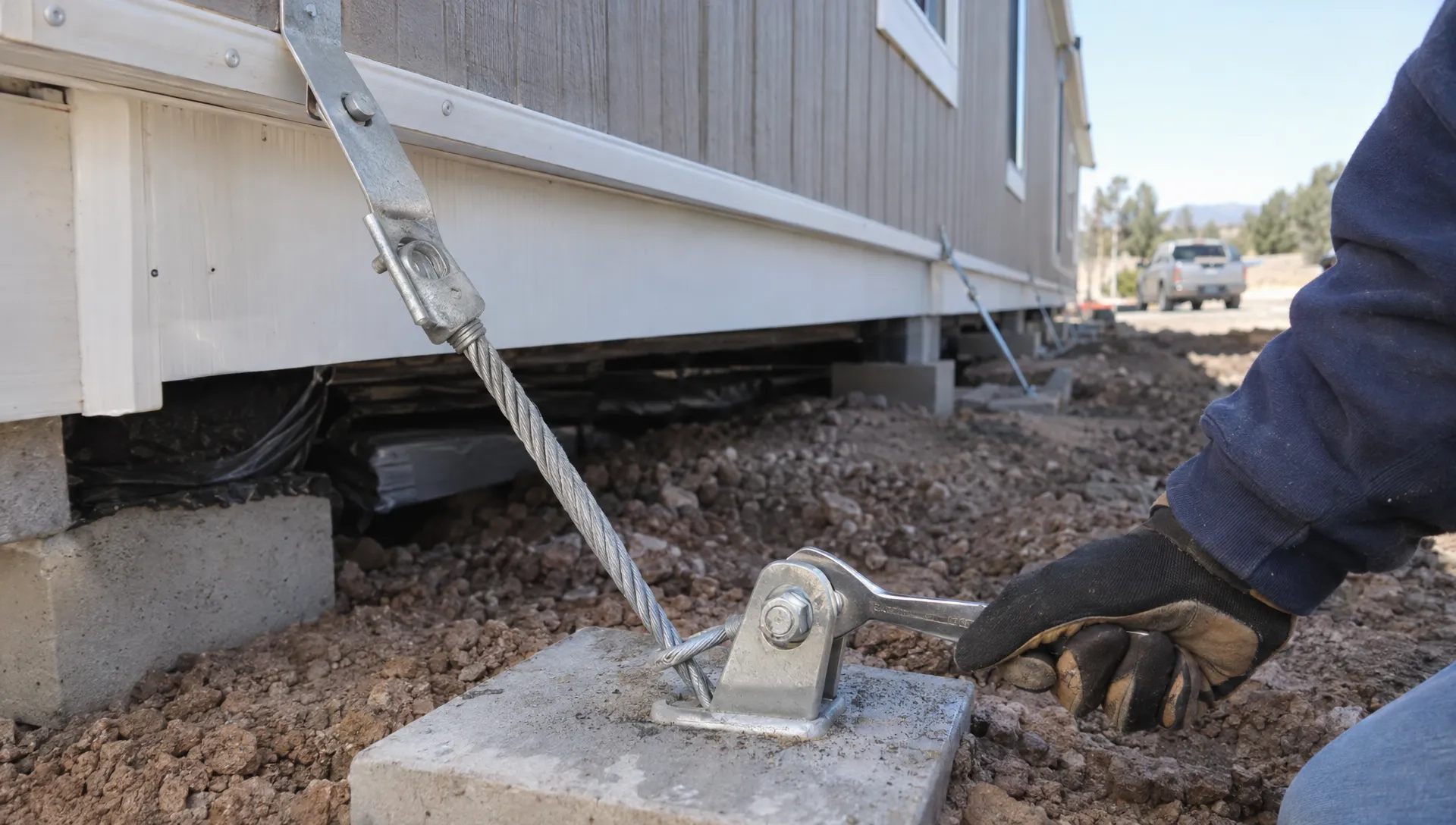
- Foundation, anchoring, skirting, steps, and utility connection requirements.
- Manufacturer warranty details and any retailer or installer responsibilities.
- HUD labels, data plate, serial numbers, and title documents when applicable.
- Community approval, zoning approval, permits, and site access before delivery.
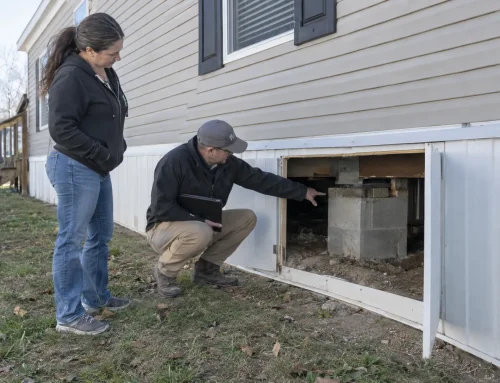
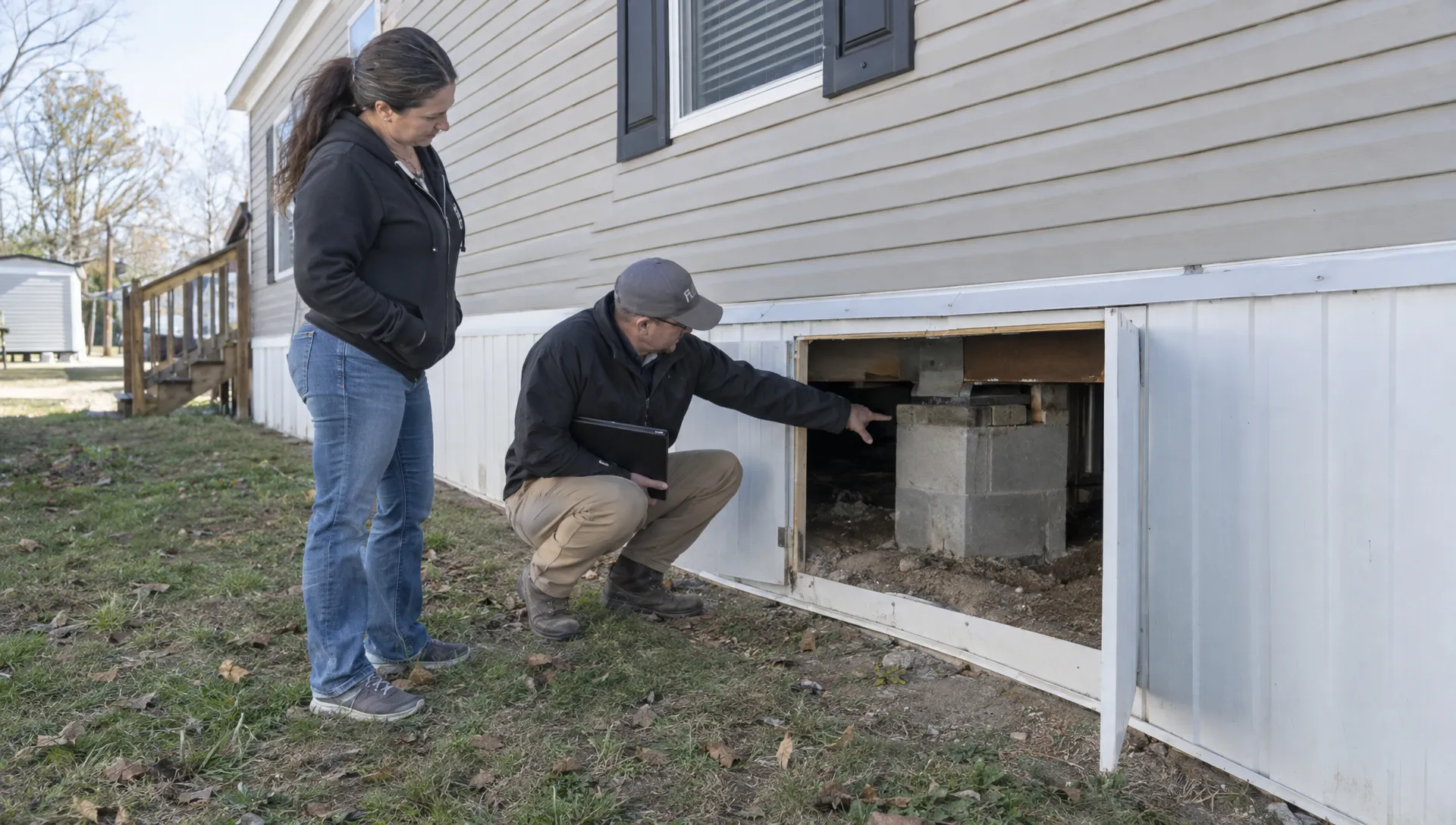
If you are buying a pre-owned double wide, be even more careful. Inspect the roof, subfloor, plumbing, electrical system, HVAC, windows, exterior siding, and signs of water damage. Also confirm whether the home can remain where it is, whether it can be moved, and whether there are liens, unpaid taxes, or title issues.
New vs. pre-owned double wide homes
Both new and pre-owned homes can be good choices, but they come with different tradeoffs.
| Option | Potential advantages | Items to review carefully |
|---|---|---|
| New double wide home | Modern layouts, current design options, manufacturer warranty, energy-efficient designs, and customization possibilities | Total project cost, upgrade pricing, delivery timeline, setup requirements, and financing fit |
| Pre-owned double wide home | Lower initial purchase price in some cases and possible established location | Condition, title, age, HUD labels, repair needs, moving restrictions, insurance, and financing eligibility |
A new home may be a better fit if you want modern interiors, energy-efficient design options, and fewer unknowns. A pre-owned home may be attractive if the price and location are right, but the inspection and paperwork become especially important.
San Antonio considerations for double wide buyers
San Antonio buyers should think about more than floor plan and payment. South Texas weather, summer heat, commute routes, school access, and community location can all affect your long-term satisfaction.
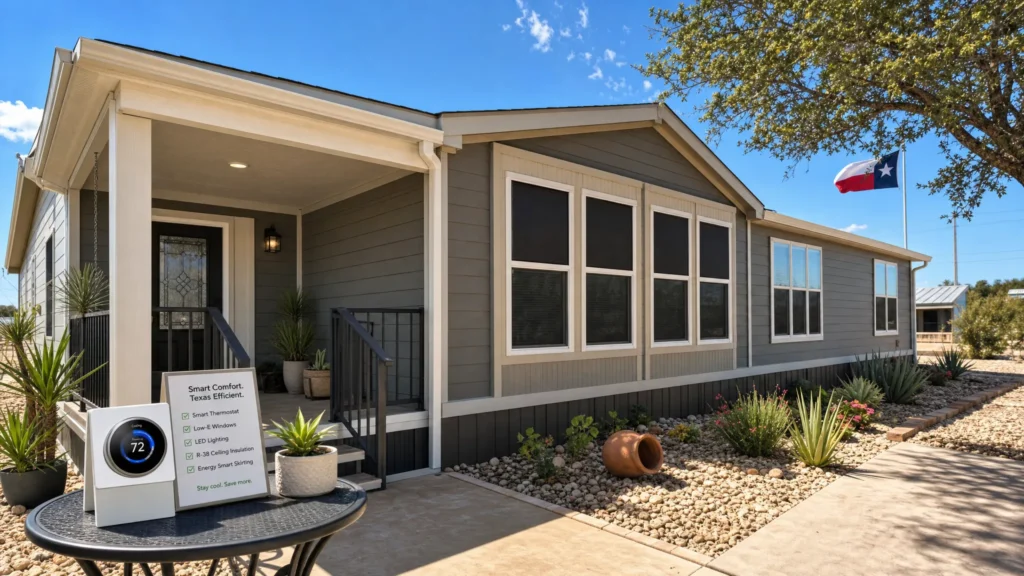
Energy efficiency matters in a warm climate. Ask about insulation, windows, HVAC sizing, ventilation, and available energy-conscious features. A comfortable home is not only about square footage, it is also about how the home performs in daily use.
Location also deserves careful thought. A lower price may not feel like a good deal if the commute is difficult, the site needs expensive utility work, or the community rules do not match your lifestyle. If you are placing the home on private land, confirm local requirements before you buy. If you are choosing a community, visit at different times of day and ask about resident expectations, parking, maintenance, and future costs.
Questions to ask before you commit
Before you sign a purchase agreement or place a deposit, slow down and ask direct questions. Clear answers now can prevent confusion later.
- What is included in the quoted price?
- What upgrades are shown in the model home?
- Who is responsible for delivery, setup, permits, and utility connections?
- What financing options may fit this home and location?
- What are the estimated monthly costs beyond the home payment?
- What warranties apply, and how are warranty claims handled?
- What must happen before the home can be delivered and occupied?
- Are there refund rules or contingencies if financing, land approval, or community approval does not work out?
A trustworthy buying process should feel transparent. You should understand the home, the timeline, the financing path, and the next steps before moving forward.
How Homes2Go San Antonio can help
Homes2Go San Antonio focuses on helping families and individuals find affordable, high-quality manufactured and mobile homes in the San Antonio area. Buyers can explore a wide selection of home models, review detailed floor plans, and get guidance through the process.
For many buyers, especially first-time buyers, the biggest benefit is having help connecting the pieces: choosing a model, understanding financing options, comparing communities or land needs, and working toward a move-in ready solution. Homes2Go also works with trusted local lenders and offers access to top home communities, which can make the buying journey easier to navigate.
If you are comparing double wide manufactured homes for sale, bring your budget, timeline, location preferences, and must-have features to the conversation. The more specific you are, the easier it is to narrow your options.
Frequently Asked Questions
Are double wide manufactured homes the same as mobile homes? Not exactly. Many people use the term mobile home casually, but homes built after June 15, 1976 to federal HUD Code are manufactured homes. A double wide manufactured home is usually built in two sections and joined together on-site.
Can I finance a double wide manufactured home? Yes, many buyers finance double wide homes, but the right loan type depends on the home, land, foundation, title status, and borrower qualifications. It is best to speak with a lender early so you know what options fit your situation.
Do I need land before buying a double wide? Not always. Some buyers place a home in a manufactured home community, while others use private land or purchase land as part of the overall plan. Each path has different costs, rules, and financing considerations.
What should I look for in a double wide floor plan? Focus on bedroom placement, storage, kitchen function, laundry space, living room size, privacy, and future needs. Finishes matter, but the layout determines how comfortable the home will feel every day.
How long does it take to move into a double wide manufactured home? Timelines vary based on model availability, financing, site preparation, permits, delivery, installation, inspections, and utility connections. Ask for a realistic timeline based on your specific home and location.
Ready to compare double wide homes in San Antonio?
A double wide manufactured home can be a practical path to more space, modern comfort, and affordable homeownership. The best purchase starts with the right questions, a clear budget, and guidance from people who understand the local market.
To explore available models, financing options, and next steps, connect with Homes2Go San Antonio and start comparing homes that fit your lifestyle, location, and budget.
 Mobile Homes With Cheap Lot Rent: What to Verify First
 How Energy Efficient Mobile Homes Cut Texas Bills