
A mobile rent to own deal can feel like the practical middle ground between renting and buying. You get into a home sooner, make monthly payments, and hope part of that money helps you become the owner later. But the real deal is not in the sales pitch. It is in the contract language.
Fine print decides whether your payments build purchase credit, whether you can lose that credit after one late payment, who pays for repairs, whether lot rent can rise, and whether the seller can actually transfer ownership when the time comes. For buyers in San Antonio, where manufactured homes can offer a more affordable path to homeownership, understanding those details can protect you from paying for months or years without gaining the ownership rights you expected.
This guide breaks down what the fine print in a mobile rent to own agreement usually means, which clauses deserve extra attention, and what to ask before you sign.
Why the fine print matters more than the monthly payment
Most shoppers start with one question: “How much is the monthly payment?” That matters, but it is only the beginning. Two mobile rent to own offers with the same monthly payment can lead to completely different outcomes.
One agreement may clearly state a purchase price, a fixed rent credit, a deadline to buy, and the process for transferring ownership. Another may call itself “rent to own” but provide no guaranteed purchase terms, no written credit toward the price, and no promise that the home will still be available to buy after the rental period.
The fine print matters because manufactured homes are often tied to more than one agreement. You may be dealing with the home itself, the land or lot where it sits, community rules, financing terms, taxes, insurance, deposits, and repairs. If any one of those documents conflicts with the others, the buyer usually feels the impact.
For a broader overview of common structures, Homes2Go SA also explains what to expect in rent-to-own manufactured home arrangements. This article focuses specifically on the contract language that can change the financial outcome.
The first question: lease option or lease purchase?
Many people use “rent to own” as a catch-all phrase, but contracts often fall into two different categories.
A lease option gives you the right, but usually not the obligation, to buy the home later. You rent now, and if you meet the contract requirements, you can choose to exercise the option by a certain date. If you do not buy, you may lose the option fee and any credits, depending on the contract.
A lease purchase is more binding. It may require you to buy the home at the end of the lease term or after certain conditions are met. If financing falls through or your situation changes, you may still face consequences because the agreement treats the purchase as an obligation, not just a possibility.
The words matter. If the contract says “option,” look for the exact process to exercise that option. If it says “purchase agreement,” “installment sale,” or “buyer agrees to purchase,” read it as a stronger commitment and consider having a qualified professional review it.
The clauses that deserve your closest attention
A mobile rent to own agreement should be specific enough that you can calculate what happens month by month. Vague promises such as “rent applies toward purchase” or “buyer may own after good payment history” are not enough.
Use this table as a plain-English guide when reviewing the fine print.
| Contract clause | What it really means | What to ask before signing |
|---|---|---|
| Purchase price | The amount you must pay to own the home | Is the price fixed today, or can it change later? |
| Option fee or upfront payment | Money paid for the right to buy, or toward the purchase | Is it refundable, credited, or lost if I do not buy? |
| Rent credit | The portion of monthly rent applied to the purchase price | How much is credited each month, and when can I lose it? |
| Lease term | How long you can rent before buying | What happens if I need more time? |
| Late payment rules | Consequences for paying after the due date | Does one late payment cancel my purchase credit or option? |
| Default clause | What counts as a violation | Can I cure the default, and how many days do I have? |
| Maintenance obligations | Who pays for repairs and upkeep | Am I responsible before I legally own the home? |
| Taxes and insurance | Who carries required coverage and pays assessments | Are these included in the payment or billed separately? |
| Lot rent | Payment for the land or community space | Is lot rent separate, and can it increase? |
| Ownership transfer | How legal ownership changes hands | When will the seller provide ownership documents? |
| Community approval | Whether a park or community must approve you | Can the purchase fail if the community says no? |
| Financing contingency | What happens if you cannot qualify for a loan later | Do I lose money if financing is denied? |
If the seller cannot answer these questions in writing, treat that as a warning sign. A solid agreement should not depend on memory, assumptions, or verbal promises.
Rent credit is not the same as equity
One of the most misunderstood parts of mobile rent to own is the rent credit. A seller may say, “Part of your rent goes toward ownership,” but the contract must define exactly what that means.
For example, a monthly payment of $1,300 does not automatically mean $1,300 is reducing the purchase price. The agreement might allocate $1,050 to rent and $250 to purchase credit. It might also say the credit only applies if every payment is made on time, the buyer completes the purchase within the original term, and there are no lease violations.
That means a buyer could pay for two years and expect $6,000 in credit, only to discover the credit was forfeited because of a late payment or because the purchase deadline passed.
Look for the exact language. The contract should state the monthly credit amount, how it is tracked, whether you receive periodic statements, what happens if you pay early, and whether credits survive late payments or lease renewals.
A good test is simple: after reading the agreement, you should be able to write down the purchase price today, the total credit after 12 months, and the remaining balance if you buy on a specific date. If you cannot do that, the terms are too unclear.
Upfront fees can have very different meanings
Rent-to-own agreements often require money upfront. That payment might be called an option fee, deposit, down payment, move-in fee, administrative fee, or security deposit. These labels are not interchangeable.
A security deposit is usually tied to damage or unpaid rent. An option fee may be the price you pay for the right to buy later. A down payment may reduce the purchase balance, but only if the contract says so. A move-in fee may simply be a fee, with no refund or credit.
Before paying, ask for a written breakdown of every upfront cost. The contract should say whether each amount is refundable, whether it applies to the purchase price, and what happens if you move out, fail to qualify for financing, or decide not to buy.
This is especially important in private-owner deals where the language may be informal. Homes2Go SA covers related warning signs in its guide to rent-to-own trailer home contract traps, including vague purchase prices and credits that disappear under broad default clauses.
Ownership documents should not be an afterthought
A mobile rent to own deal only works if the seller has the legal right to transfer the home when you are ready to buy. In Texas, manufactured home ownership records are handled through the state’s manufactured housing process, not always through the same paperwork used for site-built real estate.
The Texas Department of Housing and Community Affairs Manufactured Housing Division provides information on manufactured home ownership, regulation, and related consumer resources. Before entering a rent-to-own arrangement, you should understand whose name is on the ownership record, whether there are liens, and what documents will be required to transfer ownership.
Ask the seller to identify the home by serial number, label number if available, make, model, year, size, and current ownership record. If the home is being sold with land, that is a separate issue and may involve a deed, title company, survey, taxes, and real estate closing documents.
Do not assume “owning the home” means you own the land beneath it. In many manufactured home communities, the buyer may own the home but continue paying lot rent for the space.
Lot rent can change the affordability equation
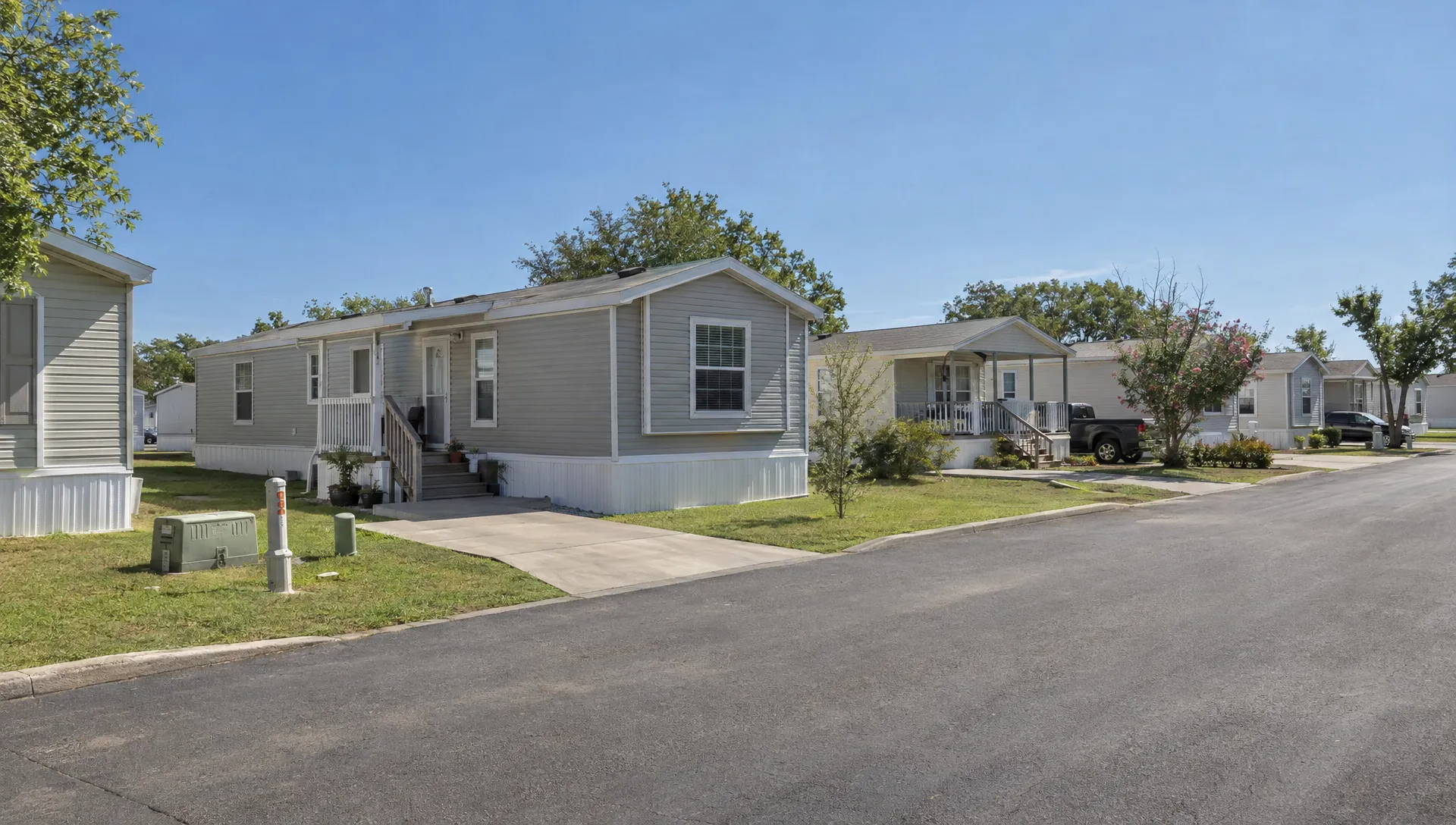
The land arrangement is often where buyers get surprised. A mobile rent to own contract may cover only the home, while a separate lease controls the lot. That separate lease may include community rules, rent increases, utility billing, pet policies, parking limits, guest rules, and eviction procedures.
If you are buying the home but leasing the lot, your total monthly cost is not just the home payment. It may include lot rent, utilities, trash, water, sewer, insurance, taxes, and community fees. A payment that looks affordable at first can become difficult if lot rent increases or if utilities are billed separately.
Community approval also matters. Some manufactured home communities require residents to apply and be approved before moving in or before ownership can transfer. If your rent-to-own contract does not explain what happens if approval is denied, you could be stuck between two agreements.
For buyers comparing communities, it is worth reviewing the key mobile park lease terms that can affect your monthly cost before committing to any rent-to-own plan.
Default clauses can erase months of progress
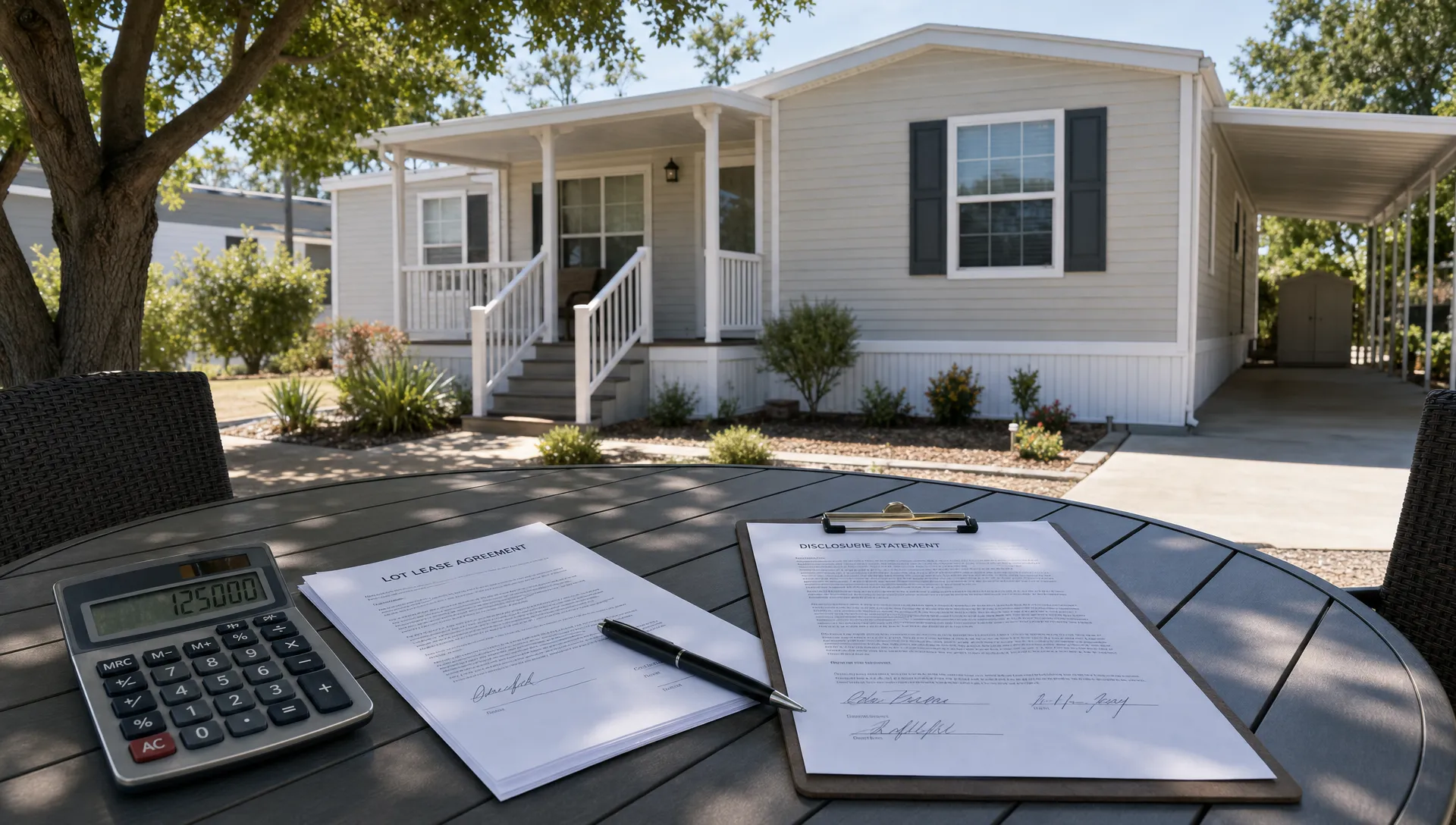
The default clause explains what happens if you break the agreement. In a mobile rent to own contract, default can include more than missing rent. It may include late payments, unpaid fees, unauthorized occupants, failure to maintain the home, community rule violations, lack of insurance, or not completing the purchase by a deadline.
This is where small wording choices can have big consequences. Some contracts say that if the buyer defaults, all rent credits, option fees, and purchase rights are forfeited. Others provide a cure period, meaning you have a limited number of days to fix the issue before losing rights.
Look for the cure period, the notice requirement, and the exact consequences. A fairer contract is usually clear about how you will be notified, how long you have to fix the problem, and whether all credits are lost or only certain rights are affected.
If the contract says “time is of the essence,” take deadlines seriously. That phrase often means dates are strict, and missing one can affect your right to buy.
Maintenance language can shift costs before you own
Another common surprise is repair responsibility. In a standard rental, the landlord usually carries many major repair obligations, although tenants may still be responsible for damage they cause. In some rent-to-own contracts, the buyer is treated more like a future owner and may be expected to handle repairs earlier.
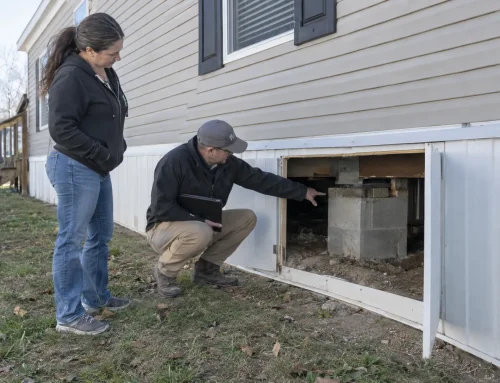
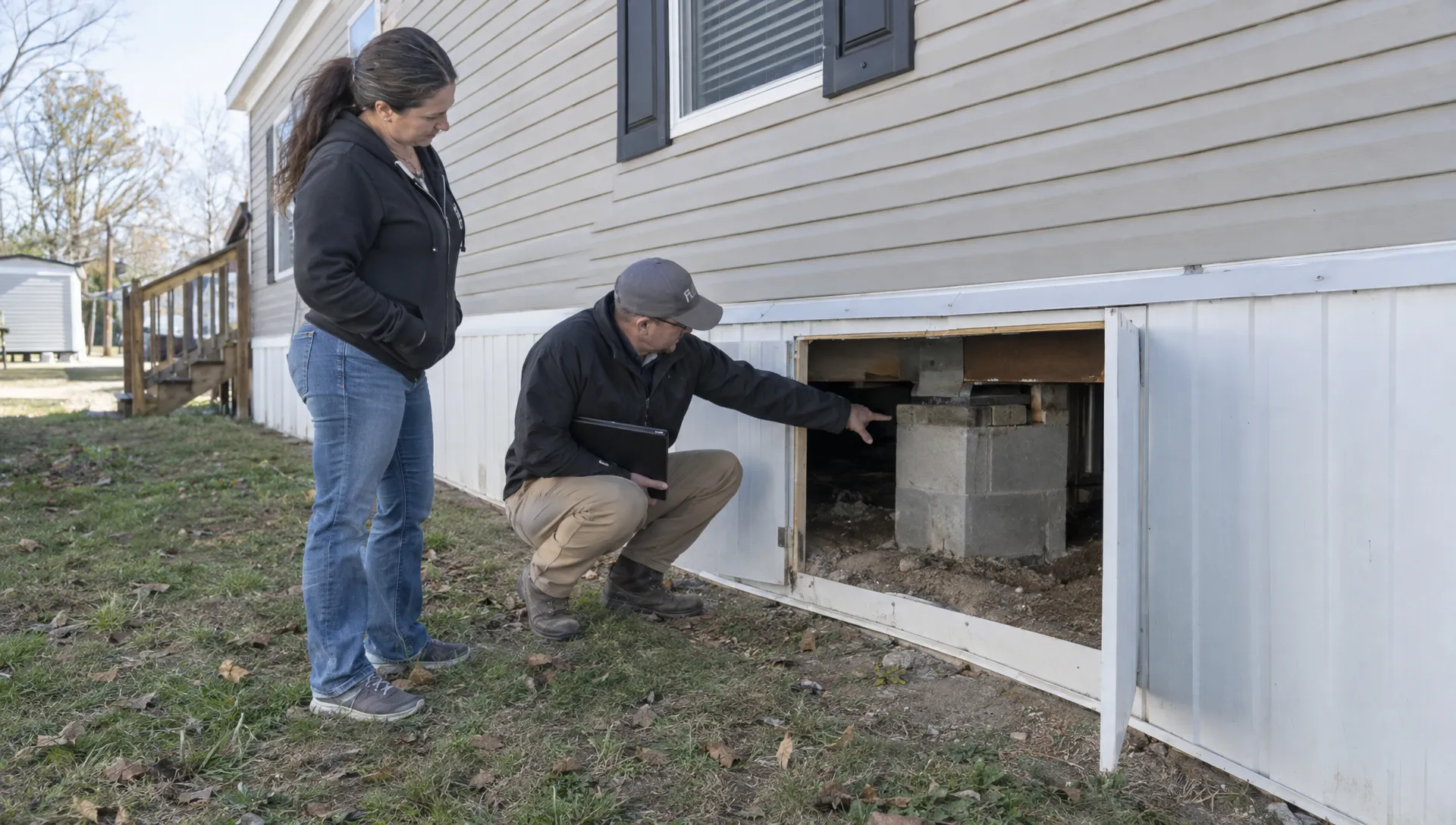
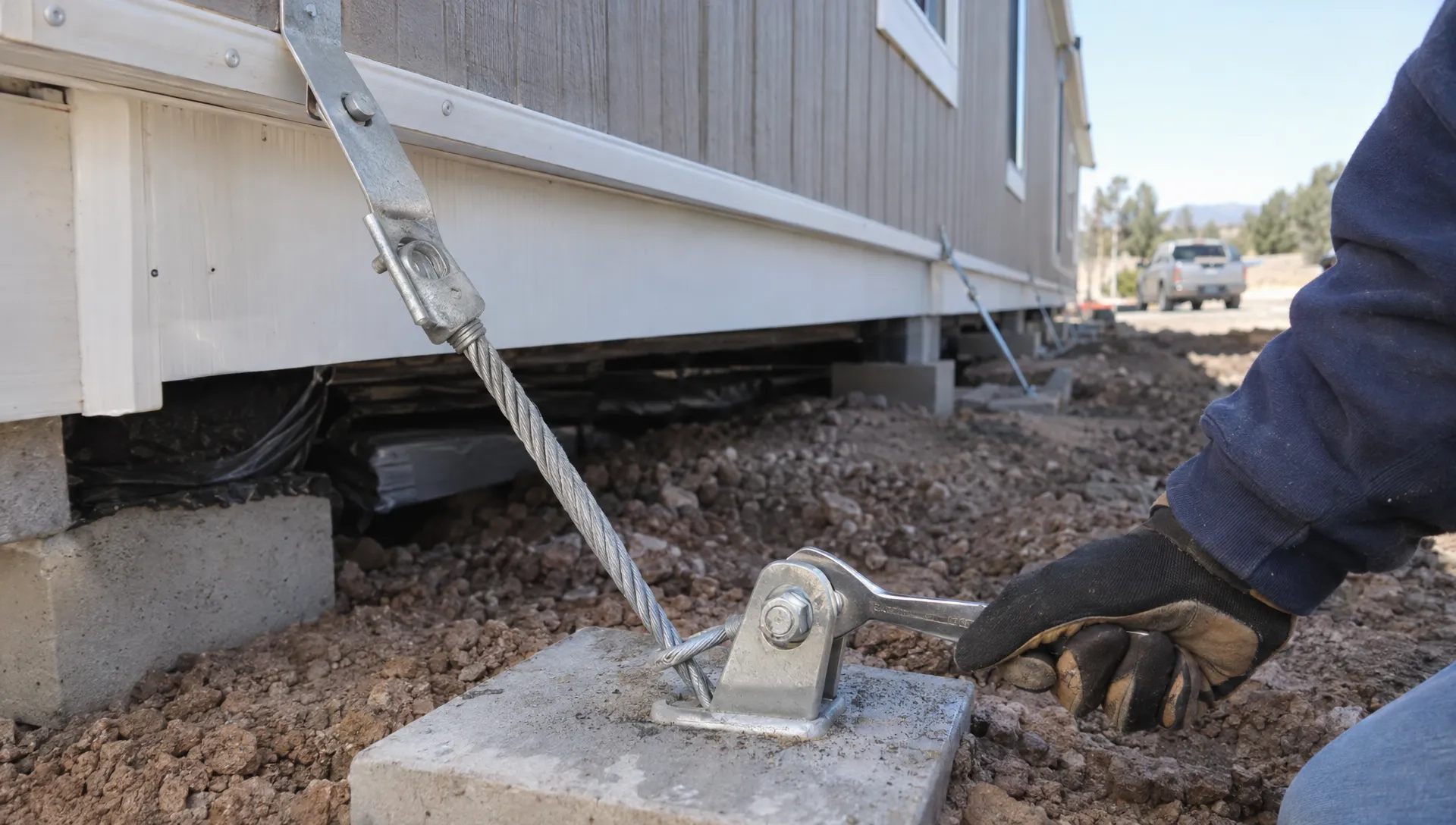
The agreement should clearly state who is responsible for the roof, HVAC system, plumbing, electrical systems, appliances, skirting, steps, decks, pest control, and code or community compliance. If the home is used, ask whether there has been a recent inspection and whether known defects are listed in writing.
Be cautious if you are asked to pay for major improvements before you have secure purchase rights. Spending thousands on repairs does not automatically give you ownership. Unless the contract says those improvements create a credit, reimbursement, or reduction in purchase price, you may simply be improving someone else’s property.
Purchase deadlines and financing terms need a backup plan
A mobile rent to own agreement may require you to buy by a certain date. That deadline can be realistic if you already know how you will complete the purchase, but risky if you are relying on future financing without a plan.
Ask whether the seller expects you to obtain a loan, pay cash, enter a separate installment agreement, or refinance the balance. If financing is required, find out what happens if you apply in good faith but are denied. A financing contingency can protect buyers, but only if it is written into the agreement.
Also check whether the purchase price includes taxes, closing costs, transfer fees, setup costs, or community charges. A contract may advertise one purchase price while leaving buyers responsible for other costs at closing.
If you are considering rent to own because you are still preparing financially, compare it against other manufactured home buying paths. Sometimes flexible financing options or a different home model may be more straightforward than a rent-to-own structure with uncertain credits.
Red flags in mobile rent to own fine print
Not every rent-to-own deal is bad, but some terms deserve extra caution. Slow down if you see any of the following:
- The purchase price is missing, adjustable without a clear formula, or “to be determined later.”
- The contract says rent credits apply, but does not state the exact monthly amount.
- One late payment cancels all purchase rights and all credits with no cure period.
- The seller will not provide proof of ownership or disclose liens.
- The lot lease is separate, but you are not allowed to review it before paying.
- You must make major repairs before owning the home, with no written credit.
- The seller relies on verbal promises that are not included in the signed agreement.
- You are pressured to sign immediately before inspecting the home or reviewing documents.
A trustworthy arrangement should become clearer as you ask questions. If it becomes more confusing, that is a sign to pause.
Questions to get answered in writing
Before signing, ask direct questions and keep the answers with your contract. Written answers help prevent misunderstandings later.
- What is the exact purchase price of the home?
- How much of each monthly payment applies to the purchase price?
- What upfront fees are refundable, credited, or nonrefundable?
- Who owns the home today, and are there any liens?
- What documents will transfer ownership when I buy?
- Is lot rent included or separate?
- Can lot rent or other fees increase during the lease term?
- What happens if I am late once?
- Who pays for major repairs before the purchase is complete?
- What happens if I cannot qualify for financing by the deadline?
If the agreement is significant, consider having a qualified attorney, housing counselor, or trusted financial professional review it. This article is educational and should not be treated as legal advice.
When mobile rent to own may make sense
Mobile rent to own can make sense when the terms are transparent, the home is in good condition, the seller can transfer ownership, and the buyer has a realistic plan to complete the purchase. It may also help buyers who need time to prepare for financing while living in the home they hope to own.
It may not make sense if the purchase price is unclear, the monthly credit is small or easy to lose, the lot lease is unstable, or the buyer is taking on major repair costs without protection. The goal is not just to move in. The goal is to move toward ownership on terms you can verify.
When comparing options in San Antonio, look at the full picture: the home payment, lot rent, utilities, insurance, taxes, repair risk, purchase timeline, and financing path. A lower move-in cost is not always the better deal if the contract makes ownership uncertain.
Frequently Asked Questions
What does mobile rent to own mean? Mobile rent to own usually means you rent a manufactured or mobile home with some right or obligation to buy it later. The exact meaning depends on the contract, especially whether it is a lease option, lease purchase, or another type of agreement.
Does all my rent go toward buying the mobile home? Usually, no. Many agreements apply only a specific portion of each payment toward the purchase price. The contract should state the exact rent credit amount and explain when that credit can be lost.
Can I lose my rent credits if I pay late? Yes, some contracts say late payments or other defaults cancel rent credits or purchase rights. Look for the default clause, cure period, and forfeiture language before signing.
Do I own the land in a mobile rent to own agreement? Not necessarily. Many agreements cover only the home, while the land or lot is rented separately. Always review the lot lease and confirm whether land is included in the purchase.
Should I sign if the seller promises to add terms later? It is safer to wait until all important terms are written into the agreement. Purchase price, credits, fees, deadlines, repair duties, and ownership transfer steps should be clear before you pay or move in.
Take the next step with clearer homebuying options
If mobile rent to own appeals to you because homeownership feels just out of reach, take time to compare it with other manufactured home options. The right path should be clear, affordable, and documented in writing.
Homes2Go San Antonio helps families and individuals explore manufactured homes, floor plans, communities, and financing options with local guidance. If you want to understand what fits your budget before committing to a complicated rent-to-own contract, start by exploring Homes2Go SA and speaking with a team that can help you compare your options with confidence.
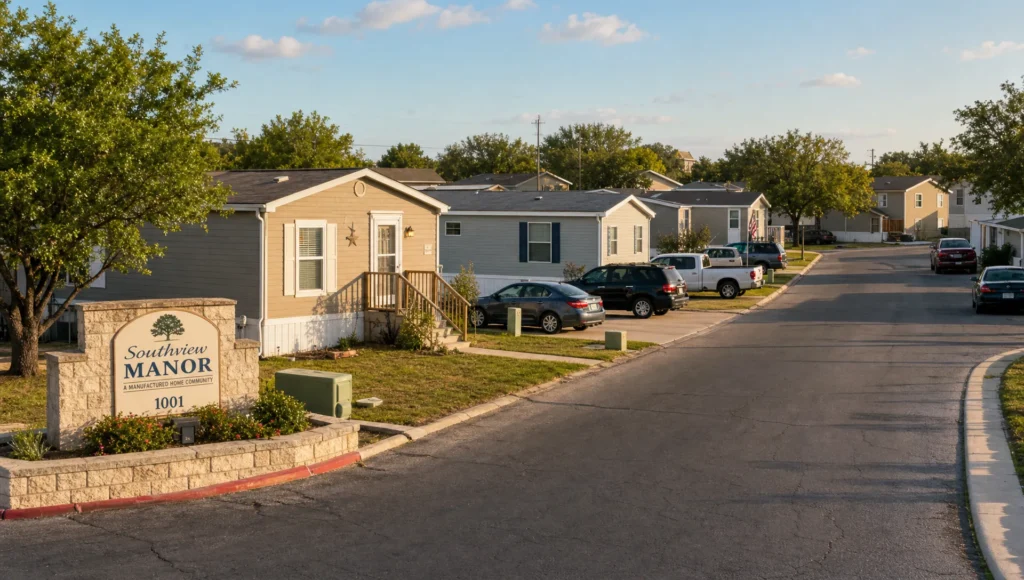 Low-Income Trailer Parks: Costs, Rules, and Red Flags
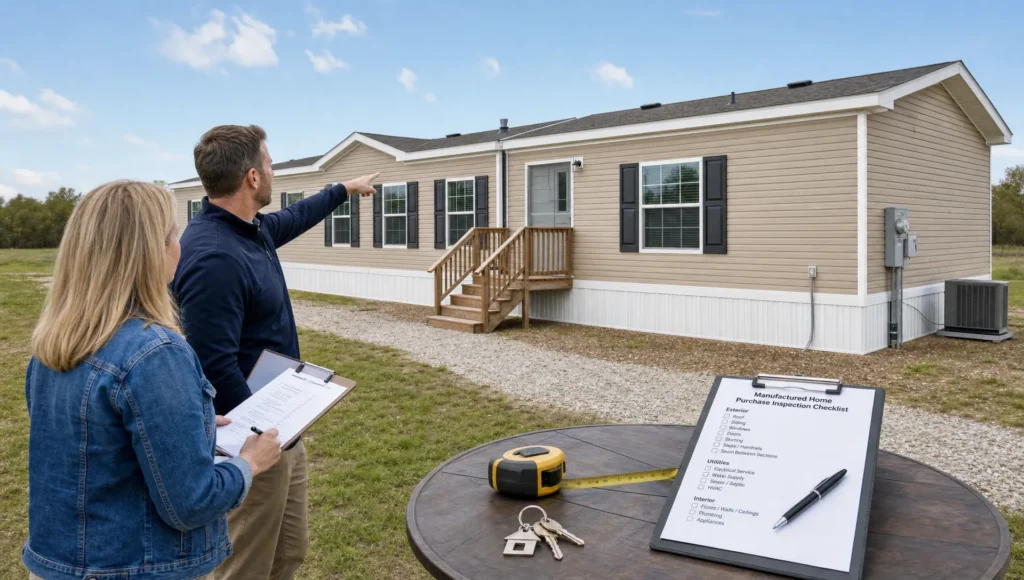 Rent-to-Own Double Wides: How to Avoid Bad Deals