
Rent-to-own double wides can sound like the perfect middle ground: you get the space of a larger manufactured home now, while building toward ownership over time. For families in and around San Antonio, that can be appealing when traditional financing feels out of reach or when you want to test a home community before buying.
But not every rent-to-own offer is a good path to ownership. Some agreements are structured clearly and fairly. Others use vague terms, high upfront fees, repair surprises, or forfeiture clauses that leave buyers with little to show after months of payments.
If you are searching for rent to own double wide mobile homes near me, slow down before you sign. The goal is not just to find a monthly payment you can handle. The goal is to understand the full deal, confirm the seller has the right to sell, inspect the home like a buyer, and make sure the contract truly gives you a realistic path to ownership.
For a broader overview of how these arrangements work, Homes2Go also has a helpful guide to mobile homes rent-to-own arrangements. This article focuses specifically on avoiding bad deals when the home is a double wide.
What rent-to-own double wides usually mean
There is no single standard version of rent-to-own. Two listings may use the same phrase but work very differently. Before paying an application fee, option fee, or move-in deposit, identify the exact structure being offered.
| Deal type | How it usually works | Main risk to review |
|---|---|---|
| Lease-option | You rent the home and have the option to buy later | You may lose the option fee if you do not buy |
| Lease-purchase | You rent now but agree to buy by a set date | You could be in default if financing falls through |
| Seller financing | The seller finances the purchase directly | Interest, title transfer, and default terms must be clear |
| Rent credit agreement | Part of your rent is credited toward the purchase | Credits may disappear if you miss a deadline or payment |
The safest deals spell out the purchase price, the payment schedule, the deadline to buy, how rent credits work, who pays repairs, and when ownership transfers. If the answer is only verbal, treat it as unfinished.
Why double wides need extra due diligence
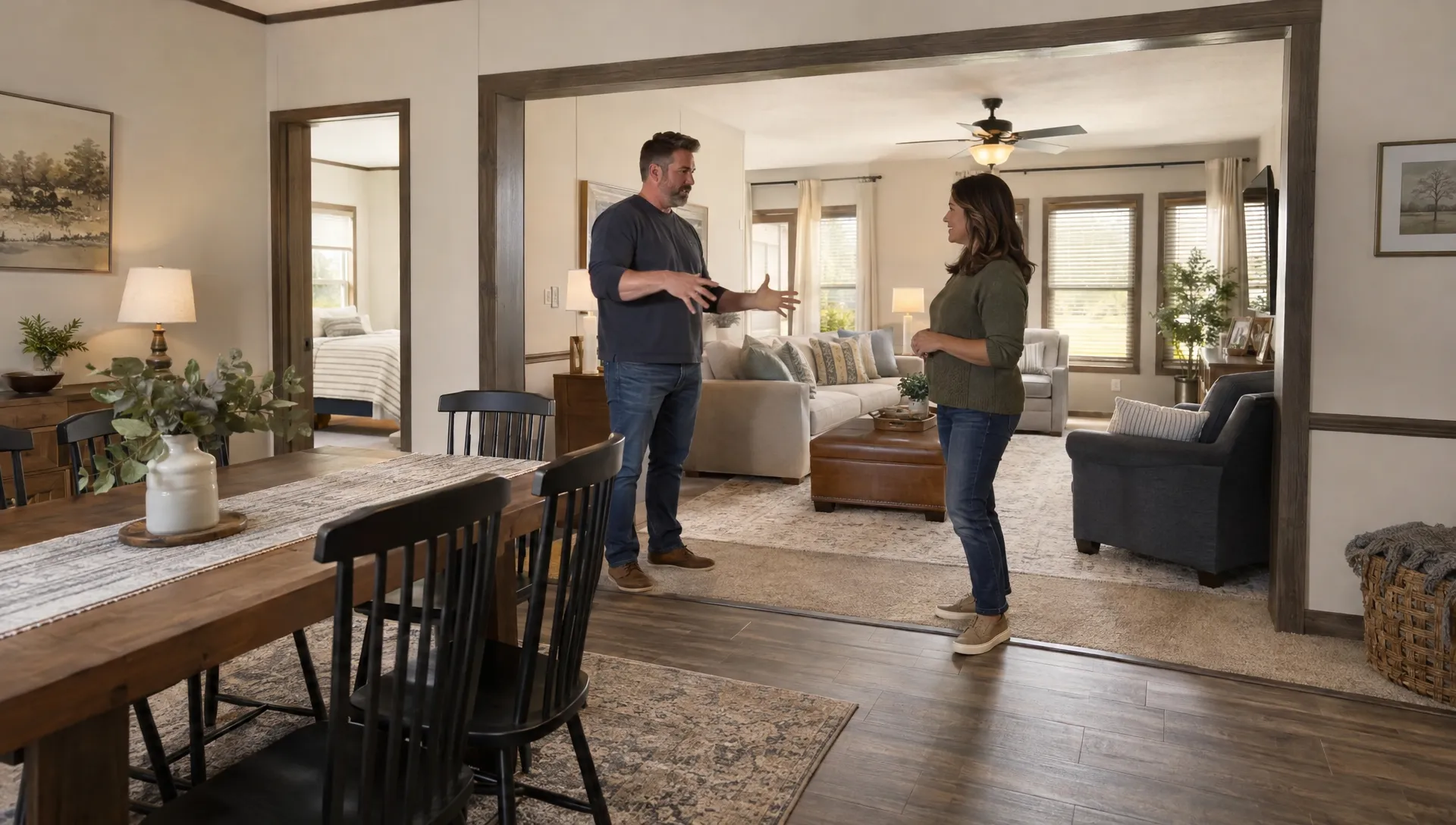
A double wide manufactured home is larger than a single wide and is delivered in two sections that are joined on site. That extra space is one reason families choose them, but it also means there is more to inspect, more to maintain, and often more to consider with land, utilities, and community rules.
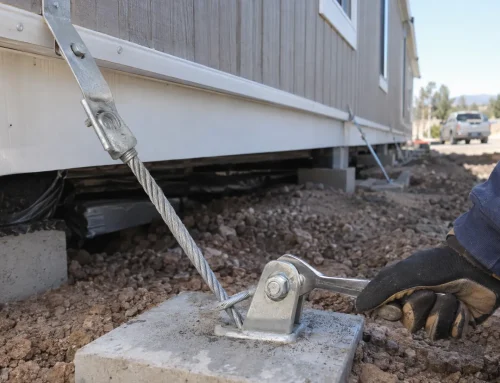
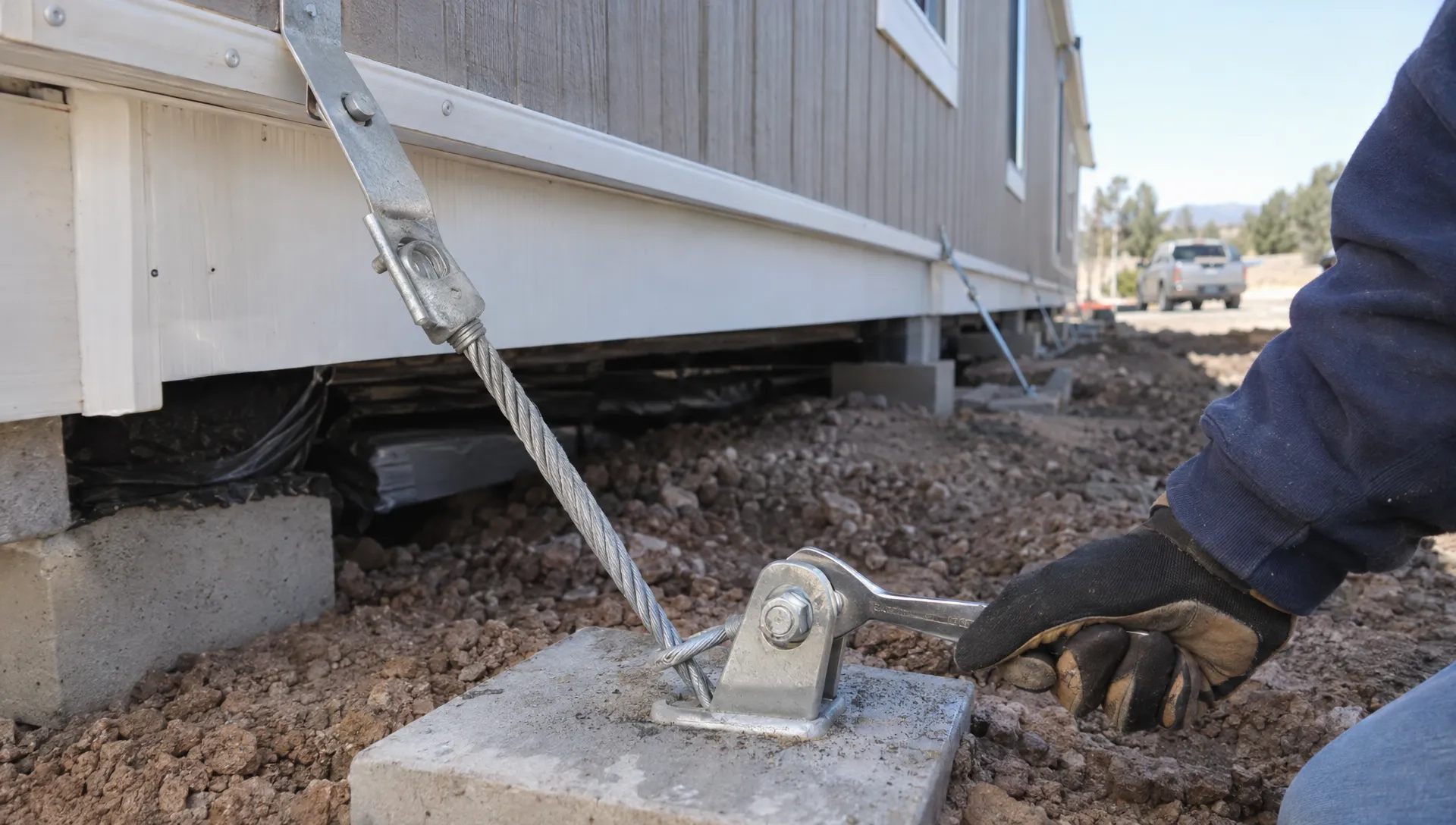
Manufactured homes built after June 15, 1976 are constructed under federal HUD standards. The HUD Manufactured Housing Program explains the national construction and safety framework for manufactured homes. When you look at a double wide, you are not only looking at flooring, cabinets, and curb appeal. You are also looking at installation quality, structural alignment, weather protection, and whether the home can remain where it sits.
This matters because a bad rent-to-own deal can hide behind a nice-looking interior. New paint and modern finishes do not fix unclear ownership, poor setup, roof leaks, damaged subfloors, or a contract that lets the seller keep your payments if one deadline is missed.
Start with the all-in monthly cost
The advertised payment is only one piece of the real cost. A double wide may involve separate charges for the home, the lot, utilities, insurance, taxes, maintenance, pets, community fees, and sometimes trash, water, or septic service.
Ask for a written estimate of the full monthly obligation before deciding whether the home is affordable. A low base rent can become a bad deal if required extras are not disclosed until move-in.
| Cost item | Why it matters | Question to ask |
|---|---|---|
| Base rent or home payment | This is the number most listings promote | Is this only for the home, or does it include the lot? |
| Lot rent or community fee | You may pay this even after buying the home | Can it increase during the agreement? |
| Rent credit | This affects how much builds toward purchase | Is it a fixed dollar amount or a percentage? |
| Option fee or down payment | This may be nonrefundable | Does it reduce the final purchase price? |
| Insurance and taxes | These can shift from seller to buyer | Who pays them before ownership transfers? |
| Repairs and maintenance | Large repairs can change the deal fast | Who pays for roof, HVAC, plumbing, and structural issues? |
A practical test is simple: if you cannot explain the total move-in cost, total monthly cost, and final purchase cost in plain language, the deal is not ready to sign.
Verify ownership before you hand over serious money
In Texas, manufactured home ownership is documented through the state, not just by a handwritten bill of sale. The Texas Department of Housing and Community Affairs Manufactured Housing Division is the key agency for manufactured housing ownership records and related requirements.
Before paying a large nonrefundable fee, ask to see ownership documentation for the home. The seller’s name should match the person or business offering the rent-to-own deal. The home’s identifying information, such as serial numbers or label information, should match the paperwork and the actual home.
If there is a loan or lien on the home, ask how it will be cleared before ownership transfers to you. If the seller says the title issue will be fixed later, do not treat that as a minor detail. Ownership problems can turn a promising rent-to-own agreement into a legal and financial mess.
Also confirm whether the land is included. In many manufactured home deals, the home and the land are separate. You may be buying the home while leasing the lot. That can still work, but the contract and community rules need to make it clear.
Contract terms that make or break the deal
A rent-to-own contract should not rely on trust alone. It should tell you exactly what has to happen for you to become the owner and what happens if either side does not follow through.
If you want a deeper checklist of risky language, review this guide to common rent-to-own contract traps. For double wides, pay especially close attention to these terms:
- The purchase price or a clear formula for setting it
- The amount of the option fee and whether it applies to the purchase
- The exact rent credit amount and when it is earned
- Whether late payments erase past rent credits
- The deadline to exercise your purchase option
- Who pays for major repairs before ownership transfers
- Whether you must qualify for financing by a certain date
- Whether the home can stay on the current lot after purchase
- What notice and cure period you receive before termination
The biggest red flag is a contract that sounds like rent toward ownership but never gives you an enforceable right to buy. Another major warning sign is a contract that lets the seller keep all option money and rent credits after a single late payment, even if you have paid on time for months.
Inspect the double wide like a buyer, not a renter
A renter may focus on whether the home is clean and move-in ready. A future owner needs to go deeper. Since rent-to-own puts you on a path to purchase, you should inspect the home with ownership costs in mind.
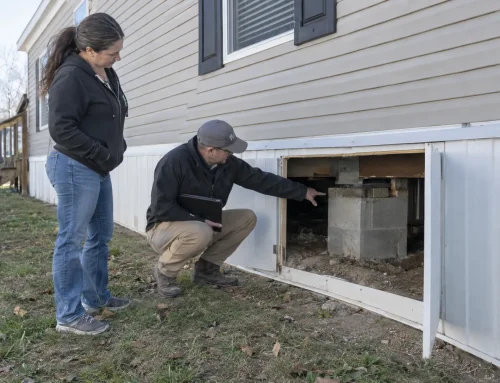
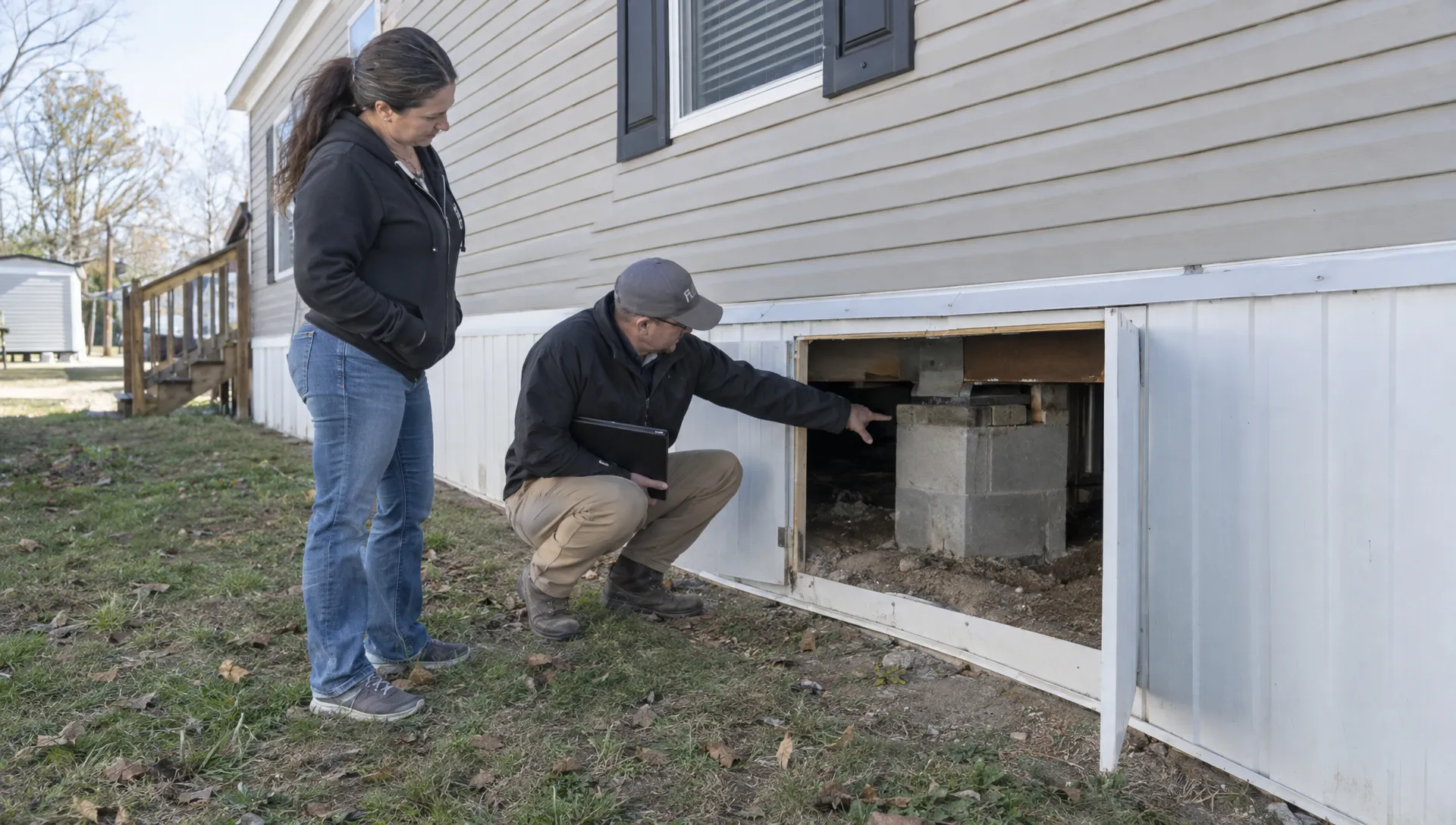
Double wides have specific areas that deserve attention, including the marriage line where the two sections meet, the roof span, the support system, the underbelly, and the condition of plumbing and electrical runs. Cosmetic upgrades are nice, but structural and moisture issues are more important.
| Area to inspect | What to look for | Why it matters |
|---|---|---|
| Roof and ceilings | Stains, soft spots, patched leaks, sagging | Water intrusion can lead to expensive repairs |
| Marriage line | Gaps, uneven flooring, ceiling cracks | Poor alignment may point to setup or leveling issues |
| Foundation and supports | Shifting, missing skirting, poor drainage | Stability affects comfort, safety, and resale value |
| Floors and subfloors | Soft areas near bathrooms, kitchen, exterior doors | Hidden water damage is common around wet areas |
| HVAC, plumbing, electrical | Age, function, visible repairs, breaker issues | Major systems can be costly to replace |
| Windows and doors | Drafts, sticking doors, damaged seals | These can reveal settling or energy loss |
If possible, hire a qualified inspector familiar with manufactured homes. The cost of an inspection is small compared with taking over a home that needs a roof, HVAC system, re-leveling, or major plumbing work. You can also review what buyers should evaluate in double wide mobile homes for sale before treating a rent-to-own offer as a purchase decision.
Compare the final price, not just the payment
Bad rent-to-own deals often look affordable because they focus on the monthly payment. A fair comparison looks at the total amount you will pay before ownership, the final purchase price, and the value of the home in its current condition.
Ask the seller for a written payoff schedule. If part of your rent is credited toward the purchase, the schedule should show how those credits reduce the balance. For example, a stated monthly credit should be easy to track and verify. If the seller cannot show how your payments move you closer to ownership, you may simply be renting with extra fees attached.
| Deal term | Safer sign | Red flag |
|---|---|---|
| Purchase price | Fixed in writing or based on a clear formula | To be determined later |
| Rent credits | Stated in dollars or percentage | At seller discretion |
| Option fee | Applied to the purchase price if you buy | Nonrefundable with no clear benefit |
| Default terms | Written notice and time to cure | Immediate forfeiture after one issue |
| Repairs | Responsibilities clearly divided | Buyer pays all repairs before owning |
| Ownership transfer | Clear process and required documents | Seller avoids ownership paperwork |
Do not compare a rent-to-own double wide only against apartment rent or a smaller rental. Compare it against the cost of buying a similar manufactured home, the age and condition of the home, the community, and the cost of staying there long term.
Do not overlook land and community rules
A double wide may be moveable in theory, but moving one is rarely simple. Transport, permits, disconnection, setup, utility reconnection, skirting, steps, and site preparation can be significant. If the deal depends on moving the home later, get written estimates from qualified professionals before signing.
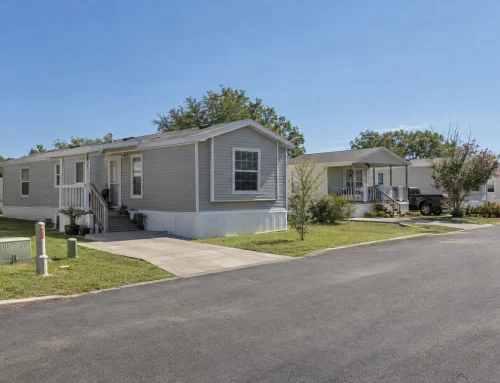
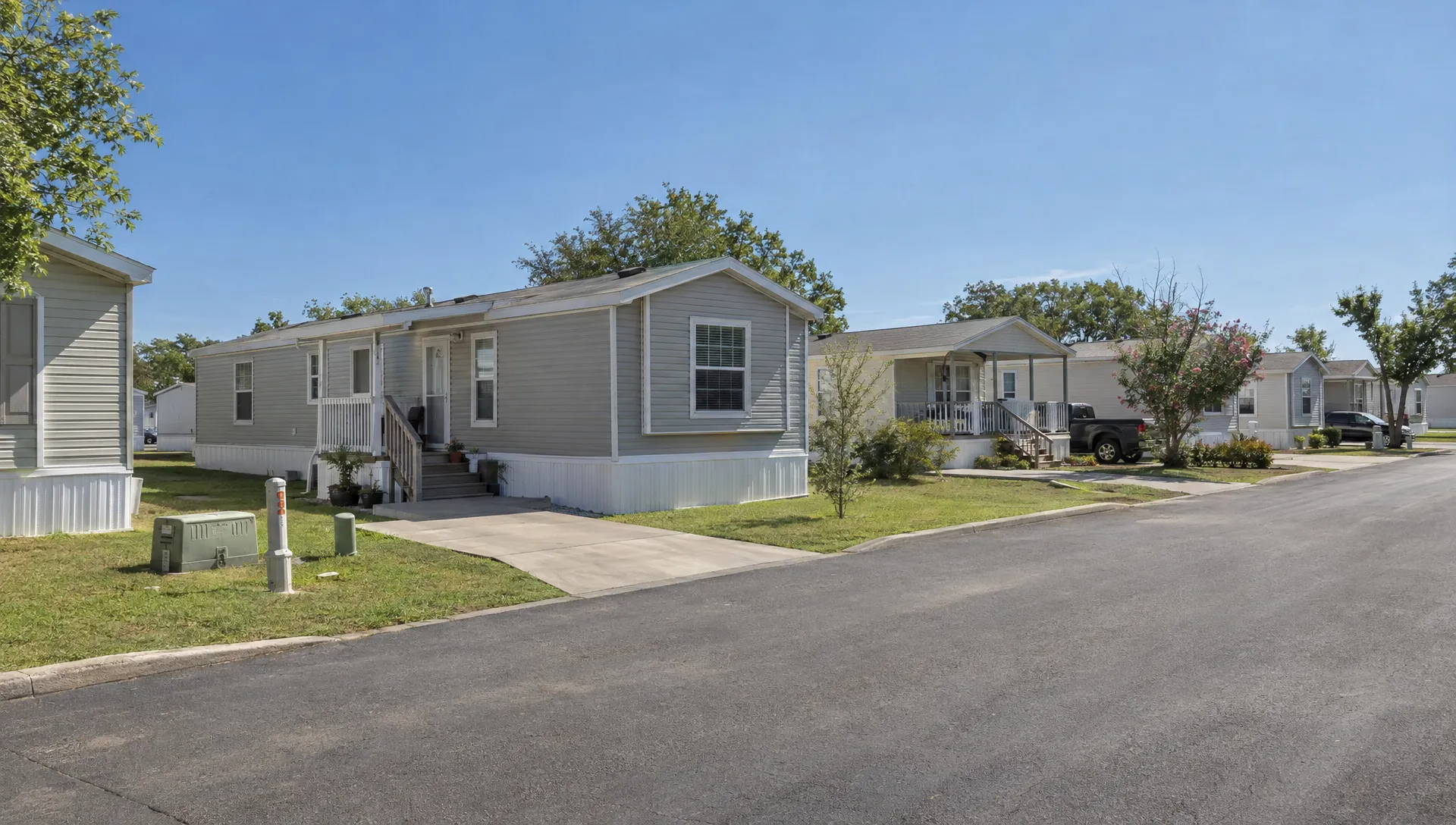
If the home is in a manufactured home community, review the community rules before signing the rent-to-own agreement. You may need approval to live there now and separate approval to remain there after you buy. Ask about lot rent, rent increases, pets, parking, occupancy limits, utility billing, home appearance rules, and resale restrictions.
This is especially important when the rent-to-own contract is with one party and the land or community is controlled by another. If you lose the right to keep the home on the lot, ownership may not help you much. If you are still comparing rental options before committing, this guide to double wide trailer lease terms can help you understand the lease side of the decision.
Treat financing as your exit plan
Many rent-to-own buyers plan to rent for a period of time and then finance the purchase. That can be a reasonable strategy, but it should be planned early. Do not wait until the option deadline to find out whether a lender will finance the home.
Ask about lender requirements before signing. Financing may depend on your credit profile, income, debt, down payment, the home’s age and condition, whether the home is permanently installed, and whether land is included. If the contract requires you to buy by a certain date, include a realistic financing timeline.
At Homes2Go San Antonio, buyers can explore manufactured home options, available floor plans, flexible financing paths, and local guidance before committing to a home. That matters because a good deal is not just about getting approved today. It is about choosing a home and payment structure that still makes sense after move-in.
Warning signs of a bad rent-to-own double wide deal
Some warning signs are obvious, such as a seller who refuses to provide a written agreement. Others are more subtle. Use the table below as a quick gut check before moving forward.
| Situation | Why it is risky | Safer response |
|---|---|---|
| Seller pressures you to pay today | Pressure can hide missing details | Ask for documents and time to review |
| No proof of ownership | The seller may not have the right to sell | Verify ownership before paying major fees |
| Purchase price is missing | You cannot know whether the deal is fair | Require a price or clear pricing formula |
| Rent credits are vague | You may not build equity as expected | Put the exact credit terms in writing |
| Inspection is discouraged | Problems may be hidden | Walk away or require access for inspection |
| Repairs are all on you immediately | You may pay owner-level costs without ownership | Clarify repair responsibility by category |
| Land terms are separate and unclear | You may own a home with nowhere to keep it | Review lot lease and community approval first |
| Final payment includes a surprise balloon | You may be unable to complete the purchase | Ask for the full payoff schedule upfront |
One red flag does not always mean the deal is impossible, but it does mean you should pause. Several red flags together are usually enough reason to keep looking.
Questions to ask before signing
Before you sign, ask for written answers to the essentials: Who owns the home today? Is there a lien? Is the land included? What is the final purchase price? How much of each payment counts toward ownership? What happens if you are late? Who pays for major repairs? Can you inspect the home? Can the home stay where it is after purchase? What documents will transfer ownership to you?
A trustworthy seller or dealer should be willing to slow down and answer these questions. If the deal only works when you do not ask questions, it is probably not the right deal.
Frequently Asked Questions
Are rent-to-own double wides a good idea? They can be a good fit when the contract is clear, the home is in solid condition, ownership can be verified, and the final purchase terms are realistic. They are risky when pricing, rent credits, repairs, or title transfer are vague.
Does rent-to-own mean every payment builds equity? Not always. Some agreements apply a specific rent credit toward the purchase, while others only give you the option to buy later. The contract should state exactly how much, if any, of each payment is credited.
What documents should I check in Texas? Ask for manufactured home ownership documentation, lien information, and a written agreement that matches the home’s identifying information. You can also review manufactured housing resources through the Texas Department of Housing and Community Affairs.
Does the land come with a rent-to-own double wide? Often, no. Many double wide deals involve buying or renting the home while leasing the lot separately. Always confirm whether land is included and whether you can remain in the community after purchase.
Should I get an inspection before signing? Yes. Since rent-to-own may lead to ownership, inspect the double wide like a buyer. Pay close attention to the roof, foundation or support system, marriage line, plumbing, electrical, HVAC, floors, and signs of water damage.
Find a clearer path to manufactured home ownership
A good rent-to-own double wide should feel understandable, not confusing. You should know what you are paying, what you are buying, when ownership can transfer, and what responsibilities you are accepting.
If you are looking for a manufactured home in the San Antonio area, Homes2Go San Antonio can help you compare home models, review floor plans, understand financing options, and think through community fit before you commit. Start with a clear conversation, ask the hard questions, and choose a path to homeownership that protects your budget as well as your future.
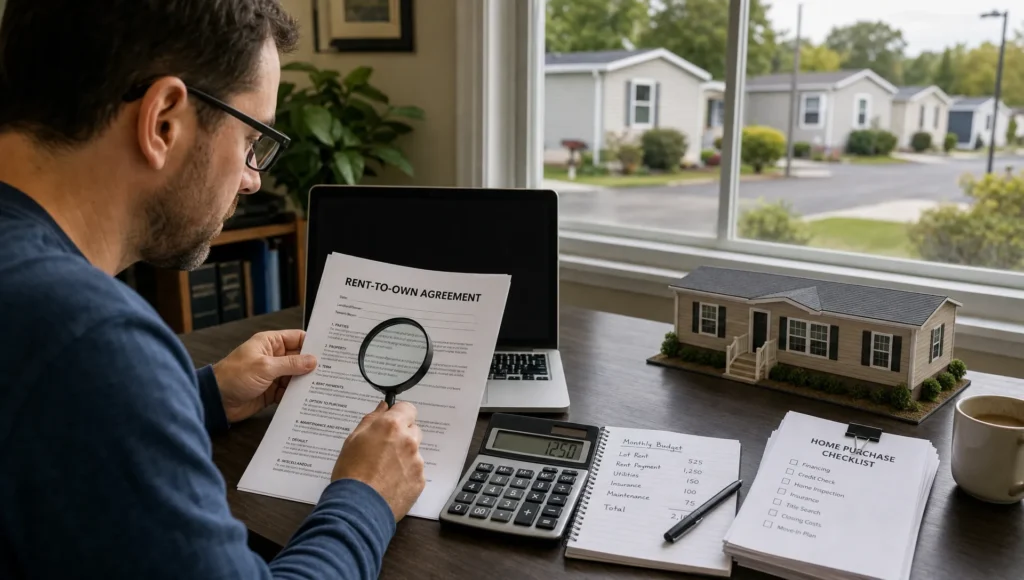 Mobile Rent to Own: What the Fine Print Really Means
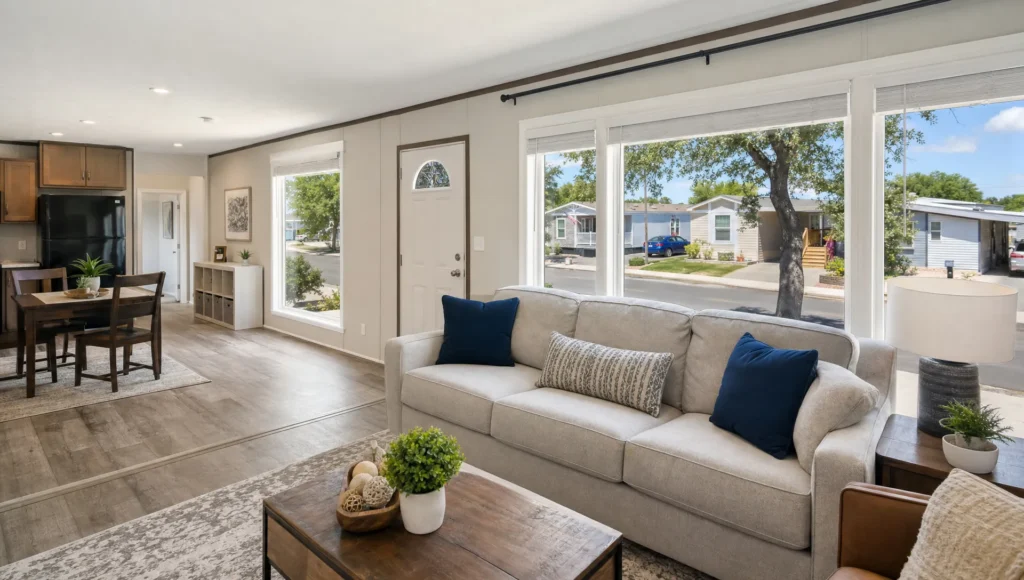 Benefits of Owning a Mobile Home in San Antonio