
FHA financing can be a strong option for buyers who want a double-wide manufactured home, especially if they plan to place it on land and use the home as their primary residence. But FHA approval is not based on the floor plan alone. The home, foundation, land, title records, appraisal, and borrower all have to meet specific requirements.
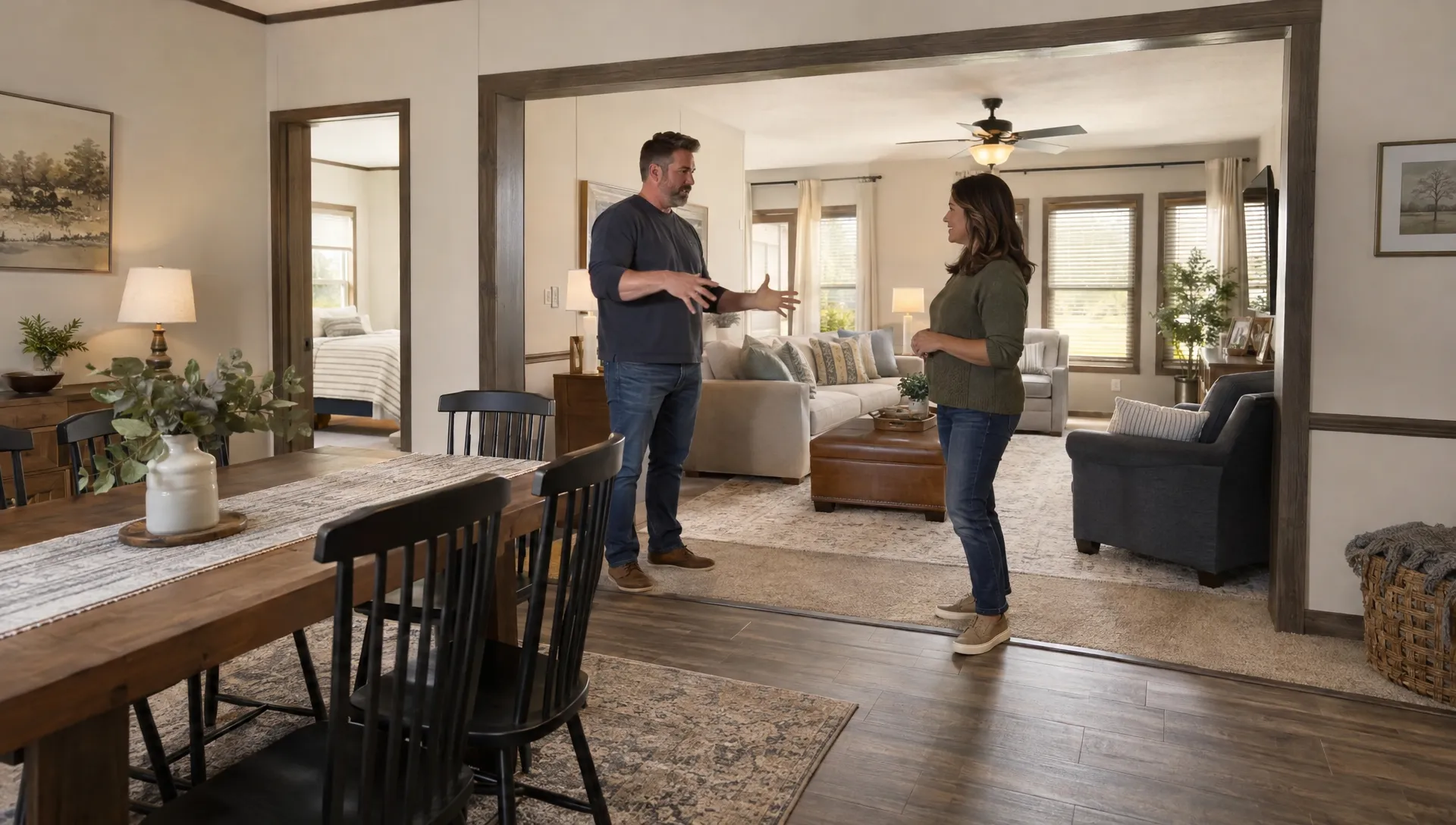
The good news is that double-wide homes often fit FHA size and livability expectations well. They usually offer more square footage, more conventional layouts, and more room for families than smaller single-section homes. The challenge is that a double-wide is made of two transportable sections, which means the lender may look closely at HUD labels, installation, the marriage line between the sections, and the permanent foundation.
Below is a practical explanation of FHA rules for double wide mobile homes, written for buyers who want to understand what must be true before they apply.
First, FHA usually means manufactured home, not old mobile home
Many buyers say mobile home when they are shopping for a double-wide. In FHA language, the important term is usually manufactured home. A manufactured home is built to the federal HUD Code, which applies to homes built on or after June 15, 1976. HUD explains that manufactured homes are built to federal construction and safety standards through its Manufactured Housing Program.
That date matters. A pre-1976 mobile home generally will not qualify for FHA manufactured home financing because it was not built under the HUD Code. A newer double-wide can be eligible, but only if the home and site meet FHA requirements.
FHA does not have a separate double-wide-only loan program. Instead, a double-wide is treated as a multi-section manufactured home. The same broad FHA manufactured housing rules apply, with extra attention to the fact that the home has two sections that must be properly joined, supported, and documented.
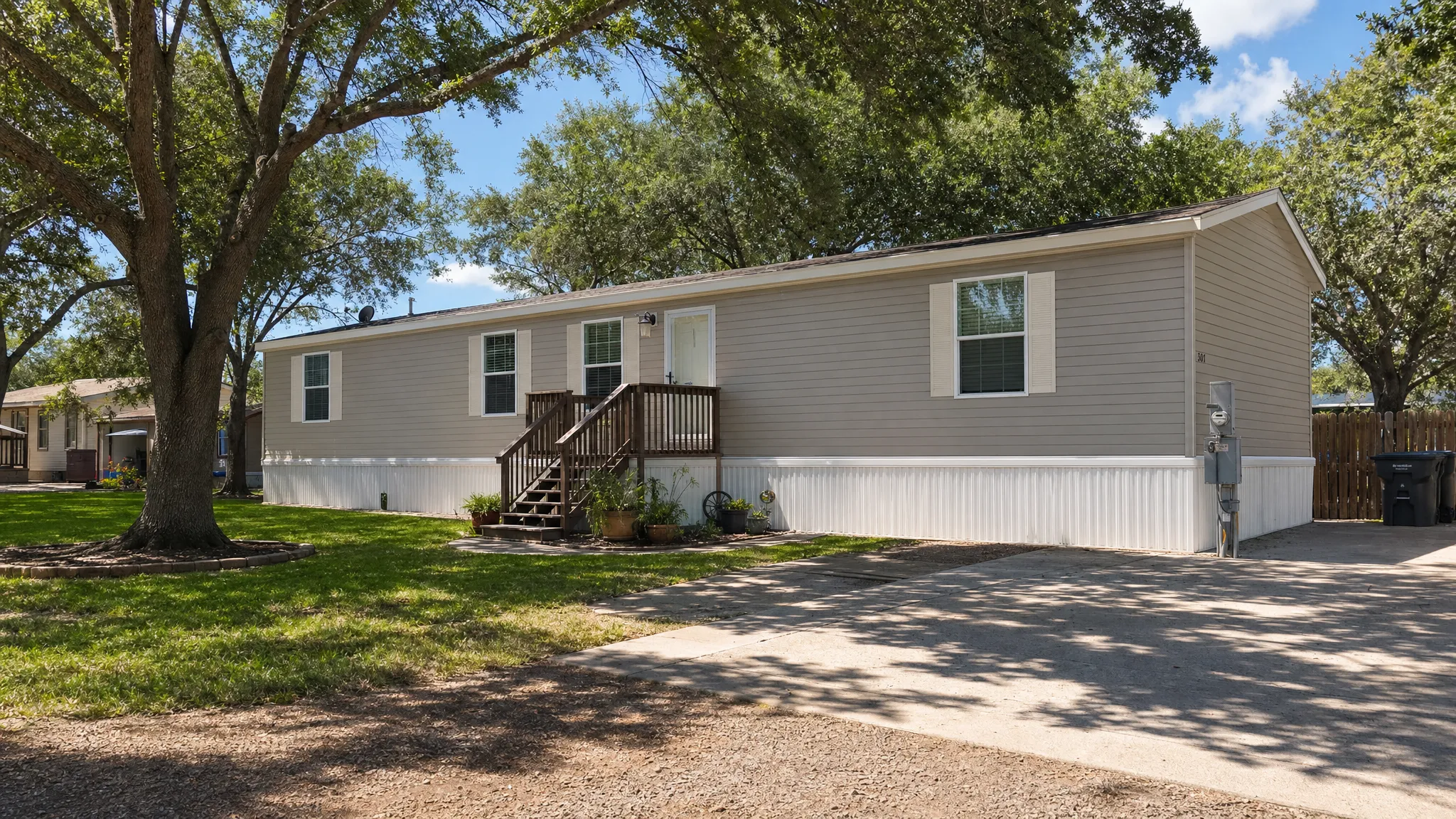
FHA eligibility checklist for a double-wide mobile home
The exact underwriting decision belongs to the lender, and lenders can have additional rules. Still, most FHA double-wide approvals start with the same core checklist.
| FHA rule or review item | What the lender usually needs to confirm | Why it matters for a double-wide |
|---|---|---|
| HUD Code construction | The home was built on or after June 15, 1976 and has HUD certification labels | FHA manufactured housing eligibility starts with HUD Code compliance |
| Minimum size | The home has at least 400 square feet of living area | Most double-wides meet this, but the lender still verifies it |
| Primary residence | The buyer will live in the home as a principal residence | FHA financing is generally for owner-occupied housing |
| HUD labels | Each transportable section has its own exterior HUD certification label | A double-wide typically has two sections, so missing labels can delay approval |
| Data plate | The home has a data plate or acceptable verification showing model, serial number, wind zone, and other details | The data plate helps confirm the home was built for the correct conditions |
| Permanent foundation | The home is installed on an FHA-acceptable permanent foundation | FHA Title II mortgage financing usually requires permanent attachment to the land |
| Real property status | The home and land are treated as real estate for mortgage-style FHA financing | Title issues are a common reason manufactured home loans stall |
| FHA appraisal | The property meets FHA health, safety, security, and marketability standards | The appraiser reviews condition, value, and property acceptability |
| Local compliance | The site meets zoning, permitting, utility, flood, and access requirements | Local issues can affect both approval and move-in timeline |
For the official source behind FHA single-family requirements, buyers and lenders rely on HUD’s Single Family Housing Policy Handbook 4000.1. Because FHA rules and lender overlays can change, always confirm details with an FHA-approved lender before making a final offer.
FHA Title I vs. FHA Title II for double-wide homes
One of the biggest points of confusion is whether a buyer needs FHA Title I or FHA Title II financing. Both can involve manufactured homes, but they are not the same.
FHA Title II is the mortgage-style option most buyers think of when they hear FHA loan. It is commonly used when the manufactured home and land are financed together as real property. If you are buying a double-wide on land, or buying a land-and-home package, this may be the path your lender evaluates.
FHA Title I is designed for manufactured home loans that may involve the home only, a lot only, or the home and lot. HUD provides information about the Title I Manufactured Home Loan Program, but not every lender offers it. If you plan to place a double-wide in a leased-lot community, Title I or another home-only financing option may be more realistic than a standard FHA mortgage.
| Financing path | Often fits | Key issue to check |
|---|---|---|
| FHA Title II | Double-wide plus land, classified as real property | Foundation, title surrender, appraisal, and land eligibility must line up |
| FHA Title I | Manufactured home financing that may not include traditional land ownership | Lender availability, program limits, lot lease rules, and home installation requirements |
| Chattel or other home-only loan | Double-wide in a manufactured home community or on leased land | Usually not the same as FHA mortgage financing, so compare payment, term, and total cost |
For a broader look at loan options, Homes2Go San Antonio’s manufactured home financing page explains common paths such as FHA, VA, USDA, conventional, and chattel loans.
Foundation rules are a major part of FHA approval
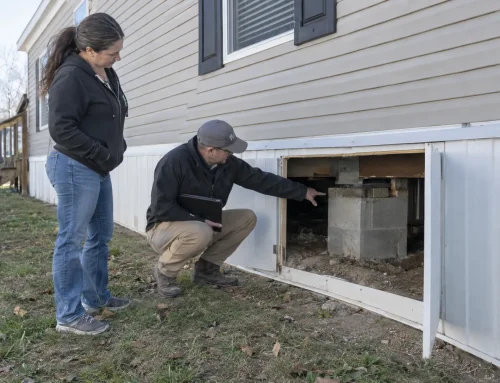
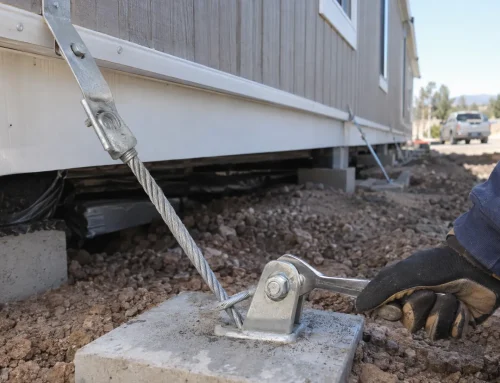
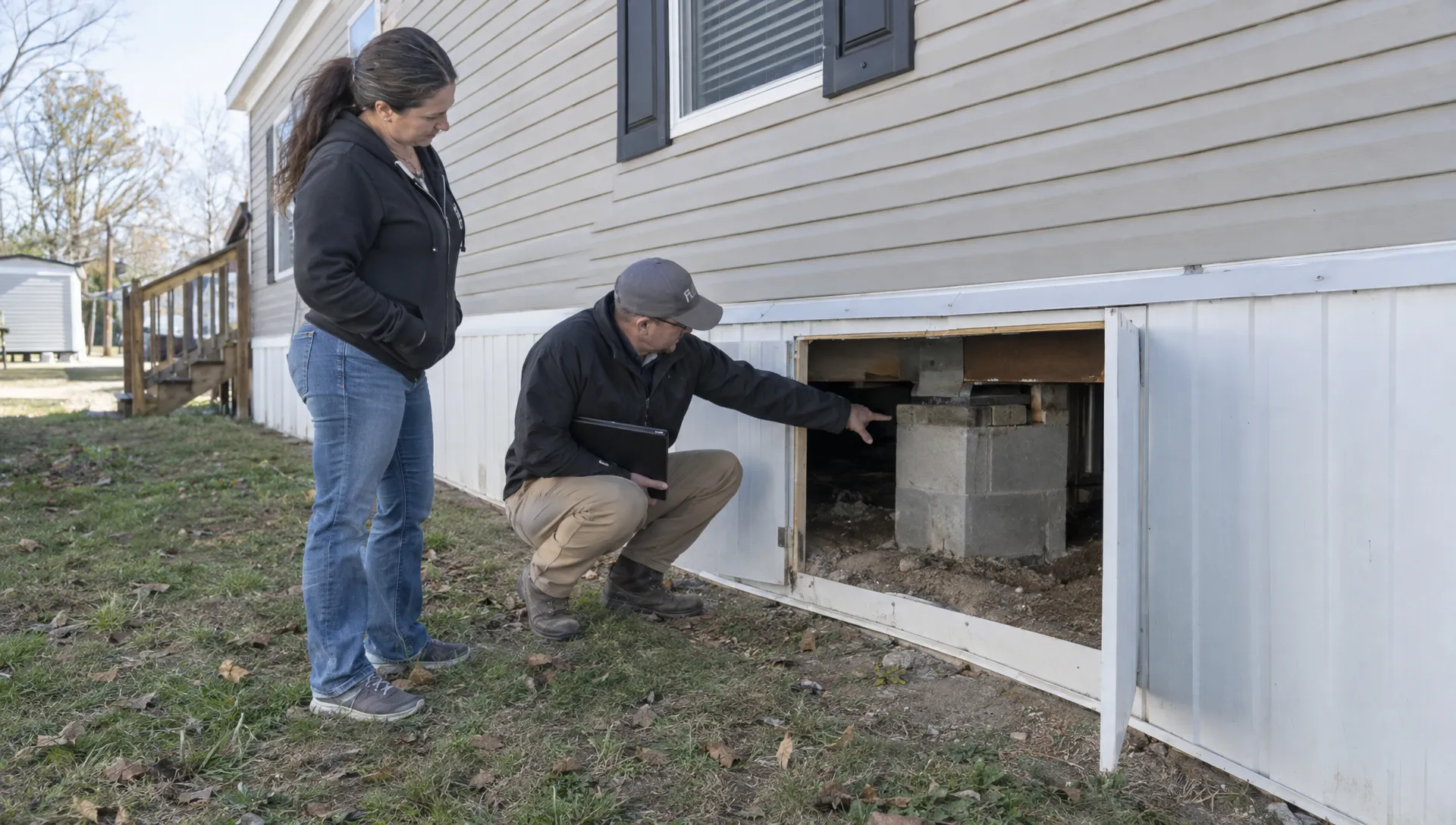
For FHA Title II financing, the double-wide must be permanently attached to an acceptable foundation. This is not just about adding skirting or setting the home on blocks. FHA looks for a foundation system that supports the home, resists movement, and is appropriate for the site.
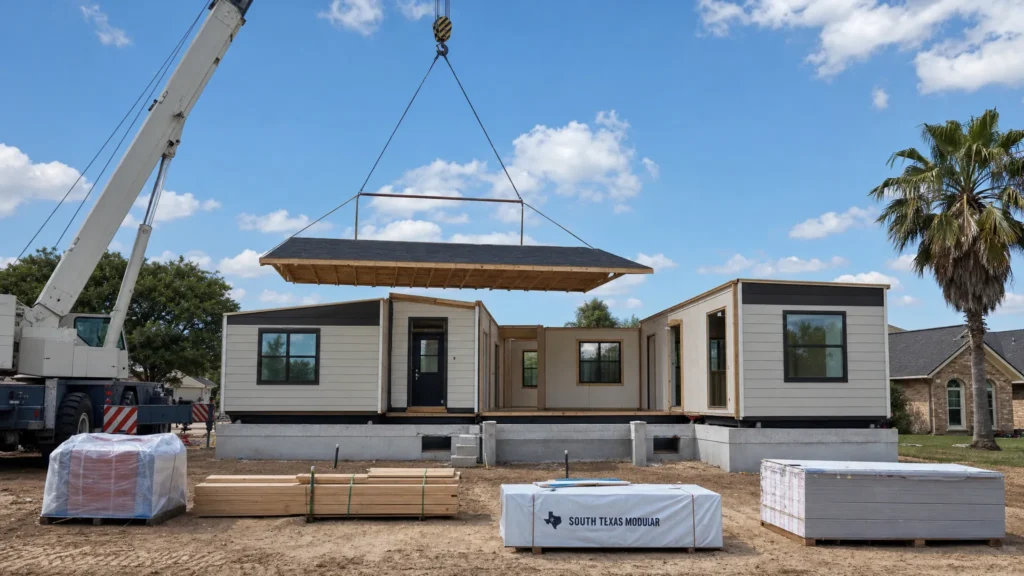
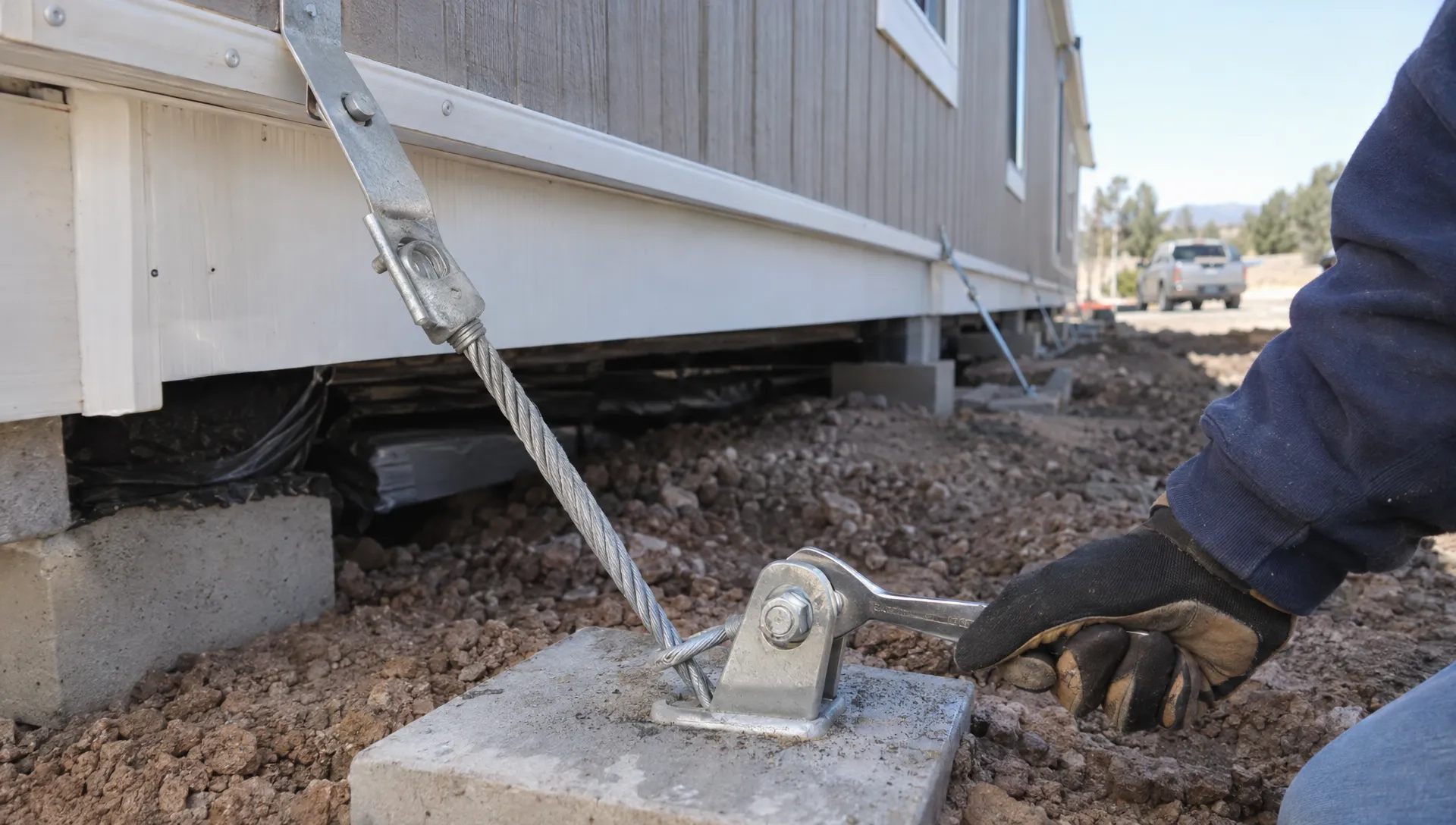
A permanent foundation may involve footings, piers, anchors, tie-downs, perimeter elements, and proper utility connections. The wheels, axles, and towing components are typically removed. The home should be installed according to applicable standards, local requirements, and the manufacturer’s instructions.
For double-wide homes, the marriage line is especially important. This is where the two sections meet. If the home is not properly joined, sealed, leveled, and supported, it can create structural, water intrusion, flooring, roofing, or appraisal concerns. Lenders may require an engineer’s foundation certification confirming that the foundation meets FHA expectations.
A few foundation-related issues can become deal-breakers:
- The home is sitting on a temporary setup rather than a permanent foundation.
- The sections are not properly aligned, connected, or sealed.
- The home has additions that may affect structural integrity.
- The foundation cannot be certified by a qualified professional.
- The home was moved after being previously installed at another site, which is often a problem for FHA Title II financing.
If you are considering a used double-wide, ask early whether it has ever been relocated after its original installation. That one detail can change your financing options.
HUD tags and data plates matter more on a double-wide
A double-wide usually has two HUD certification labels, one on each transportable section. These are the red metal tags attached to the exterior of the home. They show that each section was built to HUD Code standards.
The data plate is also important. It is commonly found inside the home, such as in a kitchen cabinet, bedroom closet, utility area, or electrical panel area. The data plate includes information such as the manufacturer, serial number, model, roof load, wind zone, thermal zone, and other construction details.
If labels or data plates are missing, the deal is not always dead, but the lender may require third-party verification. That can add time and cost. For a double-wide, it is wise to verify both sections before you spend money on inspections, appraisals, or moving plans.
Real property status and Texas title records
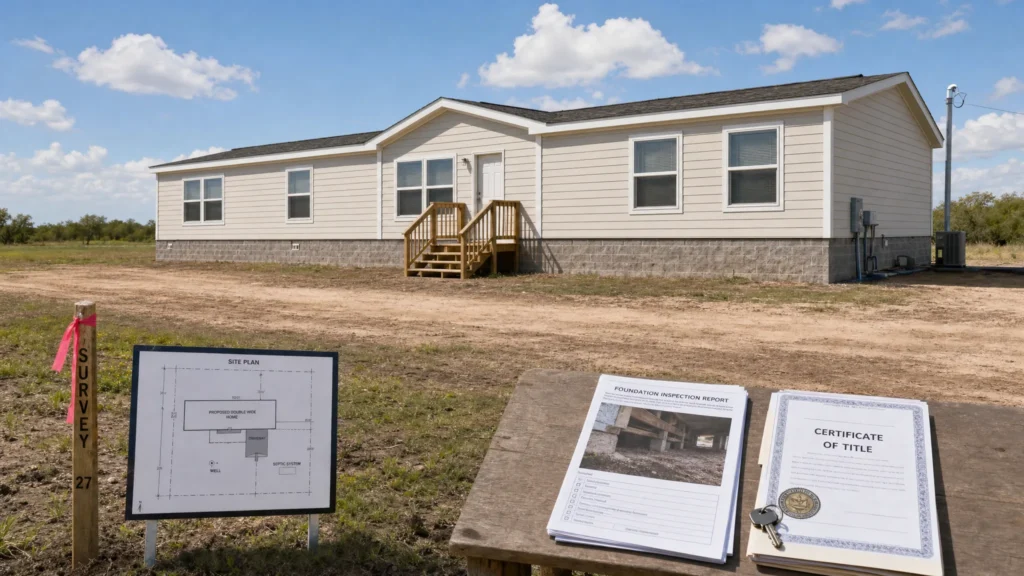
For FHA Title II mortgage financing, the home generally needs to be part of the real estate. In practical terms, the double-wide and the land are treated together instead of the home being treated only as personal property.
In Texas, manufactured housing ownership records are handled through the Texas Department of Housing and Community Affairs Manufactured Housing Division. The state uses a Statement of Ownership process, and buyers can learn more through the TDHCA Manufactured Housing Division. If the home is being converted to real property, title and ownership records must be handled correctly.
This is one reason buyers should involve the lender, retailer, title company, and local officials early. A double-wide can be beautiful, affordable, and structurally sound, but if the paperwork does not match the loan type, closing can be delayed.
For San Antonio-area buyers, this issue often comes up in three situations. First, the buyer owns land and wants to place a new double-wide on it. Second, the buyer is purchasing land and home together. Third, the buyer wants a double-wide in a community where the land is leased. Each situation can call for a different financing strategy.
What the FHA appraiser looks for
An FHA appraisal is not a full home inspection, but it is more than a simple value estimate. The appraiser reviews whether the property appears to meet FHA minimum property standards and whether it supports the loan amount.
For a double-wide manufactured home, the appraiser may review the home’s condition, HUD labels, foundation, utilities, access, site drainage, safety items, and comparable sales. The property should have safe access, working utilities, acceptable water and wastewater systems, and no obvious conditions that threaten health or safety.
Common appraisal-related issues include damaged siding, roof concerns, missing steps or handrails, exposed wiring, plumbing problems, moisture damage, broken windows, or incomplete installation work. These items may need to be repaired before closing.
This is where move-in ready homes can make the process smoother. A home that is already properly installed, documented, and ready for occupancy is often easier to finance than a home with unfinished site work or unclear records.
San Antonio considerations for FHA double-wide buyers
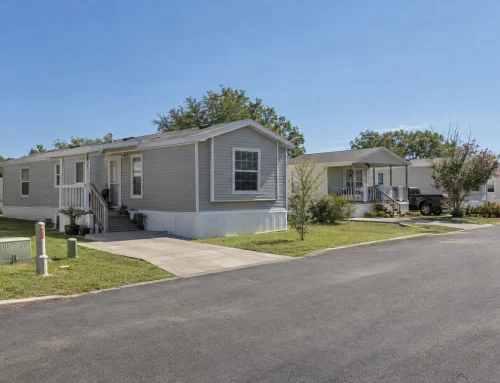
San Antonio and the surrounding communities offer several paths to manufactured homeownership, including private land, land-and-home packages, and manufactured home communities. Each path can work, but each has different FHA considerations.
If you are buying land, look beyond the purchase price. The lender may care about access, utilities, floodplain status, zoning, septic feasibility, and whether the site is ready for a manufactured home. In South Texas, drainage, soil conditions, heat exposure, and utility setup can also affect comfort and long-term cost.
If you are choosing a community, make sure the community accepts the size, age, and type of double-wide you want. Also ask whether the lot lease terms are compatible with your financing. Many ordinary lot leases do not work like land ownership, so the financing path may differ.
Homes2Go San Antonio helps buyers compare home models, review detailed floor plans, explore flexible financing options, and connect with trusted local lenders. If you are trying to match a double-wide with land, you may also find this guide to land and home packages in San Antonio useful.
Common reasons FHA double-wide deals get delayed
Most FHA delays are not caused by the fact that the home is a double-wide. They are caused by missing documents, title issues, site problems, or installation concerns.
| Delay or denial risk | Why it happens | How to reduce the risk |
|---|---|---|
| Missing HUD label | One or both section labels are gone or unreadable | Check labels before applying and ask about verification options early |
| No data plate | The lender cannot easily verify home specifications | Look inside cabinets, closets, utility areas, and electrical panel areas |
| Foundation concerns | The home is not on an FHA-acceptable permanent foundation | Get foundation requirements reviewed before ordering the appraisal |
| Personal property status | The home has not been properly converted for Title II financing | Coordinate title, land, and lender requirements early |
| Prior relocation | The used home may have been moved after initial installation | Ask for the home’s history before making a commitment |
| Site issues | Utilities, access, septic, zoning, or floodplain concerns are unresolved | Verify land readiness before finalizing the home and loan plan |
| Lender overlays | The lender has rules beyond FHA minimums | Work with lenders experienced in manufactured homes |
If you want a more general overview of FHA manufactured housing requirements, Homes2Go also has a detailed FHA manufactured home requirements checklist.
A simple pre-approval plan before you shop
Before you fall in love with a floor plan, it helps to know what your lender will require. A double-wide may qualify, but the best experience comes from checking the home, land, and financing together.
- Choose the likely financing path first: Ask whether your situation fits FHA Title II, FHA Title I, chattel financing, VA, USDA, or another option.
- Verify the home’s HUD Code status: Confirm the build date, HUD labels, data plate, serial numbers, and whether the home is new or used.
- Confirm the land or community setup: Determine whether you will own the land, lease a lot, or buy a land-and-home package.
- Review foundation requirements early: Do not assume a setup is FHA-ready just because the home is level and skirted.
- Budget beyond the home price: Include land, delivery, setup, utilities, taxes, insurance, mortgage insurance, lot rent if applicable, and closing costs.
- Work with manufactured home professionals: Choose a retailer and lender familiar with FHA rules for manufactured housing.
This step-by-step approach can save weeks of frustration. It can also help you compare homes by true monthly cost instead of only sticker price.
Frequently Asked Questions
Can you buy a double-wide mobile home with an FHA loan? Yes, if the home is a HUD-code manufactured home, meets FHA property requirements, is properly installed, and the borrower qualifies. For FHA Title II, the home and land usually need to be treated as real property.
Does FHA require a permanent foundation for a double-wide? For FHA Title II mortgage financing, yes. The home generally must be permanently attached to an acceptable foundation, and the lender may require an engineer’s certification.
How many HUD tags should a double-wide have? A double-wide typically has one HUD certification label on each transportable section, so buyers should expect two exterior HUD labels. Missing labels may require additional verification.
Can a used double-wide qualify for FHA financing? It can, but the home must meet FHA requirements. Age, condition, title status, foundation, HUD labels, and relocation history all matter. A used home that was moved after prior installation can be difficult or impossible to finance with FHA Title II.
Can I use FHA for a double-wide in a mobile home park? It depends on the loan type and the land arrangement. FHA Title II is usually easier when the home and land are financed together as real property. A leased-lot community may require FHA Title I or another home-only financing option.
What down payment is needed for an FHA double-wide loan? FHA Title II loans may allow a down payment as low as 3.5% for qualified borrowers, but credit, income, debt-to-income ratio, property eligibility, and lender overlays all affect approval.
Get help finding an FHA-friendly double-wide in San Antonio
FHA rules can feel complicated, but you do not have to sort through them alone. The key is to match the right double-wide home with the right land, foundation plan, documentation, and lender from the beginning.
Homes2Go San Antonio offers a wide selection of manufactured home models, modern interiors, energy-efficient designs, detailed floor plans, expert guidance, and access to financing options through trusted local lenders. Whether you are a first-time buyer or comparing land-and-home possibilities, the team can help you understand which homes and setups are more likely to fit your financing goals.
Ready to explore double-wide manufactured homes in the San Antonio area? Visit Homes2Go San Antonio to start comparing homes and financing options.