
FHA financing can be a strong path to manufactured homeownership, especially for buyers who want a lower down payment and more flexible credit guidelines than many conventional loans. But manufactured homes have extra property rules that can surprise buyers if they start shopping before they understand what FHA will and will not approve.
For San Antonio buyers in 2026, the big idea is simple: the borrower must qualify, the home must qualify, and the site must qualify. A buyer may have solid income and credit, but if the home is too old, lacks HUD certification, sits on the wrong type of foundation, or is not titled correctly, FHA approval can stall.
This guide explains the key FHA loan guidelines for manufactured homes in 2026, how Title I and Title II differ, what documents lenders usually request, and what local buyers should check before choosing a home, land, or community.
FHA manufactured home guidelines at a glance
FHA rules come from HUD, and lenders may add their own requirements, often called lender overlays. Always confirm details with an FHA-approved lender before making a final purchase decision. Still, most FHA manufactured home approvals start with the same core checklist.
| Guideline area | What FHA generally looks for | Why it matters |
|---|---|---|
| Home construction date | Built on or after June 15, 1976, under the HUD Manufactured Home Construction and Safety Standards | Pre-1976 mobile homes generally do not qualify as FHA-eligible manufactured homes |
| Minimum size | At least 400 square feet | FHA requires the home to meet manufactured housing eligibility standards |
| Occupancy | Borrower uses the home as a primary residence | FHA loans are not intended for vacation homes or investment properties |
| HUD certification | HUD certification labels and a data plate, or acceptable verification if labels are missing | Confirms the home was built to HUD Code |
| Foundation | Permanent foundation that meets FHA and HUD requirements | The home must be safely and permanently attached to the site |
| Property classification | Usually treated as real property for FHA Title II financing | The home and land must fit the mortgage structure |
| Appraisal | FHA appraisal and property review | Confirms value, condition, access, utilities, and health and safety standards |
| Borrower qualification | Credit, income, debt-to-income ratio, down payment, and mortgage insurance requirements | Confirms the buyer can repay the loan |
HUD’s Single Family Housing Policy Handbook 4000.1 is the main source lenders use for FHA underwriting and property eligibility. For manufactured housing construction standards, HUD’s Manufactured Housing Program is also an important reference.
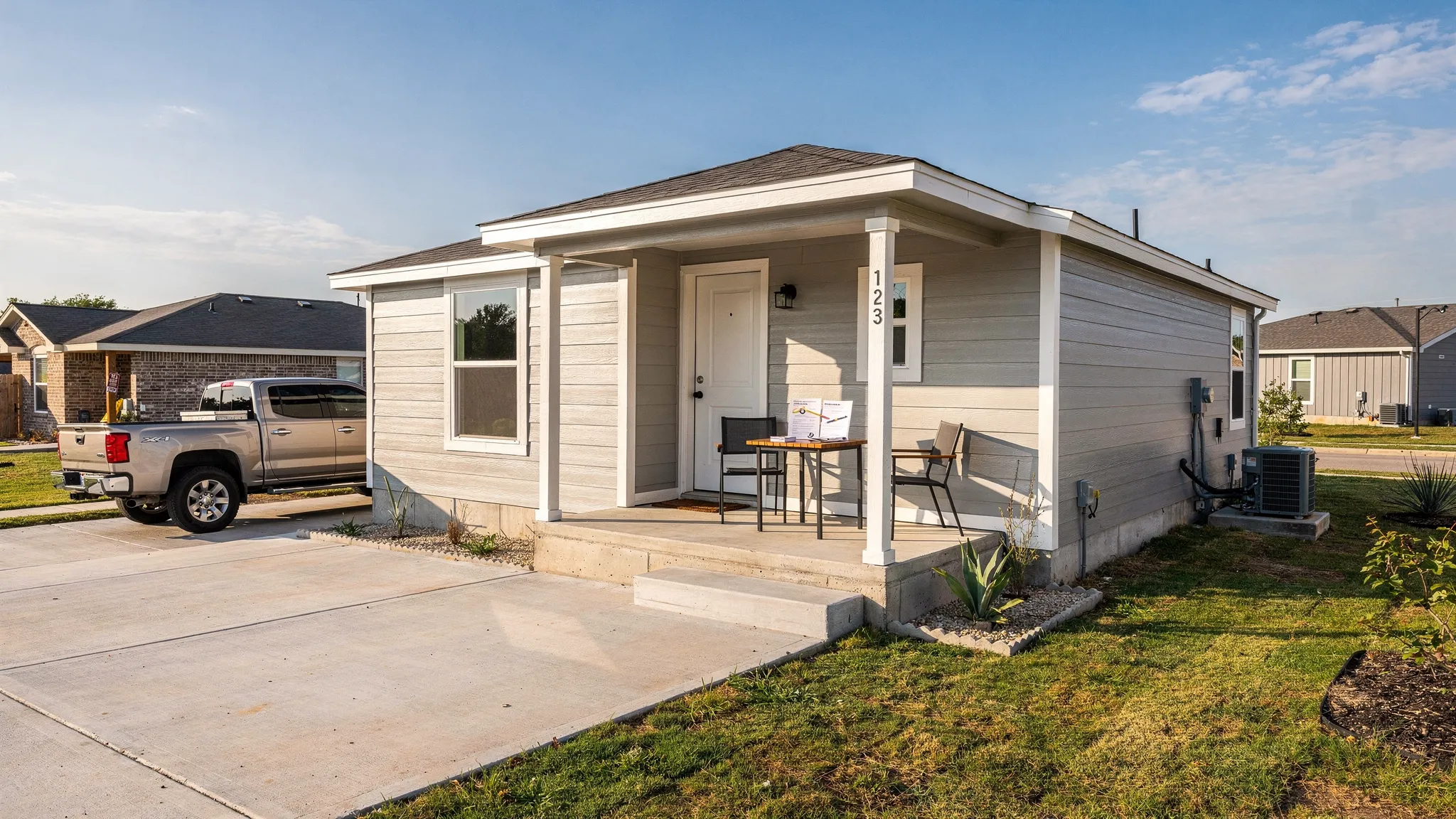
FHA Title I vs. FHA Title II for manufactured homes
Many buyers hear “FHA manufactured home loan” and assume there is only one program. In reality, FHA financing for manufactured housing can involve Title I or Title II, and the right path depends on whether the home is financed by itself, with land, or as real property.
| FHA option | Often used for | Land requirement | Key point for buyers |
|---|---|---|---|
| FHA Title I | Manufactured home only, lot only, or home and lot | May be used in some situations where the home is not financed like a traditional real estate mortgage | HUD sets separate Title I rules, limits, and terms, so availability depends heavily on lender participation |
| FHA Title II | Manufactured home and land as real property | Typically used when the borrower owns the land or has an acceptable real-property structure | This is closer to a standard FHA mortgage and has stricter foundation, appraisal, and titling requirements |
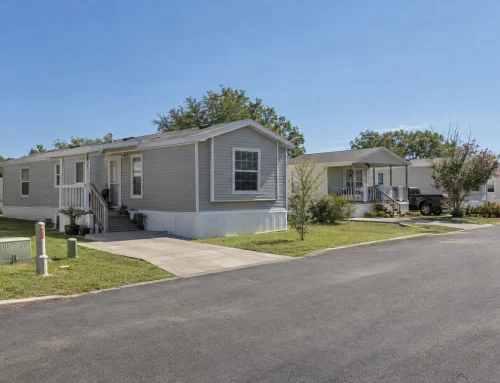
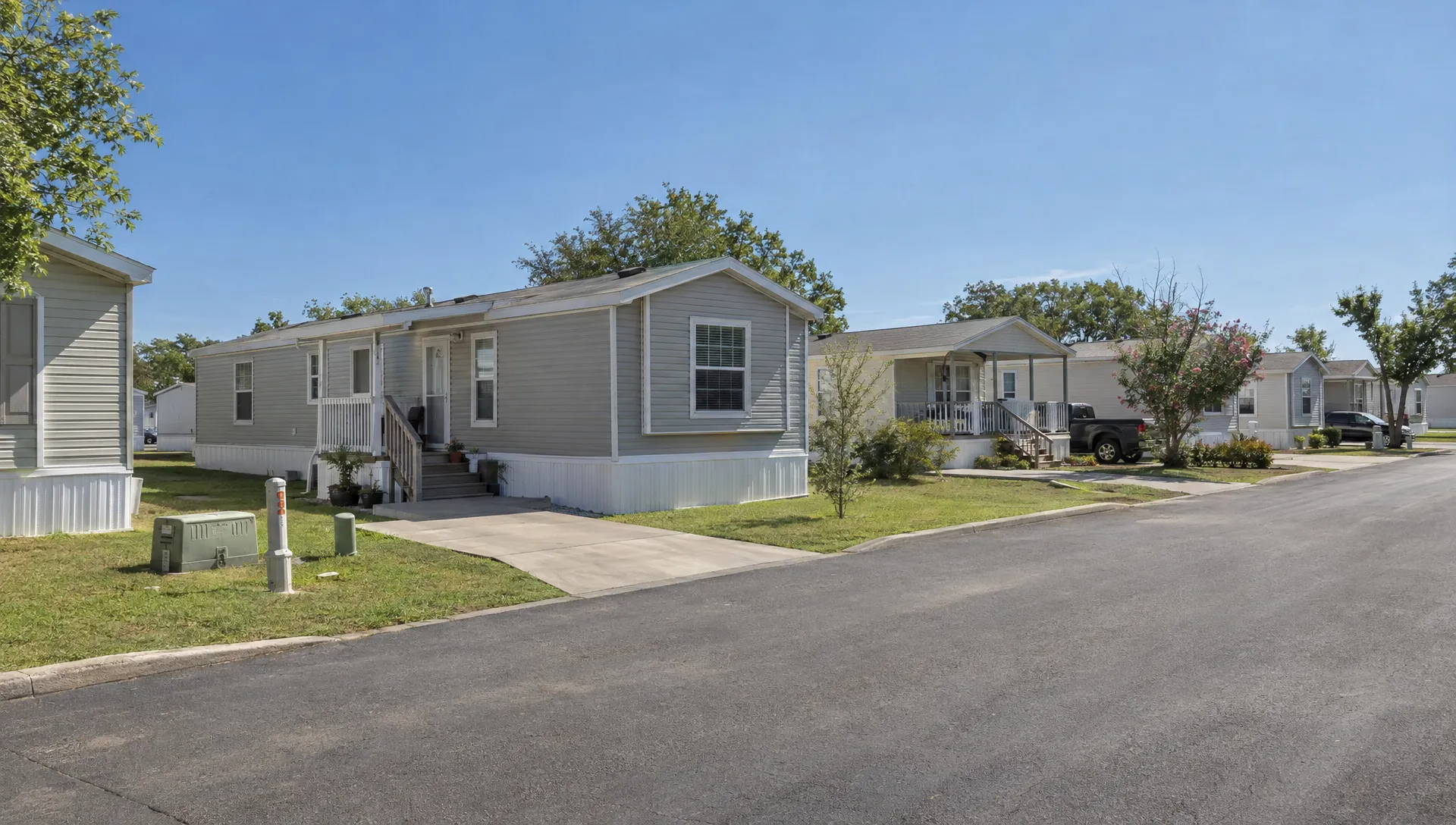
For many San Antonio buyers purchasing both land and home together, FHA Title II is the program they are asking about. For buyers placing a home in a land-lease manufactured home community, Title II may not be the best fit unless the structure meets FHA requirements. In those cases, a chattel loan, community-approved lender, Title I option, or another financing path may be more realistic.
Homes2Go San Antonio works with buyers who need help comparing financing paths, including FHA, VA, USDA, conventional, and chattel options, depending on the home, land, credit profile, and purchase plan.
Borrower eligibility basics in 2026
FHA is known for flexible borrower guidelines, but it is not automatic approval. Your lender will review your full financial picture, including credit, income, debts, assets, employment history, and the proposed property.
The most commonly discussed FHA borrower guidelines include:
- Down payment: FHA commonly allows 3.5% down for borrowers with qualifying credit, while lower credit scores may require a larger down payment.
- Credit profile: FHA has baseline credit standards, but individual lenders can require higher scores or additional documentation.
- Debt-to-income ratio: The lender reviews how much of your monthly income is already committed to debts and how the new housing payment fits your budget.
- Primary residence: You must intend to live in the manufactured home as your main home.
- Mortgage insurance: FHA loans include mortgage insurance, which affects your monthly payment and total cost.
- Loan limits: FHA mortgage limits are updated regularly and vary by area, so buyers should check the current HUD limit for the county where the home will be located.
You can look up current FHA mortgage limits through HUD’s FHA Mortgage Limits search tool. For San Antonio-area buyers, the relevant county may be Bexar County, Atascosa County, Medina County, Guadalupe County, Wilson County, or another nearby county depending on the property location.
Manufactured home property requirements
FHA manufactured home guidelines are more property-specific than many buyers expect. A home must be affordable, attractive, and functional, but it also has to meet federal and lender requirements.
The home must be HUD Code manufactured housing
To qualify as a manufactured home under FHA rules, the home generally must have been built on or after June 15, 1976. That date matters because it marks the start of the federal HUD Code for manufactured housing.
A pre-1976 “mobile home” may still be lived in, sold, or rented under certain circumstances, but it usually will not qualify for FHA manufactured home financing. If you are shopping used homes, this is one of the first facts to verify.
The home should also have HUD certification labels, sometimes called HUD tags, attached to the exterior of each transportable section. A double-wide should have two labels, one for each section. The home should also have a data plate, often located inside a cabinet, closet, utility area, or electrical panel area.
If HUD labels are missing, the lender may require label verification through the Institute for Building Technology and Safety. Missing labels do not always kill a deal, but they can slow the process if they are not addressed early.
The home must be permanently installed
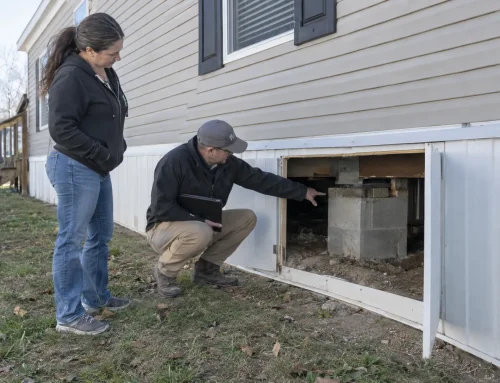
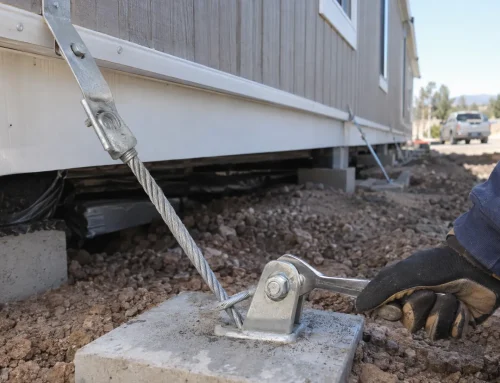
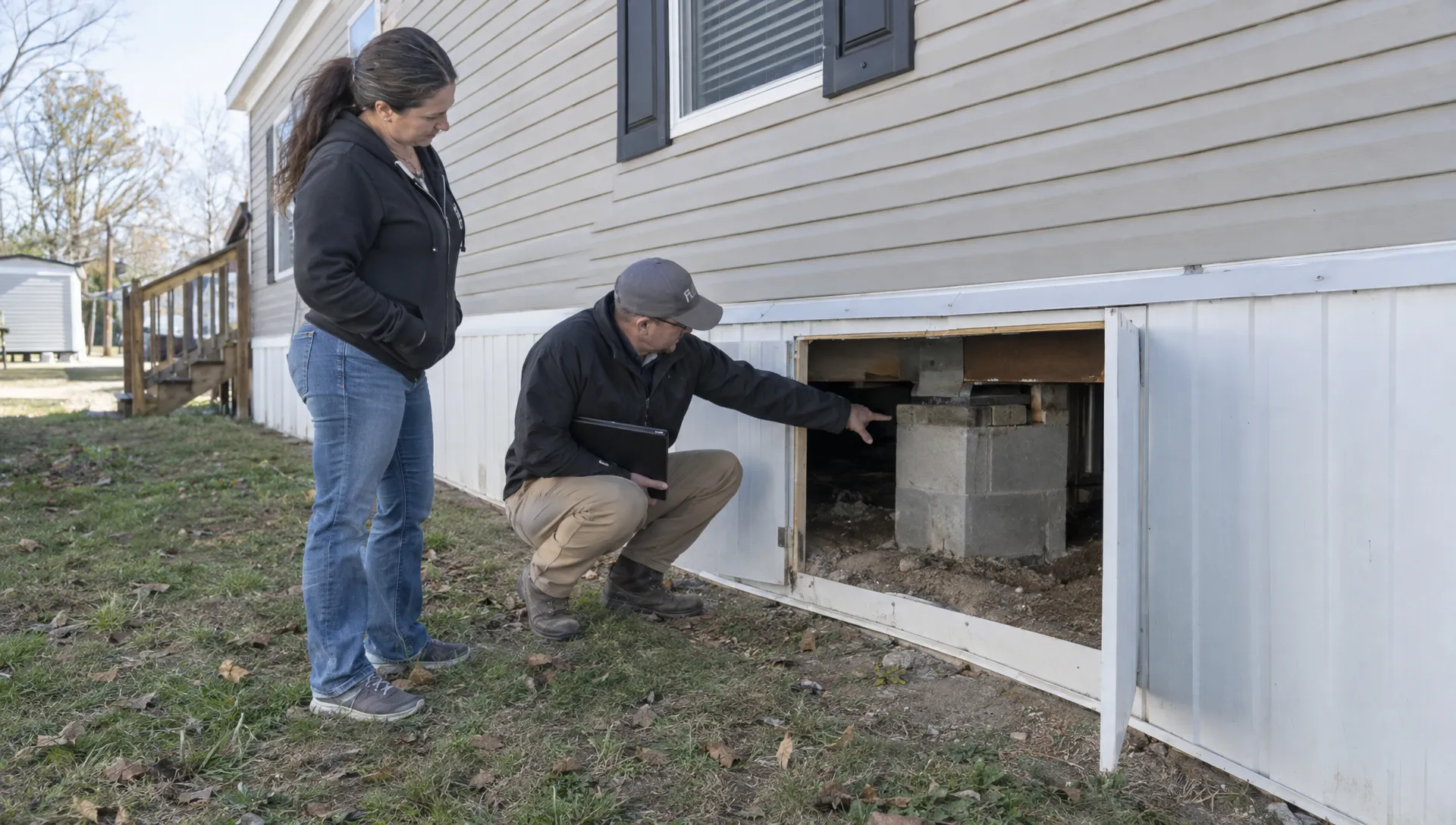
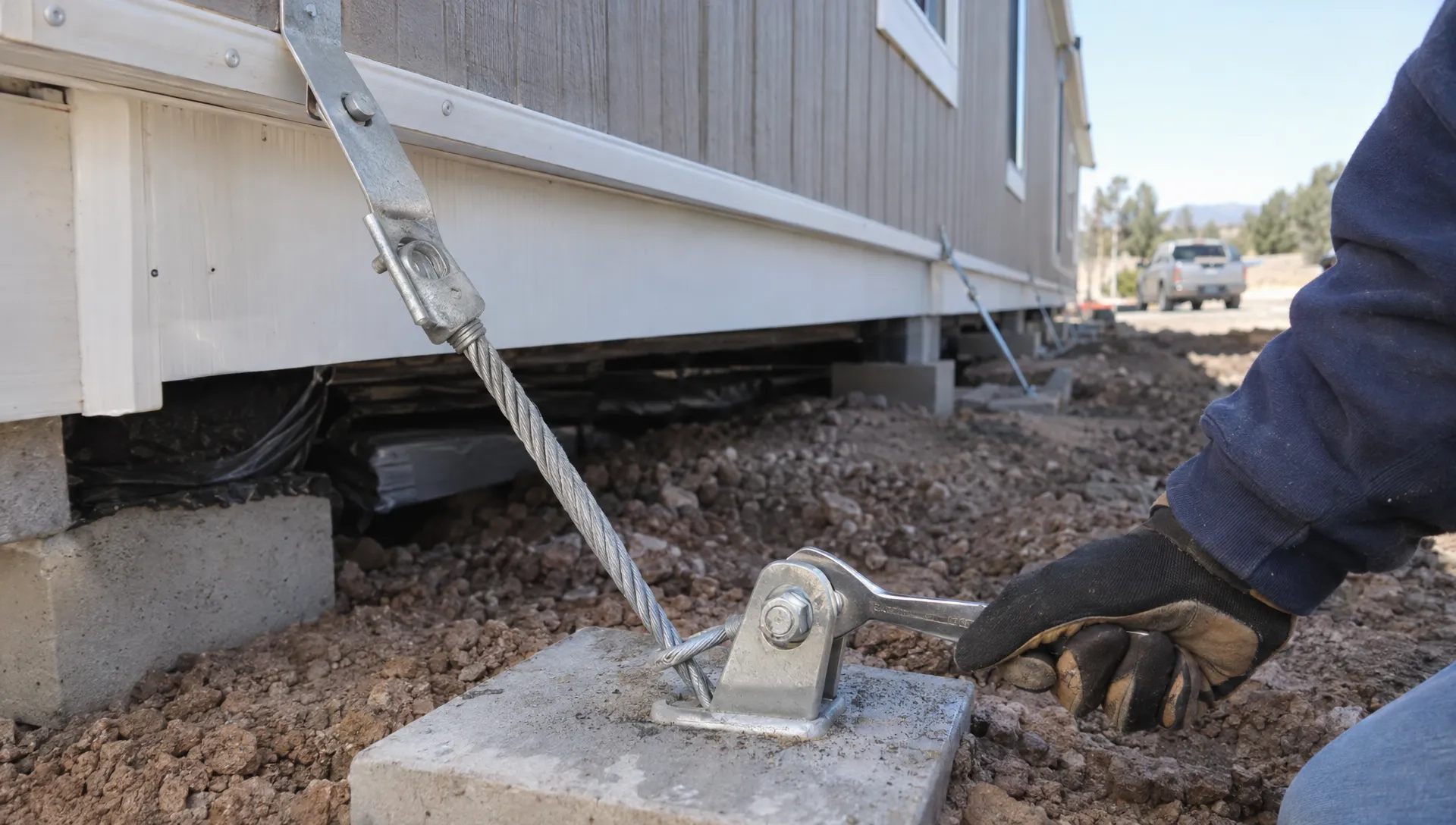
For FHA Title II financing, the home must be placed on a permanent foundation that meets FHA and HUD requirements. The foundation is not just a cosmetic detail. It affects safety, durability, insurability, and whether the home can be treated as real estate.
A lender may require a professional engineer’s foundation certification. This certification helps confirm that the foundation complies with applicable FHA standards, including proper support, anchoring, drainage, and attachment to the home.
Buyers should also expect the towing hitch, wheels, axles, and other transport equipment to be removed where required. The home should look and function like a permanent dwelling, not a temporary unit that can easily be moved again.
The home usually must be real property for FHA Title II
A major difference between manufactured home financing options is whether the home is treated as personal property or real property.
For FHA Title II, the lender generally wants the manufactured home and land to be part of the real estate collateral. In Texas, manufactured home ownership and title records involve the Texas Department of Housing and Community Affairs. Buyers can learn more from the TDHCA Manufactured Housing Division.
If the buyer owns the land and the manufactured home is permanently attached, the home may be eligible to be treated as real property when the proper documents and elections are completed. If the home is on a rented lot in a manufactured home community, that arrangement may not work for a standard FHA Title II mortgage, though other financing options may still be available.
The home must pass FHA appraisal review
FHA appraisals are not only about value. The appraiser also reviews condition and basic property acceptability. For a manufactured home, the appraisal may involve extra attention to the foundation, HUD labels, additions, access, utilities, drainage, and site conditions.
Common appraisal and property items include safe access from a public or private road, working utilities, adequate water and wastewater systems, proper drainage away from the home, and no obvious health or safety hazards. If the home has additions, porches, decks, carports, or enclosed rooms, the lender may need to confirm they were properly built and do not compromise the structure.
Texas and San Antonio considerations buyers should know
FHA guidelines are federal, but the property still has to work in Texas and in the local jurisdiction where it will be installed. A manufactured home near San Antonio may fall under city, county, or subdivision rules depending on the address.
For private land, buyers should check zoning or land-use restrictions, deed restrictions, utility access, septic requirements, driveway access, floodplain status, and whether the site can accept the size and type of home selected. A beautiful floor plan will not help if the land cannot be permitted, accessed, or improved within budget.
Flood risk also matters. FHA lenders may review whether the home is in a special flood hazard area and whether flood insurance is required. Buyers can research flood zones through FEMA’s Flood Map Service Center, but a lender, surveyor, or insurance professional should verify requirements for a specific property.
For San Antonio-area buyers, heat and energy costs are also practical concerns. FHA approval focuses on eligibility and safety, but your long-term budget should include insulation, HVAC performance, window quality, shade, and utility costs. An energy-efficient manufactured home may help keep the total monthly cost more manageable, especially during Texas summers.
Documents your lender may request
The exact document list varies by lender and transaction, but FHA manufactured home loans usually require more paperwork than a simple personal property purchase. Getting organized early can prevent delays.
| Document category | Examples | Why it matters |
|---|---|---|
| Borrower documents | Photo ID, pay stubs, W-2s or tax returns, bank statements, debt information | Supports credit, income, asset, and underwriting review |
| Home documents | Purchase agreement, model information, serial number, HUD labels, data plate, invoice or spec sheet | Helps confirm the home’s identity, value, and HUD Code status |
| Land documents | Deed, legal description, survey, title commitment, tax information | Confirms ownership, property boundaries, liens, and legal access |
| Foundation documents | Engineer certification, installation details, foundation plans, inspection records | Supports FHA permanent foundation requirements |
| Site documents | Utility confirmations, septic permits, well information, flood determination, driveway access | Helps the lender evaluate habitability and site readiness |
| Texas manufactured housing records | TDHCA Statement of Ownership or related documentation | Confirms manufactured home ownership and title status in Texas |
If you are buying a new manufactured home, ask for home specifications and floor plans early. If you are buying an existing home, verify the HUD labels, data plate, installation history, and title status before spending money on inspections or appraisals.
Step-by-step FHA approval path for a manufactured home
The FHA process is easier when you follow the right order. Many delays happen because buyers fall in love with a home or piece of land before confirming whether it fits the loan program.
- Talk with an FHA-experienced lender: Ask whether they finance manufactured homes and whether they offer Title I, Title II, or both.
- Get prequalified: Review your credit, income, debts, down payment funds, and estimated monthly payment range.
- Choose an FHA-eligible home: Confirm the home is HUD Code, properly labeled, large enough, and acceptable for the lender’s program.
- Confirm the land or community plan: Decide whether you are buying land, using land you already own, or placing the home in a community.
- Review title and foundation requirements: Make sure the home can be permanently installed and documented correctly.
- Order appraisal and inspections: The lender coordinates the FHA appraisal and may request foundation or engineering reviews.
- Clear conditions and close: Final documents, insurance, title work, and lender conditions must be satisfied before funding.
This sequence is especially important for first-time buyers. FHA can be flexible, but it is paperwork-driven. The earlier you identify possible issues, the easier they are to solve.
Common FHA deal-breakers for manufactured homes
Not every manufactured home will qualify for FHA financing. Some issues can be fixed, while others may require a different home or a different loan type.
Common problems include:
- Home built before June 15, 1976
- Missing HUD labels with no acceptable verification
- Home previously moved from another installed site, if the move violates lender or FHA requirements
- Foundation that does not meet FHA standards
- Home located on a rented lot when the buyer needs FHA Title II financing
- Land title problems, unpaid liens, or unclear ownership
- Unpermitted additions or structural modifications
- Inadequate utilities, septic, water supply, or access
- Floodplain issues without acceptable insurance or elevation compliance
- Appraised value below the purchase price
A deal-breaker for one loan program may not be a deal-breaker for every financing option. For example, a land-lease community purchase may not fit FHA Title II but could still work with another manufactured home loan. The key is to match the home, site, and buyer profile to the right financing path.
How to improve your chances of FHA approval
The best way to improve your odds is to shop with FHA guidelines in mind from the beginning. Do not wait until after you sign a contract to ask whether the home has HUD labels or whether the foundation can be certified.
If you are buying land and home together, focus on properties with clear title, legal access, available utilities, and enough space for the home, driveway, setbacks, and septic if needed. If you already own land, have a professional review site readiness before choosing a home size.
If you are still building your credit, ask a lender what specific steps would help most before you apply. Paying down revolving debt, documenting income, avoiding new debt, and saving for closing costs can all make a difference.
Working with a local manufactured home team can also help. Homes2Go San Antonio can help buyers compare home models, review floor plans, think through land or community placement, and connect with financing resources familiar with manufactured housing in the San Antonio area.
Frequently asked questions
Can I use an FHA loan to buy a manufactured home in a mobile home park? Possibly, but it depends on the loan type and the lot arrangement. A standard rented lot often does not fit FHA Title II requirements because the home is not financed with owned land as real property. Other options, such as FHA Title I or chattel financing, may be worth discussing with a lender.
Does FHA finance used manufactured homes? FHA may finance an existing manufactured home if it meets HUD Code, foundation, title, appraisal, and installation requirements. A home that was built before June 15, 1976, lacks acceptable HUD certification, or was moved in a way that violates guidelines may not qualify.
What credit score do I need for an FHA manufactured home loan? FHA has baseline credit guidelines, but lenders can set stricter requirements. Many buyers associate FHA with 3.5% down for qualifying credit profiles, but your actual approval depends on your full application, debt-to-income ratio, assets, and the property.
Does the manufactured home need a permanent foundation? For FHA Title II financing, yes, the home generally must be permanently attached to a foundation that meets FHA and HUD standards. Lenders often require an engineer’s foundation certification.
What happens if the HUD label is missing? The lender may request verification through IBTS or another acceptable documentation process. Missing labels should be addressed early because they can delay underwriting and appraisal review.
Are FHA loan limits different for manufactured homes? FHA Title II loans are subject to FHA mortgage limits for the county where the property is located. FHA Title I has its own program limits and rules. Since limits can change, verify current numbers with HUD or an FHA-approved lender.
Ready to explore FHA-friendly manufactured homes in San Antonio?
FHA financing can make manufactured homeownership more accessible, but the right home and site matter. Before you choose a model, land package, or community, make sure the plan fits your financing path.
Homes2Go San Antonio helps buyers compare manufactured home models, review floor plans, explore flexible financing options, and understand next steps for land, communities, and move-in ready homes. If you are starting your FHA loan journey in 2026, reach out to the Homes2Go team for local guidance before you commit to a home or property.
 FHA 203(k) for Manufactured Homes: What Actually Qualifies
 Can You Buy a Single Wide With FHA in 2026?