
Yes, you can add solar panels to a manufactured home in Texas, but it is not a plug-and-play decision. The home must be structurally suitable, the roof must be in good condition, the electrical system must be ready for interconnection and the site must allow solar under local, utility and community rules.
For San Antonio buyers, the best time to think about solar is before choosing a manufactured home or lot. A little planning can make the difference between a clean roof-mounted system, a better ground-mounted option or a decision to improve energy efficiency first.
Short answer: solar is possible, but approval depends on the home and site
Solar panels can be installed on many manufactured homes in Texas. The key word is many. A solar contractor should never assume that every roof is ready for panels just because it has enough space.
A solar project for a manufactured home usually needs review in five areas:
- The roof structure, roof age and roof covering
- The electrical panel, meter location and utility interconnection rules
- Local permits from the city, county or authority having jurisdiction
- Land ownership, community rules, deed restrictions or HOA requirements
- Insurance, financing and title considerations
If one of these items creates a problem, solar may still be possible through a ground-mounted system, a detached carport structure or an efficiency-first approach that lowers the size of the solar system you need later.
Why manufactured homes need a solar-specific review
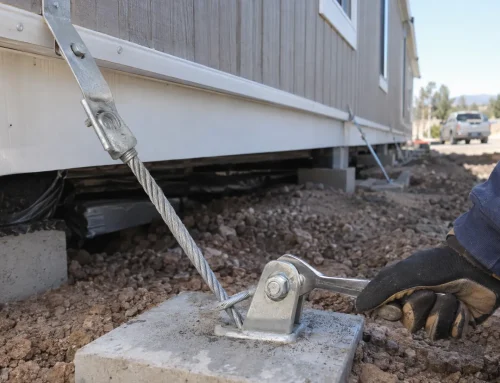
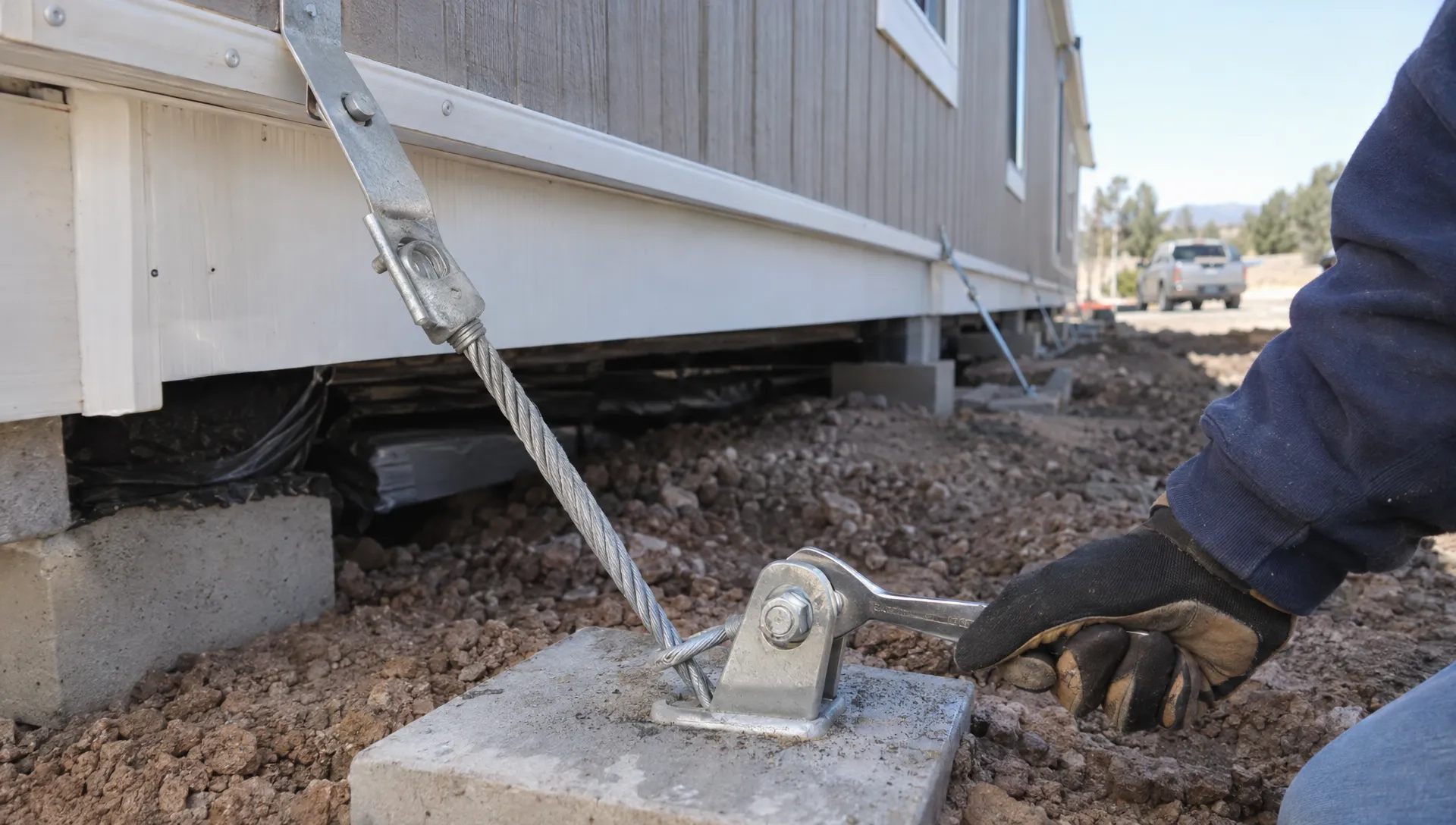
Manufactured homes built after June 15, 1976 are constructed under the federal HUD Code rather than the same local building code used for site-built homes. That does not make them unsuitable for solar. It does mean the installer needs to respect the way the home was engineered, transported, installed and anchored.
If you are still learning how federal standards, Texas installation rules and local requirements fit together, Homes2Go has a helpful overview of HUD guidelines for manufactured homes in Texas. That background matters because solar adds permanent equipment to a structure that was built to a specific standard.
Texas weather adds another layer. South and Central Texas homes deal with heat, hail, heavy rain, high winds and long cooling seasons. A solar installation must be designed for wind uplift, flashing, waterproofing and long-term roof performance, not just panel production.
Start with the roof, not the solar quote
The roof is usually the first pass-or-fail point. Solar panels add weight, mounting hardware and wind forces. Many rooftop solar arrays add only a few pounds per square foot, but the exact load depends on the panel type, racking system, attachment method and roof design. A qualified installer or structural professional should calculate the actual load instead of relying on a rule of thumb.
Roof age matters too. If your shingles are near the end of their life, it is usually smarter to replace the roof before installing solar. Removing and reinstalling panels for a roof replacement adds labor and can complicate warranties. For a manufactured home, the installer should also pay close attention to seams, vents, roof pitch, ridge lines and any previous repairs.
Ask for clear answers on these items before you sign a solar contract:
- Whether the roof covering has enough remaining life for a long-term solar installation
- Whether the trusses or rafters can support the added load
- How the mounting system will be flashed and sealed against water intrusion
- Whether roof penetrations could affect any existing roof warranty
- How the design avoids plumbing vents, attic vents, skylights and shaded roof sections
A reputable solar company should be willing to explain these details in writing. If the answer is vague, slow down.
Electrical, permit and utility requirements in Texas
Grid-tied solar is electrical work. In Texas, that generally means permits, inspection and utility approval before the system can operate. The exact process depends on where the home is located. A home inside San Antonio city limits may follow a different permitting path than a home in an unincorporated part of Bexar County or a surrounding county.
Most projects need a plan set, an electrical permit, a utility interconnection application and final permission to operate from the utility. The work should be handled by a solar contractor that can coordinate with a properly licensed electrical professional and the local authority having jurisdiction. The system must also comply with the National Electrical Code provisions that apply to photovoltaic systems.
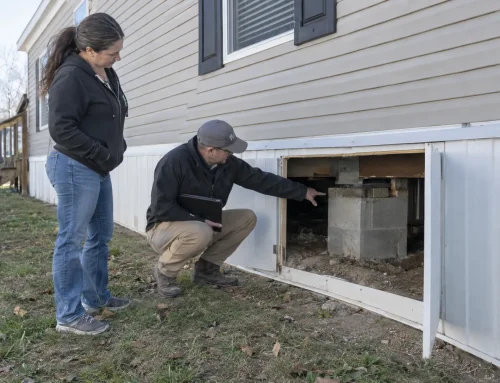
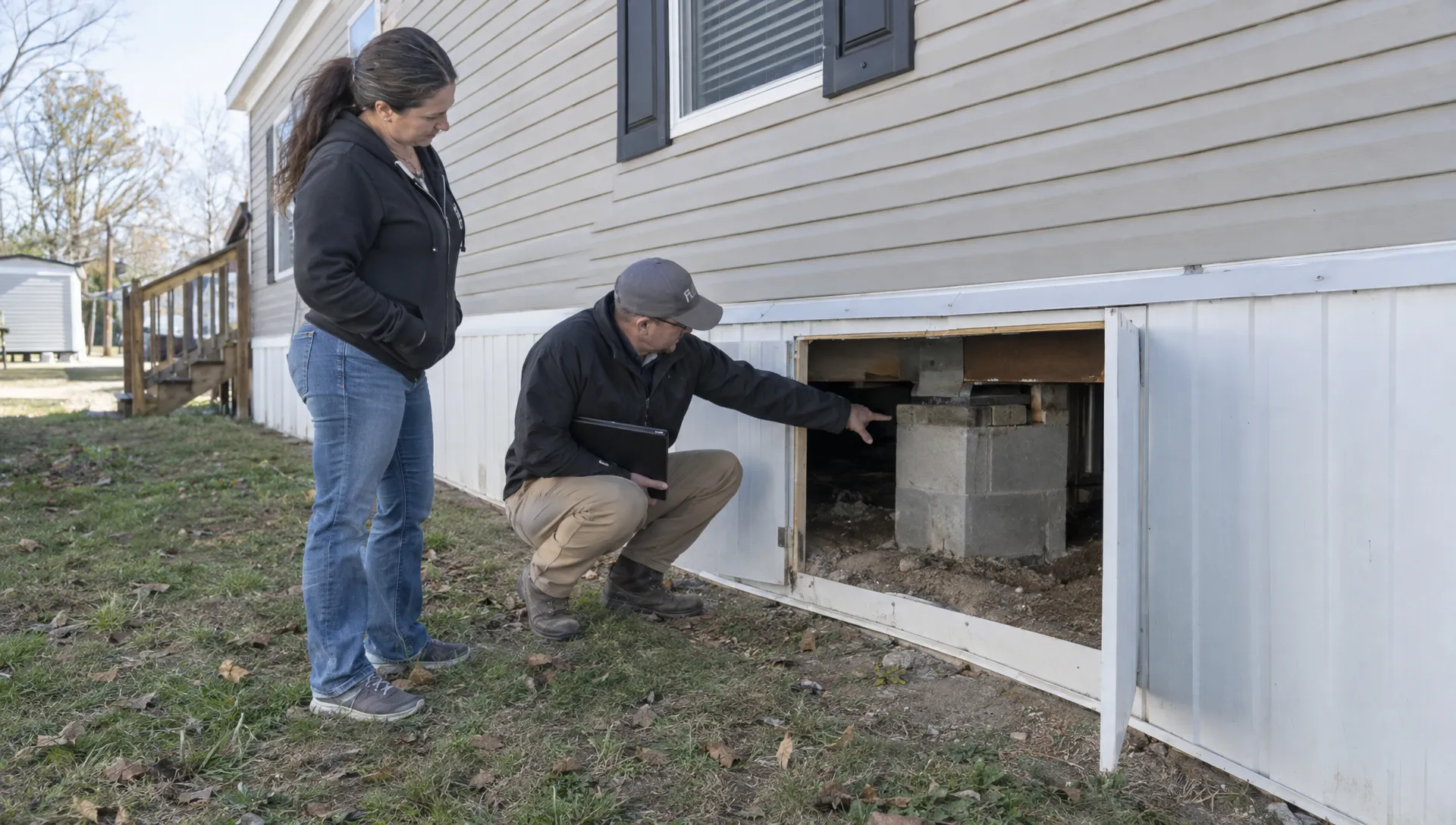
The installation status of the home matters as well. If the manufactured home is not level, properly supported or properly anchored, adding solar before addressing those items can create problems. Buyers who want a broader sense of what professionals look at during setup and resale can review what is commonly covered in a manufactured housing inspection in Texas.
If you rent the lot or live in a community, get permission first
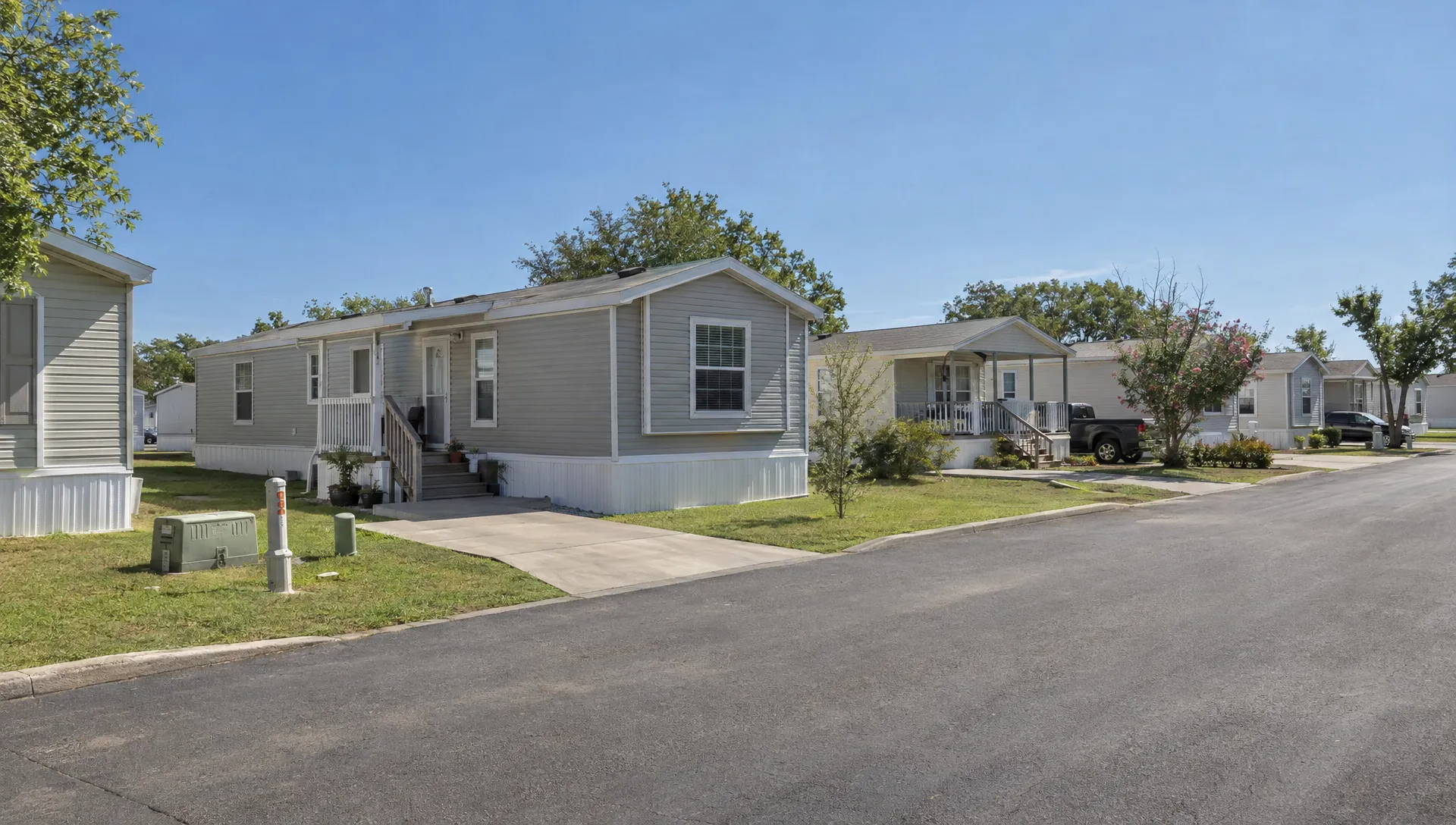
Solar gets more complicated when the homeowner does not own the land under the home. Many manufactured home communities have rules about exterior modifications, roof work, equipment placement, trenching, visible conduit and detached structures. A community may allow rooftop solar but reject a ground-mounted array, or it may require written approval before any contractor begins work.
If you lease the lot, get written permission from the landowner or community manager before applying for permits or paying a deposit. If you own the land but have deed restrictions or HOA rules, review those documents early. Texas law offers certain protections for solar installations in some HOA situations, but those protections can be fact-specific and do not remove the need for proper approval, design and permits.
Shopping for a manufactured home with solar in mind
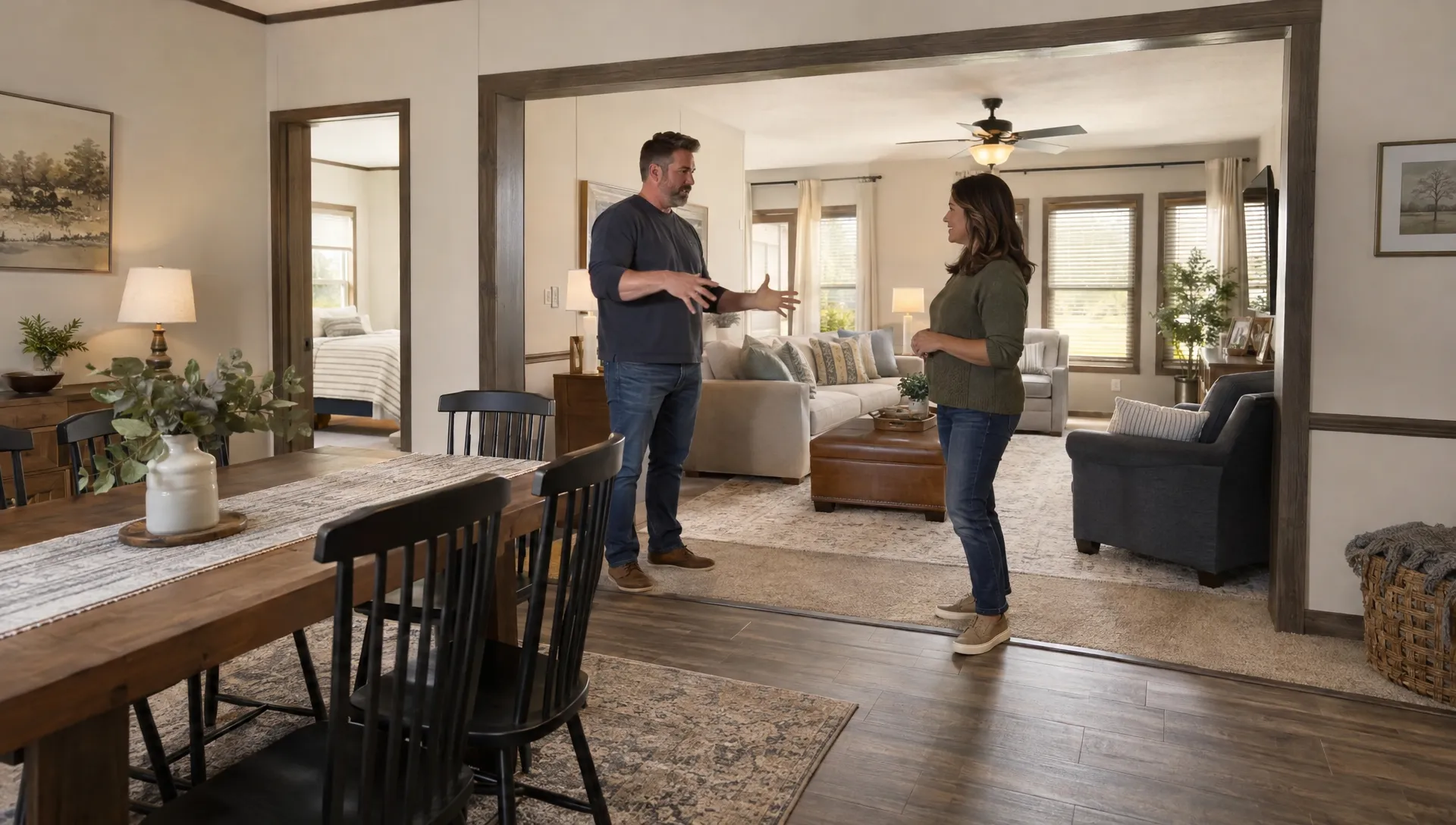
If you have not bought the home yet, you are in the best position. Solar planning starts with the lot, the roof layout and the home’s overall energy performance. A sunny lot with fewer shade issues can produce more energy than a larger roof surrounded by trees or neighboring structures. A simple roof plane facing south or west can also make design easier, although east and west orientations can still work depending on your goals and utility rate structure.
When comparing floor plans, look beyond square footage. Ask where the electrical panel is located, whether the roof has vents or features that interrupt panel placement and how the home will sit on the property. Also think about energy efficiency before solar sizing. A well-insulated manufactured home with efficient windows, a properly sized HVAC system and good air sealing may need a smaller solar system to offset the same portion of electricity use. For more on that side of the equation, see this guide to energy-efficient manufactured homes in Texas heat.
For example, the Oak Creek Vaquero is a 3 bedroom, 2 bathroom, 1,736 sq ft doublewide manufactured home with 32' x 56' dimensions, based on Oak Creek Homes floor plan T56P. A buyer considering this type of footprint can ask early questions about roof orientation, shade, service equipment location and future solar equipment placement.
Another example is the Legacy Heritage H-3264-32AP, a 3 bedroom, 2 bathroom, 1,678 sq ft doublewide manufactured home with 32' x 64' dimensions from Legacy Housing. The larger rectangular footprint gives buyers a practical starting point for discussing roof planes, site layout and whether rooftop or ground-mounted solar would make more sense. Final solar feasibility still requires a site-specific review.
Roof-mounted vs ground-mounted solar for manufactured homes
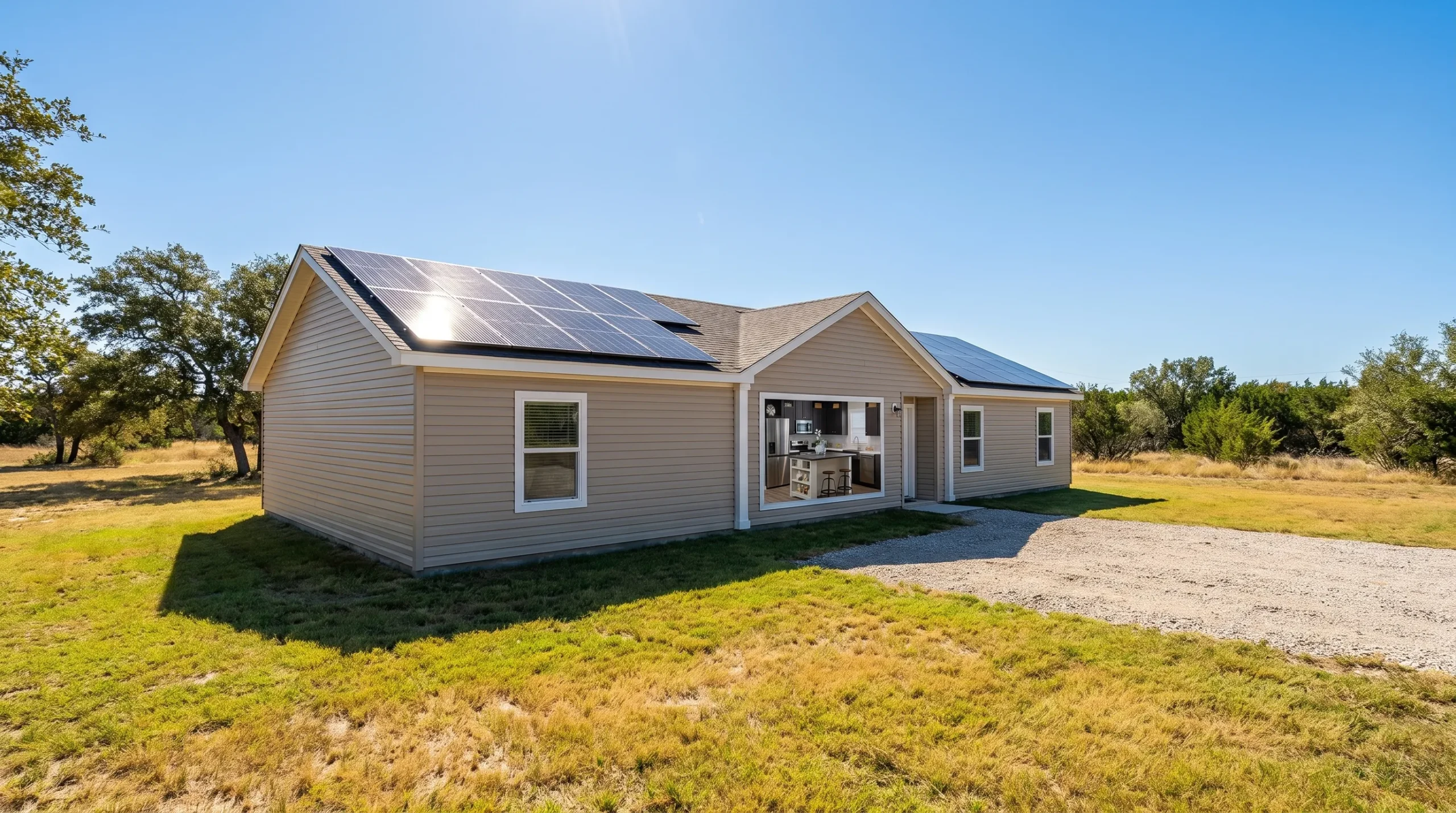
Roof-mounted solar is common because it uses existing space and keeps equipment out of the yard. For manufactured homes, though, ground-mounted solar can be a strong alternative when the roof is older, shaded, complex or not structurally approved for panels.
| Solar option | Best fit | What to watch |
|---|---|---|
| Roof-mounted solar | Newer roof, good sun exposure, approved structure | Roof penetrations, wind uplift, future roof replacement and warranty terms |
| Ground-mounted solar | Owned land with open sunny space | Trenching, setbacks, mowing access, fencing, permits and extra equipment costs |
| Detached carport or structure | Site allows a separate structure and shaded parking is useful | Structural design, permitting, distance to the electrical service and community rules |
Ground-mounted systems are not automatically easier. They may require trenching, more racking, more land and extra permitting review. Still, they can be easier to service and can avoid putting additional load on the manufactured home roof.
Texas solar incentives and utility credits to verify in 2026
As of 2026, the federal Residential Clean Energy Credit can cover 30% of qualified solar electric property costs for eligible systems placed in service through 2032. The IRS explains the Residential Clean Energy Credit, including eligibility rules and tax treatment. This is a tax credit, not an instant rebate, so buyers should speak with a tax professional about their own situation.
Texas also has a property tax benefit for certain renewable energy devices. The Texas Tax Code provides an exemption for the added appraised value of qualifying solar or wind-powered energy devices, and the Texas Comptroller maintains information on property tax exemptions in Texas. County appraisal districts handle the exemption process, so homeowners should confirm forms and deadlines locally.
Utility credits are different. Texas does not have one statewide net metering rule that forces every retail electric provider or municipal utility to credit solar exports the same way. Your buyback rate, bill credit structure and interconnection process depend on the utility or electric provider. In San Antonio, check current CPS Energy solar policies before you sign a contract because rates and program terms can change.
For production estimates, the NREL PVWatts Calculator is a useful free tool. It can estimate solar output based on location, system size, roof tilt, direction and losses. It will not tell you whether your manufactured home roof can support panels, but it can help you compare expected production across roof orientations and system sizes.
Solar readiness checklist for a manufactured home in Texas
Before comparing solar proposals, gather the basic information that contractors, lenders, insurers and inspectors may ask for. The goal is not to become a solar engineer. The goal is to avoid surprises after you have already paid a deposit.
| Item to verify | Why it matters | Who can help |
|---|---|---|
| Home make, model, year and HUD label information | Confirms the type of manufactured home and helps with structural review | Home seller, dealer, installer or inspector |
| Roof age and roof material | Determines whether roof work should happen before solar | Roofer, inspector or solar contractor |
| Roof structure and load capacity | Confirms whether rooftop panels are appropriate | Solar contractor or structural professional |
| Foundation, leveling and anchoring | Helps confirm the home is properly installed before added work | Manufactured home installer or inspector |
| Electrical panel size and condition | Determines whether upgrades are needed for solar interconnection | Licensed electrical professional |
| Land ownership and community rules | Controls whether roof, ground or detached solar is allowed | Landowner, community manager, HOA or title documents |
| Utility interconnection process | Determines approval steps and export credit rules | Utility, retail electric provider or solar contractor |
Keep copies of approvals, permits, inspections, utility permission to operate and warranty documents. Those records can help with insurance, resale and future service.
Financing, insurance and resale questions
Solar financing can affect a manufactured home differently depending on how the home and land are titled. If the home is titled as personal property, the financing path may not look the same as a site-built home with a traditional mortgage. If the home and land are titled together as real property, lenders may review solar liens, leases or power purchase agreements more closely during refinancing or resale.
Before choosing a solar loan, lease or power purchase agreement, ask how it affects your ability to sell the home, move the home, refinance the home or insure the home. Some buyers prefer owning the solar system because it can simplify resale. Others focus on monthly payment comparisons. Either way, read the contract carefully and ask whether there is a lien, transfer requirement or early payoff condition.
Insurance is just as important. Tell your insurance provider before installation and ask whether the panels, inverter, wiring and detached equipment are covered for hail, wind, theft or fire. In Texas, hail exposure is not a minor issue. Your insurer may want permit records, contractor information or proof that the system was installed to code.
When solar may not be the first upgrade
Solar is most valuable when it offsets electricity you would otherwise buy. If your home uses too much power because of air leaks, poor duct performance, an aging HVAC system or insufficient insulation, solar may be covering waste rather than solving the problem.
For many San Antonio households, the smartest sequence is to improve efficiency first, then size solar based on the lower electric load. That could mean choosing an energy-efficient manufactured home, sealing ducts, maintaining the HVAC system, using smart thermostat settings, improving skirting or reducing heat gain through windows. Lower consumption can reduce the number of panels needed and make a future solar system easier to finance.
Frequently Asked Questions
Can solar panels be installed on a mobile home in Texas? Yes, but the term mobile home is often used casually. For a post-1976 manufactured home, solar may be possible if the roof structure, electrical system, permits, utility interconnection and site rules all support the project.
Do manufactured homes need special solar panels? Usually no. The bigger issue is not the panel itself, but the mounting system, roof condition, structural capacity, wind design and electrical connection. The installer should design the system for the specific home and site.
Do I need a permit for solar panels on a manufactured home in Texas? Most grid-tied solar systems require permits, inspection and utility approval before operation. The exact process depends on your city, county, utility and whether the home is in a community with additional rules.
Is ground-mounted solar better for a manufactured home? It can be better if the roof is older, shaded, too small or not approved for the extra load. Ground-mounted solar works best when you own enough sunny land and local rules allow the equipment placement.
Will solar panels void my manufactured home roof warranty? They can if the installation penetrates the roof or alters covered materials in a way the warranty does not allow. Review the roof warranty and ask the solar contractor how flashing, sealing and workmanship warranties are handled.
Can Homes2Go install solar panels? Homes2Go helps buyers compare manufactured home models, floor plans, financing options and homeownership steps in the San Antonio area. Solar design and installation should be handled by qualified solar and electrical professionals, but planning for solar can be part of your home selection conversation.
Make your next manufactured home easier to power
Solar panels can be a smart addition to a manufactured home in Texas, especially when the home, roof, land and utility rules are considered early. The safest path is to choose an efficient home, understand the site and verify solar feasibility before committing to equipment.
If you are shopping for a manufactured home in the San Antonio area, Homes2Go San Antonio can help you compare models, review floor plans and think through practical questions like energy efficiency, lot layout and long-term homeownership costs.
 Champion Home Warranty Coverage: What Buyers Should Check
 Mobile Home Termite Inspections: When and Why You Need One