
Utility bills are one of the easiest homeownership costs to underestimate. A home can look affordable on paper, then feel expensive every month if it is hard to cool, poorly sealed, or oversized for the way your family actually lives.
That is why many San Antonio buyers look closely at manufactured homes. A well-chosen manufactured home can help lower utility bills by combining efficient layouts, modern building standards, better insulation options, practical square footage, and smart setup decisions. The key is not just buying a lower-priced home. It is choosing a home that costs less to operate month after month.
Why manufactured homes can be easier to run efficiently
Modern manufactured homes are built in a factory environment and must follow federal construction and safety standards administered through the HUD manufactured housing program. Those standards cover important areas such as structural design, heating, plumbing, electrical systems, and thermal protection. You can learn more about the federal framework through HUD's manufactured housing program.
Factory construction does not automatically make every home equally efficient, but it does create a more controlled building process. Materials are cut and assembled in a consistent environment, construction details can be repeated across models, and the home is designed as a complete system rather than a collection of on-site decisions.
Manufactured homes can lower utility bills in three practical ways:
- Less wasted square footage: A smart floor plan gives you the rooms you need without paying to cool unused space.
- More predictable construction: Factory-built homes are assembled with repeatable processes that can support consistent insulation, air sealing, and system installation.
- Modern efficiency options: Buyers can compare features like windows, HVAC setup, appliances, and insulation before choosing a model.
For buyers in South Texas, the biggest monthly difference often comes from cooling. A home that limits heat gain and distributes cool air efficiently can feel more comfortable without forcing the air conditioner to work as hard.
Right-sized floor plans reduce the space you pay to cool
Every extra square foot has to be cooled, lit, cleaned, and maintained. That does not mean smaller is always better. It means the most affordable home over time is usually the one with the right amount of space for your household.
A three bedroom home with a clean layout may serve a family better than a larger home with awkward hallways, unused formal areas, or rooms that do not match daily routines. Open living areas, efficient bedroom placement, and practical storage can make a home feel spacious without adding unnecessary square footage.
This is where comparing floor plans matters. For example, the Legacy Heritage H-3264-32A is a 3 bedroom, 2 bathroom, 1,865 sq ft doublewide manufactured home with 32' x 64' dimensions. A buyer who needs more living space can compare that layout against a slightly smaller option like the Legacy Heritage H-3264-32AP, a 3 bedroom, 2 bathroom, 1,678 sq ft doublewide manufactured home with the same 32' x 64' dimensions.
The point is not that one floor plan is automatically cheaper to operate than the other. The point is that utility costs start with the amount and arrangement of space you choose. If two homes both fit your needs, the layout that avoids unused space may help reduce cooling, lighting, and general operating costs over time.
Insulation and air sealing help keep conditioned air inside
In San Antonio, summer heat can push an air conditioner hard. Insulation and air sealing help reduce how much outdoor heat moves into the home and how much cooled air escapes.
When comparing manufactured homes, ask about insulation in the roof, walls, and floor. Also ask how penetrations around ducts, vents, plumbing, and electrical openings are sealed. Small gaps may not seem important, but air leaks can add up when the temperature outside is much hotter than the temperature you want indoors.
Good air sealing also improves comfort. A home with fewer drafts and fewer hot spots can maintain a steadier temperature. That means the thermostat does not have to compensate as aggressively for rooms that heat up faster than the rest of the home.
If you want to go deeper on the cooling side specifically, Homes2Go has a helpful guide on how manufactured homes reduce heating and cooling costs in the San Antonio climate.
Efficient windows reduce heat gain and glare
Windows are one of the most important comfort features in a Texas home. They bring in natural light, but they can also bring in unwanted heat. In hot climates, efficient windows help reduce solar heat gain, especially on east-facing and west-facing walls that receive intense morning or afternoon sun.
Look for window details such as Low-E glass, quality framing, and appropriate performance ratings for the climate. ENERGY STAR explains that window performance depends on factors such as U-factor and solar heat gain coefficient, and that the right choice varies by climate zone. Their guide to ENERGY STAR windows, doors, and skylights is a useful place to understand the basics.
Window placement also matters. A home with large, unshaded windows facing the hottest parts of the day may need more cooling than a similar home with better shade, window coverings, or orientation. If you are comparing models, do not just count windows. Think about where those windows will sit on the property.
For a more detailed look at this topic, see Homes2Go's guide on how efficient windows cut costs in manufactured homes.
HVAC sizing matters as much as HVAC efficiency
A high-efficiency air conditioner is helpful, but only if it is properly sized and installed for the home. An oversized unit may cool the space quickly without removing enough humidity. An undersized unit may run constantly and still struggle during peak heat.
The right HVAC setup considers the home size, insulation, windows, duct layout, and local climate. Ductwork also matters because leaks, poor connections, or ducts placed in hot areas can waste conditioned air before it reaches the rooms where you need it.
Thermostat habits can make a measurable difference too. The U.S. Department of Energy notes that programmable thermostats can help save energy when used to reduce heating and cooling demand at appropriate times. Their programmable thermostat guidance is a good starting point for understanding how scheduling can reduce waste.
| Feature to compare | How it affects utility bills | What to ask before buying |
|---|---|---|
| Floor plan size | More conditioned space usually means more cooling demand | Does this layout fit our real daily needs without wasted rooms? |
| Insulation | Slows heat transfer through roof, walls, and floor | What insulation levels are included in the home? |
| Windows | Can reduce heat gain, glare, and cooling load | Are efficient window options available for this model? |
| HVAC system | Impacts electricity use and comfort | Is the system sized for the home and climate? |
| Ductwork | Leaky or poorly placed ducts can waste cooled air | How is the duct system installed and inspected? |
| Site orientation | Sun exposure affects indoor temperature | Can the home be placed to reduce afternoon heat gain? |
Utility savings go beyond the air conditioner
Cooling is the biggest concern for many San Antonio households, but it is not the only utility cost to think about. Electricity, water, and sometimes gas or propane all affect the monthly budget.
Lighting is one simple example. LED lighting uses less electricity and lasts longer than older incandescent bulbs. If a home already includes efficient fixtures, that can reduce everyday electricity use. If not, replacing bulbs after move-in is usually a simple upgrade.
Water heating is another area to examine. Showers, laundry, dishwashing, and handwashing all add up. The size and efficiency of the water heater, the location of fixtures, and the household's habits all influence monthly costs. Low-flow showerheads and faucet aerators can help reduce water use without changing the home itself.
Appliances matter too. Refrigerators, washers, dryers, dishwashers, and cooking equipment all contribute to energy use. When appliances are included or selected during the buying process, ask about efficiency ratings and expected operating costs. If appliances are purchased separately, compare the long-term energy use rather than choosing only by sticker price.
Site setup can protect your utility budget
A manufactured home's efficiency is not only determined at the factory. Setup and site conditions also play an important role.
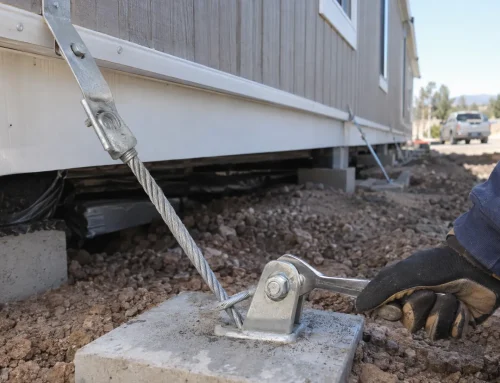
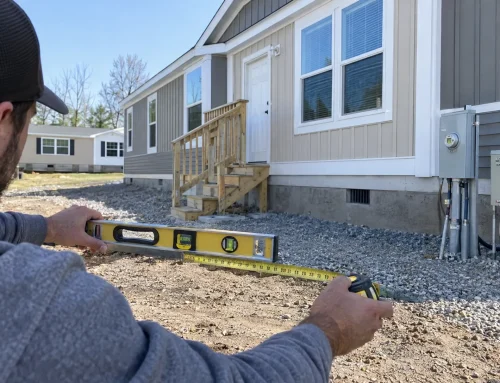
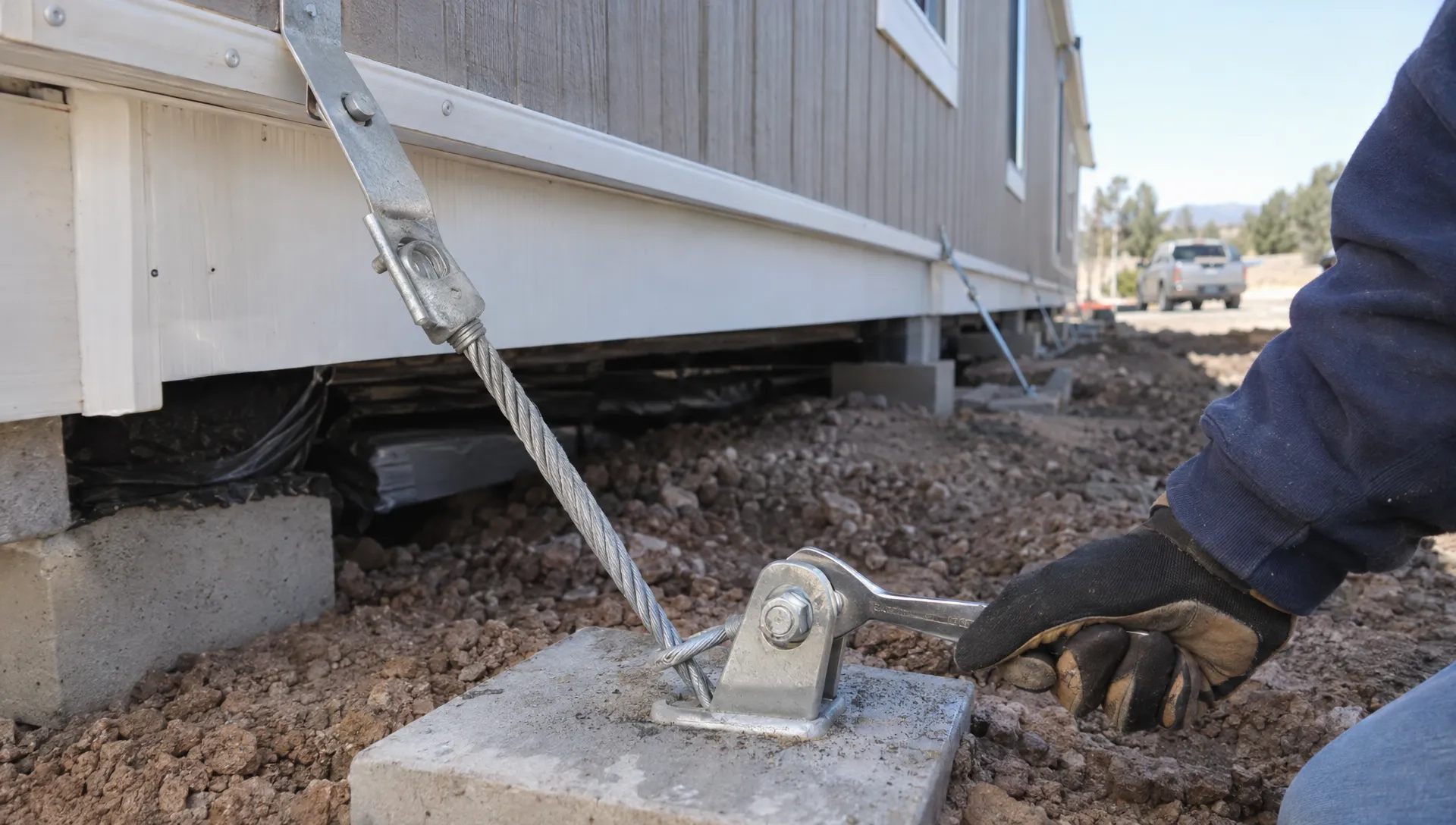
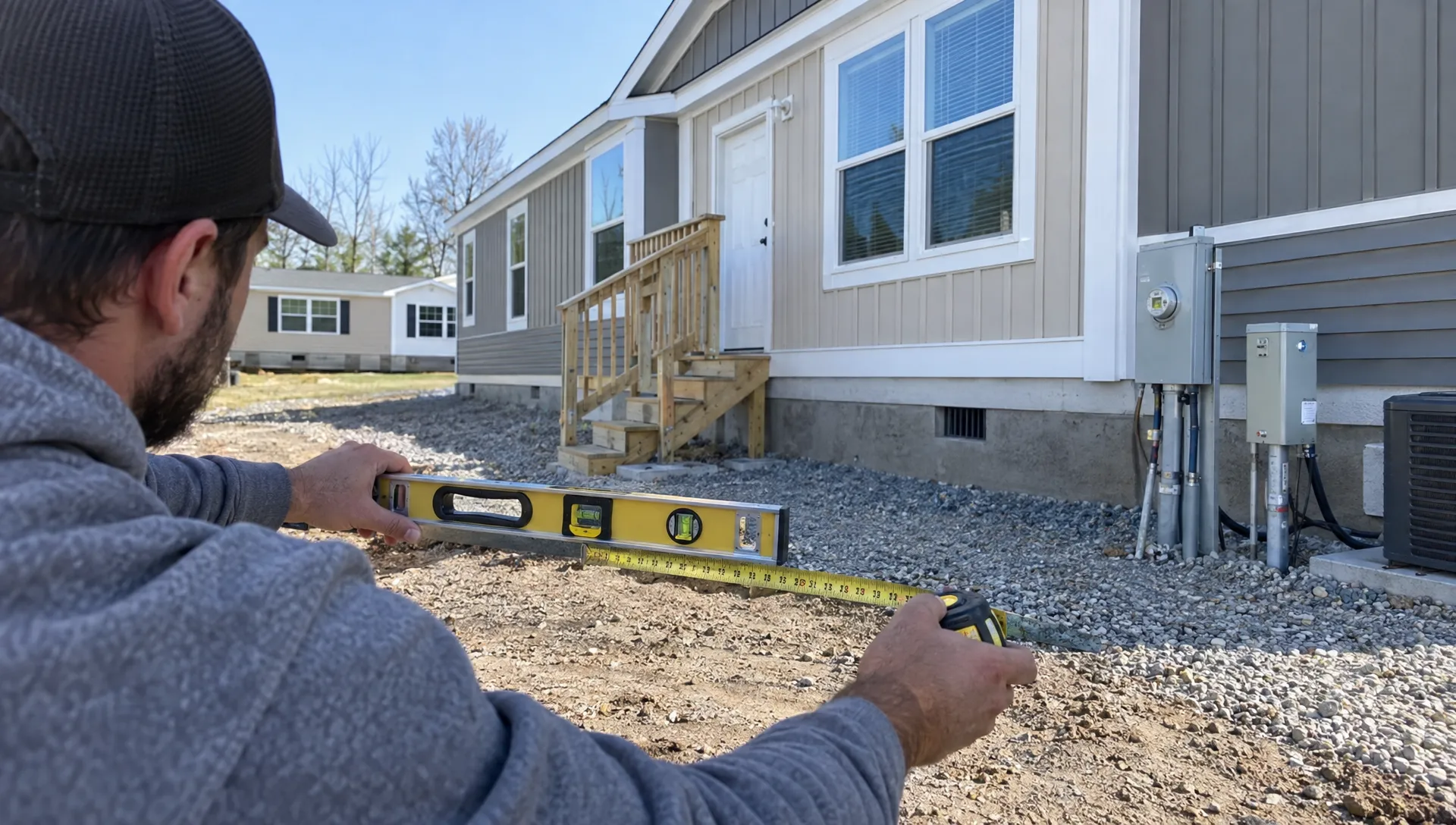
Proper installation helps the home perform as intended. Leveling, anchoring, skirting, ventilation, drainage, and utility connections should all be handled carefully. Poor drainage can create moisture problems. Damaged or poorly fitted skirting can allow unwanted airflow under the home. Badly sealed utility penetrations can create leaks that affect comfort.
Shade can also help. Mature trees, covered porches, awnings, and exterior shading can reduce direct sunlight on walls and windows. In Texas, keeping afternoon sun off the home can improve comfort and reduce cooling demand. Landscaping choices should also consider water use, especially during dry periods.
Inside the home, simple maintenance supports lower bills. Replace HVAC filters on schedule, keep vents open and unobstructed, use ceiling fans wisely, seal obvious gaps, and close blinds during the hottest hours. These habits cost little but help the home operate more efficiently.
Use total monthly cost, not just purchase price
A lower purchase price is helpful, but the best deal is the home that fits your budget after utilities, financing, insurance, site costs, and maintenance are considered. A slightly higher-quality feature may make sense if it helps reduce monthly bills or improves comfort for years.
This is especially important for first-time buyers. It is easy to compare homes based only on bedroom count, square footage, and monthly payment. A smarter approach is to compare the full ownership picture.
Homes2Go's guide to cheap manufactured homes for sale and smart buying tips explains why buyers should look beyond the listing price and consider setup, utilities, and long-term costs.
Here is a practical way to compare two homes before making a decision:
| Buying question | Why it matters |
|---|---|
| How much space will we actually use every week? | Avoids paying to cool rooms that do not serve a clear purpose |
| What efficiency features are included? | Helps compare long-term operating cost, not just price |
| How will the home be positioned on the lot? | Sun exposure can affect cooling demand |
| What utility connections and setup work are needed? | Prevents surprise costs after purchase |
| Who can explain financing and lender options? | Helps estimate a realistic monthly budget |
| What maintenance will keep the home efficient? | Protects comfort and prevents wasted energy |
Red flags that can lead to higher utility bills
Some homes look affordable at first but may cost more to operate if key details are overlooked. During your search, pay attention to signs that the home may not perform as efficiently as expected.
Be cautious if you cannot get clear information about insulation, HVAC sizing, window features, or setup requirements. Also be careful when a home is larger than your needs simply because the monthly payment appears manageable. More space can be valuable, but only if you will use it.
Another red flag is ignoring the homesite. A great floor plan can still struggle if it is placed with heavy afternoon sun exposure, poor drainage, or limited shade. The home and the lot should be evaluated together.
Finally, do not assume that energy efficiency is only about one big feature. Lower utility bills usually come from a combination of practical decisions: the right size home, a good building envelope, efficient windows, proper HVAC, careful setup, and smart daily habits.
How Homes2Go helps buyers ask the right questions
Homes2Go San Antonio works with buyers who want affordable manufactured and mobile homes without overlooking comfort and long-term costs. The value is not just seeing available models. It is getting guidance as you compare floor plans, financing options, communities, and home features.
If lower utilities are part of your goal, bring that up early in the process. Ask to compare home sizes, layouts, insulation details, HVAC considerations, and window options when available. A clear conversation before you buy can help you choose a home that fits your family and your monthly budget.
Frequently Asked Questions
Do manufactured homes always have lower utility bills? Not automatically. Manufactured homes can lower utility bills when the home is well-sized, properly installed, and equipped with efficient features. A larger or poorly set up home can still have high utility costs.
What utility cost matters most in San Antonio? For many households, electricity for cooling is the largest seasonal concern. Insulation, windows, HVAC sizing, shade, and thermostat habits all affect how hard the air conditioner has to work.
Is a smaller manufactured home always cheaper to operate? Usually, less square footage can reduce cooling and lighting demand, but layout matters too. A well-designed larger home may be a better fit than a smaller home that feels cramped or forces inefficient use of space.
What should I ask about before choosing a model? Ask about insulation, windows, HVAC sizing, ductwork, appliance efficiency, site orientation, skirting, and setup requirements. Also ask how the floor plan fits your daily routines.
Can financing affect my utility budget? Financing does not directly reduce utility bills, but it affects your total monthly housing cost. A realistic budget should include the home payment, insurance, utilities, maintenance, and any site-related costs.
Ready to compare efficient manufactured homes in San Antonio?
If you want a home that feels affordable after move-in, focus on the full monthly picture. The right manufactured home can help reduce utility bills through smart design, efficient features, proper setup, and a floor plan that matches how you actually live.
To explore available homes and get guidance from a local team, visit Homes2Go San Antonio and start comparing options that fit your space needs, comfort goals, and budget.
 Energy Saving Mobile Homes for Hot Texas Summers
 FHA Modular and Manufactured Home Loans Compared