
FHA 203(k) financing can sound like the perfect answer if you found a manufactured home that needs repairs. One loan, one closing, money set aside for improvements. Simple, right?
Not always.
For manufactured homes, the 203(k) rules are much narrower than many buyers expect. The home has to meet FHA manufactured housing standards, the land and title have to work for real estate financing, and the planned repairs must fit the program. A home can be affordable, livable, and attractive, yet still fail 203(k) eligibility because of its foundation, title status, age, or location.
Below is a practical breakdown of what actually qualifies, what usually does not, and what San Antonio-area buyers should verify before spending money on inspections, appraisals, or contractor bids.
The short answer: yes, but only in specific cases
According to HUD, the FHA 203(k) Rehabilitation Mortgage Insurance program is designed to help buyers or homeowners finance a purchase or refinance plus eligible repairs through one FHA-insured mortgage.
For a manufactured home, that typically means all of these must be true:
- The home was built to the HUD Code after June 15, 1976.
- The home is permanently attached to an FHA-compliant foundation.
- The home and land can be financed as real property, not just personal property.
- The repairs are eligible under FHA 203(k) rules and do not create prohibited structural issues.
- The borrower, property value, appraisal, and lender requirements all line up.
That last point matters. FHA sets the baseline, but lenders may add their own requirements. A deal that is technically possible under FHA guidelines may still be declined by a specific lender because of risk, documentation gaps, home condition, or investor overlays.
The four qualification layers lenders look at
Think of FHA 203(k) eligibility for manufactured homes as four separate tests. Passing one does not guarantee the others.
| Qualification layer | What the lender is checking | Common reason a deal fails |
|---|---|---|
| Manufactured home eligibility | HUD Code status, age, labels, size, condition, and installation history | Home was built before June 15, 1976 or lacks acceptable documentation |
| Foundation and land | Permanent foundation, real property status, site ownership, access, utilities, and flood concerns | Home is on a rented lot or titled as personal property |
| Repair eligibility | Scope of work, contractor bids, permits, health and safety, and 203(k) limits | Repairs involve moving the home, adding rooms, or altering structural components |
| Borrower and loan approval | Credit, income, debt-to-income ratio, appraisal, FHA loan limits, and lender overlays | Payment does not fit the buyer’s budget or the as-completed value is too low |
If you are early in the process, start with the foundation, title, and land questions. Those are often the fastest way to know whether a 203(k) path is realistic.
What manufactured homes can qualify for FHA 203(k)?
A manufactured home is not automatically eligible just because it is newer than a traditional pre-1976 mobile home. FHA looks at how the home was built, installed, titled, and connected to the property.
The home must be HUD-Code manufactured housing
FHA generally requires manufactured homes to comply with the federal Manufactured Home Construction and Safety Standards, commonly called the HUD Code. This applies to homes built on or after June 15, 1976.
Homes built before that date are usually referred to as mobile homes in the older sense. Even if one has been upgraded over the years, it generally will not qualify for FHA manufactured home financing because it was not built under the HUD Code.
A lender may ask for:
- HUD certification labels, often called HUD tags, on the exterior sections of the home.
- The manufacturer’s data plate, commonly found inside a cabinet, closet, utility area, or electrical panel area.
- A verification letter if the HUD labels are missing or unreadable.
If tags are missing, buyers can sometimes request verification through IBTS label verification services, but the lender must decide whether the documentation is acceptable.
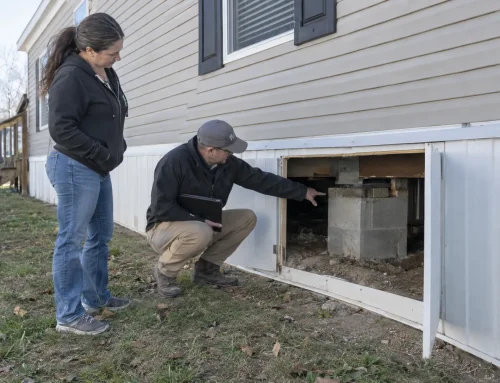
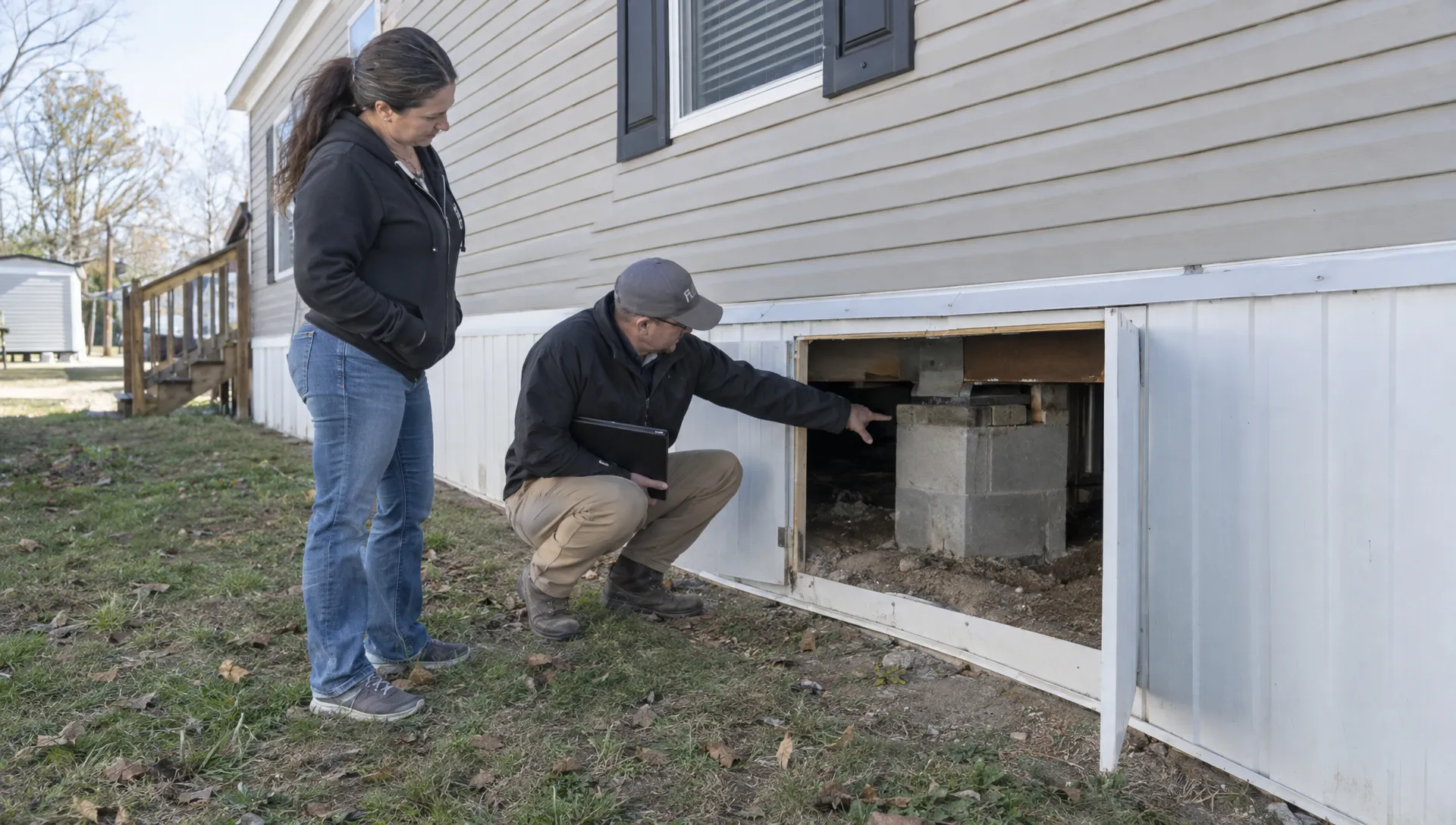
The home must be on a permanent foundation
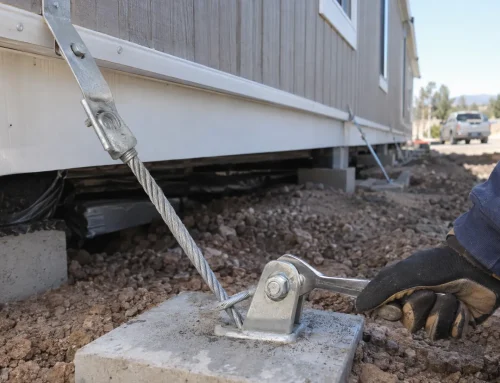
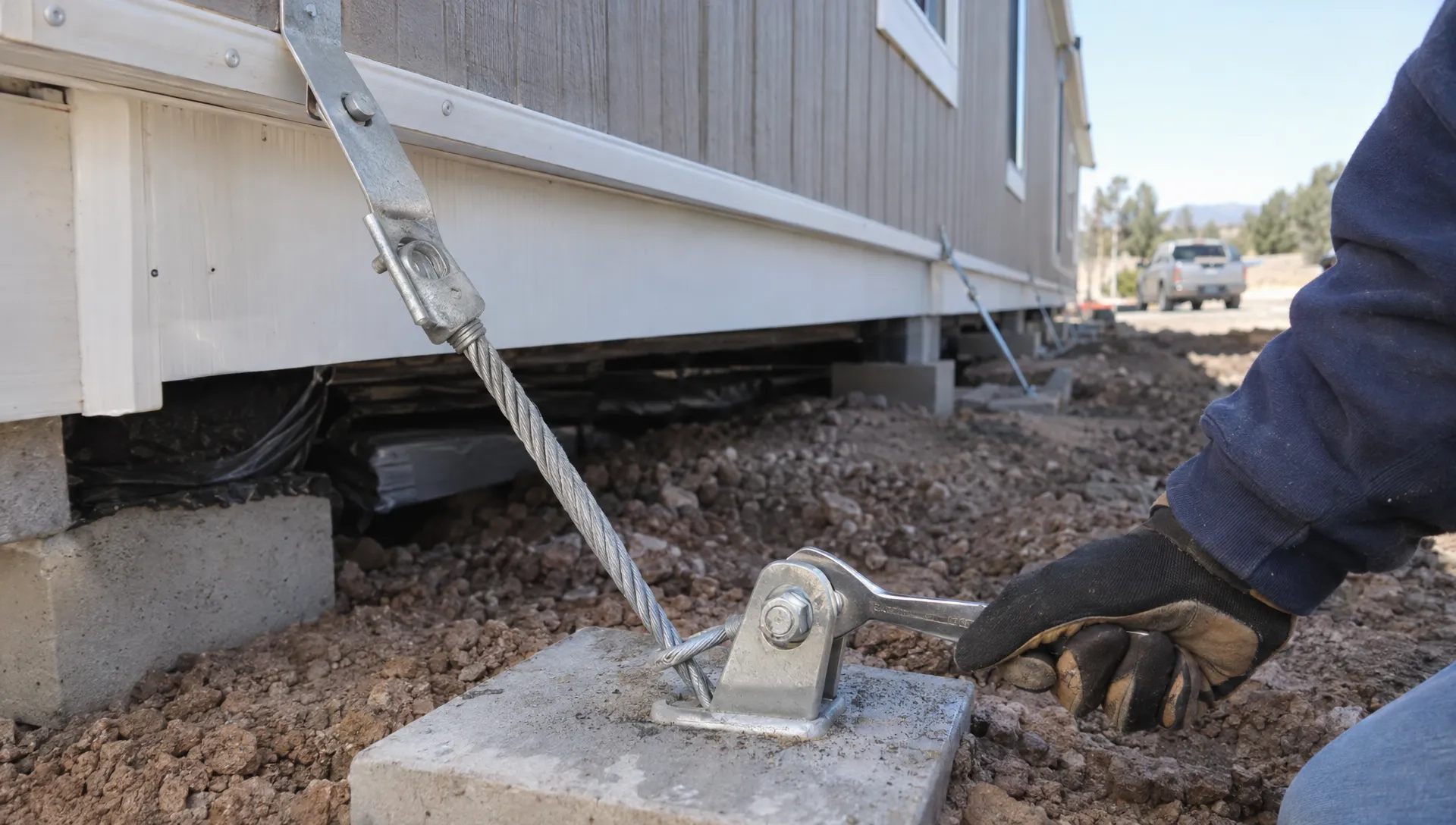
For FHA 203(k), the home generally must be permanently affixed to the land and meet FHA manufactured housing foundation standards. This is different from simply being skirted, blocked, or tied down.
A permanent foundation may require an engineer’s certification showing the foundation complies with FHA standards, including HUD’s permanent foundation expectations for manufactured housing. If the foundation is inadequate, the lender may require corrections before or through the loan, depending on the situation and program rules.
This is one of the biggest differences between regular manufactured home shopping and 203(k) financing. A home can be safe and acceptable for some cash buyers or chattel lenders, yet still not meet FHA’s real property and foundation requirements.
The home and land usually need to be financed together
FHA 203(k) is a mortgage program, not a personal property loan. That means the home usually needs to be treated as real estate, with the mortgage covering both the manufactured home and the land beneath it.
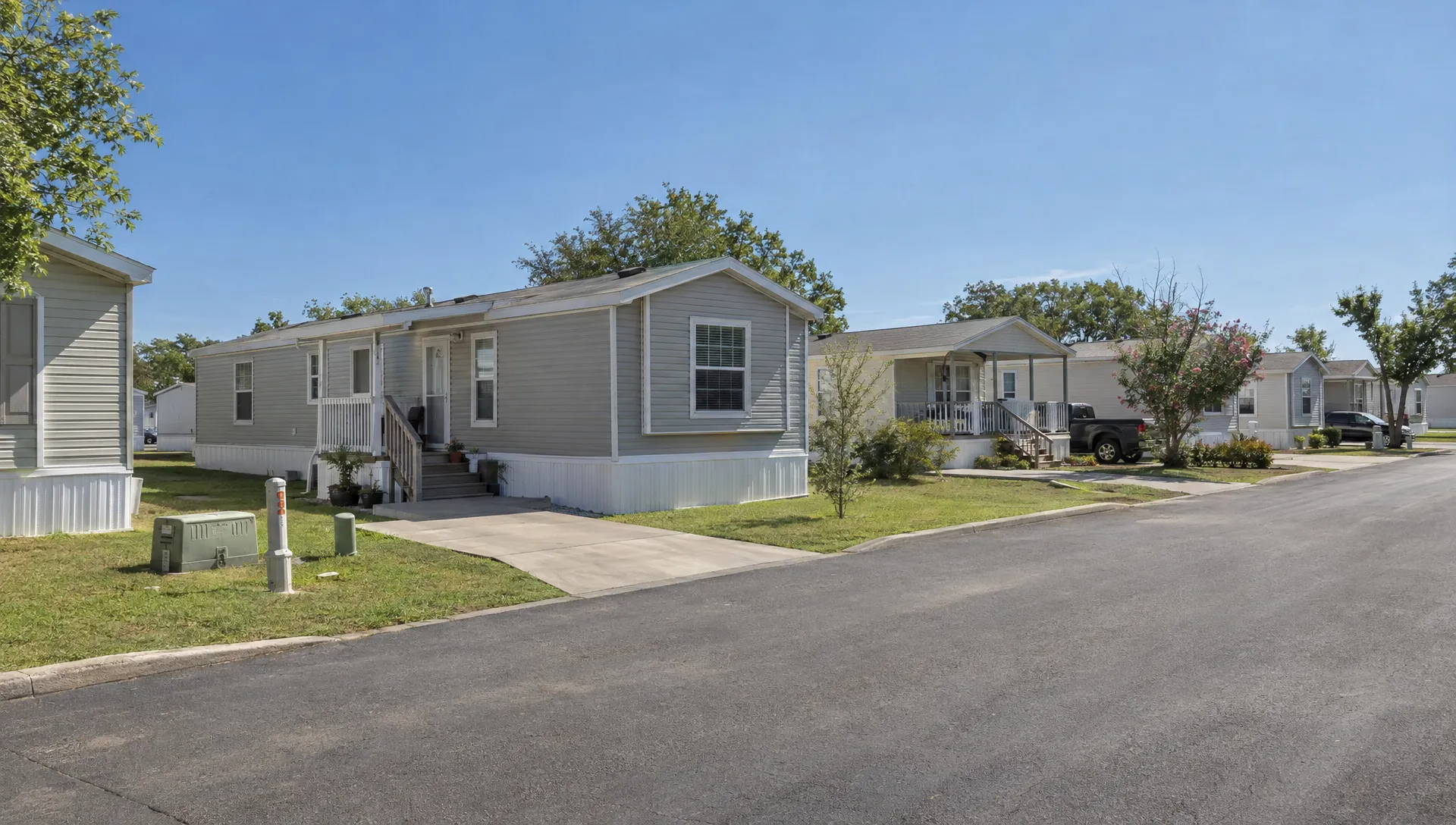
In practical terms, a manufactured home on a rented lot in a mobile home park usually does not qualify for FHA 203(k). That type of purchase is often financed with a chattel loan or another manufactured home loan product instead.
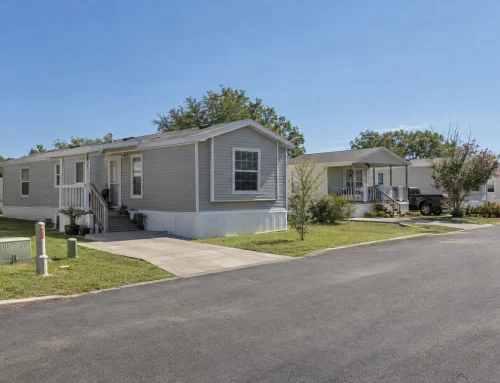
A land-home setup has a better chance of qualifying if the title, foundation, access, utilities, and property condition are acceptable. If you are comparing private land options, this is where a local guide to land and home packages in San Antonio can help you understand the moving parts before you apply.
Prior moves can create problems
Many FHA manufactured home transactions require proof that the home was transported from the manufacturer or dealer to its current site and was not previously installed somewhere else. A manufactured home that has been moved from one site to another may be difficult or impossible to finance with FHA, depending on the facts and lender requirements.
This issue comes up often with used homes sold for relocation. If the plan is to buy a used manufactured home, move it to land, install it, and use 203(k) funds for repairs, that is usually not the right fit. FHA 203(k) is generally aimed at rehabilitating an eligible existing property, not financing the relocation and setup of a used manufactured home.
What repairs can qualify under FHA 203(k)?
The repair scope is just as important as the home itself. FHA 203(k) funds are meant for eligible rehabilitation work that improves the property and brings it into acceptable condition. They are not a blank check for every upgrade a buyer wants.
HUD’s Single Family Housing Policy Handbook is the source lenders use for detailed requirements, but buyers can think in terms of two broad 203(k) options.
| Program type | General use | Manufactured home caution |
|---|---|---|
| Limited 203(k) | Smaller, non-structural repairs with total rehabilitation costs up to FHA’s Limited 203(k) cap | Often the more realistic option when repairs are modest and clearly non-structural |
| Standard 203(k) | Larger or more complex rehab projects, usually requiring a HUD-approved 203(k) consultant | Structural work may be restricted or unacceptable for manufactured homes, even when Standard 203(k) is used |
For manufactured homes, the safest repair scopes are usually health, safety, durability, and efficiency improvements that do not change the structural system of the home.
Examples of repairs that may qualify
The exact answer depends on the lender, appraiser, contractor bids, and FHA requirements. Still, these repair categories are often more realistic for a manufactured home if they are properly documented and do not affect prohibited structural components.
| Repair category | Examples | Key condition |
|---|---|---|
| Roofing and exterior protection | Roof covering replacement, siding repairs, exterior water intrusion fixes | Work should not involve major structural framing changes |
| HVAC and comfort | Replacing or repairing heating and cooling systems | Equipment must be properly sized, permitted, and code-compliant |
| Plumbing and electrical | Correcting unsafe wiring, replacing damaged fixtures, repairing leaks | Work must meet code and be completed by qualified contractors |
| Flooring and interior repairs | Replacing damaged flooring, drywall repair, interior finish corrections | Repairs should be permanent and part of the real property improvement |
| Energy and weatherization | Insulation improvements, air sealing, efficient windows where allowed | Window or wall changes must not create structural concerns |
| Accessibility and safety | Safety railings, certain accessibility improvements, trip hazard corrections | Must be approved in the scope and meet local requirements |
| Site-related repairs | Utility corrections, drainage improvements, septic or well issues in eligible cases | Must relate to the subject real property and be acceptable to the lender |
In San Antonio and South Texas, HVAC condition, roof condition, drainage, and insulation are especially important. A low purchase price can become less attractive if the home needs major cooling upgrades, water damage repair, or site drainage work that the loan will not support.
What usually does not qualify
Some items are deal-breakers because of FHA rules. Others may be technically possible in limited cases but are unlikely to work with many lenders.
Common non-qualifying or high-risk items include:
- Buying a pre-1976 mobile home.
- Financing a manufactured home on a rented park lot as personal property.
- Moving a used manufactured home from one location to another.
- Paying for delivery and setup of a newly purchased manufactured home through 203(k).
- Adding rooms or changing the home’s structural components.
- Removing load-bearing walls or altering the chassis system.
- Luxury improvements such as pools, outdoor kitchens, or nonessential upgrades.
- Starting repairs before the loan closes and expecting reimbursement.
- Using unlicensed or unapproved contractors when permits or professional work are required.
The biggest misunderstanding is the difference between renovating an eligible manufactured home already attached to qualifying land and trying to use 203(k) to create a land-home setup from scratch. Those are not the same transaction.
Texas and San Antonio checks buyers should not skip
Manufactured home financing in Texas has documentation steps that can affect whether a lender is comfortable with the file.
The Texas Department of Housing and Community Affairs Manufactured Housing Division handles manufactured housing records, including Statements of Ownership. For FHA-style real estate financing, the title history, ownership record, lien status, and real property election can matter.
In the San Antonio area, buyers should also check:
- Whether the land is inside city limits, in unincorporated Bexar County, or in a nearby municipality.
- Whether manufactured homes are allowed by zoning, deed restrictions, subdivision rules, or community standards.
- Whether utilities, septic, driveway access, and drainage are already in place or need work.
- Whether the property is in a flood zone or has drainage concerns after heavy rain.
- Whether permits are required for foundation, electrical, plumbing, septic, or mechanical repairs.
If you are looking at lots or communities near San Antonio, Homes2Go San Antonio can help you compare home models, community options, and financing paths without assuming 203(k) is the only solution.
Documents that can make or break the file
A strong 203(k) file is document-heavy. Before you get too far into negotiations, ask what the lender will need and whether the seller can provide it.
| Document or item | Why it matters |
|---|---|
| HUD labels or verification | Confirms the home was built under the federal manufactured housing code |
| Data plate or manufacturer information | Helps verify model, wind zone, roof load, thermal zone, and production details |
| Texas Statement of Ownership | Shows ownership, lien status, location, and property classification details |
| Foundation certification | Helps prove the home is permanently installed to FHA standards |
| Survey or site documents | Confirms land boundaries, access, easements, and improvements |
| Contractor bids | Establishes the repair scope, cost, and feasibility |
| Permitting information | Shows whether planned work can be legally completed |
| Appraisal subject to repairs | Supports the as-completed value used for loan approval |
Missing documents do not always kill a transaction, but they slow it down. In a competitive situation, a clean file can be the difference between a workable FHA path and a frustrating denial late in the process.
When a different loan may be better
FHA 203(k) is not always the best financing option for a manufactured home. In fact, many buyers who start by asking about 203(k) end up using another loan type because their goal is not really rehabilitation. They may be buying a new home, placing a home in a community, or looking for a move-in ready land-home package.
A different financing path may make more sense if:
- You are buying a brand-new manufactured home.
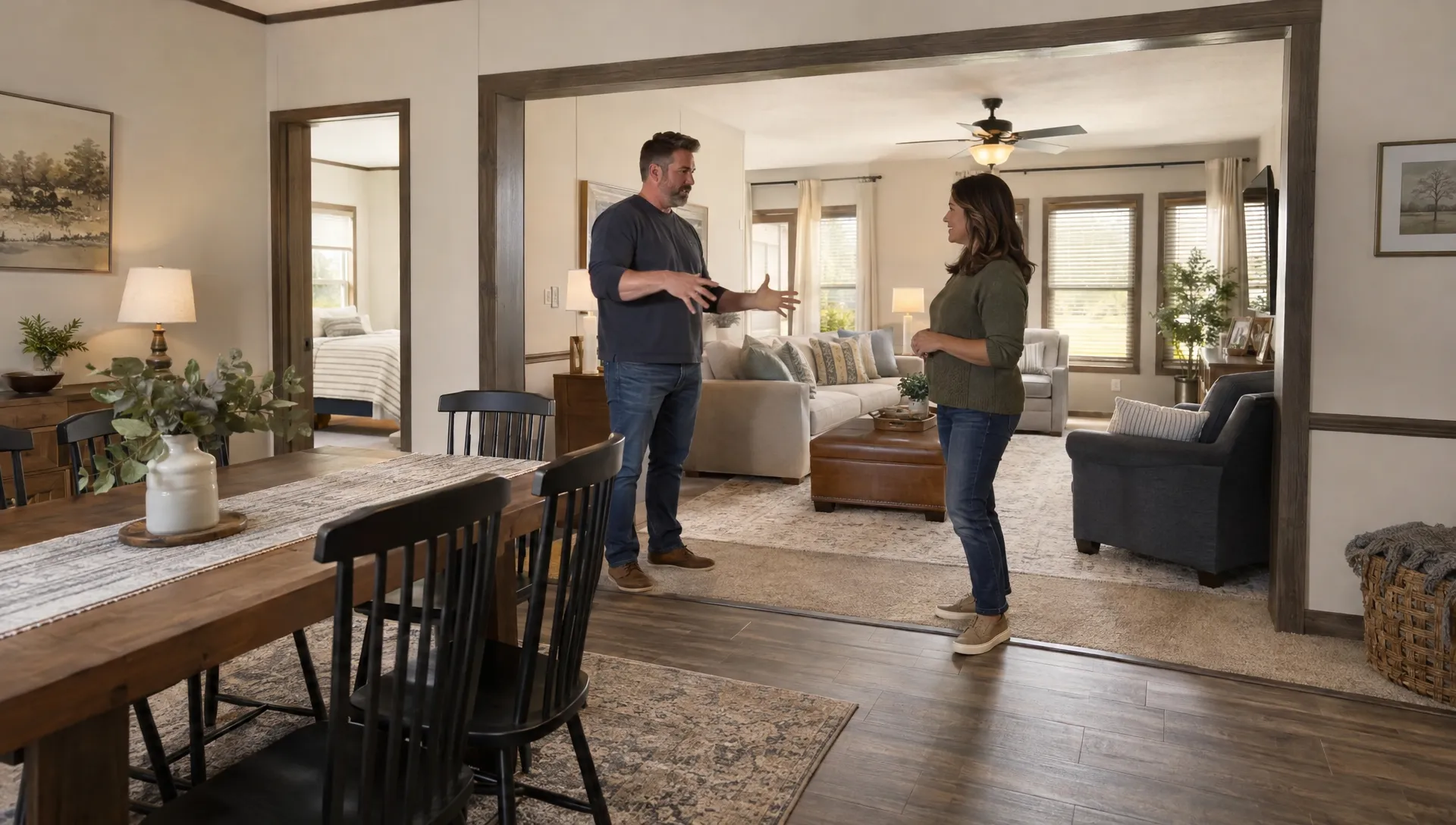
- You want a move-in ready home with modern interiors and energy-efficient design.
- The home will be placed in a land-lease community.
- The repairs are minor enough that a renovation loan is unnecessary.
- The property fails FHA foundation, title, or documentation requirements.
Homes2Go San Antonio works with buyers exploring manufactured and mobile homes, including flexible financing options and guidance from trusted local lenders. You can learn more on the Homes2Go financing page or review broader buying considerations in the manufactured homes San Antonio guide.
Realistic buyer scenarios
Here are a few simplified examples to show how qualification often plays out.
Scenario 1: Likely worth exploring
A buyer finds a 2008 double-wide manufactured home on land outside San Antonio. The home has HUD labels, a Texas Statement of Ownership, a permanent foundation, and no evidence of being moved after original installation. It needs a roof covering replacement, HVAC work, flooring, and plumbing repairs.
This may be worth discussing with an FHA 203(k) lender because the home, land, and repair scope appear closer to what the program is designed to handle.
Scenario 2: Possible, but risky
A buyer finds a 1999 manufactured home on owned land. The price is attractive, but the HUD tags are missing, the foundation has never been certified, and the repair plan includes removing interior walls and expanding the living area.
This file could run into multiple issues. Documentation may be fixable, but structural alterations and foundation uncertainty may make 203(k) difficult.
Scenario 3: Not a good 203(k) fit
A buyer wants to purchase a used manufactured home from another county, move it onto a lot near San Antonio, install utilities, build a foundation, and renovate the interior with 203(k) funds.
That is usually not a realistic 203(k) transaction. The buyer should ask about other manufactured home financing options, land-home packages, or available move-in ready homes instead.
Frequently Asked Questions
Can you use an FHA 203(k) loan on a manufactured home? Yes, but only when the manufactured home, foundation, land, title status, repair scope, borrower, and lender requirements all qualify. It is not available for every mobile or manufactured home.
Does a manufactured home in a mobile home park qualify for FHA 203(k)? Usually not if the home is on a rented lot and titled as personal property. FHA 203(k) is real estate mortgage financing, so land and title status are critical.
Can FHA 203(k) pay to move a manufactured home? Generally, no. Using 203(k) funds to move a used manufactured home to a new site is usually not a fit for the program.
Can I use FHA 203(k) for a new manufactured home? FHA 203(k) is a rehabilitation program for eligible existing properties. If you are buying a new manufactured home, ask about FHA Title I, FHA Title II, VA, USDA, conventional, chattel, or other manufactured home financing options.
Do FHA 203(k) repairs have to be done by contractors? In most cases, lenders require contractor bids, approved scopes of work, permits when needed, and professional completion. Do-it-yourself work is often restricted or not allowed by the lender.
What is the biggest reason manufactured homes fail FHA 203(k) approval? Common reasons include pre-1976 construction, rented lot status, lack of real property classification, non-compliant foundation, missing HUD documentation, prior relocation, or repair plans that involve structural changes.
Talk through your options before you commit
If you are considering an FHA 203(k) manufactured home purchase in the San Antonio area, do not start with the repair wish list. Start with the home’s eligibility, foundation, land, title status, and lender fit.
Homes2Go San Antonio can help you compare manufactured home models, review financing options, and understand whether a renovation loan, land-home package, community placement, or move-in ready home is the better path. Visit Homes2Go San Antonio to explore available options and connect with a local team that understands manufactured home buying in South Texas.
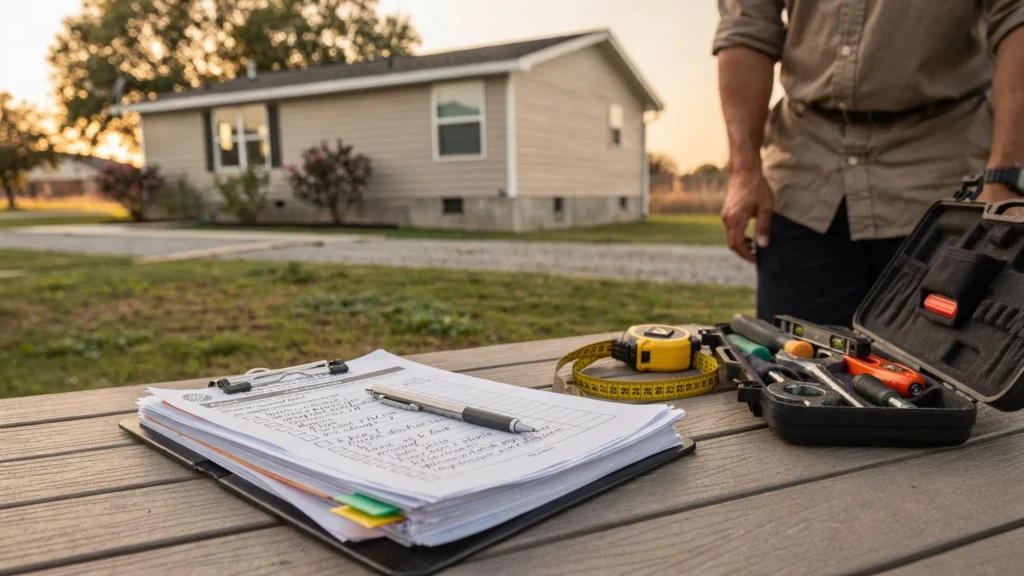 Can You Use an FHA 203(k) Loan on a Manufactured Home?
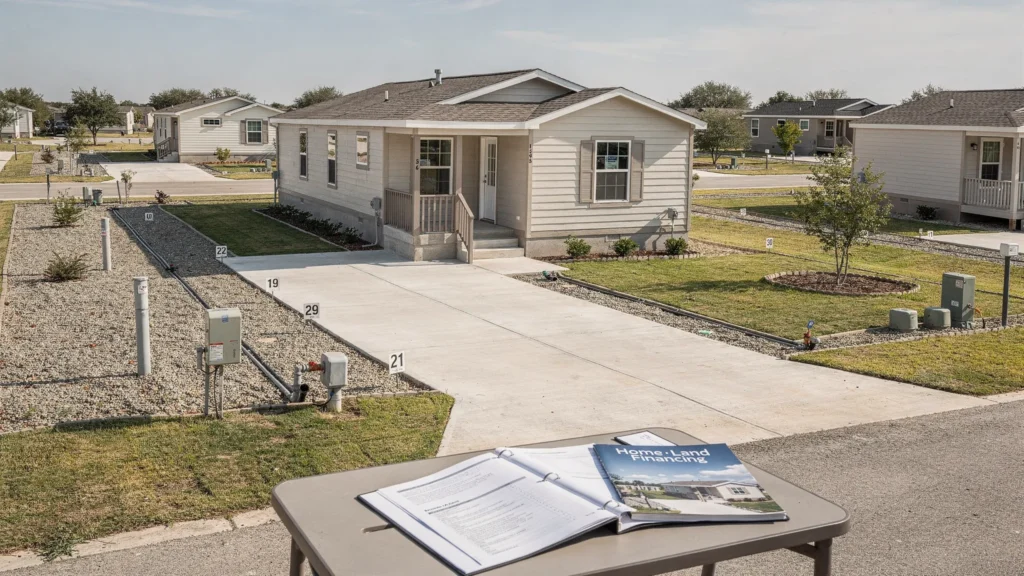 FHA Loan Guidelines for Manufactured Homes in 2026