
Short answer: yes, you may be able to use an FHA 203(k) loan on a manufactured home, but only in limited situations. The home must meet FHA manufactured housing requirements, the land and home usually need to be financed together as real property, the foundation must be acceptable, and the repair plan must fit FHA 203(k) rules.
For many San Antonio buyers, the bigger question is not just “Is it allowed?” It is “Will this specific home, land, lender, and repair scope qualify?” That distinction matters because manufactured homes have extra rules that do not apply to most site-built houses.
The quick answer for manufactured home buyers
An FHA 203(k) loan is a rehabilitation mortgage. It lets eligible buyers or homeowners finance the purchase or refinance of a home and approved repairs in one FHA-insured loan. HUD describes the FHA 203(k) program as a way to finance both the home and rehabilitation costs through a single mortgage.
Here is the practical version for manufactured homes:
| Question | Typical answer |
|---|---|
| Can an FHA 203(k) be used on a manufactured home? | Sometimes, if the home meets FHA manufactured housing and 203(k) requirements. |
| Can it be used for a pre-1976 mobile home? | Generally no. FHA manufactured housing rules apply to homes built to the HUD Code on or after June 15, 1976. |
| Can it be used for a home in a rented-lot mobile home park? | Usually no, because FHA mortgage financing typically requires the manufactured home and land to be treated as real property. |
| Can it pay to move a used manufactured home to land? | Usually no. Moving a previously installed manufactured home can create major FHA eligibility problems. |
| Is every FHA lender willing to do this? | No. Some FHA-approved lenders do not offer manufactured home 203(k) loans or apply stricter requirements. |
The best first step is to speak with an FHA-approved lender that regularly handles manufactured housing, then confirm the home, foundation, title status, land, and repair plan before you spend money on inspections or contractor bids.
What an FHA 203(k) loan is designed to do
An FHA 203(k) loan is meant for a property that needs repairs or improvements. Instead of getting one loan to buy the home and a separate loan for the work, the 203(k) combines eligible costs into one mortgage.
That can be attractive when a home has good potential but needs repairs that might prevent a standard FHA loan from closing. For example, a buyer may find a manufactured home on owned land that needs a new HVAC system, roof repairs, plumbing work, flooring, accessibility improvements, or energy-efficiency upgrades.
FHA 203(k) loans are generally divided into two categories:
| FHA 203(k) type | Best fit | Notes |
|---|---|---|
| Limited 203(k) | Smaller, less complex repairs | Typically used for non-structural work. Program limits can change, so verify current rules with your lender. |
| Standard 203(k) | Larger or more complex rehabilitation | Usually requires a HUD-approved 203(k) consultant and more documentation. |
For manufactured homes, the repair scope is especially important. A repair that seems simple on a site-built house may raise questions on a manufactured home if it affects the chassis, load-bearing system, original HUD Code construction, additions, or foundation.
FHA manufactured home requirements still come first
A 203(k) loan does not override FHA manufactured housing rules. If the home is not eligible for FHA manufactured home financing in the first place, the renovation loan will not magically fix that.
FHA manufactured housing eligibility commonly includes requirements such as:
- The home must have been built on or after June 15, 1976, under the federal HUD Code.
- The home must have HUD certification labels and a data plate, or acceptable verification if labels are missing.
- The home must meet minimum size and use requirements for FHA manufactured housing.
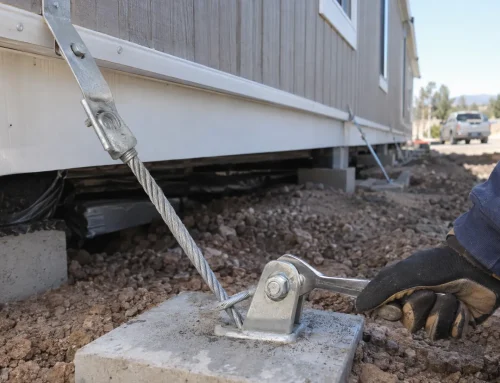
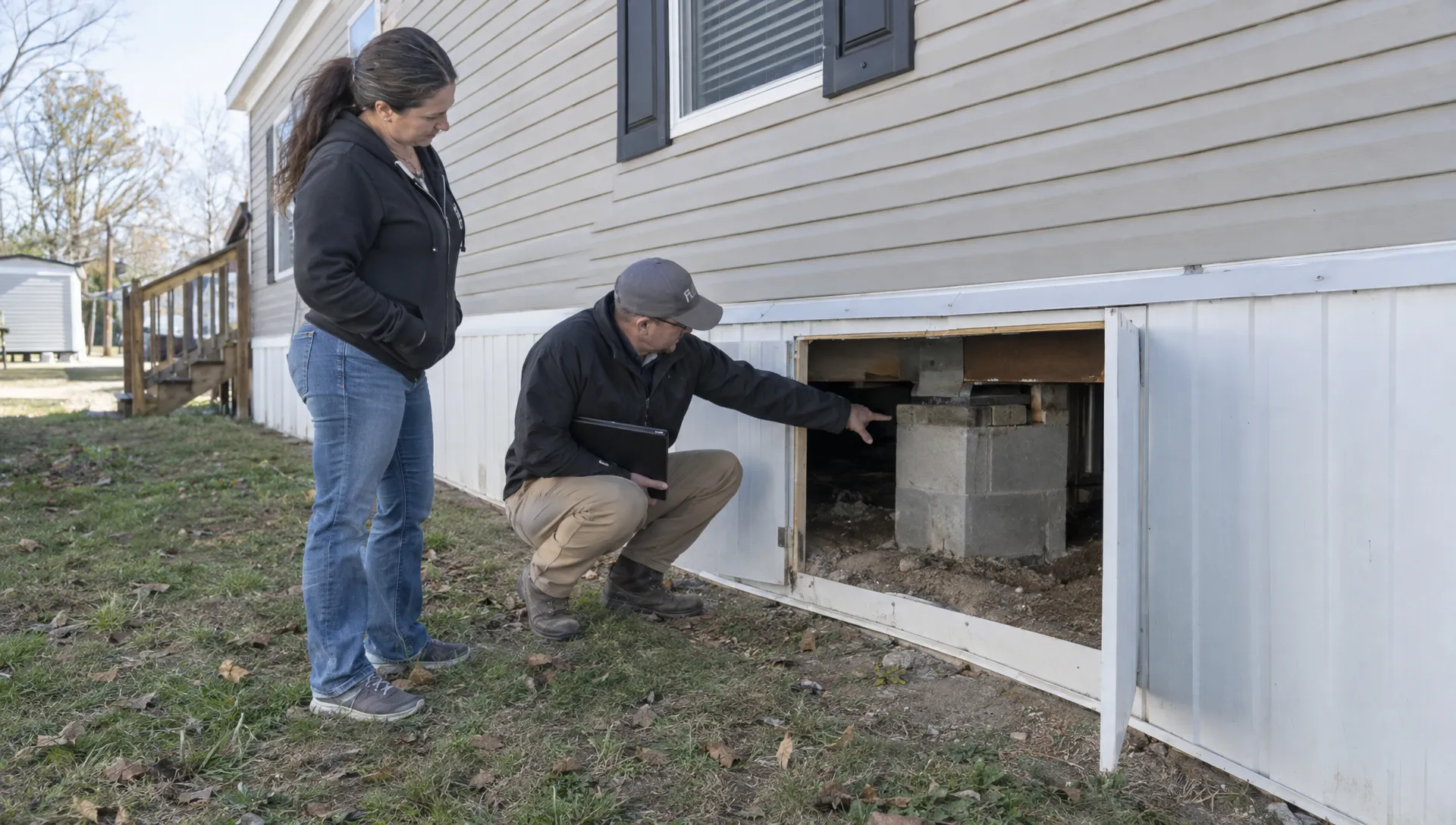
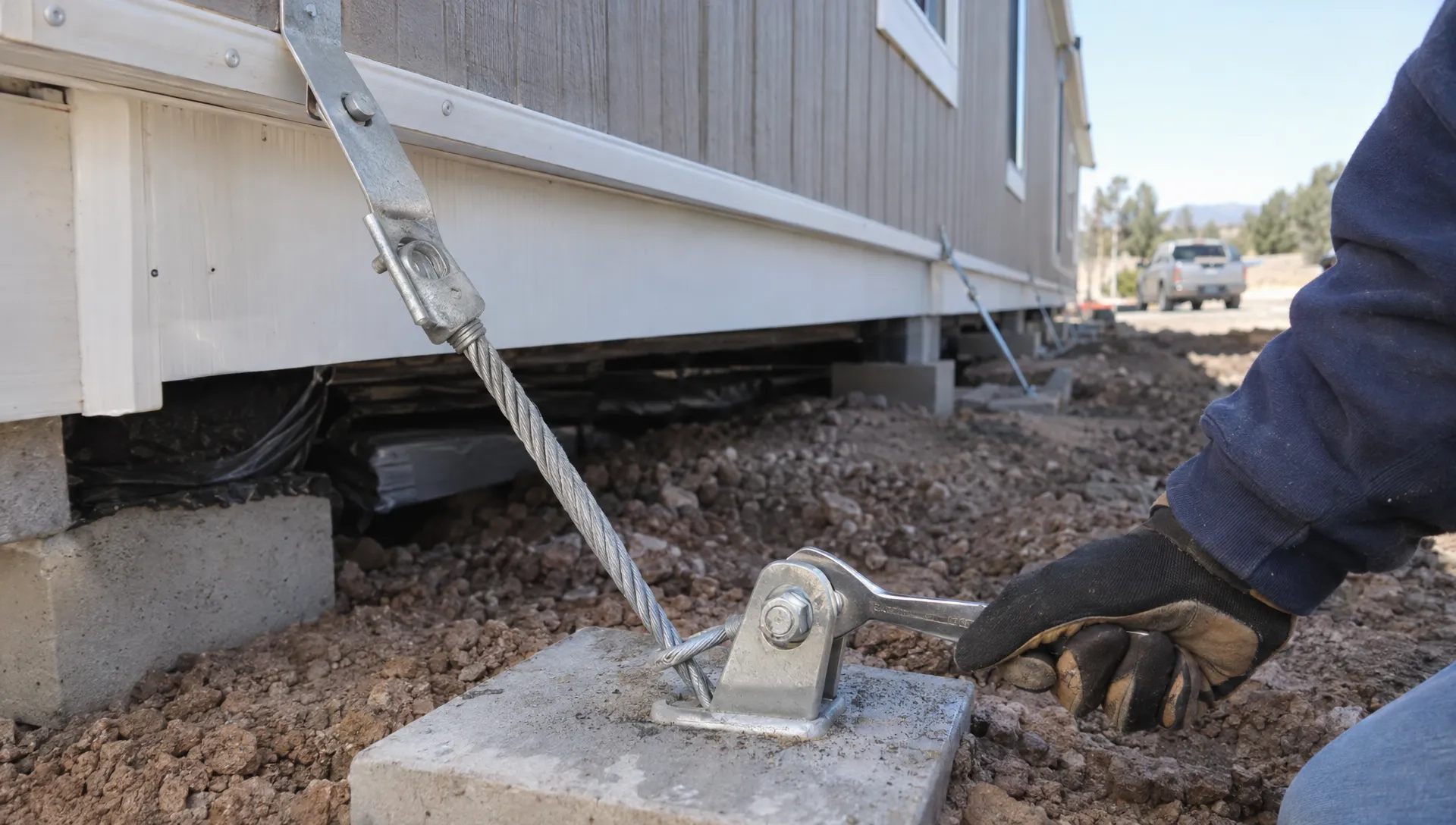
- The home must be attached to an acceptable permanent foundation.
- The home must usually be classified and taxed as real property, not just personal property.
- The mortgage generally needs to cover both the manufactured home and the land.
- The property must be the borrower’s primary residence in most buyer scenarios.
HUD maintains information on manufactured housing and FHA programs, but lenders also apply their own underwriting standards. These lender-specific standards are often called overlays.
This is why one lender may say no while another may be willing to review the file. The loan may be technically possible, but not every lender wants the added complexity.
When an FHA 203(k) loan on a manufactured home may work
An FHA 203(k) loan is most likely to be considered when the manufactured home already looks like a strong FHA candidate before repairs are added.
A realistic scenario might look like this: the home is a post-1976 manufactured home on land the buyer will own, the home is already permanently installed, the title status can be confirmed, the foundation can pass review or be corrected, and the needed repairs are straightforward enough for the lender, appraiser, consultant, and contractors to document.
In that kind of situation, the 203(k) may help finance repairs that bring the home up to FHA standards or improve livability.
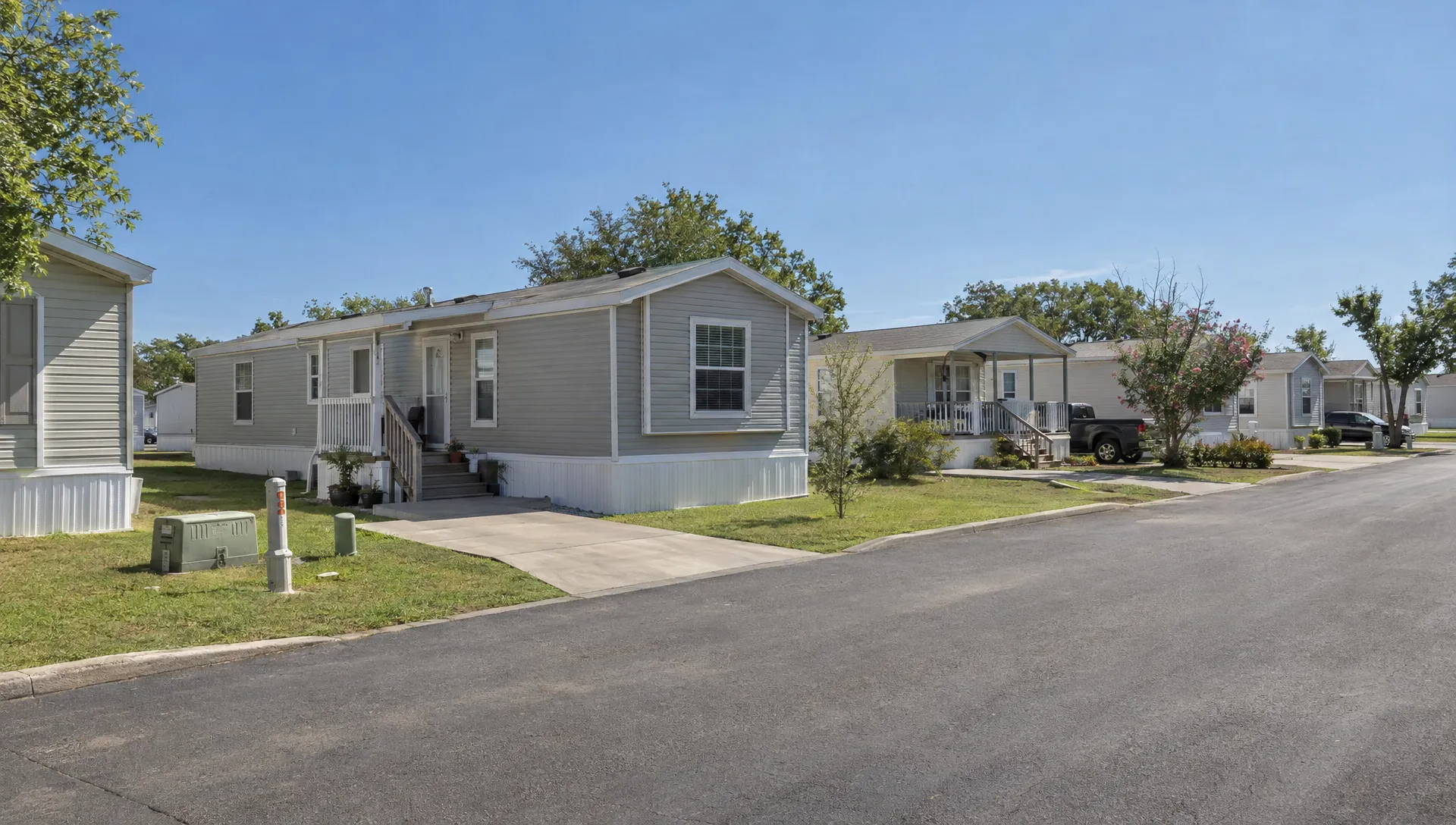
For a San Antonio-area buyer, this could apply to a manufactured home on private land in Bexar County or nearby communities if the property has clear ownership records, acceptable utility connections, proper access, and a repair plan that can be permitted and completed by qualified contractors.
When a 203(k) is usually not the right fit
A 203(k) is less likely to work if the home has fundamental eligibility problems. It is not a workaround for a home that cannot meet FHA’s manufactured housing rules.
Common deal-breakers include:
- The home was built before June 15, 1976.
- The home is on a rented lot and the buyer is not purchasing the land.
- The manufactured home has been moved from a previous installation site.
- The HUD tags, data plate, ownership records, or title history cannot be verified.
- The home cannot be placed on an acceptable permanent foundation.
- The planned work involves major structural changes that conflict with manufactured home standards.
- The buyer wants to use the property as a rental or investment from day one.
A home can be affordable and still not be financeable with FHA 203(k). That is why buyers should check loan eligibility before falling in love with a property that needs significant work.
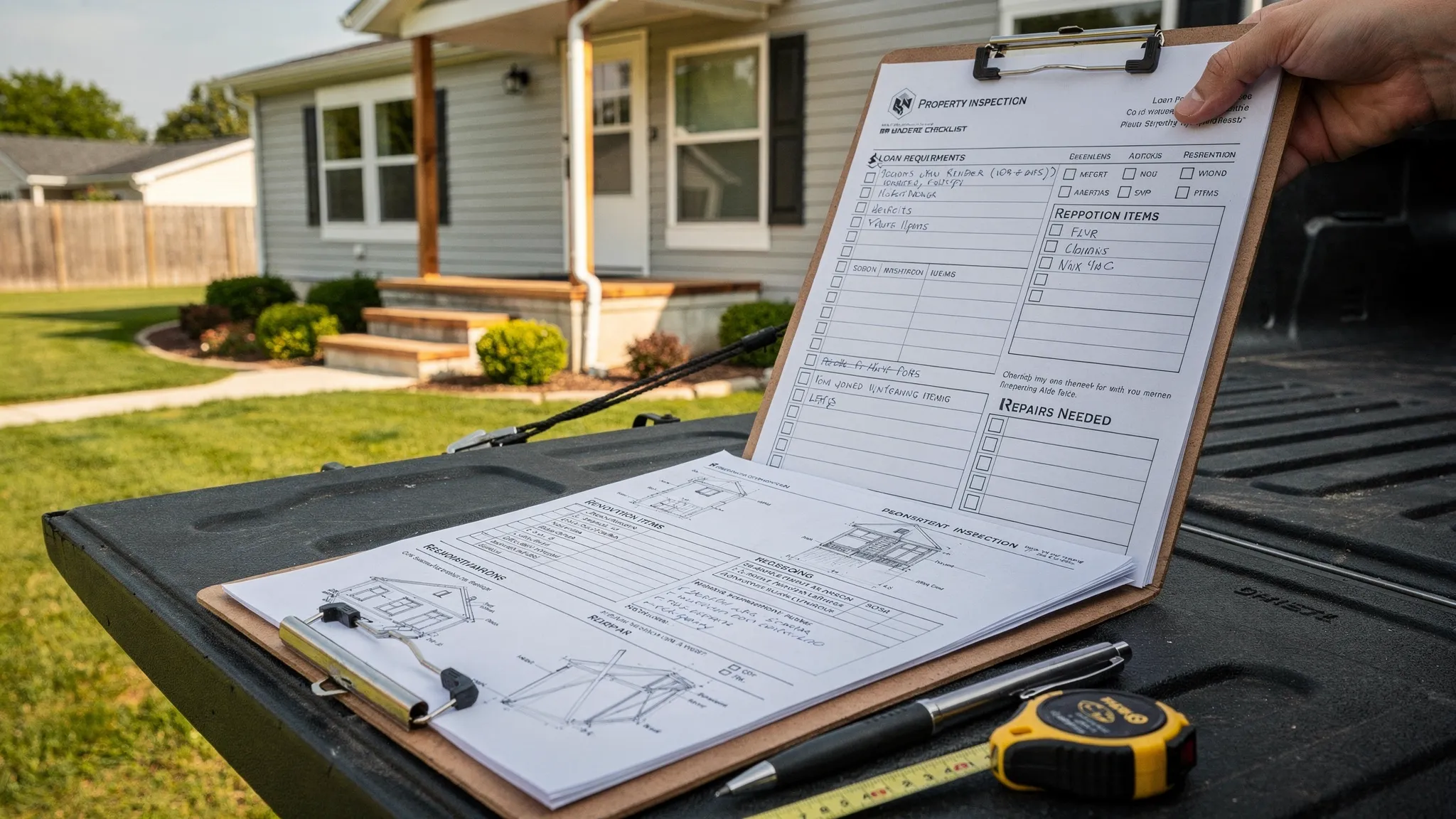
Texas title and real property issues matter
In Texas, manufactured home ownership is documented through the Texas Department of Housing and Community Affairs Manufactured Housing Division. Buyers can review general resources through the Texas Manufactured Housing Division.
For FHA mortgage financing, the title status of the home is critical. A manufactured home may be treated as personal property or real property depending on how it is titled, installed, and connected to the land.
For a 203(k) loan, you should expect the lender and title company to look closely at:
| Item to verify | Why it matters |
|---|---|
| Statement of Ownership | Shows key ownership and property classification information in Texas. |
| Land ownership | FHA mortgage financing usually requires the home and land to be part of the real estate collateral. |
| Foundation documentation | FHA often requires evidence that the home is on an acceptable permanent foundation. |
| HUD labels and data plate | Confirms the home was built under the federal manufactured housing standards. |
| Utility connections and permits | Helps prove the property can meet safety, livability, and local requirements. |
| Floodplain and site conditions | Important in and around San Antonio, especially for drainage, insurance, and long-term costs. |
If the home is still titled like personal property, or if the land and home ownership do not line up, the loan may stall. Fixing those issues can take time, so it is better to identify them early.
What repairs might be eligible?
FHA 203(k) funds generally must be used for approved improvements that become part of the real property. Luxury items and non-permanent upgrades are not the purpose of the program.
For manufactured homes, eligibility depends on the lender, FHA rules, the appraiser’s findings, the consultant’s work write-up if required, and whether the repair is appropriate for the home’s construction.
| Repair or improvement | Potential 203(k) fit? | What to watch |
|---|---|---|
| HVAC replacement | Often possible | Must be properly sized and installed for the home. |
| Roof repair or replacement | Often possible | Scope must be compatible with manufactured home construction. |
| Plumbing or electrical repairs | Often possible | Work may require licensed contractors and permits. |
| Flooring, cabinets, interior finishes | Often possible | Must be part of the approved work write-up. |
| Energy-efficiency upgrades | Often possible | Windows, insulation, ducts, and HVAC should be documented clearly. |
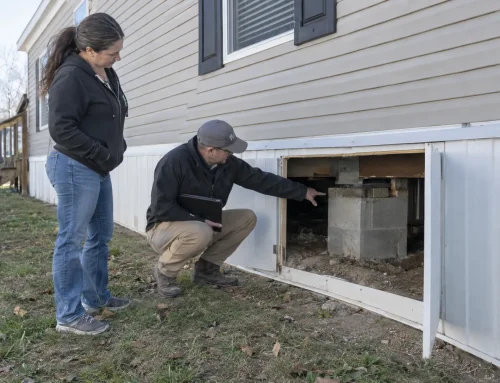
| Foundation repairs | Sometimes possible | Engineering and FHA foundation standards may be required. |
| Additions or structural changes | More difficult | May conflict with HUD Code, engineering, or lender requirements. |
| Pools, outdoor luxury items, removable items | Usually not | FHA 203(k) is not intended for luxury improvements. |
Because Texas heat can make comfort and utility costs a real budget issue, energy-related repairs may be worth discussing with your lender and contractor. Better insulation, sealed ducts, efficient HVAC, and properly installed windows can improve both comfort and long-term affordability when they are eligible and cost-effective.
Homes2Go San Antonio also has a guide to energy-efficient manufactured homes in Texas heat if you are comparing repair priorities or shopping for a newer model.
The step-by-step process if you want to explore 203(k)
The 203(k) process has more moving parts than a standard purchase loan. With manufactured homes, those moving parts multiply because the lender must evaluate both the renovation and the manufactured housing eligibility.
A smart sequence looks like this:
- Talk to a manufactured home financing specialist first: Ask whether the lender offers FHA 203(k) loans on manufactured homes, not just whether they offer FHA loans in general.
- Confirm the home’s basic FHA eligibility: Check age, HUD labels, data plate, title status, land ownership, installation history, and permanent foundation requirements.
- Review the land and site: Look at access, utilities, septic or sewer, drainage, floodplain status, and local permitting needs.
- Get the repair scope reviewed early: Ask whether the repairs are eligible, whether a Standard or Limited 203(k) applies, and whether a consultant is required.
- Use qualified contractors: Lenders usually require written bids, licensing where applicable, insurance, and approval before work begins.
- Expect appraisal and inspection conditions: The appraiser will consider the as-completed value, and draws are usually released as work is completed and inspected.
- Build in extra time: A manufactured home 203(k) transaction can take longer than a clean FHA purchase because documentation has to be precise.
Do not assume that a contractor’s repair estimate is enough. The lender will need the repair plan to fit FHA, appraisal, insurance, title, and closing requirements.
203(k) versus other manufactured home financing options
For many buyers, a different loan type may be simpler than an FHA 203(k), especially if the goal is to buy a newer or move-in ready manufactured home.
| Financing path | Best for | Key consideration |
|---|---|---|
| FHA 203(k) | Eligible manufactured home on real property that needs approved repairs | More documentation, lender availability may be limited. |
| FHA Title II manufactured home loan | Buying a manufactured home with land as real property | Better fit when the home is already in good condition or new. |
| FHA Title I manufactured home loan | Certain manufactured home or lot scenarios | Different rules and loan structure than a land-home mortgage. |
| VA loan | Eligible veterans, service members, and surviving spouses | Property and lender requirements still apply. |
| USDA loan | Eligible rural-area buyers and properties | Location and income limits apply. |
| Chattel loan | Home-only purchase, often in a leased community | Usually does not include land as real estate collateral. |
| Conventional manufactured home loan | Qualified buyers with eligible home and property | May require stronger credit, down payment, or property documentation. |
If you are buying in or around San Antonio, start by deciding whether you want a home in a community, a private-land setup, or a land-home package. That decision affects your financing options more than many first-time buyers realize.
You can review local options in the Homes2Go guide to land and home packages in San Antonio or explore general loan paths on the Homes2Go financing page.
Why many buyers choose a move-in ready manufactured home instead
An FHA 203(k) can be useful, but it is not always the easiest path. If the home needs repairs, the buyer has to manage lender conditions, contractor bids, draw schedules, inspections, and possible delays. With manufactured homes, there may also be foundation certifications, title corrections, or site issues to resolve.
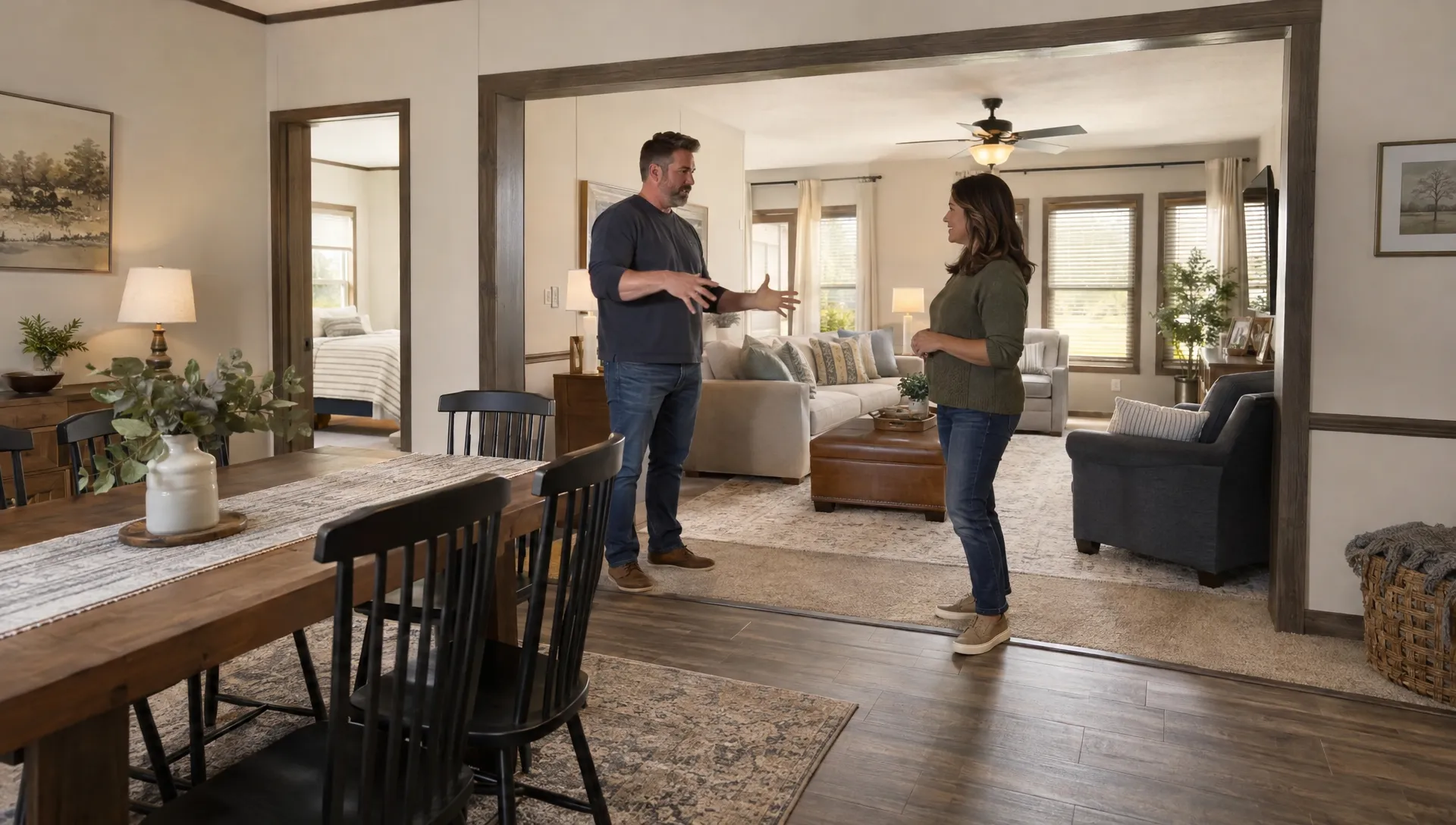
For buyers who want a simpler route to homeownership, a newer move-in ready manufactured home may reduce uncertainty. You can compare floor plans, energy-efficient features, modern interiors, community options, and financing paths without taking on a renovation project before move-in.
That does not mean a rehab purchase is always a bad idea. It means the discount on a fixer-upper has to be large enough to justify the extra complexity. A low purchase price can become expensive if the home cannot qualify, if the foundation needs major work, or if repairs exceed the budget.
Questions to ask before pursuing a manufactured home 203(k)
Before you make an offer on a manufactured home that needs repairs, ask these questions:
| Question | Why it matters |
|---|---|
| Was the home built on or after June 15, 1976? | Pre-HUD-Code mobile homes are generally not eligible for FHA manufactured home financing. |
| Is the home on land I will own? | A rented lot usually points away from FHA 203(k). |
| Has the home ever been moved after original installation? | Prior relocation can create major eligibility problems. |
| Can the HUD labels and data plate be verified? | Missing documentation can delay or stop financing. |
| Is the foundation FHA-acceptable? | Foundation issues are common deal points in manufactured housing. |
| Are the repairs non-structural or more complex? | This affects whether the loan is feasible and which 203(k) type may apply. |
| Does the lender actually offer this product? | FHA approval alone does not mean the lender will do manufactured home 203(k) loans. |
If the seller, agent, or lender cannot answer these questions clearly, slow down. The most expensive mistake is assuming the loan will work and discovering late in the process that the home is not eligible.
Frequently Asked Questions
Can you use an FHA 203(k) loan on a manufactured home in Texas? Yes, it may be possible if the manufactured home meets FHA manufactured housing rules, is treated as real property, sits on an acceptable permanent foundation, and the repairs meet 203(k) guidelines. Lender participation is not guaranteed, so confirm early.
Can I use a 203(k) loan for a mobile home in a park? Usually not if the home is on a rented lot. FHA mortgage financing generally works best when the manufactured home and land are financed together as real property. A chattel loan or another home-only financing option may be more realistic for leased-lot communities.
Can an FHA 203(k) pay to move a used manufactured home to my land? Usually no. A used manufactured home that has been moved from a prior installation site can have serious FHA eligibility issues. If you want a home placed on land, ask about new manufactured home financing or land-home package options instead.
Does the manufactured home need a permanent foundation? Yes, for FHA mortgage financing, the home generally must be attached to an acceptable permanent foundation. A lender may require an engineer’s certification or other foundation documentation.
What if the HUD tags are missing? Missing HUD certification labels can complicate the loan, but verification may sometimes be available through official records or third-party verification services such as IBTS. Ask your lender what documentation they will accept before moving forward.
Is a 203(k) better than buying a newer manufactured home? Not always. A 203(k) can help with an eligible fixer-upper, but it adds paperwork, inspections, contractor requirements, and lender review. Many buyers prefer a newer or move-in ready manufactured home for a cleaner path to ownership.
Get help comparing your manufactured home financing options
If you are trying to decide whether an FHA 203(k) loan makes sense, Homes2Go San Antonio can help you think through the bigger picture: home condition, land options, floor plans, community choices, and financing paths.
The right answer may be a 203(k), but it may also be a move-in ready manufactured home, an FHA land-home loan, a VA or USDA option, or a chattel loan for a community placement. The key is matching the financing to the home, the land, and your budget before you commit.
Explore available guidance through Homes2Go San Antonio financing or start with the local mobile homes in San Antonio buyer guide to compare your next steps with more confidence.
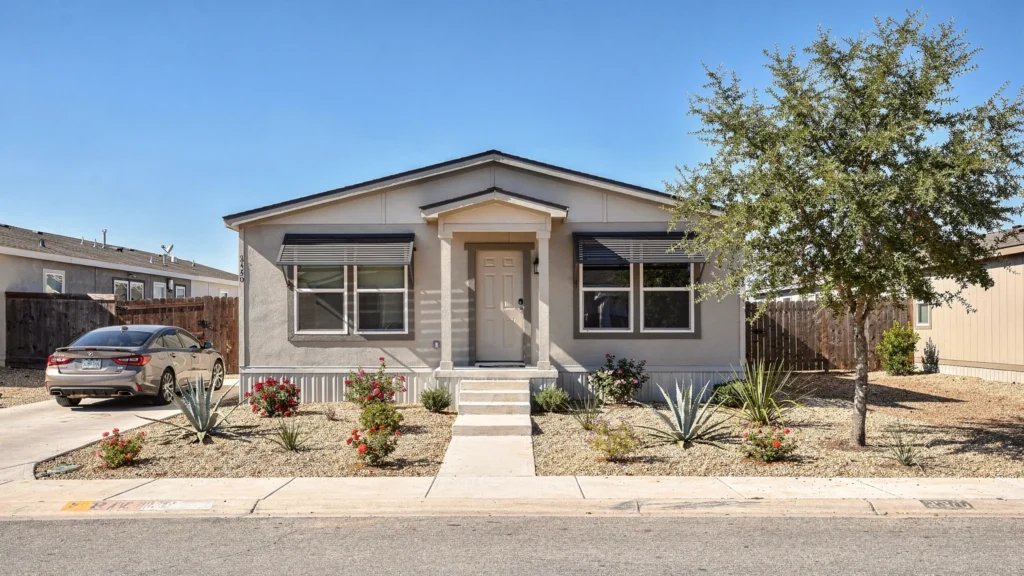 Energy Star Modular Homes: Lower Bills, Better Comfort
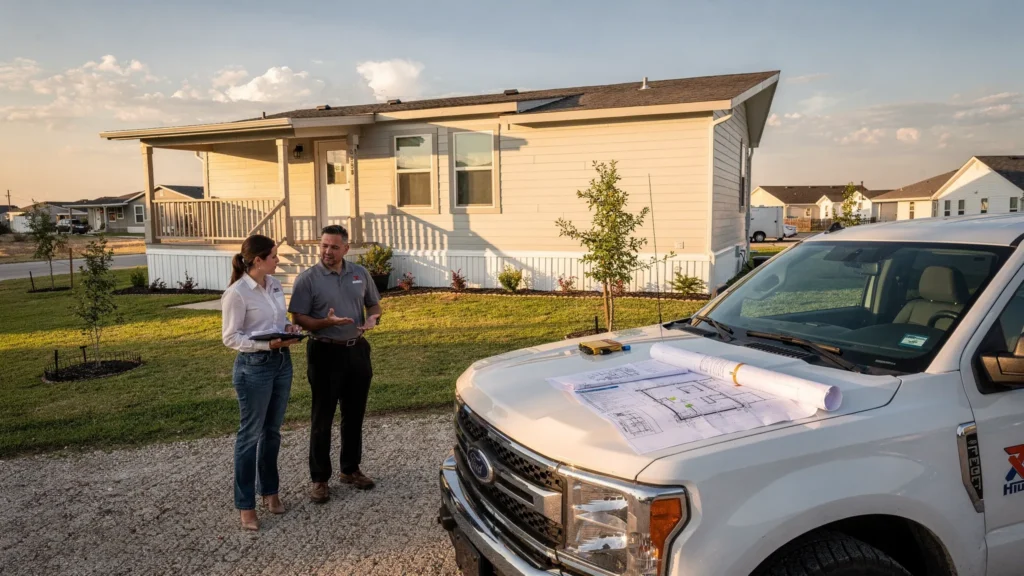 FHA 203(k) for Manufactured Homes: What Actually Qualifies