
If you searched for “us bank chattel loans,” you are probably trying to understand whether a manufactured home can be financed without buying land at the same time. The short answer is yes, if the lender offers chattel financing and the home, buyer and homesite meet its requirements. For many San Antonio buyers, this loan type can make manufactured home ownership more accessible because the home itself serves as the collateral, not a parcel of real estate.
A chattel loan is different from a traditional mortgage. With a mortgage, the lender usually secures the loan with land and a permanently attached home. With a chattel loan, the lender finances the manufactured home as personal property, which can be useful when you plan to place the home in a land-lease community or on land you do not want included in the loan.
Because bank programs change by state, lender and home type, buyers should verify details directly with the bank or lending partner. This guide explains how the process typically works, what lenders review and how to compare offers before choosing a home.
How “us bank chattel loans” fit manufactured home financing
In everyday searches, “us bank chattel loans” may refer to financing through U.S. Bank specifically or to chattel loans from a U.S. bank in general. Either way, the key question is whether the lender offers manufactured home personal property financing in your area, not just conventional mortgage products.
Large banks, credit unions and specialized manufactured home lenders may have different rules. Some institutions finance manufactured homes only when land is included. Others can finance the home by itself, especially if the home will be placed in an approved community or on a qualified private site.
The most important detail is the legal treatment of the home. If the manufactured home is titled as personal property, a chattel loan may fit. If the home is permanently affixed to owned land and converted to real property, a mortgage or land-home loan may be more appropriate.
For a broader plain-English foundation, Homes2Go also explains chattel loans for manufactured homes and how they differ from traditional mortgages.
What a chattel loan actually finances
When buyers compare “us bank chattel loans,” they should separate the home purchase from the land situation. A chattel loan typically finances the manufactured home itself and may include certain related costs if the lender allows them. The land, lot lease or community rent is usually separate.
That structure can be helpful when you want to move into a manufactured home community, lease a homesite or keep the home financing separate from land ownership. It can also simplify the process for buyers who are not ready to purchase land but want a move-in ready manufactured home.
The exact loan amount depends on the home price, down payment, eligible setup costs, taxes, insurance and lender rules. Some lenders may require the home to be new, built to HUD standards and installed by licensed professionals. Others may finance pre-owned homes if they meet age, condition and inspection guidelines.
According to HUD, manufactured homes built after June 15, 1976 must meet the federal Manufactured Home Construction and Safety Standards, often called the HUD Code. Buyers can review HUD’s manufactured housing program through the U.S. Department of Housing and Urban Development for background on these federal standards.
Step-by-step: how the loan process usually works
The process for “us bank chattel loans” is similar to other installment loans, but with extra attention on the manufactured home, where it will be placed and how it will be titled. You are not only qualifying as a borrower. The home and homesite must also make sense to the lender.
Most buyers move through these stages:
- Initial budget conversation: You estimate your down payment, target monthly payment, lot rent if applicable, insurance, taxes and utilities.
- Prequalification or application: The lender reviews credit, income, employment, debts and basic home plans.
- Home selection: You choose a manufactured home model, floor plan and options that fit the estimated approval range.
- Site or community review: The lender may confirm where the home will be installed and whether the community or land arrangement qualifies.
- Documentation and approval: You provide pay stubs, bank statements, identification, purchase documents, insurance information and other required paperwork.
- Closing and funding: After approval, the lender finalizes the loan documents, funds the purchase and records any required lien or title interest.
In Texas, manufactured home ownership and titling are handled through the Texas Department of Housing and Community Affairs Manufactured Housing Division. Buyers can learn more from the TDHCA Manufactured Housing Division, especially if they want to understand statements of ownership and consumer protections.
What lenders review before approving a buyer
A lender reviewing “us bank chattel loans” will usually look at the same borrower basics as other financing programs, then add manufactured-home-specific conditions. A strong file makes the process smoother, even if every lender sets its own standards.
Common borrower factors include credit history, stable income, employment, debt-to-income ratio and available funds for down payment or closing costs. Lenders want to see that the monthly home payment fits your overall budget, not just that you qualify on paper.
The home review matters just as much. The lender may ask for the manufacturer, model year, serial number or HUD label information, purchase agreement, invoice, floor plan, appraisal or valuation, setup details and insurance binder. If the home will be in a community, the lender may also request proof that the buyer is approved for the lot or that the community meets lender requirements.
If you want a deeper checklist before applying, the Homes2Go guide to chattel loan requirements for manufactured home buyers breaks down borrower, home, homesite and paperwork requirements in more detail.
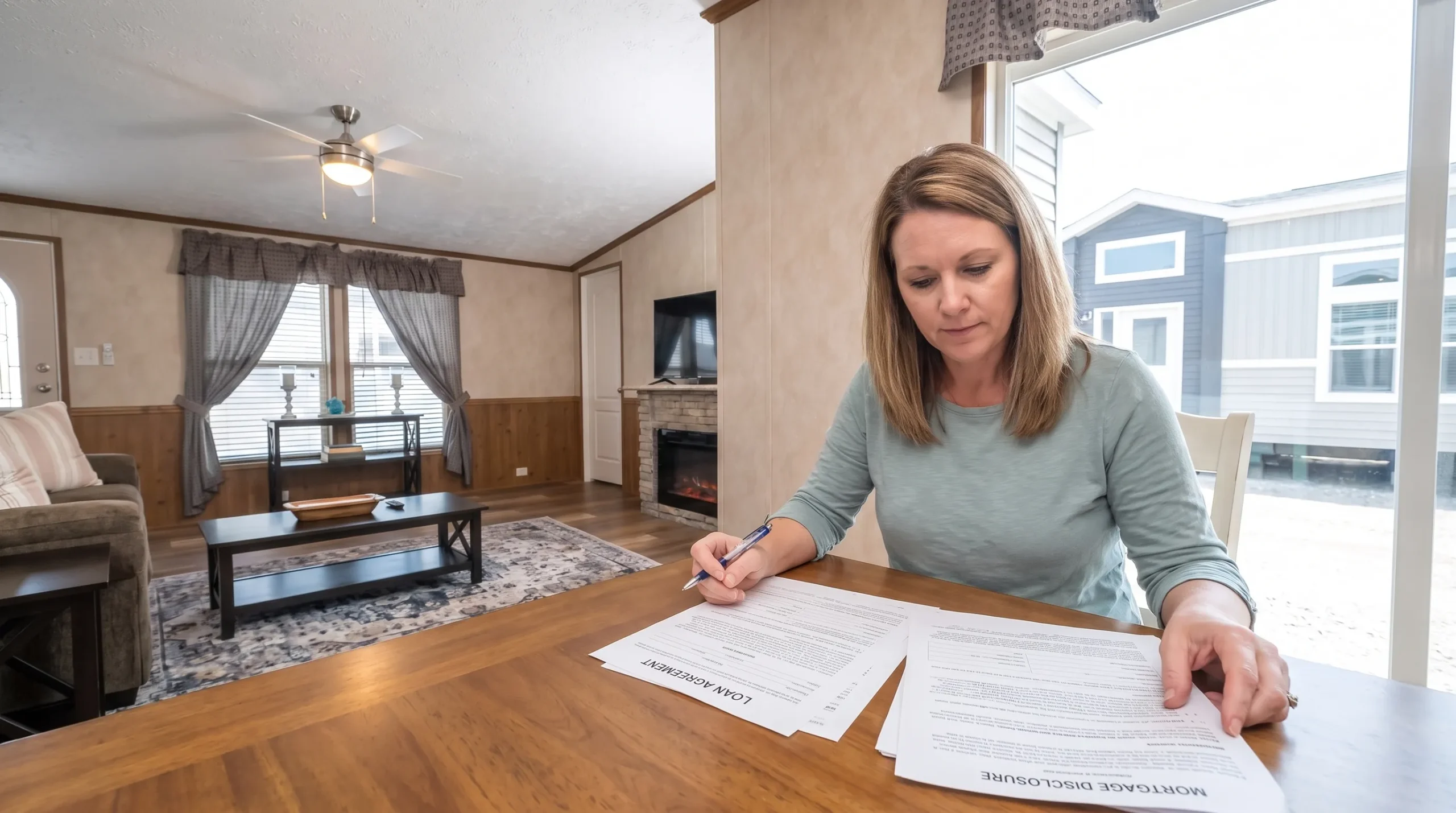
How payments, rates and terms are structured
When comparing “us bank chattel loans,” do not focus only on the interest rate. Look at the full cost of the loan, including APR, repayment term, down payment, fees and whether optional items are rolled into the balance. A lower monthly payment can still cost more over time if the term is longer or the financed amount is higher.
Chattel loans often have shorter repayment terms than traditional mortgages, and rates may be higher because the loan is secured by personal property rather than land. That does not automatically make the loan a bad fit. It means the buyer should compare total housing cost carefully.
Your true monthly budget may include the home loan payment, lot rent, insurance, utilities, taxes, maintenance and any community fees. A loan offer that looks affordable before lot rent may feel tight once the full housing picture is included.
| Financing factor | What to compare | Why it matters |
|---|---|---|
| Interest rate | The note rate charged on the loan | Affects monthly payment and interest cost |
| APR | Rate plus certain finance charges | Helps compare offers more accurately |
| Loan term | Number of years to repay | Longer terms may lower payments but increase total interest |
| Down payment | Cash due from the buyer | Changes the financed amount and approval strength |
| Total housing cost | Loan payment plus lot rent, insurance and utilities | Shows whether the home is truly affordable |
For a practical 2026 comparison framework, see Homes2Go’s guide on how to compare chattel loan interest rates.
Choosing a home that fits the financing
The home you choose affects the size of the loan, the monthly payment and the lender’s review. For example, a larger doublewide may offer more bedrooms and living space, but the total financed amount may be higher than a smaller model. A more compact floor plan may make sense for buyers who want a lower payment or a simpler approval path.
For families needing three bedrooms, the Legacy Aubrey is a 3 bedroom, 2 bathroom doublewide manufactured home with 1,372 square feet and dimensions of 32' x 48'. It is Legacy Housing floor plan C-32×48-32B and is available from Homes2Go in San Antonio.
For buyers who want a two-bedroom layout, the Legacy Heritage H-1668-22A offers 2 bedrooms, 2 bathrooms and 1,005 square feet in a 16' x 68' doublewide manufactured home. Comparing models like these can help you match the home size to your financing comfort zone.
When discussing “us bank chattel loans” with a lender, bring the specific home information early. A lender cannot give a truly useful estimate without knowing the model, purchase price, setup details and where the home will be placed.
Chattel loan vs mortgage: which one fits?
A buyer considering “us bank chattel loans” should also understand when a mortgage might be better. The right answer depends on land ownership, long-term plans and how the home will be titled.
A chattel loan may fit when you are buying the manufactured home only, placing it in a land-lease community or keeping land separate from the loan. It may also be useful when you want a more direct manufactured home financing path and do not need a land-home mortgage.
A mortgage may fit when you are buying both the home and land together, permanently affixing the home to a foundation and converting the home to real property. Mortgage options may have different rates, terms, appraisal rules, title requirements and closing timelines.
| Situation | Chattel loan may fit | Mortgage may fit |
|---|---|---|
| Home in a leased community | Yes, if lender and community qualify | Usually no, because land is not included |
| Home on land you already own | Possible, if home remains personal property | Possible, if home and land qualify as real property |
| Buying home and land together | Sometimes, but land is separate | Often a stronger fit |
| Fast comparison shopping | Can be more direct | May require more real estate documentation |
| Long-term land equity goal | Limited, unless you own land separately | Often better aligned |
Homes2Go covers the land-home decision in more detail in its guide to mobile home and land mortgage vs chattel loan options.
Questions to ask before you apply
Before applying for “us bank chattel loans,” prepare direct questions so you can compare lenders fairly. This is especially important if you are talking with a bank, dealer-connected lender and local lender at the same time.
Ask whether the lender currently offers chattel loans for manufactured homes in Texas, whether the home can be placed in a land-lease community and whether both singlewide and doublewide homes qualify. Confirm whether setup, delivery, taxes or insurance can be included in the loan or must be paid separately.
You should also ask about prepayment penalties, late fees, minimum down payment, credit expectations, required insurance and how long approval usually takes. If a lender quotes a monthly payment, ask what is included and what is not included.
It also helps to ask whether the lender works with first-time manufactured home buyers. A loan officer who regularly handles manufactured homes is more likely to understand title documents, community approvals, installation timelines and the difference between personal property and real property financing.
Common mistakes to avoid
The biggest mistake is shopping only by monthly payment. A payment can look low because the term is longer, the down payment is higher or key costs are excluded. Always compare APR, total amount financed and total monthly housing cost.
Another mistake is choosing a home before confirming the site. Lenders may need to know whether the home is going into a community, onto private land or into another approved location. Community approval and lender approval are separate steps, and both matter.
Buyers also run into delays when documents are incomplete. Before you apply, gather income documents, identification, bank statements, home model information, purchase agreement details and site information. If you are self-employed, ask the lender what tax returns or profit-and-loss documents it requires.
Finally, do not assume every bank offers the same program. “us bank chattel loans” is a useful search phrase, but real approval depends on the specific lender, current guidelines, the home, your financial profile and where the home will be installed.
Frequently Asked Questions
Are us bank chattel loans the same as manufactured home mortgages? No. A chattel loan usually finances the manufactured home as personal property, while a mortgage typically includes real estate and may require the home to be permanently attached to land.
Can I use a chattel loan if I do not own land? Often, yes. Many buyers use chattel financing when placing a manufactured home in a land-lease community, as long as the lender and community requirements are met.
Do chattel loans have higher rates than mortgages? They often can, because the loan is secured by the home as personal property instead of land-backed real estate. Compare APR, term, down payment and total housing cost before deciding.
What documents should I prepare before applying? Be ready with identification, income documents, bank statements, credit information, home model details, purchase agreement information, insurance details and homesite or community information.
Can Homes2Go help me understand financing options? Homes2Go San Antonio offers expert guidance, flexible financing options and access to trusted local lenders, so buyers can compare manufactured home models and financing paths with more confidence.
Get help comparing manufactured home financing in San Antonio
If you are looking at “us bank chattel loans” because you want an affordable path to homeownership, the next step is to match your budget with the right manufactured home and lender requirements. Homes2Go San Antonio can help you review available models, understand floor plans and connect with financing guidance suited to manufactured home buyers.
Explore Homes2Go’s manufactured homes in San Antonio or speak with the team about flexible financing options, move-in ready homes and communities that may fit your plans.
 How to Choose the Best Mobile Home for Your Lifestyle
 Do Fannie Mae Chattel Loans Exist for Manufactured Homes?