
Buying a manufactured home can be one of the most practical paths to homeownership, especially in a market where site-built homes may feel out of reach. But the best purchase decisions happen before you choose colors, countertops, or a favorite floor plan.
The most important things to know before buying a manufactured home are not only about the home itself. You also need to understand land or community placement, financing type, delivery and installation, local rules, warranties, and the paperwork that proves ownership. When you look at the full picture early, you can avoid surprise costs and make a confident decision.
Know what “manufactured home” actually means
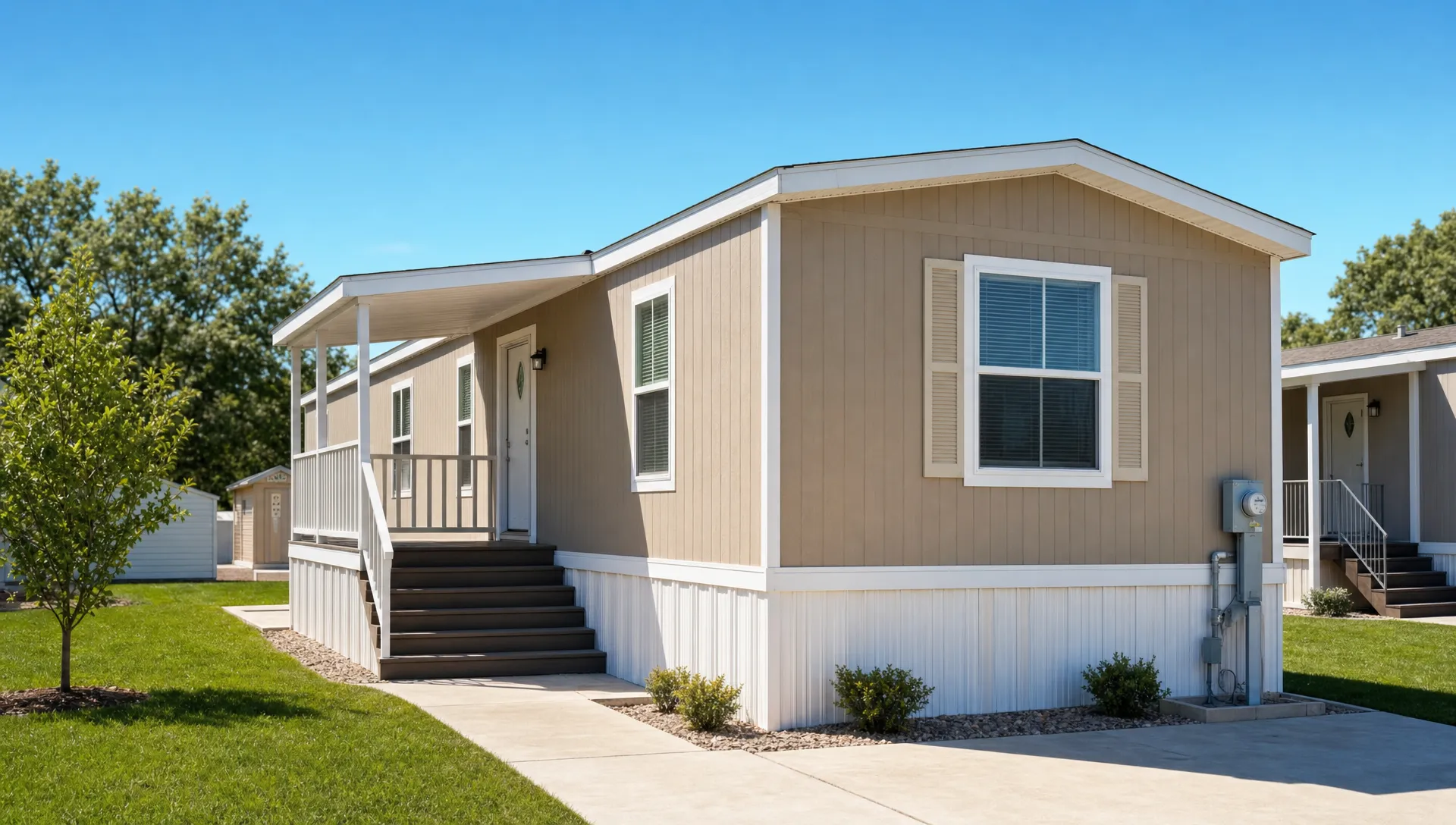
Many people use the terms mobile home and manufactured home interchangeably, but they are not exactly the same. In the United States, homes built in a factory after June 15, 1976, and built to the federal HUD Code are considered manufactured homes. Older factory-built homes from before that date are commonly called mobile homes.
That distinction matters because lenders, insurers, appraisers, communities, and government programs may treat the home differently depending on its age, construction standard, and documentation. The U.S. Department of Housing and Urban Development oversees the federal manufactured housing construction and safety standards, which cover areas such as design, construction, strength, durability, transportability, fire resistance, and energy efficiency.
A true manufactured home should have HUD certification labels on the exterior and a data plate inside the home. These details can be important when you apply for financing, insure the home, register ownership, or resell it later.
Decide where the home will be placed before you shop too seriously
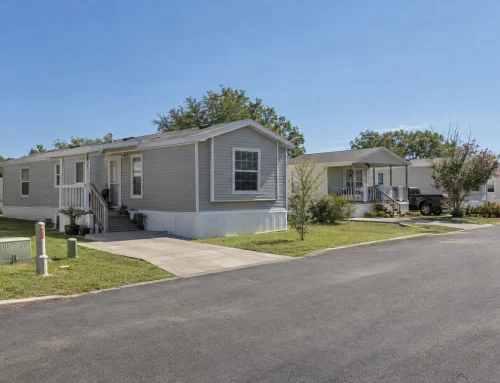
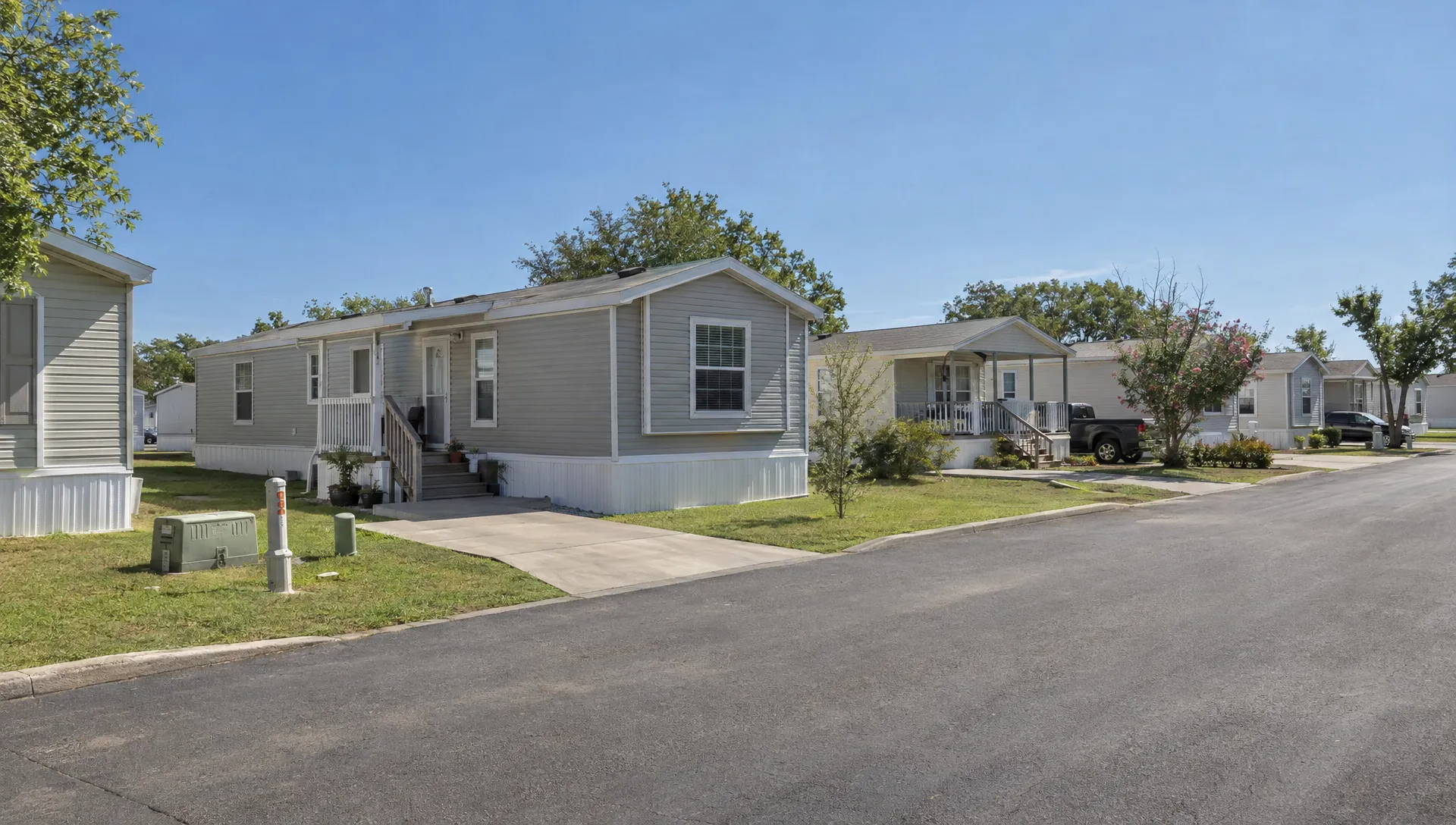
A manufactured home is not just a product you buy. It needs an approved place to go. Before you commit to a model, decide whether you want to live in a manufactured home community or place the home on private land.
In and around San Antonio, rules can vary by city, county, subdivision, utility provider, homeowners association, and community owner. A location that looks perfect may still have restrictions on home size, age, roof pitch, foundation type, utility connections, setbacks, or exterior appearance.
| Placement option | What to consider | Best fit for |
|---|---|---|
| Manufactured home community | Lot rent, community rules, pet policies, home age requirements, amenities, lease terms, approval process | Buyers who want a ready location and may not want to purchase land |
| Private land | Zoning, deed restrictions, utilities, driveway access, septic or sewer, water, permits, site preparation | Buyers who want more control and may want land ownership |
| Land-home package | Land purchase and home purchase may be financed together if eligible | Buyers who want one long-term ownership plan and can qualify for the financing structure |
If you are comparing options locally, this guide to manufactured homes for sale in San Antonio explains several Texas-specific buying considerations that can help you narrow your search.
Budget for the total installed cost, not just the home price
One of the biggest mistakes buyers make is comparing only the advertised home price. The base price may not include everything needed to make the home livable, legal, and move-in ready.
The true cost depends on the home model, size, features, location, land condition, utility access, foundation requirements, delivery distance, lender requirements, and local permitting. A home that looks cheaper at first can become more expensive if site work, utility connections, or installation costs are higher.
| Cost category | Why it matters | Questions to ask |
|---|---|---|
| Home price | Covers the structure and included features | What is included in the quoted price? |
| Delivery | The home must be transported from the retailer or factory to the site | Is delivery included, and are there distance limits? |
| Site preparation | Land may need grading, clearing, access work, or pad preparation | What must be completed before delivery? |
| Foundation and installation | Proper setup affects safety, financing, insurance, and long-term performance | Who installs the home, and what standard will be used? |
| Utility connections | Water, sewer or septic, electric, and sometimes gas must be connected | Which costs are included, and which are separate? |
| Permits and inspections | Local approvals may be required before move-in | Who handles permits and inspection scheduling? |
| Taxes and insurance | Ongoing costs affect affordability | What estimates should you use for monthly budgeting? |
| Community costs | Lot rent and fees can change the monthly payment | What are all recurring charges in writing? |
Ask for an itemized estimate in writing. A clear estimate should separate the home, delivery, setup, site work, utility connections, upgrades, fees, taxes, and any optional add-ons. This makes it easier to compare models fairly.
Understand financing before you fall in love with a floor plan
Manufactured home financing can work differently depending on whether the home is titled as personal property or real property, whether land is included, and whether the home meets the lender’s requirements.
Some buyers use a personal property loan, sometimes called chattel financing, when the home is located in a community or on land they do not own. Others may qualify for a mortgage-style loan when the home is permanently attached to land they own or are buying. FHA, VA, USDA, conventional, and retailer-connected financing options may be available in some situations, but eligibility depends on the buyer, the home, the land, and the loan program.
If you are considering FHA financing, review the major requirements before shopping. Homes2Go’s guide to FHA mobile home loan rules explains how FHA Title I and Title II options differ and why HUD labels, foundation standards, and property details matter.
It is also smart to compare more than one financing option. The Consumer Financial Protection Bureau explains how Loan Estimates help borrowers compare interest rates, monthly payments, closing costs, and loan terms. Even if you are not using a traditional mortgage, the same principle applies: compare the full cost of borrowing, not just the monthly payment.
Choose a floor plan around real life, not just square footage
Model homes are designed to make a strong first impression. Beautiful finishes matter, but the best floor plan is the one that fits how you actually live.
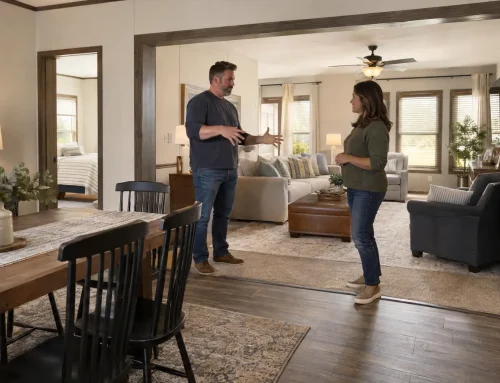
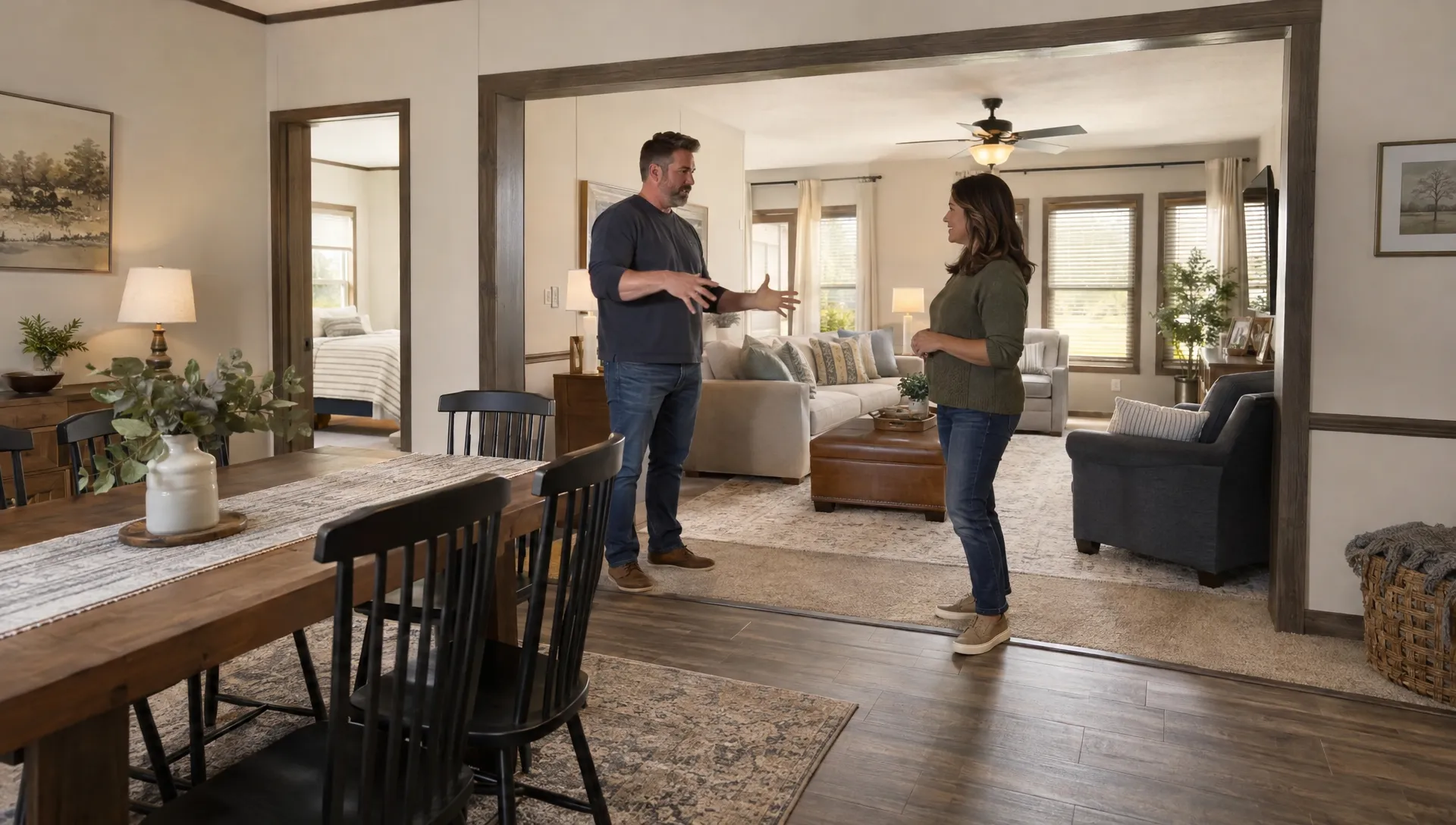
Think about your daily routines. A split-bedroom layout may give parents, roommates, or guests more privacy. A larger utility room can make laundry easier. An open kitchen may be great for families who gather around meals, while a more separated living area may work better for quiet evenings or shift work.
Before choosing a model, walk through these practical questions:
- Do you need three bedrooms now, or are you planning for future family changes?
- Is the primary bedroom private enough for your household?
- Are closets, pantry space, and utility storage adequate?
- Is there room for a home office, hobby area, or guest space?
- Will the entry layout work during rainy weather, muddy shoes, or grocery trips?
- Are hallway widths, bathroom layouts, and steps comfortable for long-term use?
In South Texas, energy efficiency also deserves attention. Ask about insulation, windows, HVAC sizing, appliances, ventilation, and expected utility performance. A home that is comfortable during a San Antonio summer can make a real difference in day-to-day living.
Look closely at construction quality, setup, and warranties
Factory-built construction can offer consistent quality, but the home still needs to be transported, installed, leveled, connected, and finished properly. A well-built home with poor installation can create problems later. A properly installed home with unclear warranty coverage can also lead to frustration if you do not know who is responsible for what.
Ask about the manufacturer warranty, retailer responsibilities, installer responsibilities, appliance warranties, and service process after move-in. Make sure verbal promises are written into the purchase documents when they affect price, timing, upgrades, or repairs.
If you are comparing new and pre-owned homes, the decision is not only about price.
| Option | Advantages | Watch carefully |
|---|---|---|
| New manufactured home | Current designs, customization options, manufacturer warranty, modern interiors, potential energy-efficient features | Final price after upgrades, delivery timeline, site readiness |
| Pre-owned manufactured home | Lower entry price in some cases, existing location may be available, faster move-in in some situations | Title history, roof, plumbing, HVAC, floor condition, skirting, leveling, financing limits |
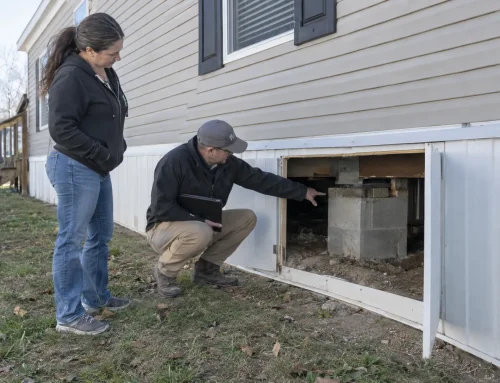
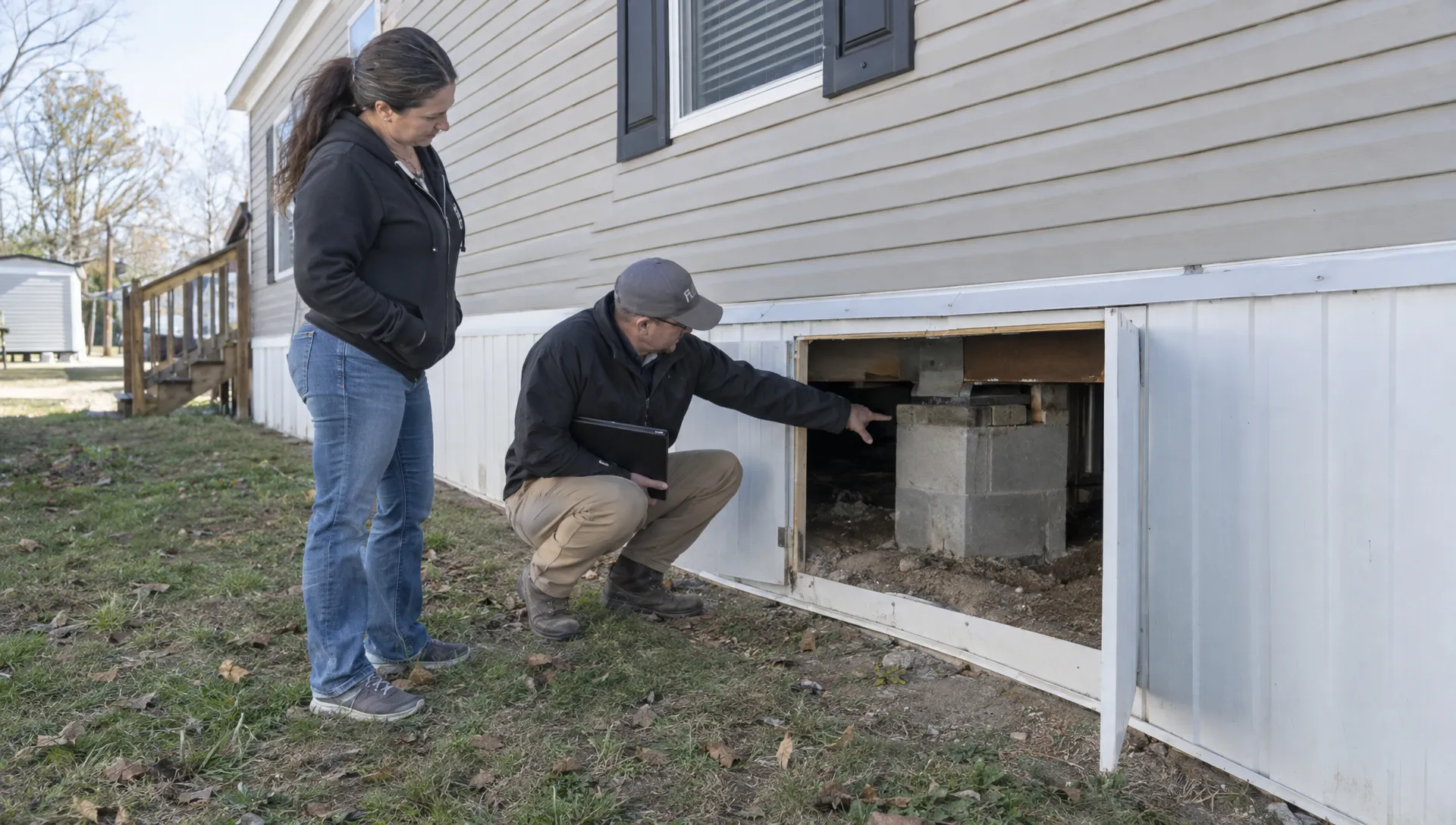
For used homes, consider a professional inspection. Pay attention to soft floors, water stains, roof condition, plumbing leaks, electrical issues, HVAC age, window function, door alignment, underbelly condition, and signs of improper repairs.
Review Texas paperwork and ownership details carefully
Paperwork is not the exciting part of buying a home, but it is one of the most important. In Texas, manufactured housing ownership records are handled through the Manufactured Housing Division of the Texas Department of Housing and Community Affairs. Buyers should understand how the home’s ownership will be documented, whether there are liens, and whether the home is being sold with land or separately.
Before you sign, review the purchase agreement, financing documents, community lease if applicable, warranty documents, installation agreement, and any addendum that changes the deal. Confirm the home’s serial number or VIN, model information, size, year, and included features.
Be especially careful with deposits and contingencies. You should understand whether a deposit is refundable, what happens if financing is denied, what happens if the site is not approved, and who pays for delays related to permits, land issues, or utility access.
Red flags deserve immediate attention:
- The seller will not provide clear ownership documents.
- The home’s identity information does not match the paperwork.
- The quoted price is vague or missing delivery and setup details.
- You are pressured to sign before reviewing financing terms.
- Community rules or lot rent are not provided in writing.
- Promises about repairs, upgrades, or move-in dates are only verbal.
A reputable seller should be willing to slow down, explain documents, and help you understand the full purchase process.
Plan the delivery and move-in timeline realistically
A manufactured home purchase involves more than signing and getting keys. The home may need to be ordered, built or prepared, transported, installed, connected to utilities, inspected, and completed with exterior items such as steps, skirting, decks, or driveway access.
Your timeline can be affected by weather, site preparation, permit approvals, utility providers, lender conditions, community approvals, and inspection schedules. If you are selling another home, ending a lease, or coordinating a school move, build in a cushion.
Ask who is responsible for each phase of the process. Buyers should know who handles permits, who schedules delivery, who prepares the site, who installs the home, who connects utilities, who arranges inspections, and who completes the final walk-through. Clarity upfront reduces stress later.
Think about long-term ownership, not just move-in day
A manufactured home should fit your life now and support your goals later. Resale value, financing options for future buyers, maintenance requirements, community reputation, land ownership, and local demand can all affect long-term satisfaction.
Location is a major factor. A well-maintained home in a desirable community or on properly improved land may be easier to enjoy and resell than a home placed somewhere with unresolved access, utility, or rule issues. If you own the land, improvements such as proper drainage, driveway access, porches, landscaping, and utility infrastructure can also affect long-term usability.
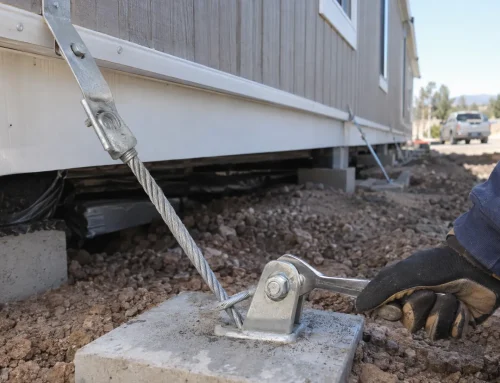
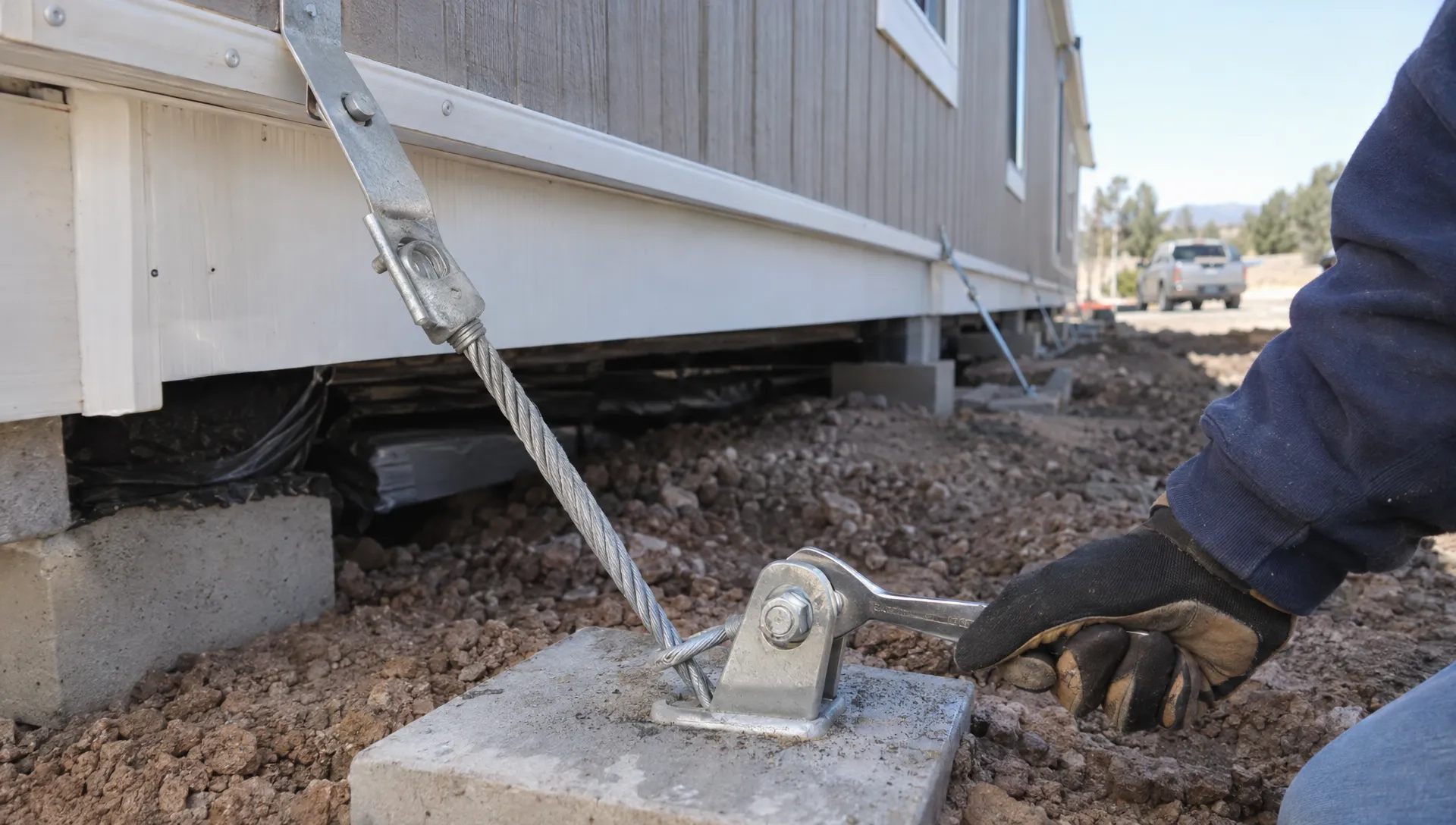
Maintenance matters too. Keep records for warranties, service, inspections, repairs, and upgrades. Watch roof condition, gutters, skirting, ventilation, plumbing protection, HVAC servicing, leveling, anchors, and drainage around the home. Small maintenance habits can prevent expensive problems.
Insurance should also be discussed before closing. Ask what coverage is available for the home, personal property, liability, wind, hail, flood risk if relevant, and any lender or community requirements. Do not assume every policy is the same.
Frequently Asked Questions
What is the most important thing to know before buying a manufactured home? The most important thing is that the home, financing, and location all need to work together. A great floor plan can become a poor fit if the land is not approved, the total installed cost is unclear, or financing does not match the home and ownership structure.
Is a manufactured home the same as a mobile home? In everyday conversation, many people use both terms. Technically, homes built after June 15, 1976, to the federal HUD Code are manufactured homes. Homes built before that standard are commonly called mobile homes.
Can I put a manufactured home on my own land in San Antonio? Possibly, but you must verify zoning, deed restrictions, utility access, permits, foundation requirements, and any city, county, subdivision, or HOA rules before buying the home. Never assume land is approved without checking.
Is it better to buy a new or used manufactured home? It depends on your budget, timeline, financing, repair tolerance, and desired features. New homes may offer warranties and updated designs, while used homes may have a lower upfront price but require more inspection and repair planning.
Do manufactured homes qualify for financing? Many manufactured homes can qualify for financing, but the options depend on the home, buyer, land, title status, age, condition, and loan program. Speak with experienced lenders early so you know what price range and home type fit your approval.
Make your next step a confident one
Buying a manufactured home is easier when you have clear answers before you sign. Focus on the full cost, the right location, realistic financing, proper installation, and complete paperwork.
If you are shopping in the San Antonio area, Homes2Go San Antonio can help you compare home models, review floor plans, explore flexible financing options, and get guidance from a local team familiar with manufactured home buyers in South Texas.
 Is a Double Wide Modular Home Right for Your Budget?
 How to Compare FHA Manufactured Home Loan Lenders