
Double wide mobile homes are one of the most practical options for buyers who want more space than a single wide, but do not want the cost or timeline of a traditional site-built house. For many San Antonio families, they offer a realistic path to homeownership with full-size kitchens, multiple bedrooms, modern finishes, and floor plans that feel much closer to a conventional home.
The key is understanding the real cost, not just the advertised home price. A double wide is made of two factory-built sections joined on site, so your final budget can include the home, delivery, installation, utility connections, foundation work, land or lot rent, taxes, insurance, and financing costs. Layout matters just as much because two homes with similar square footage can live very differently.
This guide breaks down what double wide mobile homes typically cost, how layouts compare, and which buyers tend to get the most value from them.
What counts as a double wide mobile home?
A double wide mobile home is a multi-section manufactured home built in a factory and transported to the home site in two main sections. Once delivered, the sections are joined, sealed, connected to utilities, and finished so the home functions as one continuous living space.
Many buyers still use the phrase mobile home, especially when searching online. Technically, homes built after June 15, 1976 are manufactured homes because they must comply with the federal HUD Code. The HUD Manufactured Housing Program oversees the national construction and safety standards for manufactured housing.
Double wides are usually wider and more residential in feel than single wides. Instead of a long, narrow layout, they can support open living rooms, larger kitchens, walk-in closets, split-bedroom plans, utility rooms, and more flexible common areas. This is why they are often the preferred choice for families, remote workers, first-time buyers who want room to grow, and downsizers who still want comfort.
How much do double wide mobile homes cost?
The short answer is that double wide mobile homes usually cost more than single wide homes, but often provide more livable space, better layout flexibility, and stronger long-term usability. The final price depends on the model, square footage, finishes, installation requirements, land situation, and financing structure.
The U.S. Census Bureau Manufactured Housing Survey tracks national manufactured home pricing and consistently shows that multi-section homes have higher average sales prices than single-section homes. Those figures are useful as a benchmark, but they do not replace a local, itemized quote because site conditions and delivery costs vary significantly.
Use the ranges below as planning estimates, not fixed prices. A local retailer or lender should confirm current pricing for the specific home, land, and setup.
| Buying scenario | Typical planning range | What to remember |
|---|---|---|
| New double wide, home only | About $120,000 to $230,000+ | This usually reflects the home itself before some site-specific costs. Size, brand, finishes, and appliances can change the price. |
| New double wide in a land-lease community | About $150,000 to $280,000+ before monthly lot rent | Setup may be simpler than raw land, but the monthly lot rent must be included in your housing budget. |
| New double wide on owned land | About $180,000 to $350,000+ if land is already owned | Site prep, foundation, utility runs, permits, driveway access, and septic or sewer work can add substantial cost. |
| Used double wide | Highly variable | A lower purchase price can be offset by repairs, transport limits, inspection issues, or financing restrictions. |
Cost factors that change the final number
The home price is only one part of the budget. Two buyers can choose the same floor plan and still end up with different final costs because their land, community, utilities, and lender requirements are different.
| Cost factor | Why it matters | Questions to ask before signing |
|---|---|---|
| Size and floor plan | More square footage, bedrooms, bathrooms, and structural options increase cost. | Is this layout large enough for the next 5 to 10 years, or just for today? |
| Finish package | Cabinets, countertops, flooring, bathroom fixtures, and appliances affect price and comfort. | Which upgrades improve daily life, and which are mainly cosmetic? |
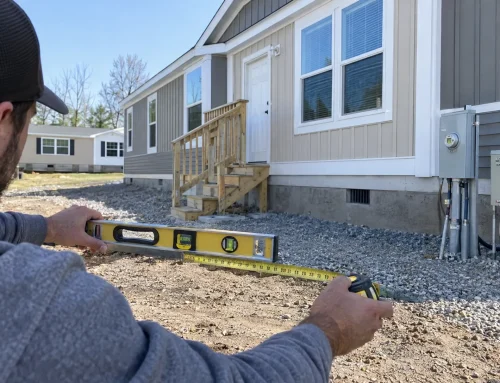
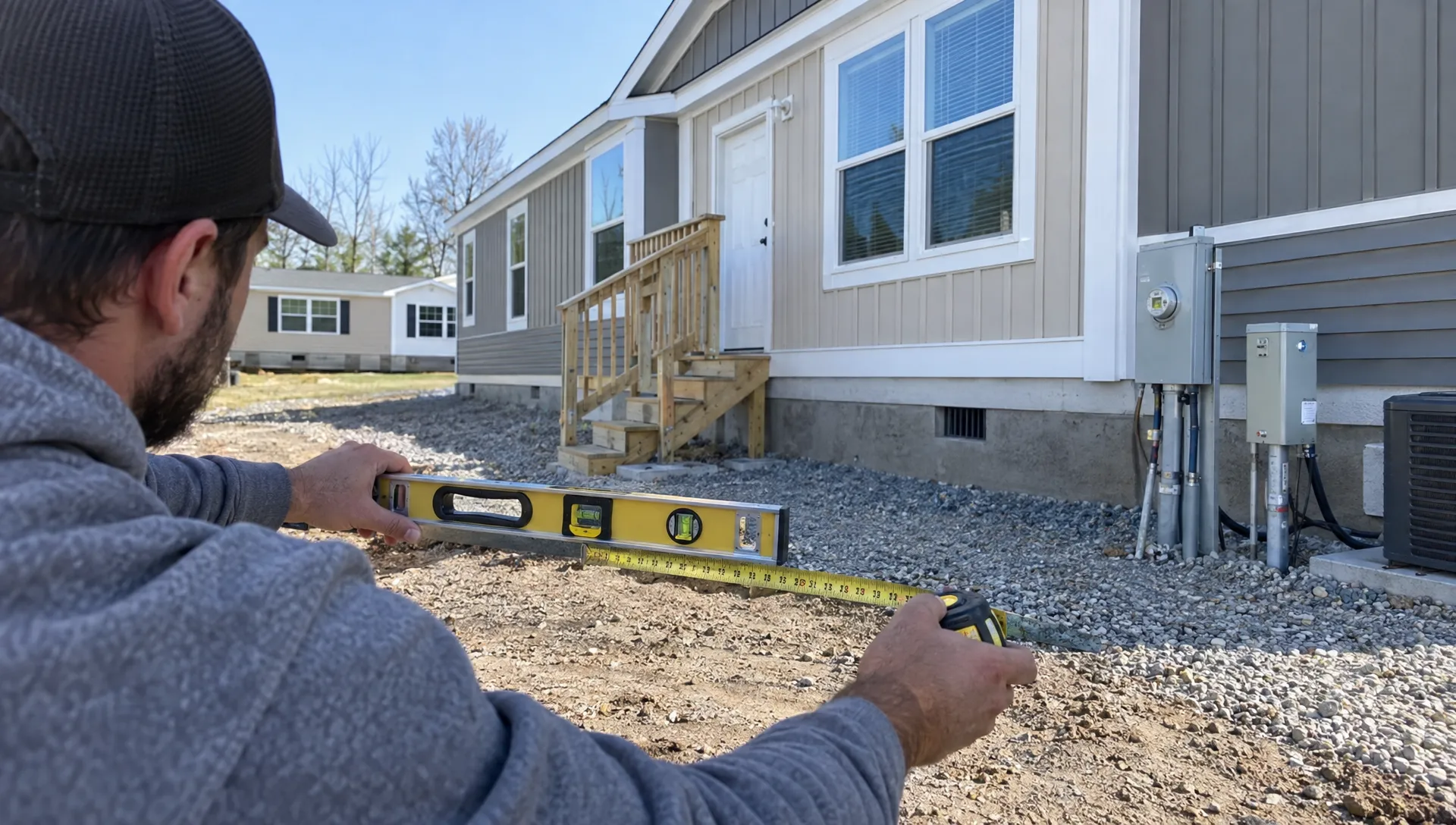
| Delivery and set | Transport distance, route access, equipment needs, and installation complexity can vary. | Is delivery included, and what conditions could create extra charges? |
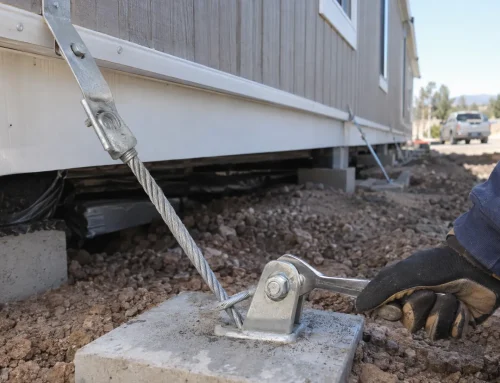
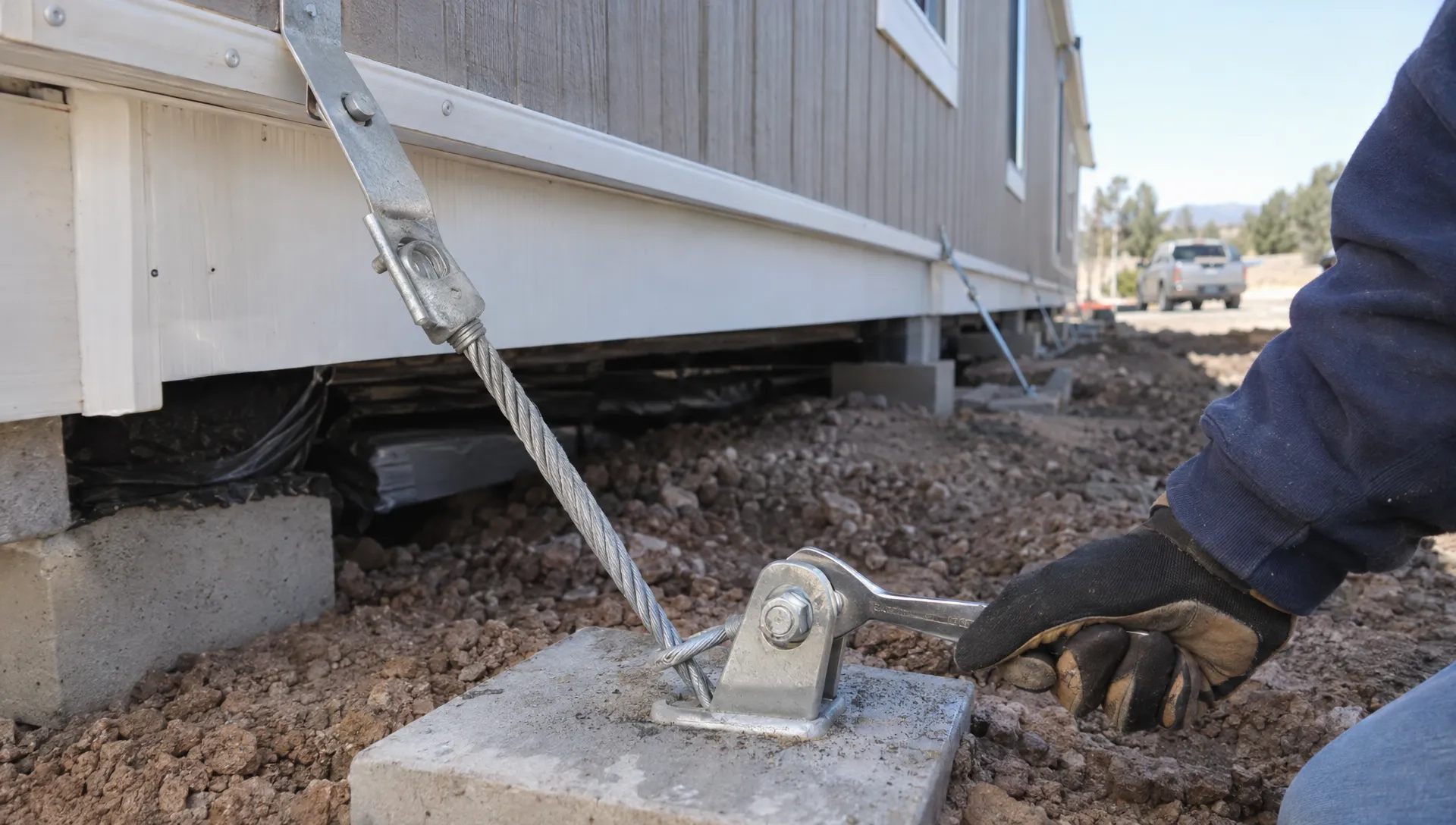
| Foundation and anchoring | Proper installation affects safety, durability, code compliance, and financing eligibility. | What foundation type is required for this property and loan program? |
| Utilities | Electric, water, sewer, septic, gas, and HVAC connections can be simple or expensive. | Are utilities already available at the site, or do they need to be extended? |
| Land or lot rent | Owned land and community placement create different monthly costs and ownership structures. | Am I buying land with the home, placing it on land I own, or leasing a lot? |
| Taxes and insurance | Manufactured homes still require insurance, and taxes depend on location and title status. | How will the home be titled, and what should I expect annually? |
| Financing costs | Interest rate, down payment, closing costs, and loan type shape affordability. | What monthly payment fits comfortably after utilities, insurance, and lot rent? |
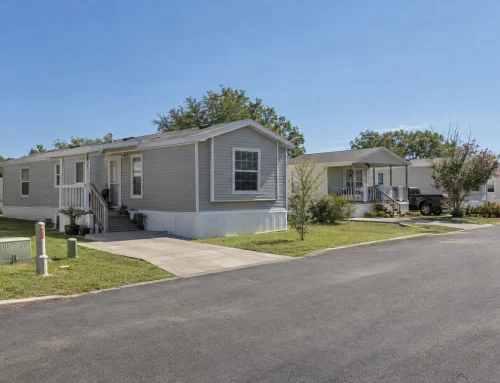
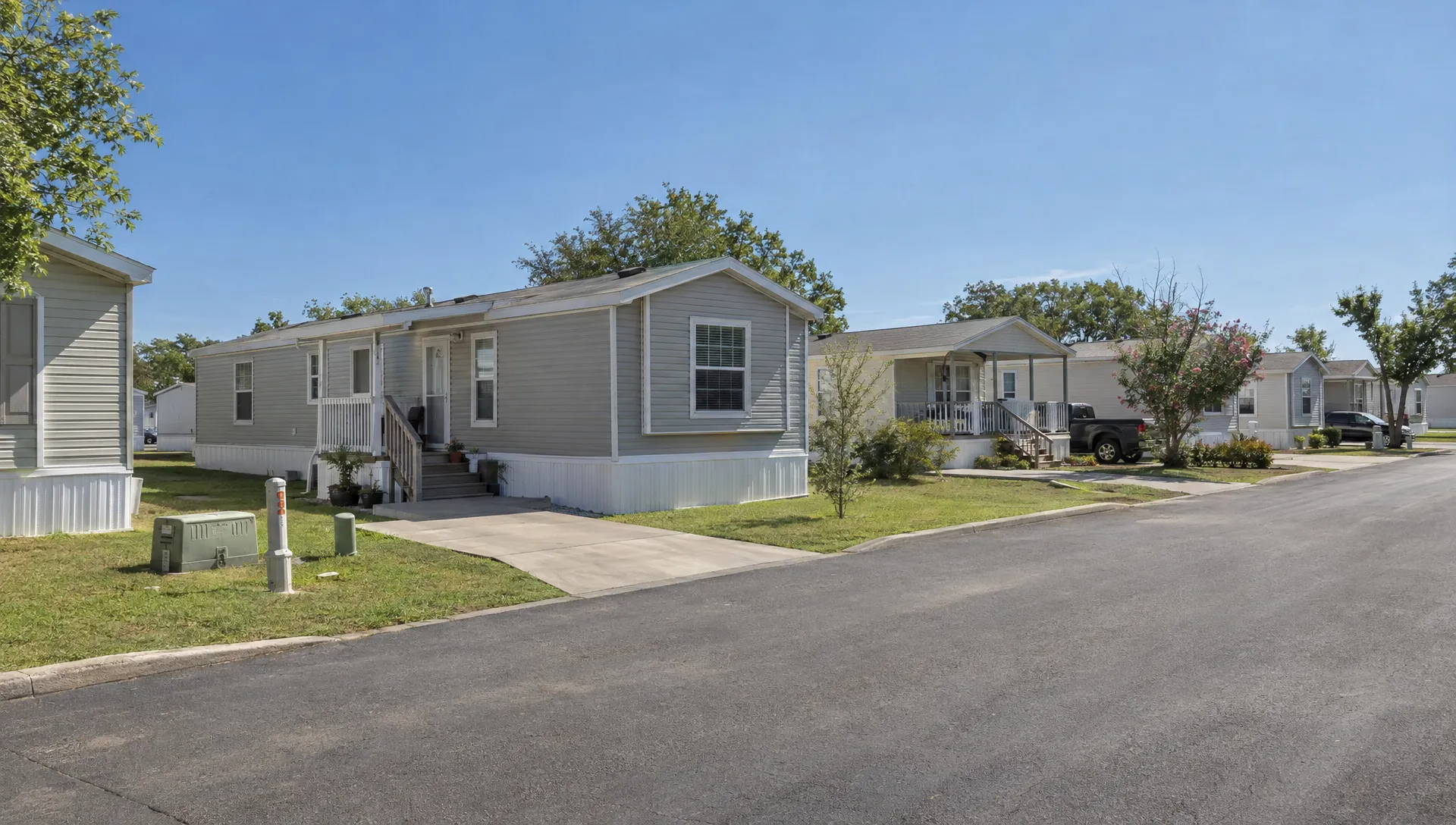
In the San Antonio area, land conditions can be a major cost variable. A property with easy road access, nearby utilities, and clear permitting is very different from acreage that needs grading, a long driveway, septic design, or extended electrical service. If you are placing a home in a manufactured home community, the site may already be prepared, but you need to understand lot rent, community rules, parking, pet policies, and what services are included.
Common double wide layouts
The main advantage of a double wide is layout flexibility. Because the home is built in two sections, it can feel wider, brighter, and more open than a single-section home. Common widths are often in the 24 to 32 foot range, with lengths that vary by model. Square footage can start near 1,000 square feet and extend well beyond 2,000 square feet in larger plans.
A good layout should match how your household actually lives. If everyone gathers in the kitchen, prioritize an open kitchen and living area. If privacy matters, look for a split-bedroom design. If you work from home, a smaller bedroom may be more valuable as an office than as occasional guest space.
| Layout type | Common size range | Best for | Watch for |
|---|---|---|---|
| Compact 3 bed, 2 bath | About 1,100 to 1,400 sq. ft. | First-time buyers, couples, small families, buyers keeping payments lower | Smaller secondary bedrooms and limited storage |
| Standard 3 bed, 2 bath split plan | About 1,400 to 1,800 sq. ft. | Families wanting privacy between the primary suite and other bedrooms | Long walks between laundry, bedrooms, and kitchen if the flow is not efficient |
| Large 3 bed, 2 bath with flex space | About 1,700 to 2,100 sq. ft. | Remote work, homeschooling, hobbies, guests, or a second living area | Paying for flex space you may not actually use |
| 4 bed, 2 bath | About 1,800 to 2,400+ sq. ft. | Larger families, blended families, multi-generational households | Smaller room sizes if square footage is spread too thin |
| Open-concept kitchen and living plan | Varies | Entertaining, family time, natural light, modern interiors | Less separation for noise, cooking smells, and privacy |
For example, the Legacy Aubrey shows how a 1,372-square-foot doublewide can fit 3 bedrooms and 2 bathrooms into a manageable footprint. That type of plan can work well for buyers who want the feel of a full home without moving into the largest possible model.
Layout details that matter more than square footage
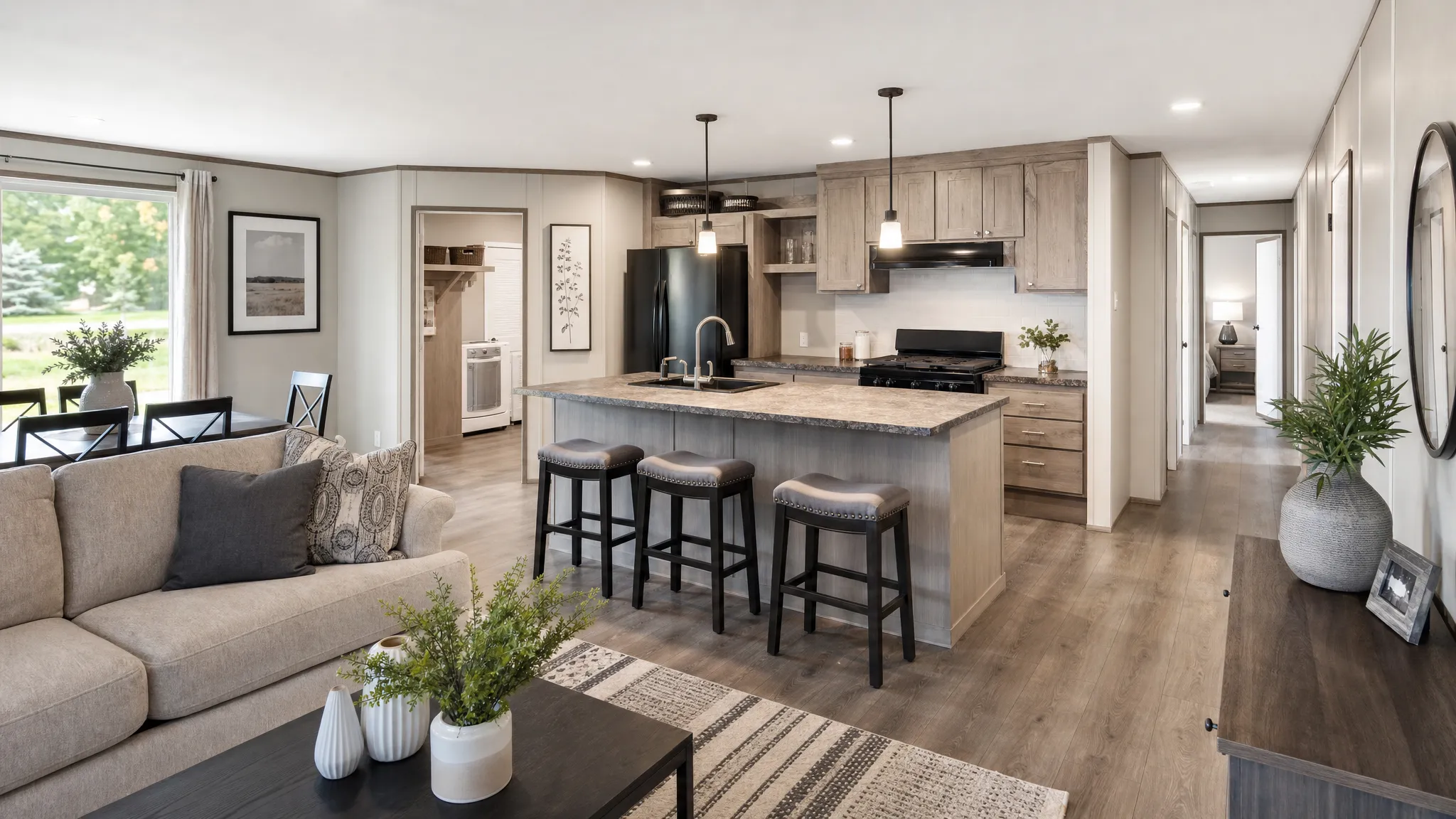
Square footage is helpful, but it does not tell the full story. A 1,500-square-foot home with wide hallways, a smart laundry location, and good storage may feel better than a larger home with awkward room placement.
Pay close attention to the kitchen triangle, meaning the relationship between the sink, stove, and refrigerator. Look at where groceries enter the home, where laundry piles will collect, and whether the primary bedroom is far enough from noisy living areas. If you have children, consider sightlines from the kitchen to the living room. If you have older family members, look at steps, door widths, bathroom access, and the distance from parking to the entry.
Double wide vs. single wide: which one fits better?
A single wide can be a smart choice when budget, land size, or simplicity is the top priority. A double wide is usually the better fit when you need a more residential layout and plan to stay longer.
| Feature | Single wide | Double wide |
|---|---|---|
| Typical footprint | Narrower and longer | Wider, with more room-like proportions |
| Layout feel | Efficient but more linear | More open, with better separation of spaces |
| Bedrooms | Often 2 to 3 | Often 3 to 4, depending on size |
| Common buyer priority | Lower upfront cost | More space, comfort, and flexibility |
| Site needs | Smaller footprint can be easier to place | Requires more site width and more complex setup |
| Resale appeal | Depends heavily on condition and location | Often broader appeal for families and long-term owners |
If the home will be used for only one or two people and affordability is the deciding factor, a single wide may be enough. If you need a primary suite, guest rooms, a home office, and a larger shared living area, a double wide often makes more sense.
Best uses for double wide mobile homes
Double wide mobile homes are not one-size-fits-all. They are especially strong when the buyer values space, speed, predictable design, and a more accessible homeownership path.
Growing families
Families often choose double wides because they provide separate bedrooms, larger living areas, and two full bathrooms at a more approachable price point than many site-built homes. A split-bedroom layout can give parents privacy while keeping children or guests on the opposite side of the home.
Storage is a big factor for families. Look for walk-in closets, pantry space, a functional utility room, and enough room near the entry for shoes, backpacks, sports gear, or work equipment.
First-time homebuyers
A double wide can help first-time buyers move from renting to owning without jumping straight into a high-cost site-built property. The predictable floor plans and available financing paths can make the process easier to understand, especially with the right guidance.
First-time buyers should focus on the total monthly payment, not only the purchase price. That means including home payment, land payment or lot rent, utilities, insurance, taxes, maintenance, and any community fees.
Buyers placing a home on family land
In Texas, many buyers look at manufactured homes because they already have access to family land or rural acreage. A double wide can be a strong fit when the land is suitable for installation and utilities can be connected at a reasonable cost.
Before choosing a model, confirm zoning, deed restrictions, floodplain status, utility access, driveway requirements, and whether the land can support the required foundation and installation.
Multi-generational households
A larger double wide can work for households with aging parents, adult children, or extended family. The best layouts for this use often include bedrooms on opposite sides, two living areas, or a bedroom near a bathroom with easy access.
For older family members, look beyond bedroom count. Entry access, bathroom layout, hallway width, lighting, flooring transitions, and laundry location can make daily life easier.
Downsizers who still want comfort
Not every downsizer wants a tiny home. Many buyers want fewer maintenance responsibilities but still need a real kitchen, guest room, storage, and space for hobbies. A double wide can offer that balance, especially in a community where yard work and location may be easier to manage.
The best downsizing layouts keep the primary suite comfortable, reduce wasted hallway space, and avoid rooms that will sit unused.
Remote workers and home-based businesses
Remote work has made floor plan flexibility more important. A double wide with a flex room, third bedroom, or second living area can provide a dedicated workspace without taking over the dining table.
If you work from home, check outlet placement, internet availability, natural light, noise separation, and whether the office space is close to common areas or tucked away for privacy.
Financing a double wide mobile home
Financing depends on whether the home is placed on owned land, purchased with land, or located in a land-lease community. It also depends on the home’s age, condition, title status, foundation, and whether it meets the lender’s manufactured housing requirements.
Common financing paths can include personal property loans, sometimes called chattel loans, for homes not financed with land. Buyers may also explore land-home loans when the home and land are financed together. Some borrowers may qualify for FHA, VA, USDA, or conventional manufactured housing programs if the property and borrower meet the program rules.
FHA financing can be especially detail-oriented for manufactured homes. Labels, foundation requirements, title status, appraisal rules, and land eligibility may all matter. If you are considering that route, review the key requirements in this guide to FHA rules for double wide mobile homes before you get too far into the shopping process.
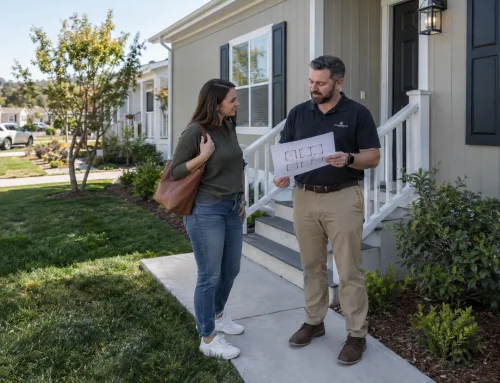
The most important step is getting prequalified with a lender that understands manufactured housing. A lender familiar with local communities, land-home packages, and manufactured home guidelines can help you avoid surprises late in the process.
What to check before choosing a double wide
A double wide should fit your budget, land situation, and daily routine. Before committing, ask for clear answers on the total installed cost and what is included.
- Confirm whether the quoted price includes delivery, setup, skirting, steps, HVAC, appliances, permits, and utility connections.
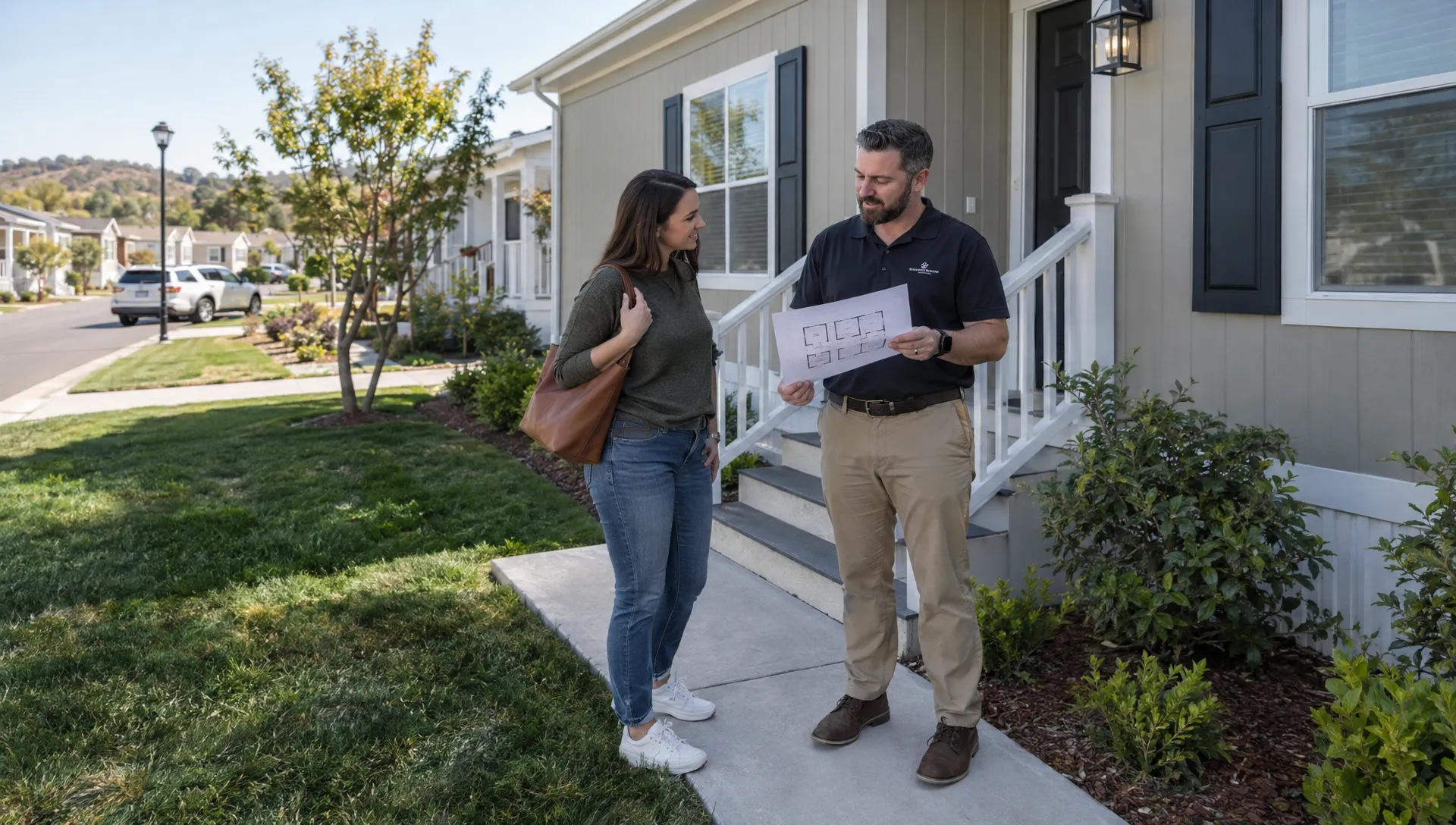
- Walk the floor plan in person when possible, paying attention to traffic flow, storage, room sizes, and natural light.
- Compare the monthly payment with utilities, insurance, taxes, lot rent, and maintenance included.
- Ask what foundation or installation standard is required for your lender, community, or property.
- Review community rules or land restrictions before choosing a home size.
- Check energy-related features such as insulation, windows, HVAC specifications, and appliance efficiency.
- Understand warranty coverage, service timelines, and who handles post-installation items.
The right home should feel comfortable on day one and still make sense years later. If a layout barely works now, it may feel cramped quickly. If a model is larger than you need, you may pay for space that does not improve your daily life.
Are double wide mobile homes worth it?
Double wide mobile homes can be worth it when they solve the right problem: more space, lower entry cost than many site-built homes, faster construction, and flexible placement options. They are often a strong match for buyers who want a full-size home but need a more accessible path than traditional construction.
They may not be the best fit if your land is difficult to develop, if local restrictions limit manufactured housing, or if you are comparing only the home price without the full installed budget. They also require careful attention to financing terms, title status, installation quality, and long-term site costs.
The best decision comes from comparing several models, reviewing actual floor plans, and building a full cost estimate before you fall in love with finishes. A beautiful kitchen matters, but the right payment, location, and layout matter more.
Frequently Asked Questions
Are double wide mobile homes the same as manufactured homes? Modern double wide mobile homes built after June 15, 1976 are technically manufactured homes because they are built to the federal HUD Code. Many people still use mobile home as a common search term.
How much do double wide mobile homes cost in San Antonio? Costs vary by model, size, finishes, land, setup, and financing. Many new double wides fall into six-figure budgets, and the final installed cost can be much higher than the home-only price once delivery, foundation, utilities, and site work are included.
Do I need to own land to buy a double wide? No. Some buyers place a home on land they own, some buy land and home together, and others place the home in a manufactured home community with monthly lot rent. Each option affects financing and long-term cost.
Can double wide mobile homes be financed with FHA loans? Some double wide manufactured homes may qualify for FHA financing if the borrower, home, land, foundation, title status, and appraisal meet FHA requirements. Eligibility is specific, so it is best to work with a lender experienced in manufactured housing.
What is the best layout for a family? Many families prefer a 3 bed, 2 bath or 4 bed, 2 bath split-bedroom layout with an open kitchen, good storage, and a utility room. The best layout depends on family size, privacy needs, work-from-home needs, and how long you plan to stay.
Find the right double wide home in San Antonio
Choosing a double wide is easier when you compare real floor plans, real setup requirements, and realistic financing options side by side. Homes2Go SA helps buyers evaluate manufactured homes with practical guidance, flexible financing options, and access to home models that fit different budgets and lifestyles.
If you are ready to compare options, start by reviewing new mobile homes for sale in San Antonio and look for the floor plan that fits how you actually live, not just the one with the most square footage.
 Cheap Trailer Homes for Rent Near Me: Avoid Costly Mistakes
 Benefits of a Mobile Home for Budget-Conscious Buyers