
If you are comparing manufactured home financing in San Antonio, an FHA loan can be one of the most buyer-friendly options, especially for first-time buyers who want a lower down payment and flexible credit guidelines. But FHA loan rules for double wide homes are more specific than they are for a typical site-built house.
A double wide is usually considered a multi-section manufactured home, meaning it was built in two sections at a factory, transported to the site, and joined together during installation. FHA does not approve or deny a home simply because it is a double wide. Instead, the lender will look at how the home was built, where it is installed, whether it is legally classified as real property, and whether the borrower meets FHA mortgage guidelines.
Below is a practical guide to the key FHA requirements for double wide homes, with notes for buyers in San Antonio and surrounding areas.
Can You Use an FHA Loan for a Double Wide Home?
Yes, you can use an FHA loan for many double wide manufactured homes, but the home and property must meet FHA standards. In most cases, buyers are looking at one of two FHA paths.
| FHA financing option | Best fit | Important note |
|---|---|---|
| FHA Title II mortgage | Double wide home attached to land as real property | Often used for land-home purchases, homes on owned land, or qualifying existing homes |
| FHA Title I manufactured home loan | Manufactured home, lot, or home-and-lot financing | Can apply to some home-only scenarios, but lender availability varies |
For many San Antonio buyers, the biggest question is whether the home will sit on owned land or in a land-lease community. If you own the land and the home is permanently installed, FHA Title II may be a fit. If the home is in a community where you lease the lot, a traditional FHA mortgage may not work the same way, and you may need to explore FHA Title I, chattel loans, or other manufactured home financing options.
Homes2Go San Antonio helps buyers compare available models, floor plans, communities, and financing paths so they can understand what is realistic before falling in love with a home.
FHA Double Wide Home Requirements at a Glance
FHA manufactured home requirements are designed to make sure the property is safe, durable, properly installed, and acceptable as collateral for the loan.
| Requirement | What FHA or the lender will review | Why it matters |
|---|---|---|
| HUD-code construction | The home must be built to the federal manufactured housing code, generally after June 15, 1976 | Pre-HUD-code mobile homes usually are not eligible |
| Minimum size | FHA manufactured homes must typically be at least 400 square feet | Most double wides exceed this requirement |
| HUD certification labels | Each section should have a red HUD certification label, often called a HUD tag | Confirms the home was built to federal standards |
| Data plate | The home should have a data plate with manufacturer, serial number, wind zone, roof load, and other details | Helps verify the home’s eligibility and specifications |
| Permanent foundation | For FHA Title II, the home must be permanently affixed to an acceptable foundation | The home must function as real property, not temporary housing |
| Real property status | The home and land generally need to be legally tied together for a mortgage | This affects titling, taxes, appraisal, and loan approval |
| Primary residence | The borrower must plan to live in the home as a principal residence | FHA loans are not for investment properties or vacation homes |
| Acceptable site | The lot must meet zoning, access, utility, drainage, and safety requirements | Site issues can delay or stop approval |
| FHA appraisal | An FHA-approved appraiser must evaluate value and minimum property standards | The home must be marketable, safe, and structurally sound |
These requirements are general. FHA lenders can also add their own standards, called lender overlays, so one lender may be more flexible or more experienced with manufactured housing than another.
Borrower Requirements for an FHA Loan
FHA financing is popular because it can be more accessible than many conventional mortgage programs. Still, you must qualify as a borrower.
Credit Score and Down Payment
FHA’s general minimum down payment is commonly 3.5% for borrowers with a qualifying credit score of 580 or higher. Borrowers with scores from 500 to 579 may be eligible under FHA rules with a higher down payment, but many lenders have stricter standards, especially for manufactured homes.
For double wide manufactured homes, it is smart to ask lenders about their specific manufactured housing requirements, not just their standard FHA requirements. A buyer may meet FHA’s baseline rules but still need to satisfy the lender’s credit, income, and property standards.
Income, Employment, and Debt-to-Income Ratio
Your lender will verify that you have stable income and can afford the monthly payment. That review usually includes employment history, pay stubs or tax returns, bank statements, debts, and recurring obligations.
FHA looks at debt-to-income ratio, which compares your monthly debt payments to your gross monthly income. Some buyers qualify with higher ratios depending on compensating factors, but a lower ratio can make approval easier and may give you more room for insurance, taxes, lot-related costs, utilities, and maintenance.
Occupancy
FHA loans are intended for owner-occupied homes. You must plan to use the double wide as your primary residence, usually within a reasonable time after closing or completion.
Mortgage Insurance
FHA loans include mortgage insurance. There is typically an upfront mortgage insurance premium and an annual mortgage insurance premium paid monthly. These costs should be included in your payment estimate, because they affect affordability.
You can learn more about FHA loan basics through HUD’s home loan resources, but always confirm your exact numbers with a licensed lender.
Property Requirements for Double Wide Manufactured Homes
The home itself must qualify. This is where double wide buyers often run into surprises.
The Home Must Be a HUD-Code Manufactured Home
FHA financing is for manufactured homes built to the federal HUD Code, which took effect on June 15, 1976. A home built before that date is usually considered a pre-HUD-code mobile home and typically will not qualify for FHA financing.
A qualifying double wide should have HUD certification labels attached to the exterior of each section. If a label is missing, the lender may require verification from the Institute for Building Technology and Safety or another acceptable source. Missing labels do not always kill a deal, but they can slow it down.
The Home Must Be Properly Installed
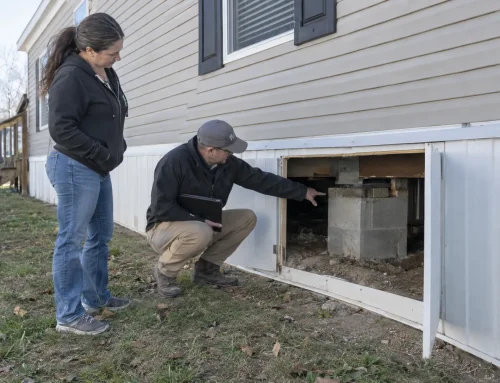
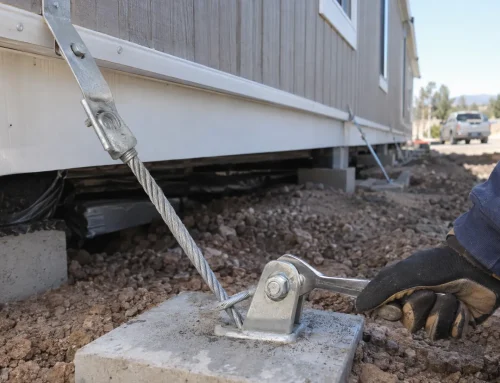
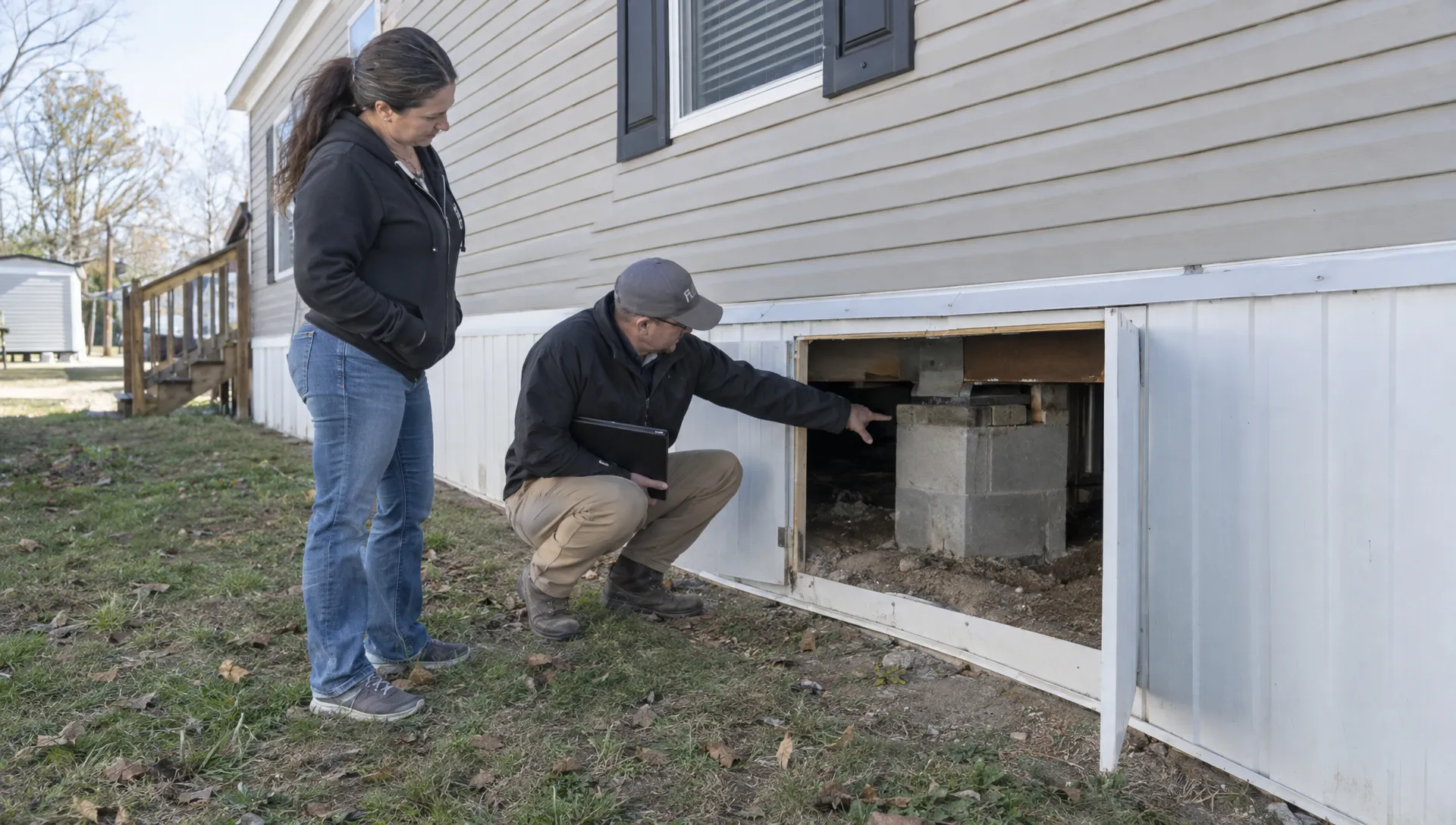
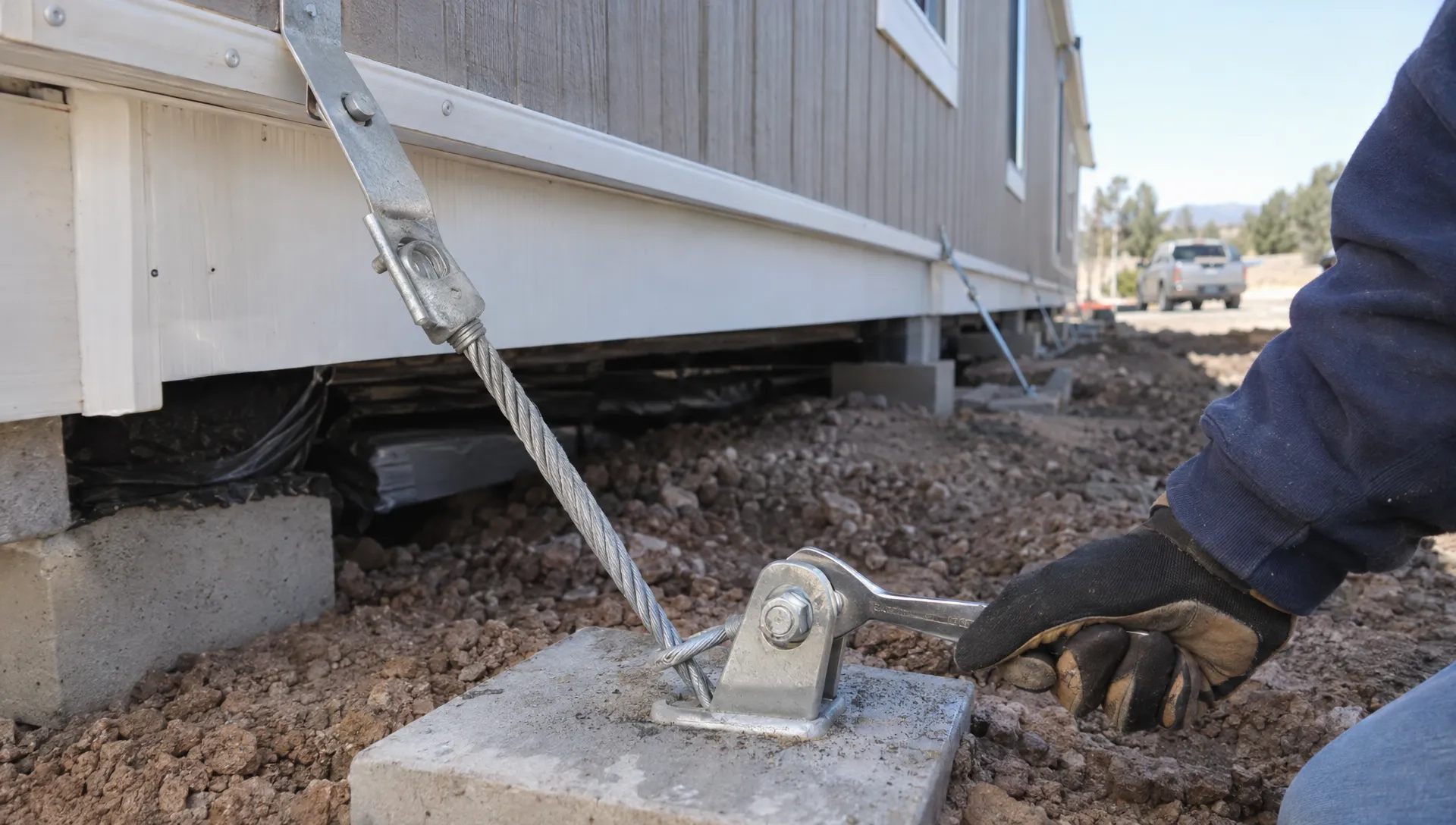
For an FHA Title II mortgage, the double wide must be installed on a permanent foundation that meets FHA and HUD standards. Lenders frequently require a foundation inspection or engineer’s certification to confirm compliance.
The foundation is not just about concrete. The review can include piers, footings, anchoring, crawlspace access, drainage, skirting, utility connections, and whether the home is permanently attached to the site.
The Home Usually Cannot Be Relocated from Another Site
FHA and many lenders are cautious with manufactured homes that have been moved after initial installation. A new home transported from the retailer or manufacturer to its permanent site is normal. A used manufactured home that was installed in one location, then moved to another site later, can be difficult or impossible to finance with FHA.
If you are buying an existing double wide, ask early whether the home is on its original installation site and whether relocation history can be documented.
The Home Must Meet Safety and Condition Standards
An FHA appraisal checks value, but it also checks basic property standards. Common concerns include roof condition, structural issues, water intrusion, unsafe electrical systems, missing utilities, damaged flooring, broken windows, and incomplete installation.
The home does not need to be luxury-level, but it does need to be safe, sound, and secure. If repairs are required, the lender will decide whether they must be completed before closing.
Land and Site Requirements
The land can be just as important as the double wide itself.
Owned Land vs. Leased Land
For FHA Title II mortgage financing, the cleanest scenario is usually a double wide permanently attached to land the borrower owns. The home and land are treated together as real property.
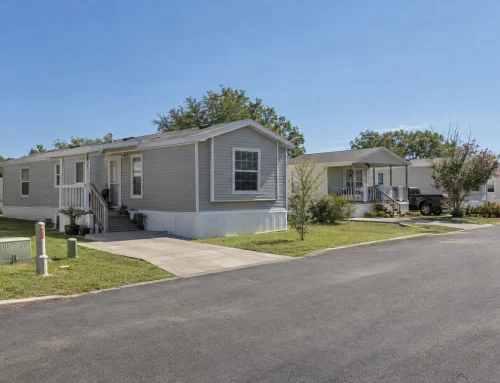
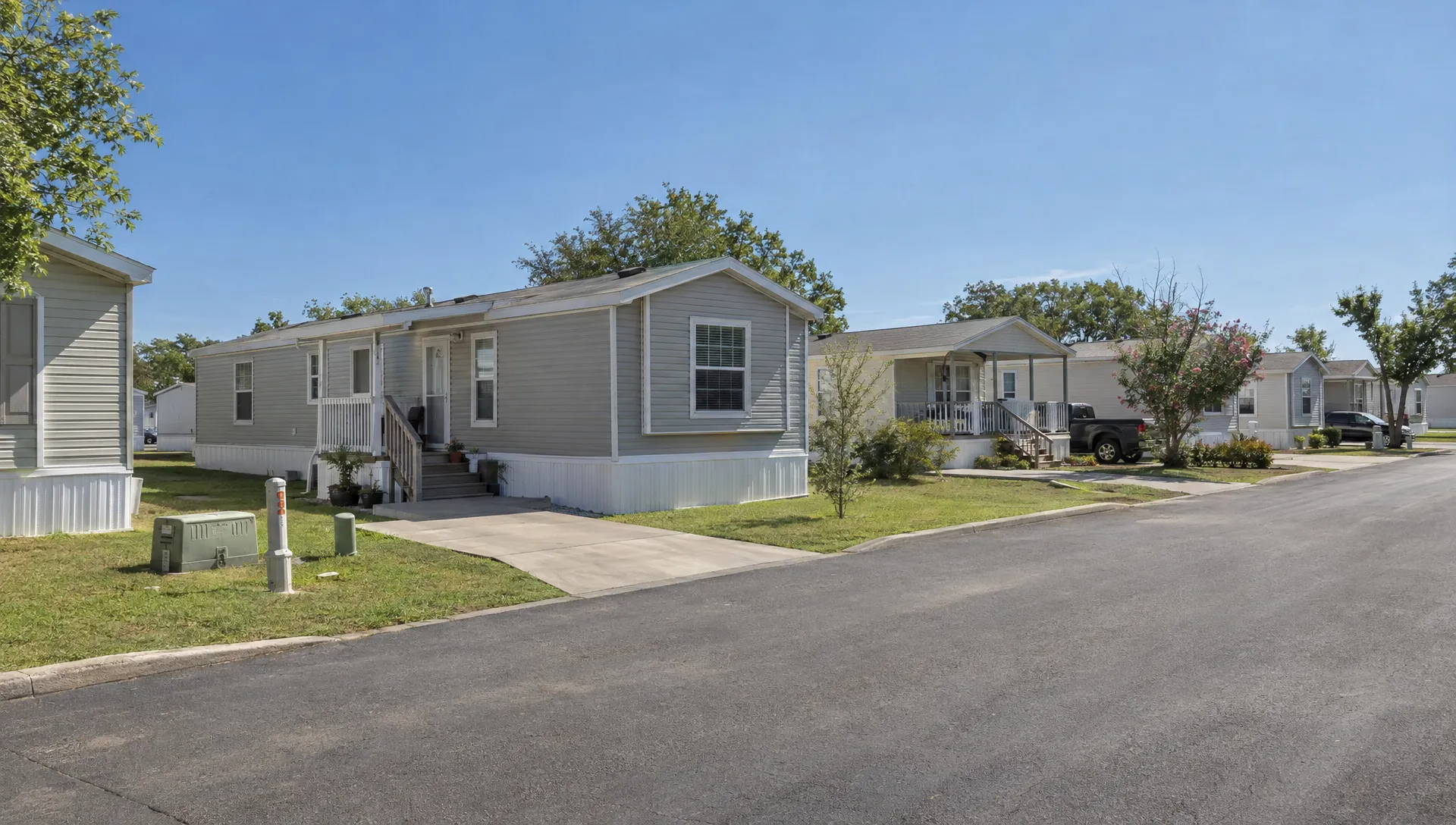
If the home is in a manufactured home community where the buyer leases the lot, FHA Title II may not be the best fit. FHA Title I may be available in some cases, and other manufactured home loan options may make more sense. For lease-lot scenarios, lenders often review the lease term, community approval requirements, and whether the site meets program guidelines.
Zoning, Deed Restrictions, and Local Rules
In the San Antonio area, buyers should confirm that the property allows manufactured housing before ordering or placing a home. Rules may vary depending on whether the site is inside the City of San Antonio, elsewhere in Bexar County, or in nearby counties such as Medina, Comal, Guadalupe, Wilson, or Atascosa.
Also check subdivision restrictions. A county or city may allow manufactured homes, but private deed restrictions can still prohibit them or limit the type, age, size, roof pitch, exterior materials, or foundation style.
Utilities and Access
FHA lenders want to see that the home has reliable access and essential services. That usually means water, sewer or septic, electricity, safe ingress and egress, and compliance with local permitting.
For private land outside city limits, septic and well requirements can become important. Floodplain status may also matter. If the property is in a flood zone, flood insurance may be required, and the lender may request additional documentation.
Texas Titling and Real Property Considerations
Manufactured homes in Texas are tracked through the Texas Department of Housing and Community Affairs Manufactured Housing Division. The key document is often the Statement of Ownership, which identifies the home, owner, location, liens, and whether the home is treated as personal property or real property.
For many FHA mortgage scenarios, the double wide must be converted or documented as real property, meaning the home is permanently attached to land owned by the same person or borrower. This process is technical and must be handled correctly.
You can review general manufactured housing information through the Texas Department of Housing and Community Affairs, but your lender, title company, and housing specialist should guide the exact steps for your transaction.
FHA Appraisal Requirements for a Double Wide
An FHA appraisal is required, but it is not the same thing as a full home inspection. The appraiser estimates value and checks FHA minimum property standards. A home inspector looks more deeply at the condition of systems and components.
For a double wide manufactured home, the appraiser may review:
- HUD labels and data plate information
- Comparable manufactured home sales in the market
- Permanent foundation and installation indicators
- Site access, utilities, and drainage
- Health and safety concerns
- Whether the home appears permanently affixed
- Overall marketability of the home and land
Because manufactured home comparables can be harder to find in some neighborhoods, it helps to work with lenders and real estate professionals who understand the local manufactured housing market.
FHA Loan Limits and Double Wide Pricing
FHA loan limits matter because they cap the amount FHA will insure. For Title II mortgages, limits vary by county and are updated by HUD. You can check current limits through the HUD FHA mortgage limits lookup tool.
For FHA Title I manufactured home loans, HUD has separate limits depending on whether the loan is for the home only, the lot only, or the home and lot together. Multi-section homes such as double wides may have different limits than single-section homes. HUD explains the program on its Manufactured Home Loan Insurance page.
The important point is simple: your home price, land cost, delivery, installation, foundation, utility work, taxes, insurance, and closing costs all need to fit the financing structure. Some costs may be financeable depending on the loan type and contract. Others may need to be paid separately.
Common Reasons FHA Approval Gets Delayed
FHA loans for double wide homes can move smoothly when the home, land, lender, and documents are aligned. Delays often happen when a key detail is discovered too late.
| Issue | Why it causes problems | How to reduce risk |
|---|---|---|
| Missing HUD labels | Lender needs proof the home was built to HUD Code | Verify labels early and request acceptable documentation if needed |
| Foundation not certified | FHA may require proof of permanent foundation compliance | Ask about engineer certification before closing deadlines |
| Home was previously moved | FHA lenders may reject homes relocated from a prior site | Confirm installation history before making an offer |
| Title status is unclear | Personal property vs. real property affects loan eligibility | Review the Texas Statement of Ownership early |
| Land use is restricted | Zoning or deed restrictions may prohibit the home | Check city, county, and subdivision rules first |
| Utilities are incomplete | FHA requires a functional, livable property | Budget and schedule utility work early |
| Appraisal repairs | Safety or condition issues may need correction | Inspect the home before lender deadlines |
FHA vs. Other Manufactured Home Financing Options
An FHA loan is not always the only or best option. Some buyers benefit from comparing FHA with chattel loans, conventional manufactured home loans, VA loans, USDA loans, or lender-specific programs.
| Financing type | Potential fit | Main consideration |
|---|---|---|
| FHA Title II | Land-home double wide on permanent foundation | Requires real property status and FHA property compliance |
| FHA Title I | Home-only or certain manufactured housing scenarios | Not all lenders offer it, and loan limits apply |
| Chattel loan | Home in a leased-land community | Often faster for home-only financing, but terms can differ |
| VA loan | Eligible veterans and service members | Property must meet VA and lender manufactured housing rules |
| USDA loan | Eligible rural areas and qualified borrowers | Location and income limits apply |
| Conventional loan | Strong credit profiles and qualifying properties | Guidelines may be stricter for manufactured homes |
If you are not sure which path fits, start with the home location. A double wide in a land-lease community, a double wide on private land, and a new land-home package can require very different financing strategies.
Homes2Go San Antonio’s financing page explains several common manufactured home financing options and can help you understand which questions to ask before applying.
Step-by-Step: How to Prepare for an FHA Loan on a Double Wide
A little preparation can save weeks of back-and-forth.
- Get prequalified with a manufactured-home-friendly lender: Ask specifically whether the lender handles FHA loans for double wide manufactured homes.
- Decide whether you want owned land or a community lot: This choice affects the loan type, monthly budget, and approval requirements.
- Choose a qualifying home model: Confirm the home is HUD-code, multi-section, and supported by proper documentation.
- Review site requirements early: Check zoning, deed restrictions, utilities, floodplain status, access, and permit needs.
- Confirm foundation expectations: Ask whether an engineer’s foundation certification will be required.
- Gather documents: Be ready with income records, bank statements, ID, land documents, purchase contract, and manufactured home specifications.
- Compare the full monthly payment: Include principal, interest, FHA mortgage insurance, property taxes, homeowner’s insurance, utilities, and any community fees.
For buyers exploring land-home options, Homes2Go also has a guide to land and home packages in San Antonio that explains how site selection, permitting, installation, and financing fit together.
What San Antonio Buyers Should Pay Special Attention To
San Antonio-area buyers often have strong opportunities to find affordable manufactured homes, but local conditions matter.
First, Texas heat makes energy efficiency important. FHA does not require you to choose the most efficient home available, but better insulation, efficient HVAC, quality windows, and good airflow can make the home more comfortable and may lower long-term ownership costs.
Second, land varies widely across the metro area. A lot that looks affordable may need expensive utility extensions, septic work, grading, driveway access, or drainage improvements. Always look beyond the land price.
Third, community approvals can be separate from loan approvals. If you plan to place a double wide in a manufactured home community, you may need both lender approval and community approval before move-in.
Finally, work with people who understand manufactured housing. FHA rules are manageable, but the details are different from site-built homes. Experienced guidance can help you avoid homes, lots, or contracts that do not match your financing plan.
Frequently Asked Questions
Can I buy a double wide with an FHA loan? Yes, if the double wide is a HUD-code manufactured home, meets FHA property standards, is properly installed, and the borrower qualifies. For FHA mortgage financing, the home often needs to be permanently attached to land and treated as real property.
What is the minimum down payment for an FHA loan on a double wide? FHA’s general minimum down payment is commonly 3.5% for borrowers with qualifying credit. However, manufactured home lenders may have additional requirements, and your final cash needed depends on closing costs, prepaid items, site work, and loan structure.
Does FHA finance double wides in mobile home parks? It depends on the loan program and land arrangement. Traditional FHA Title II mortgages usually work best when the home and land are financed together as real property. For leased-land communities, FHA Title I or other manufactured home financing may be more relevant.
Can a used double wide qualify for FHA financing? Sometimes, but it must meet FHA and lender requirements. A major issue is whether the home has been moved from a previous site. Used homes with missing HUD labels, unclear title status, or noncompliant foundations can be difficult to finance.
Do I need a permanent foundation for an FHA loan? For FHA Title II mortgage financing, yes, the manufactured home generally must be permanently affixed to an acceptable foundation. Lenders often require an engineer’s certification.
Is an FHA appraisal the same as a home inspection? No. An FHA appraisal checks value and minimum property standards, but it is not a full inspection. Buyers should consider hiring a qualified inspector to review the home’s condition before closing.
Ready to Explore FHA-Friendly Double Wide Homes in San Antonio?
FHA loan requirements for double wide homes are detailed, but they are easier to navigate when you start with the right home, the right site, and the right financing questions.
Homes2Go San Antonio offers a wide selection of manufactured home models, detailed floor plans, modern interiors, energy-efficient designs, and guidance for first-time buyers. The team can help you compare homes, understand community and land options, and connect with trusted local lending resources.
Start by reviewing your financing options at Homes2Go San Antonio or explore available manufactured home guidance at Homes2Go SA.
 Mobile Home Roof Inspection Checklist for Texas Buyers
 Manufactured Homes in San Antonio: 2026 Buyer Guide