
Renting a mobile (manufactured) home can look like a bargain at first glance, especially compared to many San Antonio-area apartment prices. The catch is that the advertised rent is often only one piece of the monthly bill.
If you want to find affordable mobile homes for rent and avoid surprise expenses, you need to price the rental the way property managers do: base rent plus utilities, fees, and the “non-negotiables” like deposits and insurance.
Start with the most important question: What exactly are you renting?
Mobile home rentals usually fall into one of these setups, and each one changes your monthly cost structure.
1) Renting the home on a lot in a community (most common). You pay one monthly rent to a community or owner. Sometimes some utilities are included, sometimes not.
2) Renting a home on private land. The home is placed on someone’s land or a small property. You may have separate utility accounts, and you might handle more maintenance.
3) Owning the home but renting the lot (not “for rent,” but often compared). Many people say “renting a mobile home” when they really mean they own the home and pay monthly lot rent. Your monthly cost might be lower than apartment living, but repairs and insurance are on you.
This article focuses on the true “for rent” scenario (you rent the home), but it will also point out where costs shift if you own the home.
The real monthly cost breakdown (what to budget for)
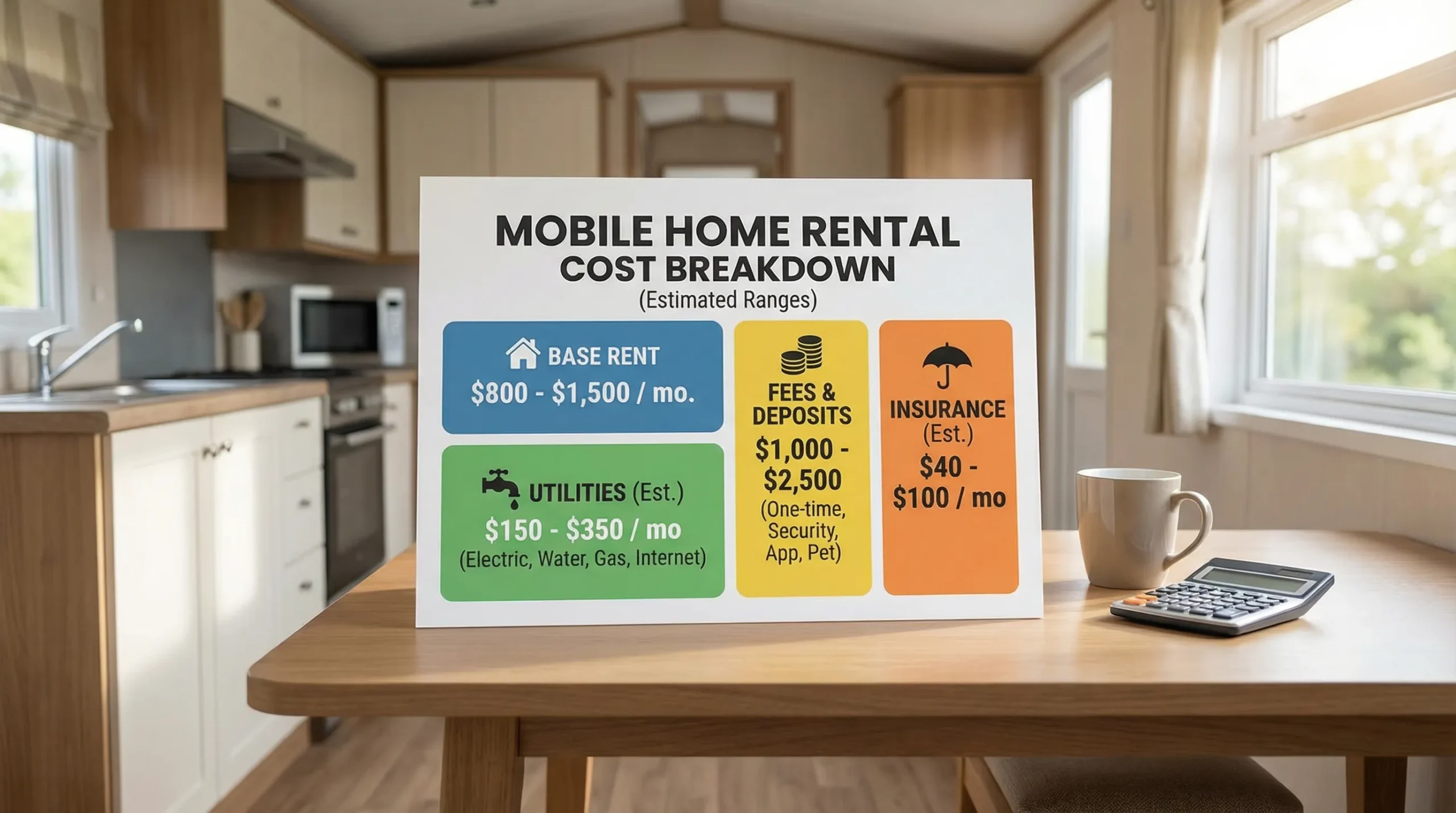
Below are the cost categories that most often make the “cheap rent” number jump.
1) Base rent (the advertised price)
Base rent is the monthly amount for the home itself. In some communities, this is advertised as “home rent,” “unit rent,” or “monthly rent.”
What to verify:
- Is the advertised rent a promo rate for the first few months?
- Does the rent change after the first lease term?
- Is there an extra monthly charge for additional occupants?
2) Utilities (the biggest source of surprises)
Utility responsibility varies a lot in manufactured home communities.
Common utility arrangements:
- Electric: Often paid by the tenant directly to the provider (or billed back by the community).
- Water and sewer: Sometimes included, sometimes billed back based on a meter or a formula.
- Trash: Sometimes included, sometimes billed monthly.
- Gas: If the home uses natural gas or propane, confirm who supplies it and how billing works.
Texas summers also make HVAC usage a real budget line item. Energy efficiency matters, and not just for owners.
3) Renters insurance (usually required)
Many landlords and communities require renters insurance, and some require a minimum liability amount. Renters insurance is typically affordable, but you should still include it in your monthly figure.
If you own the home (not renting), you may need a different policy type than standard renters insurance.
4) Fees that behave like rent (monthly add-ons)
Even if they are not called “rent,” these can recur every month:
- Pet rent
- Amenity or community fees
- Valet trash (in some communities)
- Parking fees (extra vehicles, covered parking, RV storage)
- Utility billing/admin fees
5) Maintenance and yard expectations
With a rental home, major repairs are usually the landlord’s responsibility, but expectations vary for:
- Lawn care
- Pest control
- Air filter replacements
- Minor maintenance thresholds (for example, tenant pays the first $X of a service call)
Get these items in writing.
6) Internet and TV
Some communities have limited provider choices, and some bundle internet into rent while others don’t. Treat it as a separate monthly line until you confirm otherwise.
One-time move-in costs vs recurring monthly costs
A place can be “affordable” month-to-month but expensive upfront. Ask for a complete move-in cost sheet before you apply.
| Cost type | Common examples | When you pay | Often refundable? |
|---|---|---|---|
| One-time | Application fee, admin fee, background check, security deposit, pet deposit, first month rent, prorated rent, utility deposits | Before move-in | Sometimes (deposits may be refundable per the lease) |
| Monthly | Base rent, utilities, renters insurance, pet rent, billing fees, parking/storage | Every month | No |
For Texas renters, security deposit handling is governed by state law, and timelines and itemized deductions typically depend on the lease terms and applicable Texas Property Code rules. If something feels unclear, get clarity in writing before you sign.
Sample monthly budgets (examples, not market averages)
Because rental pricing varies by location, community rules, home size, and what’s included, the best way to help you budget is to show all-in examples you can adjust.
These examples assume you are renting a manufactured home in or near the San Antonio area, and that utilities are not fully included.
| Monthly line items | Example A: “Lean” budget | Example B: “Typical” budget | Example C: “Higher utility/fees” budget |
|---|---|---|---|
| Base rent | $900 | $1,150 | $1,350 |
| Electric (seasonal) | $120 | $180 | $260 |
| Water/sewer/trash | $40 | $80 | $120 |
| Internet | $50 | $70 | $90 |
| Renters insurance | $15 | $25 | $40 |
| Pet rent/fees | $0 | $25 | $50 |
| Admin/billing/parking | $0 | $20 | $50 |
| Estimated monthly total | $1,125 | $1,550 | $1,960 |
How to use this table:
- If water and trash are included, subtract those lines.
- If you work from home and need higher internet speeds, adjust that line upward.
- If the community bills back water/sewer based on usage or occupancy, budget for volatility.
A quick “affordability test” you can run in 5 minutes
Before you tour, calculate an affordability ceiling based on take-home pay. Many renters try to keep total housing costs (rent plus utilities) around a comfortable percentage of monthly take-home income.
Instead of focusing on base rent, ask yourself:
- What is the maximum all-in monthly payment you can handle?
- How much seasonal swing can you absorb (higher electric bills in peak summer heat)?
- Do you have enough cash for move-in costs without relying on a credit card?
If you only remember one thing: affordability is determined by the all-in number, not the ad.
Questions to ask so you can price a rental accurately
When you find a listing that looks promising, ask for a written fee sheet and clarify these items:
- What utilities are included, and what utilities are billed separately?
- How is water billed (metered, ratio utility billing, flat fee)?
- Are there monthly admin, billing, or technology fees?
- What is the total move-in amount due, including deposits and prorations?
- What lease term options exist (6, 12, 18 months) and what changes with each?
- What triggers rent increases (renewal, month-to-month, policy changes)?
- What are the pet rules, and what are the costs (deposit, pet rent, one-time fee)?
If the lease language feels hard to interpret, that is common. Larger operators often manage lease obligations, disclosures, and policy updates with dedicated compliance processes, sometimes supported by tools such as compliance automation platforms like Naltilia on the operator side. As a renter, your best protection is still simple: request the full written terms and do not rely on verbal summaries.
How to keep monthly costs down (without sacrificing safety or comfort)
Most savings come from choosing the right home and community structure, not from trying to “nickel-and-dime” your budget.
Pick the right size and layout
A larger home usually means higher rent and higher cooling costs. If “affordable” is the priority, look for a layout that wastes less square footage (for example, fewer long hallways, more efficient room shapes).
Prioritize energy efficiency (especially in Texas)
Even as a renter, you benefit from features like better insulation, tighter windows and doors, and efficient HVAC. If you tour a home, pay attention to comfort indicators:
- Does the home feel drafty near windows and doors?
- Are there signs of moisture problems around vents or windows?
- Is the HVAC system struggling to keep up during warm afternoons?
If you want a deeper dive on what to look for, Homes2Go has a practical guide to energy-efficient manufactured homes that explains which features tend to reduce cooling costs.
Choose communities that include key services
Two rentals with the same base rent can have very different totals if one includes trash and water and the other bills them back with added fees.
Avoid “cheap rent, expensive fees” listings
If a listing has unusually low rent, ask early about:
- required add-on packages
- mandatory service bundles
- move-in fees that effectively spread across the lease
A transparent community will give you a fee sheet.
Renting vs buying a manufactured home (when buying may pencil out)
Some renters start searching for rentals, then realize the monthly all-in cost is close to what a financed manufactured home payment could be, especially if you plan to stay put for several years.
The key difference:
- Renting is simpler, and you are usually not responsible for major repairs.
- Buying can build long-term stability, but you need to factor in financing, insurance type, setup, and where the home will be placed (community lot versus private land).
If you are comparing both paths in the San Antonio area, Homes2Go San Antonio can help you evaluate manufactured home options and financing routes (including guidance for first-time buyers) so you can compare a rental’s all-in cost against realistic ownership costs. You can start with their overview of manufactured home financing options.
Bottom line: “Affordable” means all-in, predictable, and sustainable
An affordable mobile home rental is not just the one with the lowest advertised rent. It is the one where:
- the utilities are clear and manageable
- the recurring fees are minimal and disclosed upfront
- the move-in costs fit your cash budget
- the lease terms are understandable and stable
If you price rentals using the breakdown above, you will quickly spot which listings are truly affordable, and which ones only look that way until the first full month’s bills arrive.
 Mobile Home Lots for Rent San Antonio: Costs and Utilities
 Land and Manufactured Home Packages: Timeline, Costs, Financing