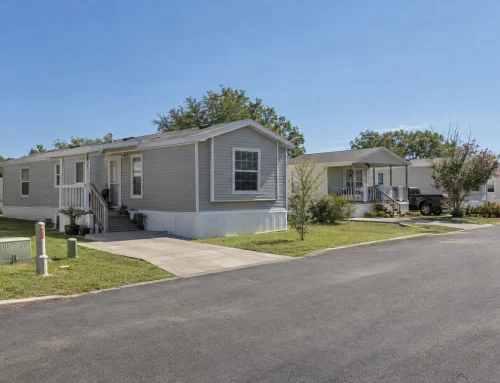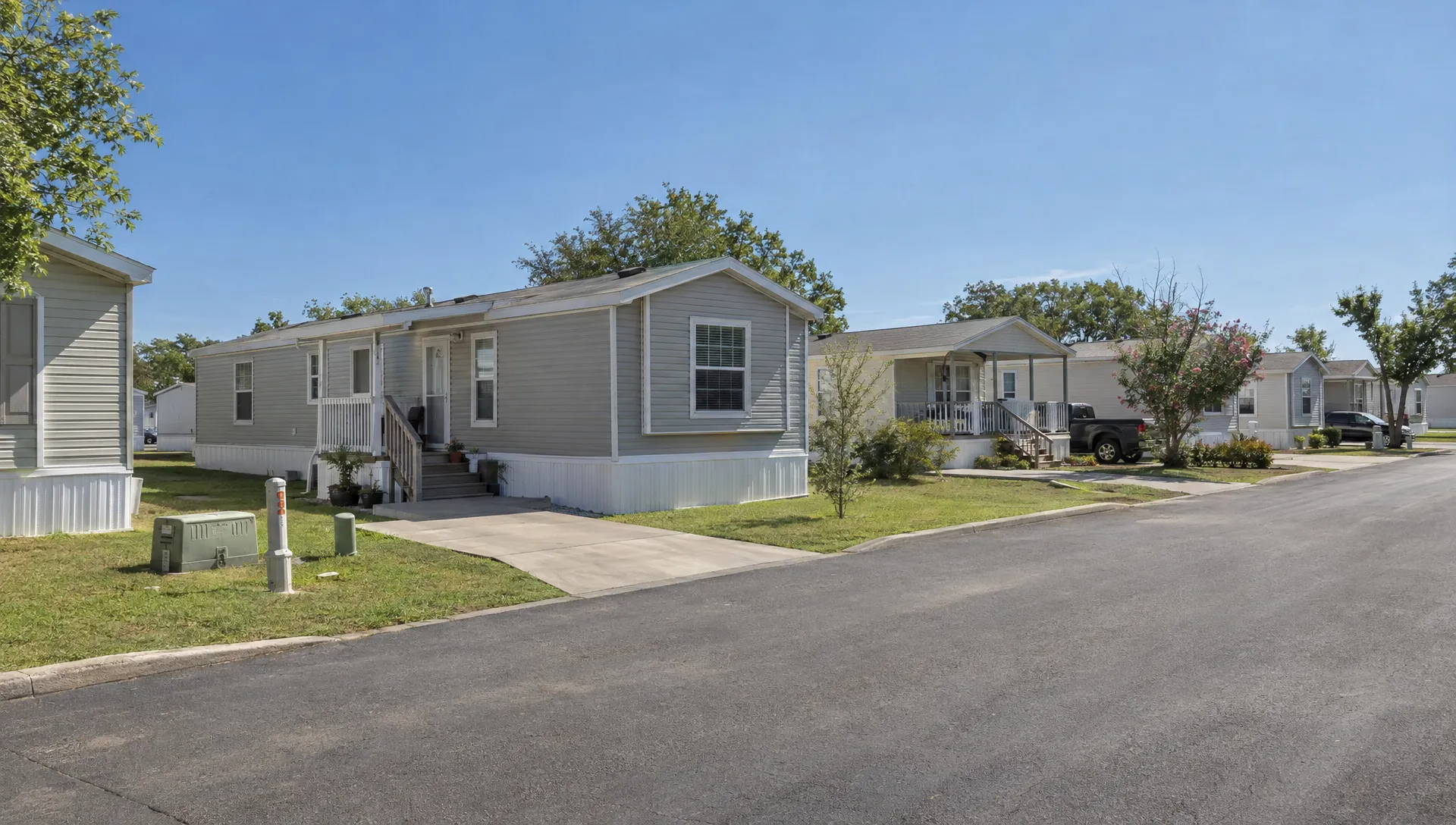

If you’re searching for mobile home parks in San Antonio TX, the fastest way to narrow your options is to compare areas first, then tour specific communities. San Antonio is a “many-cities-in-one” metro: a 20 to 30 minute shift in drive time can change your commute, school options, utility providers, and even what kinds of communities (all-age vs 55+, older parks vs newer developments) you’ll find.
This guide breaks down the best areas to compare so you can build a shortlist that matches your budget and lifestyle before you spend weekends driving around.
How to use this area guide (and why it matters)
Most “best park” lists become outdated quickly because availability changes, rules change, and vacancies fill. Geography, however, stays consistent.
Start by picking 2 to 3 areas that fit your priorities:
- Commute and road access (Loop 1604, Loop 410, I-10, I-35, I-37, US-281)
- Schools and daily errands (grocery, clinics, daycare)
- Lot size and feel (tighter, older parks vs newer communities with more space)
- Utilities and infrastructure (city water/sewer vs alternative setups depending on location)
- Long-term plan (land-lease community living vs buying land and placing a home)
Tip: Keep an open mind about “San Antonio” meaning outside the city limits but still in the San Antonio commute shed. Many buyers compare Bexar County communities just beyond the core because that’s where new sites and larger lots are more common.
What changes most by location (beyond the park itself)
Before getting into the areas, here are the location-driven variables that tend to make or break the decision.
Commute reliability (not just distance)
A park that’s 18 miles away can be an easier daily drive than one that’s 10 miles away, depending on your route. When comparing areas, look at access to the major corridors:
- I-35 (Northeast to downtown, also toward Austin)
- I-10 (Northwest to downtown, also toward Boerne)
- I-37 (South/Southeast to downtown)
- Loop 1604 and Loop 410 (ring-road options that can reduce or increase stress depending on time of day)
For up-to-date construction and incident info while you’re evaluating routes, you can check TxDOT traffic and roadway conditions.
Flood risk and drainage patterns
San Antonio can see intense rain events, and flood risk varies by micro-location. Even within the same ZIP code, one street can be fine while another sits in a low spot.
When you tour any community, cross-check the address using:
Utilities and monthly cost drivers
Lot rent is only one line item. Depending on the community and area, you may be responsible for separate billing (water, sewer, trash, electricity), or some may be bundled.
If you’re unfamiliar with local water and sewer service boundaries, start with SAWS (San Antonio Water System) and confirm whether the community is on SAWS service or another setup.
School districts and daily convenience
School district boundaries do not align neatly with neighborhood names. If schools matter for your household, confirm the exact district and campus assignments before you commit.
A good starting point for district information is the Texas Education Agency.
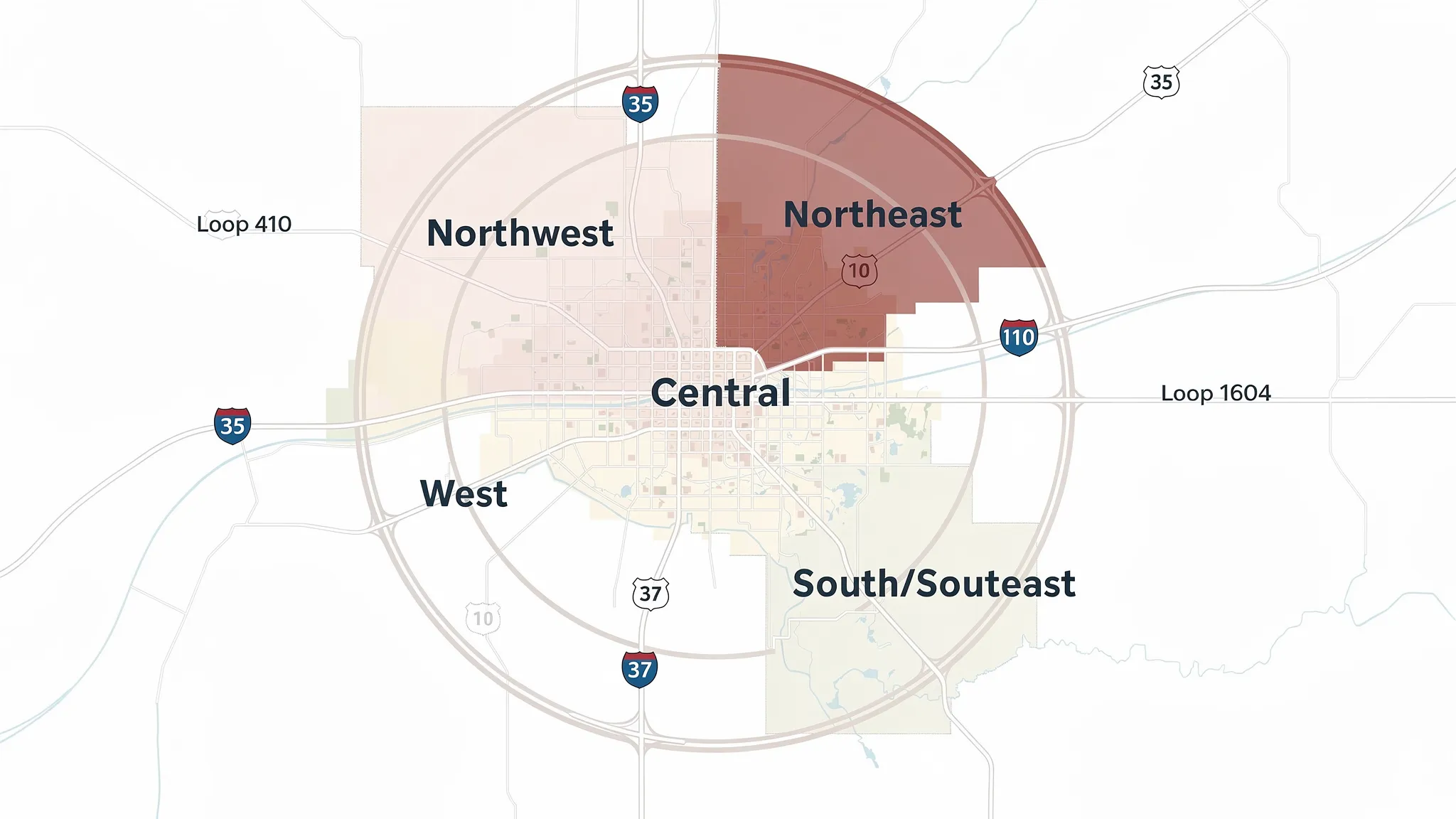
Best areas to compare for mobile home parks in San Antonio TX
San Antonio’s mobile home communities are spread across several corridors. The “best” area depends on whether you’re optimizing for commute, price, lot size, or access to newer developments.
Northeast San Antonio (I-35 / 1604 corridor)
Why people look here: Northeast areas along I-35 and near Loop 1604 are popular for buyers who want straightforward access to major retail corridors and job centers, plus quick routes into the city.
Good fit for:
- Commuters who need I-35 access
- Households who want many shopping and dining options nearby
- Buyers balancing convenience with a suburban feel
What to watch for:
- Traffic variability on I-35 at peak hours
- Parks with stricter rules because demand can be high (vehicle limits, exterior standards, pet policies)
Northwest San Antonio (I-10 / US-281 / 1604)
Why people look here: Northwest San Antonio is often associated with strong amenities and an “outer-suburban” lifestyle, especially as you get closer to Loop 1604.
Good fit for:
- People who value proximity to medical corridors, shopping, and newer development patterns
- Buyers who prioritize neighborhood feel and amenities over being closest to downtown
What to watch for:
- Overall cost of living trends can be higher in many Northwest submarkets
- Fewer options close-in, you may need to expand the radius and be flexible on exact location
West and Far West San Antonio (US-90 / 151 / Loop 1604)
Why people look here: West San Antonio can offer strong connectivity to key corridors and a wide range of community types, from smaller parks to larger land-lease communities.
Good fit for:
- Buyers who want access to western job centers or a West-side family network
- People who like being near major routes without paying for a central location
What to watch for:
- Community-to-community variation is huge, touring matters more here than assuming the “area” tells the whole story
- Confirm what’s included in lot rent (and what isn’t), especially for water/trash
South San Antonio and Southside (I-37 and surrounding areas)
Why people look here: South and Southside areas are often where you can still find more space and newer site development opportunities, depending on the specific location.
Good fit for:
- Buyers who want a bit more breathing room
- People open to newer developments outside the densest parts of the city
- Households prioritizing value and lot size over being close to the northern corridors
What to watch for:
- Verify commute times to your exact destination (some drives are simple, others are not)
- Confirm utilities, road access, and flood/drainage details carefully during tours
If you’re considering newer lots for manufactured homes in the South/Southeast direction, Homes2Go also shares details about a local community development on their site (including lot and utility information) on the Property page.
Southeast San Antonio (toward Elmendorf and adjacent areas)
Why people look here: Southeast submarkets can appeal to buyers who want proximity to the I-37 corridor and prefer areas that feel less congested.
Good fit for:
- Buyers looking for a balance between access to San Antonio and a more open feel
- People interested in land-and-home style planning, even if they start with community living
What to watch for:
- Confirm what “San Antonio” means in the listing (city limits vs nearby towns), since services and rules can differ
- Ask detailed questions about site standards if you plan to bring in a new manufactured home
More central San Antonio (inside Loop 410)
Why people look here: Central locations are about proximity, not abundance of options. Parks and communities closer to the core are often older and more limited.
Good fit for:
- Buyers who want the shortest drive to downtown and central employers
- People who value being near established neighborhoods and city amenities
What to watch for:
- Inventory can be tight and turnover can be fast
- Older infrastructure and tighter sites may mean stricter installation constraints for new homes
Quick comparison table: which area matches your priorities?
Use this table as a first-pass filter, then validate with actual tours and community rules.
| Area | Best for | Typical feel | Commute anchors | Watch-outs to check early |
|---|---|---|---|---|
| Northeast (I-35 / 1604) | Convenience and access to major retail/job routes | Suburban, high-demand pockets | I-35, 1604 | Peak-hour traffic, rule strictness |
| Northwest (I-10 / US-281 / 1604) | Amenities and newer development patterns | Outer-suburban | I-10, US-281, 1604 | Higher costs in some pockets, fewer close-in options |
| West / Far West (US-90 / 151 / 1604) | Variety and corridor access | Mixed, depends heavily on the park | US-90, 151, 1604 | Wide variation in community quality and included utilities |
| South / Southside (I-37) | Space and value, potential for newer sites | More open in many pockets | I-37, 410 | Verify utilities, drainage, and commute specifics |
| Central (inside 410) | Shortest drive to downtown | Limited options, often older | 410 spokes into downtown | Inventory tight, older infrastructure constraints |
What to confirm when you tour communities in any area
Once you’ve chosen your top areas, your next step is to compare communities consistently. Bring a simple scorecard and ask the same questions everywhere so you’re comparing apples to apples.
Lease terms and rules (the “surprise” category)
Ask for the park rules in writing. In land-lease communities, rules are normal, but you want to be sure they fit your daily life.
Key items to confirm:
- Age restrictions (all-age vs 55+)
- Pet rules (breed, size, count, fees)
- Vehicle policies (work trucks, parking limits)
- Exterior standards (skirting, sheds, fencing, porch requirements)
- Guest policies and any background or screening requirements
Utility setup and what’s included
Ask directly what is included in lot rent and what is separately metered or billed. Also ask who performs maintenance on utility lines and who you call after hours.
Installation and home approval process
If you’re placing a new manufactured home into a community, confirm the park’s approval process before you order a home.
Typical questions include:
- Approved home sizes and roof pitch requirements
- Age limits for homes being moved in
- Setback requirements and pad specs
- Timeline for approval and installation scheduling
For Texas-specific manufactured housing resources and consumer information, you can reference the Texas Department of Housing and Community Affairs (Manufactured Housing).
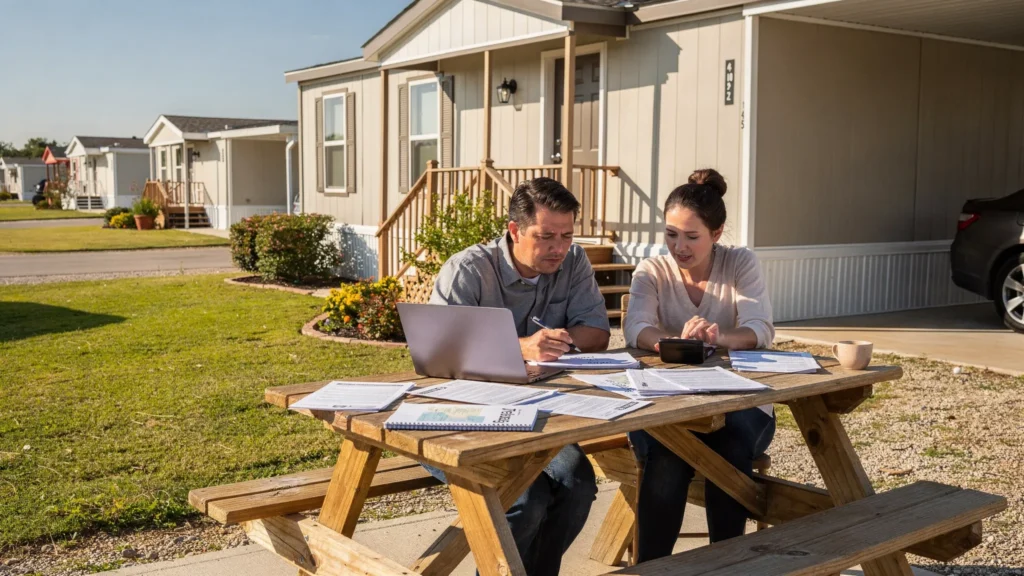
Budgeting tip: compare total monthly housing cost, not just lot rent
For most buyers, the real decision comes down to a realistic monthly total:
- Home payment (if financed)
- Lot rent
- Utilities
- Insurance
- Maintenance and reserves
If you’re early in the process, getting a financing conversation started can help you choose areas with confidence, because some communities have qualification standards and approval steps that can affect timelines.
Homes2Go shares a clear overview of common loan paths (including chattel loans and mortgage options, depending on your situation) on their Financing page.
Choosing between a park and a land-and-home plan (area matters here too)
Some buyers start by shopping mobile home parks and realize they’d rather control the land long-term. Others want the simplicity of a community.
A practical way to decide is to ask yourself:
- Do you want community amenities and managed common areas, even with rules?
- Or do you want long-term land control, even if site work and permitting are more involved?
If you’re comparing both options around San Antonio, this overview of land and home packages in San Antonio can help you understand the workflow and what changes when land is part of the purchase.
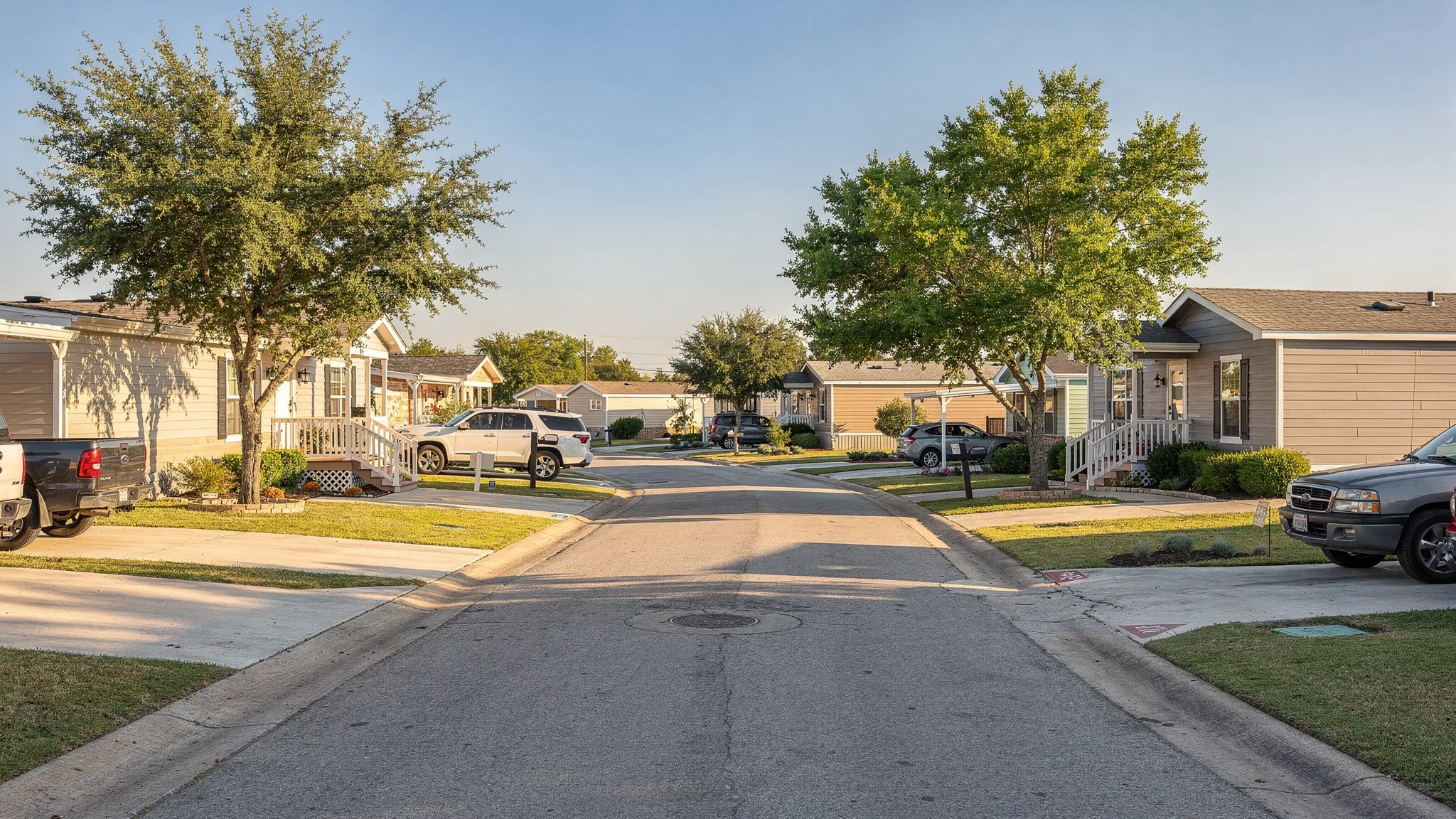
A simple next step: shortlist 3 areas, then tour 2 communities in each
To keep the search efficient:
- Pick 3 areas from the guide above based on commute and lifestyle.
- Identify 2 communities per area that match your must-haves.
- Tour them at similar times of day to compare traffic, noise, and neighborhood activity.
If you want help matching a home model to a community’s requirements, or you’re weighing community living versus a lot-based plan, Homes2Go San Antonio can guide you through home selection and financing options. You can also browse their broader educational resources, including their manufactured homes buyer overview for San Antonio, to clarify the terminology and cost drivers before you commit.
 Mobile Homes for Rent in San Antonio TX: Real Budget Guide
 Mobile Home Lots for Rent San Antonio: Costs and Utilities