
A modular home warranty should explain which construction defects are covered, who must correct them and what costs remain yours. Before buying, look beyond the headline coverage period. A long warranty can still leave gaps around installation, site work, service calls or the connection between factory-built sections.
For San Antonio buyers, the goal is to get a complete set of written responsibilities before signing, not discover after move-in that the manufacturer, installer and foundation contractor each expect someone else to respond.
Confirm whether the home is modular or manufactured
Modular and manufactured homes are both factory-built, but they follow different construction and regulatory systems. That distinction matters when requesting warranty documents or identifying the agency that handles a complaint.
In Texas, modular housing generally falls under the industrialized housing framework administered by the Texas Department of Licensing and Regulation. Manufactured homes are built to federal HUD construction standards, and the Texas Department of Housing and Community Affairs Manufactured Housing Division handles state manufactured-housing regulation.
Ask the seller to identify the home's classification in writing and provide its identifying documentation. Then request the warranty applicable to that specific home, not a brochure describing another product line. Sales terminology alone should not determine which protections you expect.
What should a modular home warranty cover?
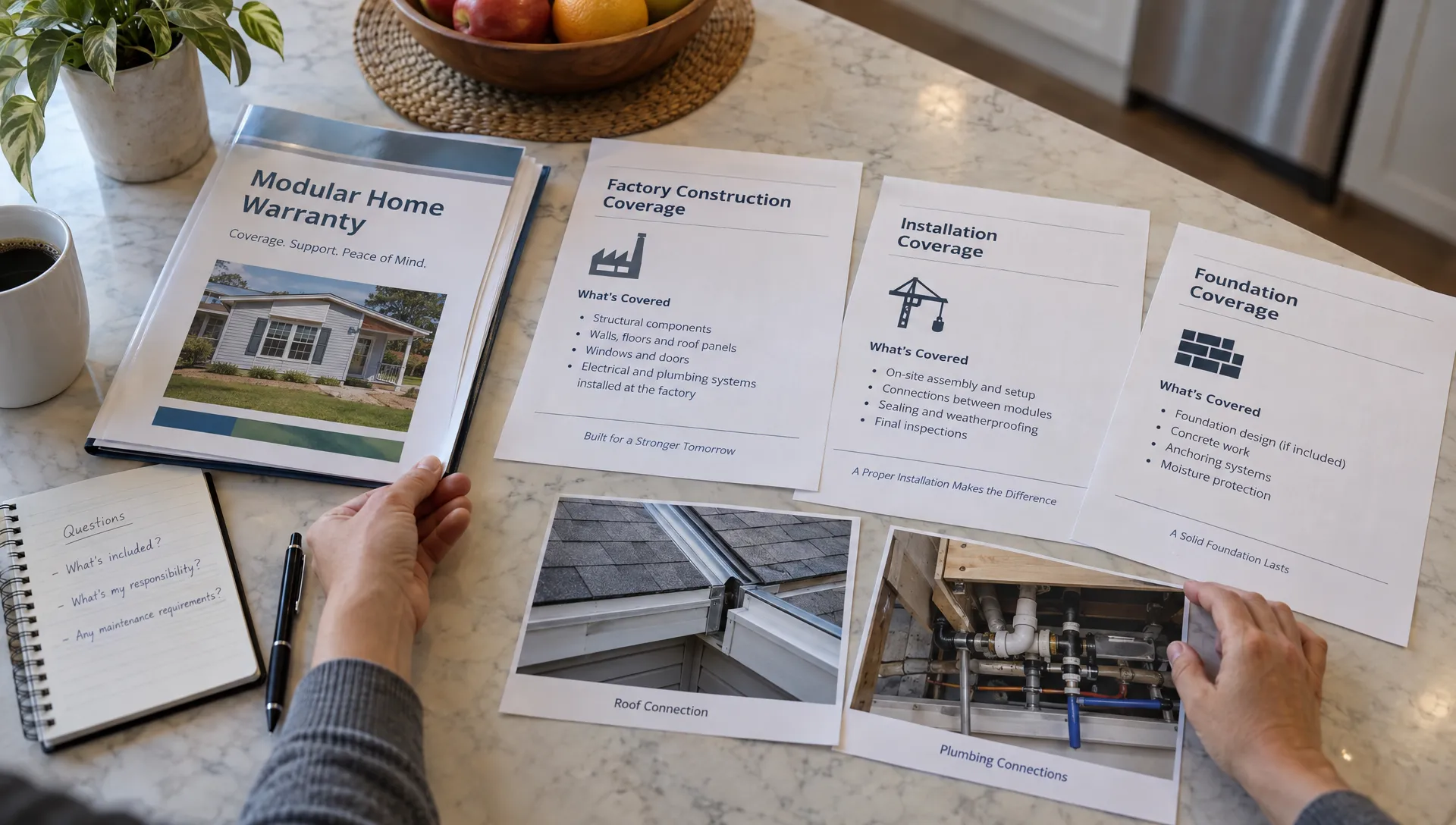
For a new home, look for clear protection against covered defects in materials and workmanship, plus a written explanation of structural coverage. Separate agreements may address factory construction, installation and site-built improvements.
The following is a buyer's checklist, not a statement that every warranty includes these items:
| Coverage area | What to look for in writing | Question to resolve before buying |
|---|---|---|
| Structural components | Covered load-bearing components and qualifying defects | Does coverage require actual structural failure, or can a defect qualify earlier? |
| Factory workmanship | Coverage for defects in factory-installed materials and assembly | Are cabinets, flooring, windows and interior finishes included? |
| Weather protection | Responsibility for defective roofing, flashing and exterior seals | Who handles leaks at connections between sections? |
| Plumbing and electrical | Coverage for installed systems and connections | Where does factory responsibility end and site-contractor responsibility begin? |
| Heating and cooling | Equipment coverage and installation responsibility | Are labor, refrigerant and diagnostic visits included? |
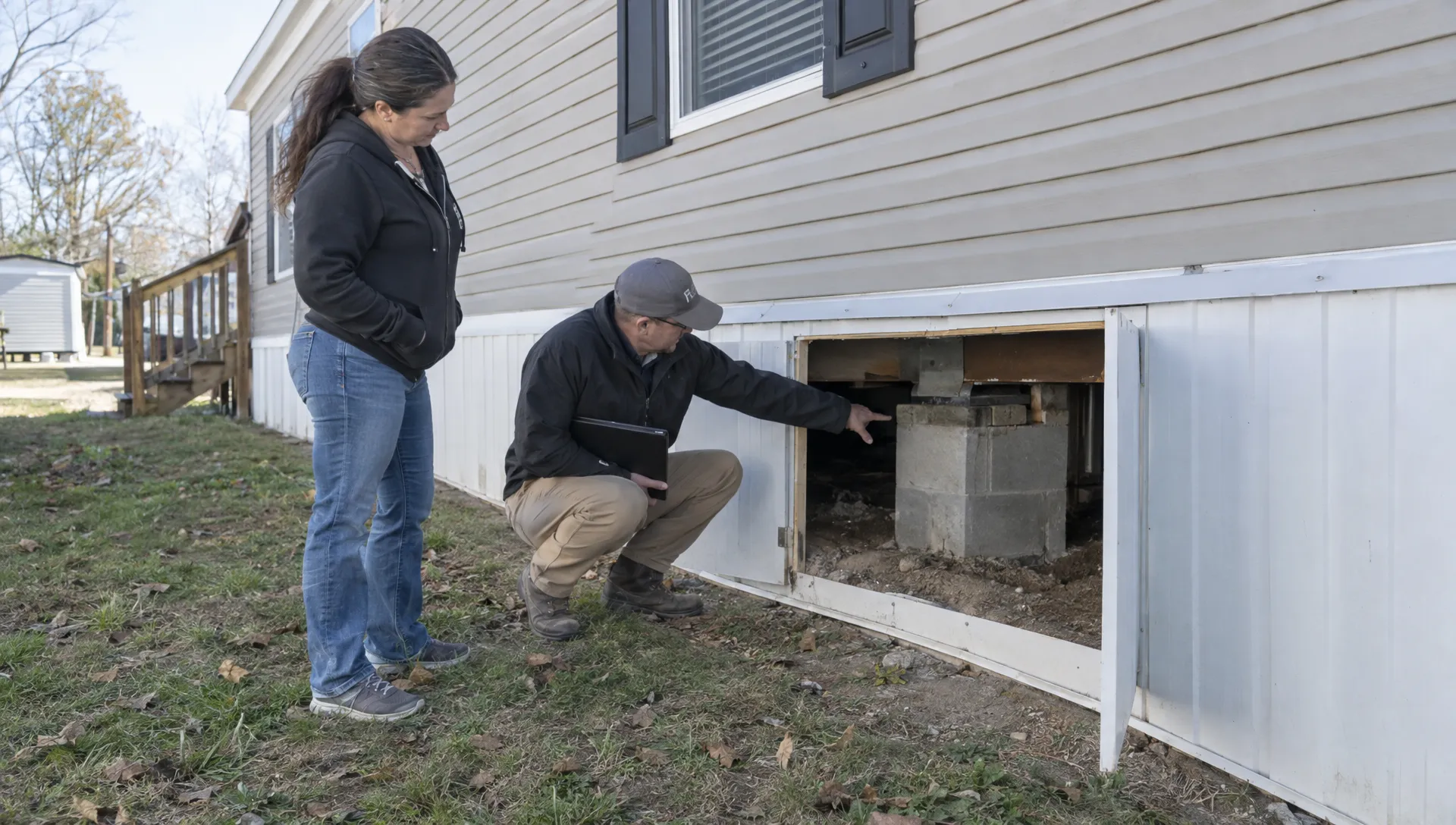
| Foundation and installation | Separate written protection for covered foundation or setup defects | Which company must investigate movement or misalignment? |
Also check how the agreement defines a defect. A warranty limited to failures that make the home unsafe may offer less protection than you expect for persistent leaks or poorly installed finishes.
Appliances may have their own manufacturer warranties. Ask who handles those claims and whether a problem caused by installation belongs under a different agreement.
Match every responsibility to a named company
A modular home warranty is easier to evaluate when each part of the project has a named responsible party. The seller may coordinate service, but coordination is not necessarily a contractual promise to pay for every repair.
Request a responsibility sheet identifying the factory manufacturer, home seller, installer, foundation contractor and utility contractors, as applicable. Include legal business names, contact details and the work each company is responsible for.
Pay particular attention to the boundaries between their work. For example, a window may have been installed at the factory, while damage around it could result from transportation, installation or later water intrusion. A roof leak near the connection between sections may require investigation before anyone can determine its cause.
Ask who arranges that investigation, whether you must pay initially and how reimbursement works if the defect is covered. Get the response documented rather than relying on “we'll take care of it.”
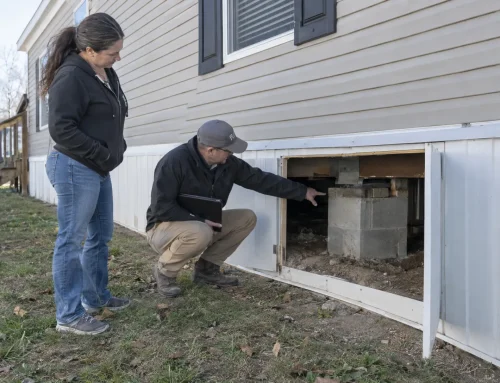
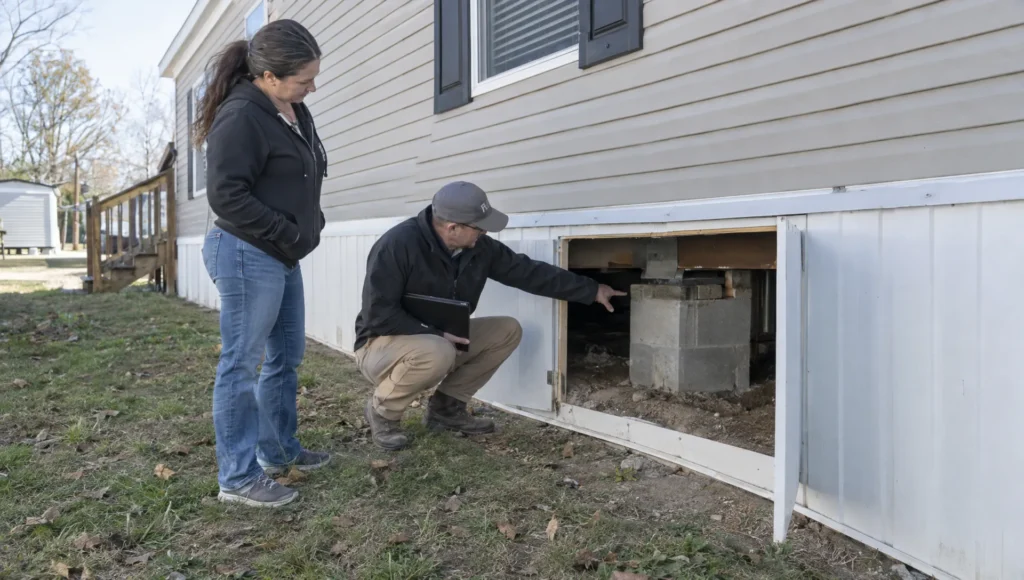
An independent inspection can help establish the home's condition before acceptance. Homes2Go's guide to how inspectors evaluate factory-built homes explains the construction, installation and documentation issues worth reviewing. An inspection supports your records, but it does not replace written warranty obligations.
Read exclusions alongside the coverage promises
The exclusions in a modular home warranty can matter as much as the covered-component list. Read both together, especially where water damage, foundation movement or owner maintenance is involved.
Some agreements exclude ordinary wear, cosmetic changes, owner modifications or damage from outside events. The important question is how the language distinguishes those conditions from defective construction. A small finish crack and movement caused by an installation defect should not be treated as interchangeable without investigation.
For a San Antonio property, examine how the documents address grading, drainage and soil-related movement. Determine who is responsible for preparing the site and what maintenance the owner must perform afterward. Ask whether any soil evaluation, engineering documentation or drainage plan is included in your project.
Water claims deserve close attention. An agreement might cover correction of defective flashing while limiting payment for damaged flooring, insulation or personal belongings. Ask about resulting damage, not just repair of the original defect.
Homeowners insurance and warranties serve different purposes. Insurance generally addresses covered risks under the policy, while a construction warranty addresses the defects described in its terms. Neither should be assumed to fill every gap left by the other.
Check coverage periods, labor costs and repair limits
Do not evaluate a modular home warranty by its longest advertised term alone. Structural protection, workmanship coverage and equipment warranties may have different durations, start dates and claim requirements.
Find the exact event that starts each coverage period. Depending on the agreement, that could be delivery, installation, closing or another stated milestone. If completion is delayed, ask how that affects the time available to report defects.
Next, work through the costs of an actual repair. A replacement component may be covered while freight, travel, diagnosis or installation labor is excluded. Access can also matter: repairing a concealed plumbing defect could require removing and restoring surrounding finishes.
Ask whether there are deductibles, service fees, per-claim limits or an overall coverage cap. Check whether the provider can choose repair instead of replacement and what standard applies to matching materials.
Finally, distinguish the original warranty from a separately purchased service contract. An optional plan may cover certain later equipment breakdowns without extending construction-defect protection. Compare its exclusions and fees independently rather than assuming it extends every promise in the original agreement.
Make sure the claims process is usable
A modular home warranty needs a workable reporting process, not just a list of covered components. Before closing, request the service contact, required submission method and any deadline for notifying the provider after discovering a problem.
Ask what information a claim requires. Useful records include the home's identifying information, dated photographs, a description of the symptoms and copies of relevant inspection or maintenance documents. Save emails and confirmation numbers so you can establish when notice was given.
For urgent problems, clarify the emergency procedure in advance. A significant leak may require prompt action to prevent additional damage, yet the agreement may require authorization before repairs. Ask whom to contact after hours, what temporary measures are permitted and how to document emergency expenses. Do not delay necessary safety action while waiting for routine service.
Request the written process for delayed or disputed claims, including escalation contacts and any mediation or arbitration provisions. A stated response time is useful, but distinguish acknowledgment of a claim from an inspection date or completed repair.
Keep the final warranty, purchase agreement, installation contract and service records together. Depending on the home classification and issue, a Texas regulator may also offer a complaint process. Regulatory remedies and contractual warranty claims are not necessarily the same procedure.
Compare actual homes without assuming identical protection
When comparing models, evaluate the warranty documents alongside the floor plan. A modular home warranty comparison should begin with confirming that the homes being compared are actually modular rather than manufactured.
For example, Homes2Go offers the Champion Alice, a three-bedroom, two-bathroom doublewide manufactured home with 1,699 square feet. Its floor plan is Champion Homes Innovation 3256H. Because it is a manufactured home, request the applicable manufactured-home warranty rather than assuming a modular-home agreement applies.
The Cavco Addison is another manufactured option available from Homes2Go in San Antonio. It has three bedrooms, two bathrooms and 1,717 square feet, using the Cavco Homes Valu Premier 3256 3G floor plan.
Those specifications help compare living space, but they do not establish warranty duration, covered repairs or service terms. Obtain the documents applicable to the specific home and transaction before making those comparisons.
For either doublewide, ask who handles transportation damage, connections between sections, setup and utility hookups. These questions are relevant to the purchase even when the answers appear in separate contracts rather than one manufacturer warranty.
Resolve these points before signing
Before accepting a modular home warranty, turn any unanswered question into a written request. A sales explanation is helpful, but it should match the agreement you will receive.
Use this final document check:
- Correct home and parties: Confirm the home identification, purchaser information and companies responsible for covered work.
- Complete coverage terms: Obtain the warranty, exclusions, coverage periods and any separate installation or equipment agreements.
- Clear costs and remedies: Identify deductibles, labor exclusions, repair limits and responsibility for resulting damage.
- Documented condition: Record visible defects and unfinished work, with a named party and agreed completion terms.
- Usable service instructions: Save claim contacts, notice deadlines and emergency procedures.
A pre-closing punch list should describe specific conditions, not vague requests such as “finish repairs.” For example, identify the room, component and observed problem, supported by photographs where possible.
If a material promise is missing from the written documents, ask for clarification or an appropriate written agreement before committing. Do not assume an informal assurance changes an exclusion. For significant uncertainty about contract terms or legal rights, consider advice from a qualified Texas attorney.
Frequently asked questions
Does every modular home warranty include foundation coverage? No. Foundation design and construction may be addressed through a separate contractor agreement. Ask which defects are covered, who investigates movement and how responsibility is determined when the cause is disputed.
Is a ten-year structural warranty the same as ten years of full coverage? No. A structural warranty may apply only to specified components and qualifying conditions. Finishes, appliances, plumbing repairs and other items may have shorter coverage or separate terms. Read the definition of a covered structural defect.
Will the warranty transfer if I sell the home? Transferability depends on the agreement. Check whether coverage follows the home, whether registration or a fee is required and whether the next owner receives the same remaining protection.
Can I use my own contractor for a covered repair? Check the authorization requirements first. Unapproved work may create reimbursement problems. Ask for written approval when practical and follow the emergency procedure when immediate action is necessary to protect people or prevent further damage.
Ask for the documents before choosing your home
Homes2Go can help San Antonio buyers compare available manufactured-home models and navigate the buying process. As you narrow your choices, request the applicable warranty documents and clarify which company handles construction, installation and service. Compare those written commitments alongside the home's layout and total purchase cost before deciding.
 Mobile Home Structural Inspection Issues Buyers Should Flag
 Mobile Homes Without Land for Sale and What Buyers Must Check