
If you are looking for an FHA loan for prefab home purchases in 2026, the first thing to know is this: FHA does not approve every factory-built home the same way. The home’s construction type, foundation, land status, title records, and intended use all matter.
For San Antonio buyers, FHA financing can be a strong path to affordable homeownership because it may allow a lower down payment than many conventional loans. But the rules can feel confusing, especially when terms like prefab, manufactured, modular, and mobile home get used interchangeably.
This guide breaks down what qualifies in 2026, what usually does not, and how to prepare before you choose a home model, community, or land-home package.
What does FHA mean by “prefab home”?
“Prefab” is a broad consumer term. It simply means some or all of the home is built off-site in a factory, then transported or assembled on location. FHA eligibility depends on the specific type of prefab home.
| Home type | How it is built | How FHA typically views it |
|---|---|---|
| Manufactured home | Built to the federal HUD Code on a permanent chassis | Eligible if it meets FHA manufactured housing rules |
| Modular home | Built in factory sections to state or local building codes | Often treated more like a site-built home if permanently installed |
| Panelized or kit home | Parts are factory-made, then assembled on site | May qualify if completed to applicable building code and property standards |
| Pre-1976 mobile home | Built before federal HUD Code standards began | Usually not eligible for FHA manufactured home financing |
The most important distinction is between manufactured homes and modular homes. Manufactured homes must meet federal manufactured housing standards administered by HUD. Modular homes are built to state or local residential building codes, such as the same code framework used for site-built homes in the area.
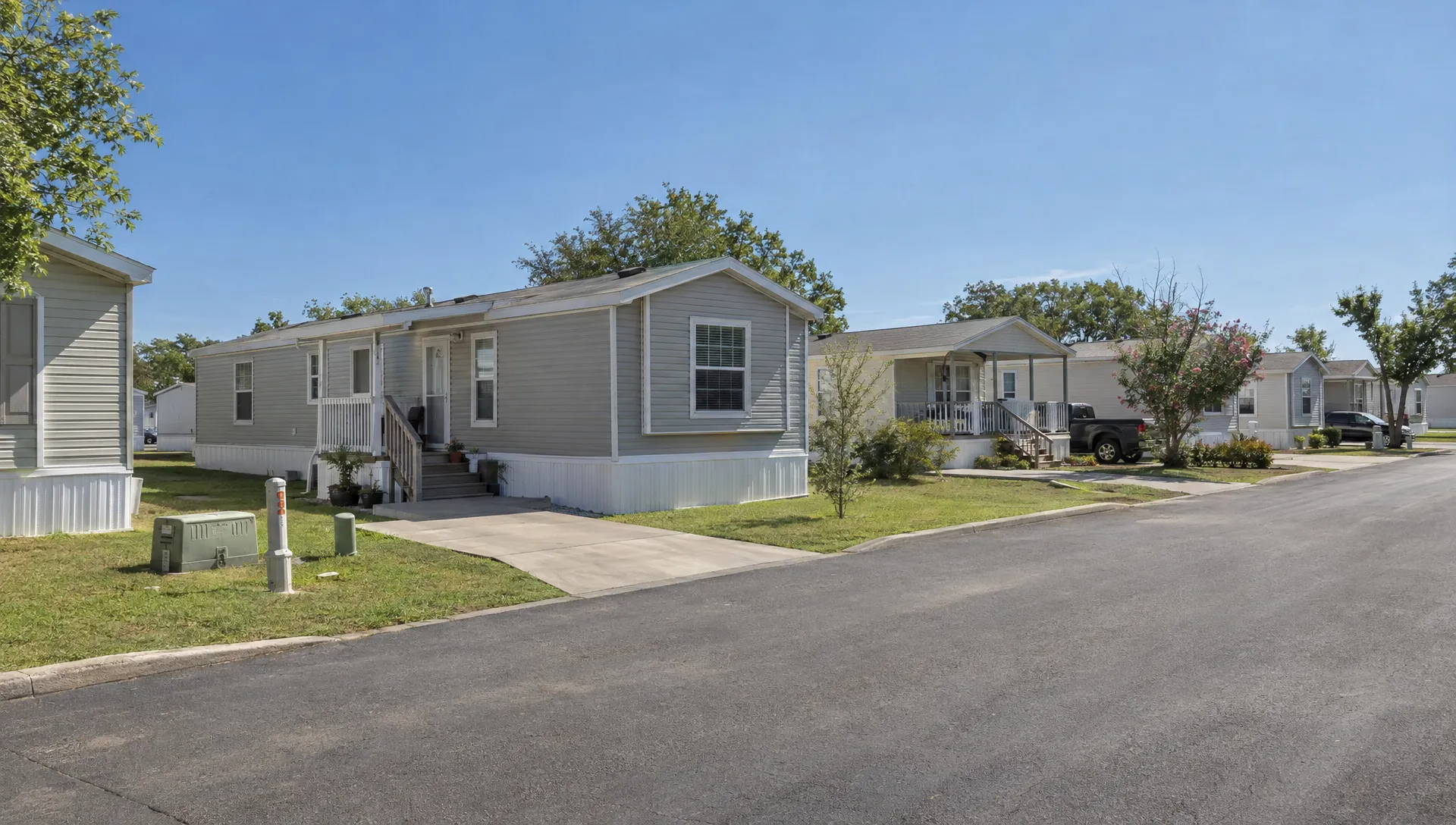
For buyers in and around San Antonio, many “mobile homes” sold today are legally manufactured homes. That distinction matters because FHA generally uses the manufactured home rules for HUD Code homes built after June 15, 1976.
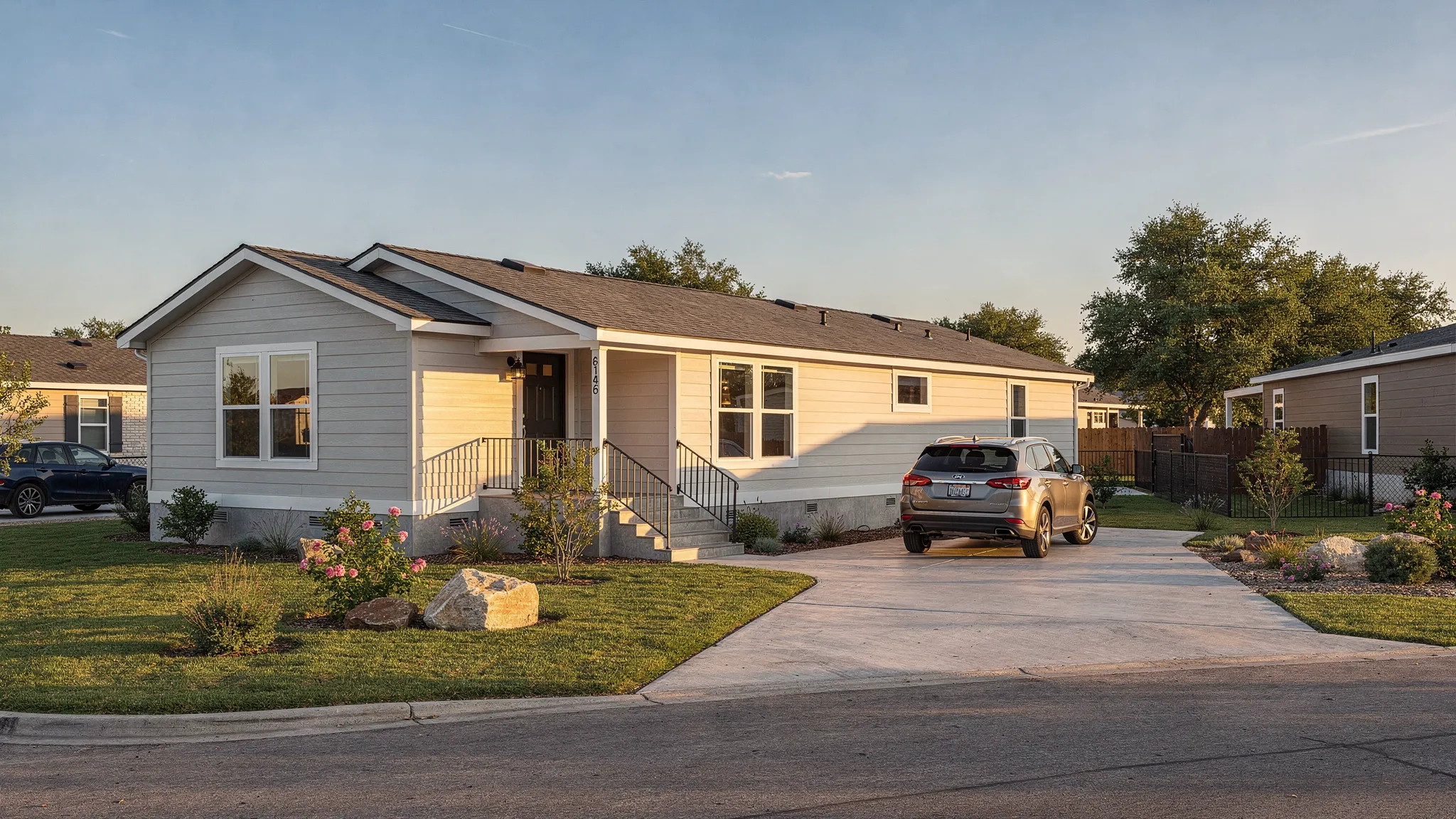
The two main FHA paths for prefab and manufactured homes
FHA financing for factory-built homes usually falls into two broad categories: FHA Title II and FHA Title I. The right path depends on whether you are financing the home as real property, buying land with the home, or placing the home in a community.
FHA Title II: Common for land-home purchases
An FHA Title II mortgage is generally the option people think of when they talk about an FHA home loan. For a manufactured home, Title II usually requires the home and land to be financed together as real estate.
This path is often used when you own land, are buying land with the home, or are purchasing an existing manufactured home already permanently installed on land. The home must meet FHA property standards, be permanently affixed to an approved foundation, and be classified as real property.
For modular homes, FHA Title II can also be used when the home is permanently installed, meets applicable building codes, and satisfies FHA appraisal and property requirements.
FHA Title I: Often used for manufactured home-only financing
FHA Title I manufactured home loan insurance is designed specifically for manufactured homes. It may be used for a manufactured home, a lot, or a home-and-lot combination, depending on the transaction and lender.
This can be relevant when a buyer wants to place a manufactured home in a leased-land community rather than buy the land. Title I has its own loan limits, term rules, and property requirements, and not every lender offers it.
The key takeaway: if you are buying a manufactured home without buying the land, ask early whether the lender offers FHA Title I or whether another home-only financing option is a better fit.
What qualifies for an FHA loan for prefab home purchases in 2026?
To qualify, the home, property, borrower, and loan structure all have to line up. Here are the major requirements buyers should understand.
1. The home must be an eligible type of factory-built housing
For a manufactured home, FHA generally requires that the home:
- Was built on or after June 15, 1976
- Was built to the federal Manufactured Home Construction and Safety Standards, commonly called the HUD Code
- Has HUD certification labels, often called HUD tags, or acceptable verification
- Has a manufacturer’s data plate or acceptable documentation
- Contains at least 400 square feet of living area
- Is designed and used as a single-family principal residence
HUD’s manufactured housing program explains the federal standards that apply to manufactured homes on its manufactured housing overview.
For a modular home, the rules are different. A modular home does not use HUD tags because it is not built to the HUD manufactured housing code. Instead, it must meet the applicable state or local building code, be properly permitted and inspected, and satisfy FHA property standards.
This is why the label “prefab” is not enough for a lender. Your lender needs to know exactly what type of home you are buying.
2. The home must be your primary residence
FHA loans are intended for owner-occupants. In most cases, the home must be your primary residence, not a vacation home, rental property, or investment property.
This matters for manufactured homes in communities as well as land-home packages. If you plan to live in the home full time, you are aligned with one of FHA’s core eligibility requirements. If you plan to rent it out immediately, FHA is usually not the right financing path.
3. The foundation and installation must meet FHA standards
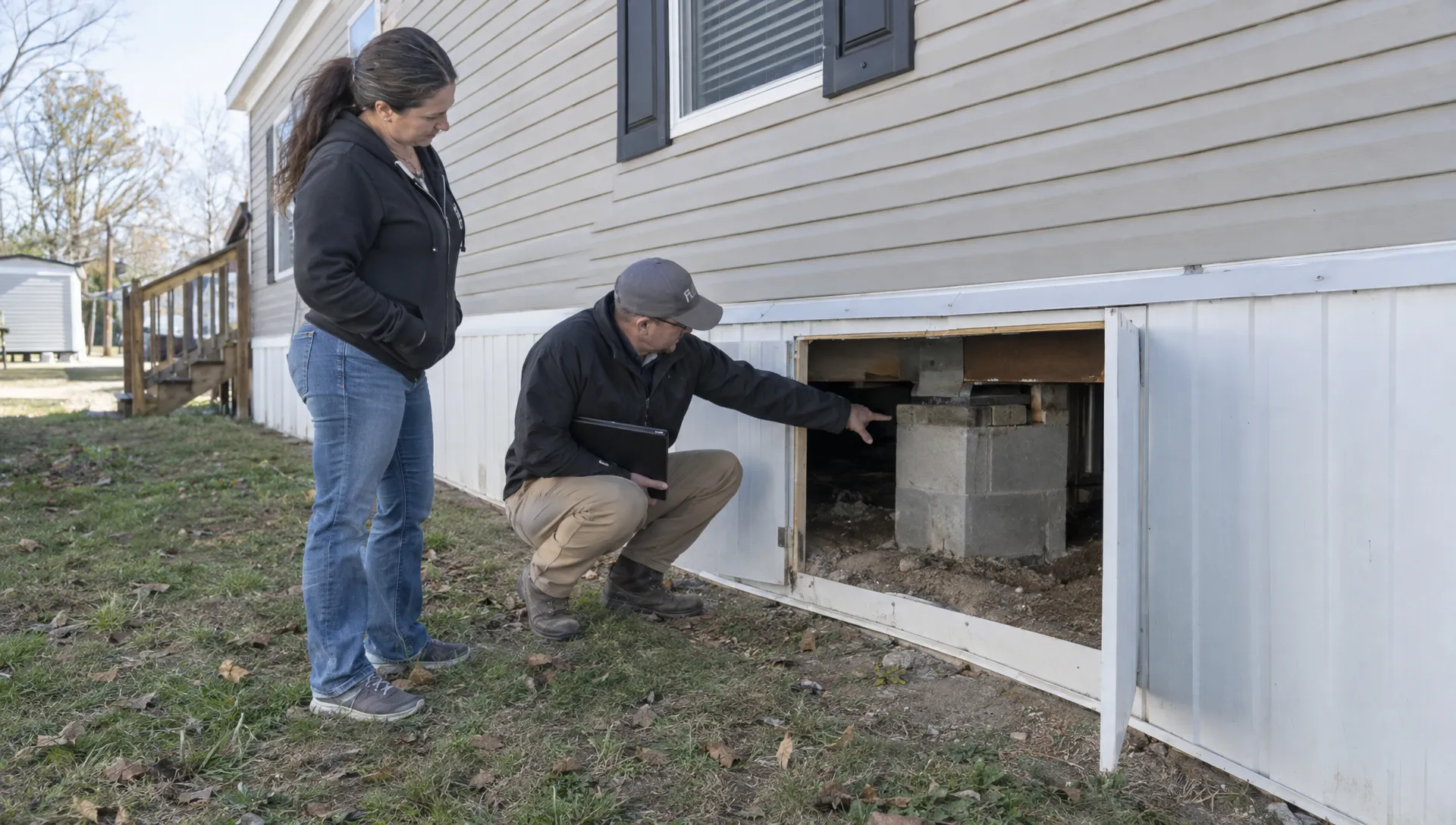
For FHA Title II manufactured home financing, the foundation is one of the biggest qualification points. The home must be permanently affixed to the site and installed according to applicable standards.
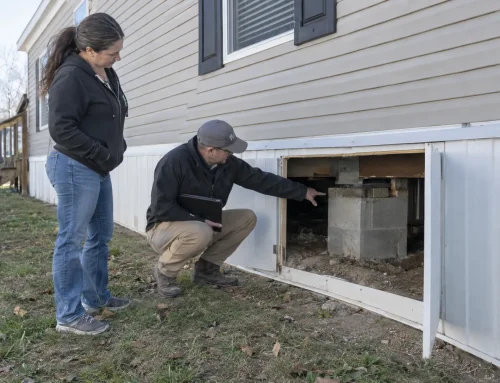
In practice, lenders commonly require documentation showing that the foundation meets FHA’s Permanent Foundations Guide for Manufactured Housing. This often involves an engineer’s foundation certification, especially for existing homes.
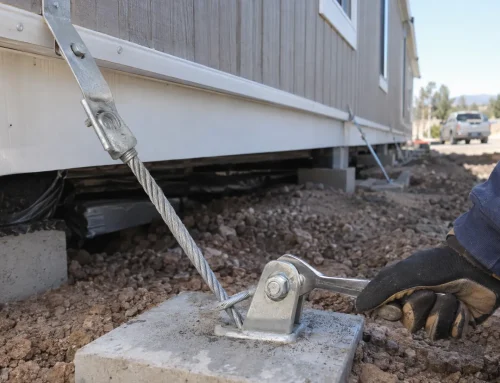
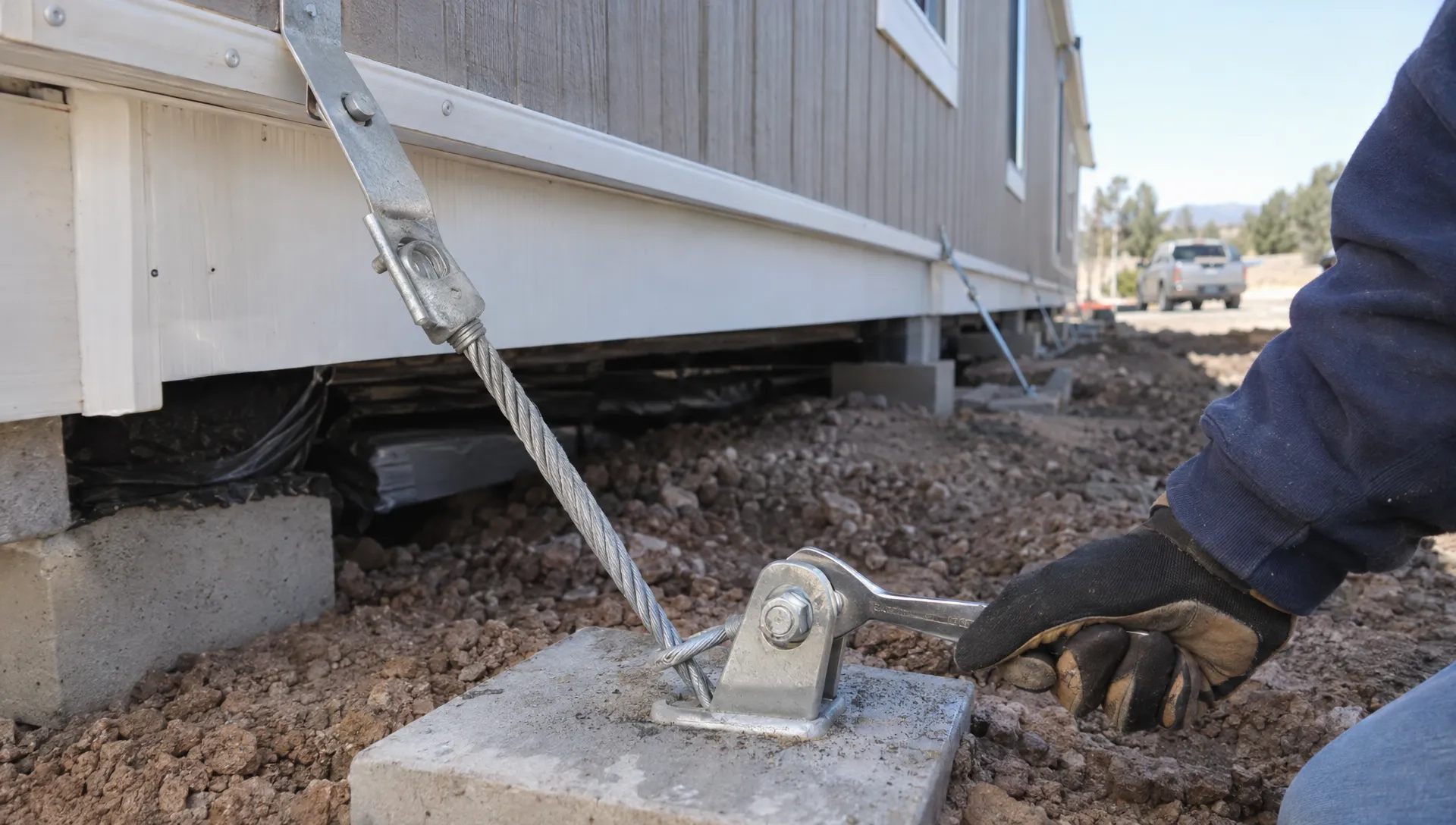
A qualifying installation may include properly designed footings, piers, anchors, tie-downs, utility connections, drainage, and removal of transport components such as wheels and axles. The permanent chassis remains part of a manufactured home, but the home must be installed as a permanent residence rather than a movable vehicle.
Foundation problems are a common reason FHA manufactured home transactions slow down. Before you make an offer on an existing manufactured home, ask whether an FHA-compliant foundation inspection has already been completed or will be required.
4. The home and land may need to be classified as real property
For FHA Title II, the home and land generally need to be treated as real estate. In Texas, manufactured home ownership and classification are handled through the Texas Department of Housing and Community Affairs Manufactured Housing Division.
If the manufactured home is permanently attached to land owned by the homeowner, the owner may need to elect real property status through the appropriate Texas manufactured housing documentation. The TDHCA Manufactured Housing Division is the key state resource for ownership records, statements of ownership, and related manufactured housing requirements.
This is especially important in San Antonio land-home purchases. If you are buying the home and land together, your lender, title company, retailer, and closing team need to coordinate the home title, land deed, and real property election correctly.
For FHA Title I, the home may be financed differently, including situations where the land is leased. However, the home still must meet FHA’s manufactured home requirements and be placed on an acceptable site.
5. The property location must be acceptable
FHA looks at the property, not just the home. The site must be suitable for residential use and must meet health, safety, access, and marketability standards.
For San Antonio area buyers, that means checking items like zoning, deed restrictions, flood zones, driveway access, utility availability, septic or sewer requirements, and community rules. If the home will be placed in a manufactured home community, the community approval process is separate from the FHA loan approval.
A home can be beautiful and affordable, but still run into financing issues if the land is not ready, the utilities are uncertain, or local placement rules are not clear.
For buyers considering a land-home setup, it is worth reviewing a local guide like Homes2Go San Antonio’s land and home package guide before committing to a property.
6. The borrower must meet FHA loan requirements
FHA loan approval also depends on the borrower. In 2026, standard FHA borrower factors include credit history, income, debt-to-income ratio, down payment funds, and ability to repay.
FHA is known for allowing a 3.5% down payment for borrowers with qualifying credit scores of 580 or higher. Borrowers with scores from 500 to 579 may need 10% down under FHA rules, although many lenders set higher credit score requirements. These lender-specific requirements are often called overlays.
Other borrower considerations include:
- Verifiable income and employment history
- Acceptable debt-to-income ratio based on underwriting
- Funds for down payment and closing costs
- FHA mortgage insurance premiums
- No unresolved credit or legal issues that block approval
Because manufactured home financing can involve extra property documentation, it is smart to get prequalified with a lender that understands manufactured housing before you choose a model or land.
7. The loan amount must fit FHA limits
FHA Title II mortgage amounts must fit within FHA loan limits for the county where the property is located. These limits can change yearly and vary by property type and area.
San Antonio buyers should check the current limit for Bexar County or the surrounding county where they plan to buy. HUD provides an official FHA mortgage limits lookup tool for current county-by-county limits.
FHA Title I manufactured home loans have their own limits and rules. Since limits can change, confirm current numbers directly with a participating lender or HUD resource instead of relying on an outdated online estimate.
FHA qualification checklist for San Antonio prefab home buyers
Before applying, gather as much documentation as possible. The more complete your file is, the easier it is for a lender to identify the right FHA path.
| Item to verify | Why it matters |
|---|---|
| Home type | Determines whether FHA treats it as manufactured, modular, or another prefab structure |
| Build date | Manufactured homes generally must be built on or after June 15, 1976 |
| HUD labels and data plate | Confirms HUD Code compliance for manufactured homes |
| Floor plan and square footage | FHA manufactured homes must meet minimum size and residential use standards |
| Foundation plan or certification | Helps prove the home is permanently installed for Title II financing |
| Land deed or lease documents | Determines whether the loan is land-home, home-only, or community-based |
| Texas Statement of Ownership | Important for manufactured home ownership and real property classification in Texas |
| Permits and utility information | Helps confirm the site is legal, safe, and ready for occupancy |
| Lender preapproval | Shows whether your credit, income, and loan structure fit FHA requirements |
Homes2Go San Antonio can help buyers compare manufactured home models, review floor plans, explore financing options, and understand how community or land-home choices may affect the purchase process. Because every buyer’s situation is different, the best first step is to match the home, location, and loan type before you commit.
What usually does not qualify for FHA prefab home financing?
Some properties are poor candidates for FHA financing, even if they look affordable upfront. Common issues include:
- A manufactured home built before June 15, 1976
- A home with missing HUD labels or no acceptable HUD Code verification
- A manufactured home under 400 square feet
- A tiny home on wheels or RV-style unit not classified as eligible housing
- A manufactured home moved from a previous permanent site, except normal transport from the manufacturer or retailer to its first installation
- A home not permanently affixed when Title II financing is needed
- A property with major safety, structural, access, utility, or flood concerns
- Unpermitted additions or structural modifications that cannot be documented
- A purchase intended primarily as an investment property or vacation home
This does not mean every issue is impossible to solve. Some documentation problems can be corrected. Some foundation issues can be repaired. Some site issues can be handled before closing. But these items should be identified early so you do not spend money on inspections, appraisals, or deposits before knowing whether FHA financing is realistic.
FHA vs. other financing options for manufactured homes
FHA can be a great fit, but it is not the only option. The right financing depends on whether you are buying land, placing a home in a community, using VA benefits, qualifying for USDA, or seeking a faster home-only loan.
| Financing option | Common use case | Key consideration |
|---|---|---|
| FHA Title II | Manufactured or modular home with land as real property | Requires property, foundation, appraisal, and borrower approval |
| FHA Title I | Manufactured home-only, lot-only, or home-and-lot loans | Availability depends on participating lenders and Title I rules |
| Chattel loan | Home in a leased-land community | Often faster, but terms may differ from mortgage financing |
| Conventional mortgage | Manufactured or modular home with land | May require stronger credit or larger down payment |
| VA loan | Eligible veterans and service members | Can be strong for qualified buyers, but property must meet VA rules |
| USDA loan | Eligible rural-area buyers | Location and income limits apply |
If you are comparing loan types, Homes2Go San Antonio’s manufactured home financing page is a helpful place to start. A housing specialist can help you understand which financing paths may match your budget, home preference, and location.
A practical 2026 buying process for FHA prefab home financing
The smoothest FHA transactions usually start with financing and site planning before home selection. A good process looks like this.
First, confirm whether you want a manufactured home in a community, a land-home package, or a modular-style setup on private land. This choice affects the loan type, documents, timeline, and total cost.
Next, get prequalified with a lender familiar with manufactured housing. Ask whether they offer FHA Title II, FHA Title I, or both. Also ask about credit score overlays, down payment expectations, appraisal steps, and foundation documentation.
Then, choose a home model that fits FHA eligibility. For manufactured homes, confirm the build standard, square footage, HUD labels, and available floor plan documentation. For modular homes, confirm code compliance, installation process, and local permitting.
After that, verify the site. If you are buying land, check access, utilities, zoning, flood maps, and installation feasibility. If you are moving into a community, confirm community rules, lot rent, lease terms, and approval requirements.
Finally, coordinate the paperwork. Manufactured home purchases can involve a retailer, lender, installer, title company, appraiser, engineer, insurance provider, and state ownership records. Good coordination helps prevent delays.
Why FHA can be a good fit for San Antonio buyers
San Antonio continues to attract buyers who want more space, modern layouts, and a more attainable path to homeownership. Manufactured homes can help meet that need, especially when buyers compare models carefully and understand the full cost of land, setup, utilities, taxes, insurance, and financing.
FHA financing can be appealing because it may offer lower down payment options and more flexible credit guidelines than some conventional loans. When paired with a qualifying manufactured or modular home, it can open the door for first-time buyers and families who want a move-in ready home without overextending their budget.
The key is preparation. FHA is not just approving the buyer. It is also approving the home, the site, the foundation, and the legal structure of the transaction.
Frequently Asked Questions
Can I use an FHA loan for a prefab home in 2026? Yes, if the home and transaction meet FHA requirements. Manufactured homes, modular homes, and some other factory-built homes may qualify, but the rules depend on construction type, foundation, property classification, and occupancy.
Can a single-wide manufactured home qualify for FHA financing? A single-wide manufactured home may qualify if it meets FHA manufactured housing standards, minimum size rules, foundation requirements, and lender guidelines. Some lenders may have stricter overlays, so ask before applying.
Does FHA finance manufactured homes in mobile home parks? FHA Title I may be an option for manufactured homes on leased land, depending on the lender and lease terms. FHA Title II generally applies when the home and land are financed together as real property.
Do FHA manufactured homes need a permanent foundation? For FHA Title II financing, yes. The home typically must be permanently affixed to an FHA-compliant foundation, and lenders often require an engineer’s certification.
Can I buy land and a manufactured home together with FHA? Yes, many buyers use FHA Title II for land-home purchases when the home, land, foundation, appraisal, and borrower all qualify. The property must meet FHA standards and the loan amount must fit current county limits.
Are modular homes easier to finance with FHA than manufactured homes? Sometimes. Modular homes are generally treated more like site-built homes because they are built to state or local building codes, not the HUD manufactured housing code. They still must meet FHA appraisal, property, and borrower requirements.
Ready to see what FHA-friendly options may fit your budget?
If you are shopping for a manufactured or mobile home in San Antonio, the right financing strategy starts before you pick a model. Homes2Go San Antonio can help you explore available home models, compare floor plans, understand land and community options, and connect with financing guidance tailored to manufactured home buyers.
Visit Homes2Go San Antonio to browse options or start with the financing page to learn which loan path may fit your 2026 homeownership goals.
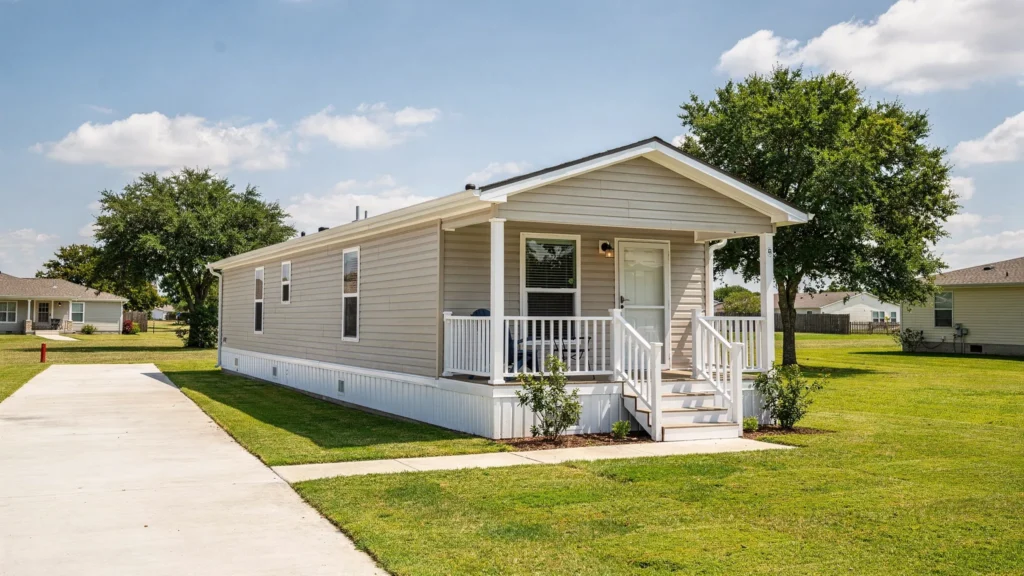 Can You Get FHA Loans for Single Wide Mobile Homes?
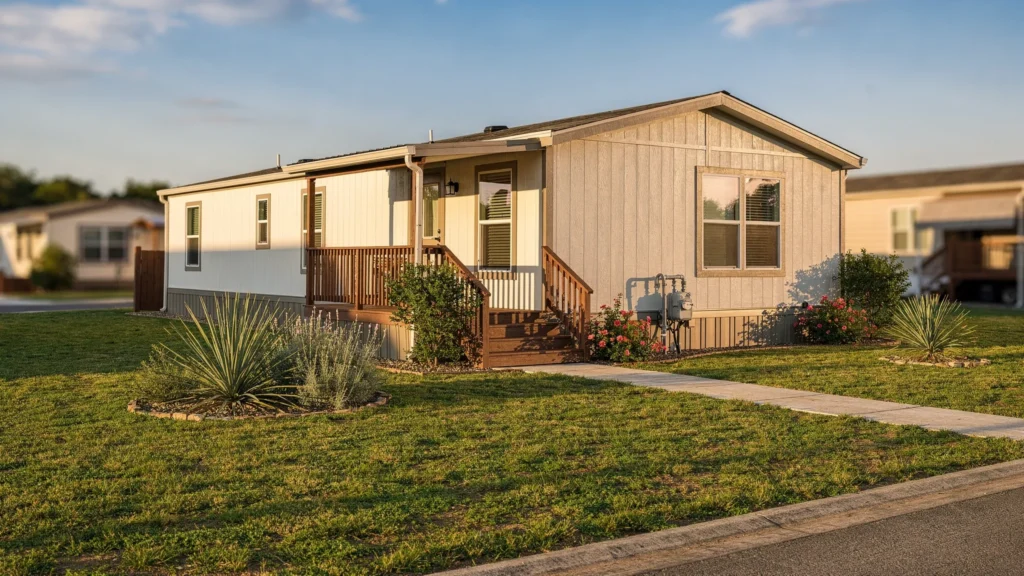 FHA Single Wide Manufactured Home Guidelines in 2026