
Buying or installing a manufactured home in Texas can feel straightforward right up until someone says, “We need an inspection.” The good news is that most inspection items are predictable, and when you know what inspectors look for, you can avoid delays, surprise repair bills, and closing-day stress.
This guide walks through what a manufactured housing inspection typically covers in Texas, how it differs from a site-built home inspection, and what you can do to prepare.
Manufactured housing inspections in Texas: the big picture
A manufactured home is built to the federal HUD Code, not local building codes, and it’s inspected in the factory during construction. That factory oversight is helpful, but it does not replace the real-world checks that happen after the home is delivered and installed.
In Texas, the main “inspection moments” usually fall into two buckets:
- Home condition and safety (similar to a traditional home inspection, especially for pre-owned homes)
- Installation and setup (anchoring, piers, grading, utilities, and other site-specific items)
Depending on your situation, inspections may be requested by a buyer, lender, insurer, retailer, community, or local authority. If you’re placing a home on private land, you may also have separate local inspections tied to permits (for example, electrical service, septic, or final utility connections).
For official Texas-specific guidance and program information, start with the Texas Department of Housing and Community Affairs (TDHCA) Manufactured Housing Division website: TDHCA Manufactured Housing
What’s the difference between a manufactured home inspection and an installation inspection?
Many buyers lump everything into “the inspection,” but in practice there are two different scopes:
Manufactured home (home condition) inspection
This focuses on the home itself, including safety, functional systems, visible defects, and signs of moisture or structural issues. This is especially important for used manufactured homes, where wear, prior repairs, and deferred maintenance can be hard to spot.
Installation and setup inspection
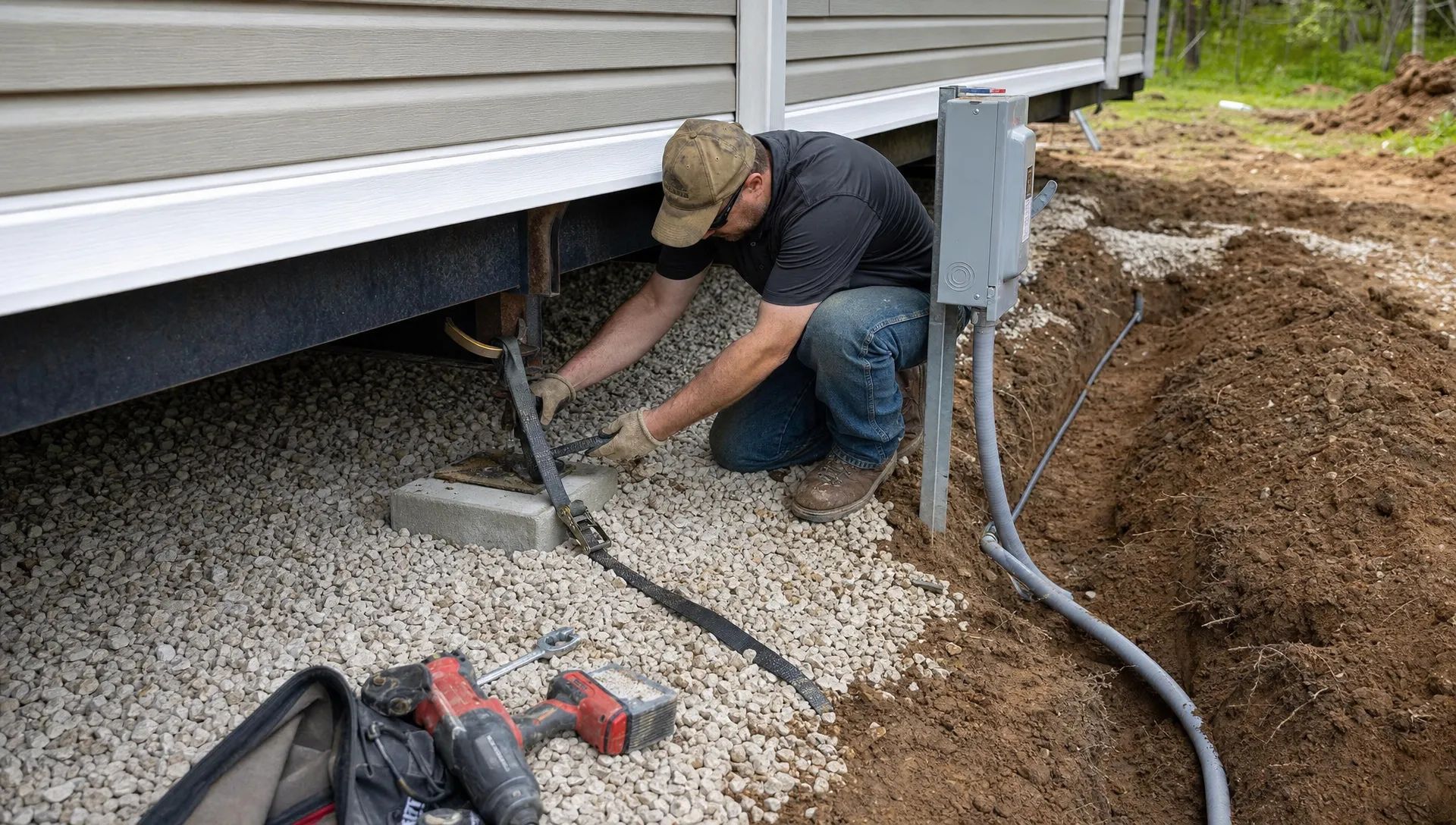
This focuses on how the home is installed on the site, including supports, anchoring, leveling, drainage, steps/handrails, utility hookups, and code-required safety details.
The federal framework for manufactured home construction and safety comes from HUD, and installation standards are also federally defined. References:
- HUD Manufactured Home Construction and Safety Standards
- HUD Manufactured Home Installation Program
Manufactured Housing Inspection: what inspectors check (Texas checklist)
While every inspector has their own workflow, most manufactured housing inspections cover the same major categories.
1) HUD labels, data plate, and home identification
Inspectors (and lenders) often want to confirm the home’s identity and basic compliance details.
Common items:
- HUD certification labels (often called “HUD tags”) typically located on the exterior of each transportable section
- Data plate (usually inside the home, often in a kitchen cabinet, utility room, or bedroom closet) showing key specs like manufacturer, serial number, wind zone, roof load, and thermal zone
- Serial/VIN and section information matching paperwork
Why it matters: If labels are missing or numbers don’t match documentation, it can slow down financing, insurance, titling, and resale.
2) Roof, ceiling, and moisture intrusion
Water is one of the biggest enemies of any home, and manufactured homes are no exception.
Inspectors typically check:
- Roof covering condition (aging, punctures, poor repairs)
- Flashing details around penetrations (vents, stacks, skylights, chimneys)
- Soft spots, stains, bubbling, or sagging ceilings
- Signs of active leaks in attics or around vents
Texas note: Heat and UV exposure can accelerate roof wear, and sudden downpours can reveal drainage and flashing problems quickly.
3) Foundation supports, leveling, and structural setup
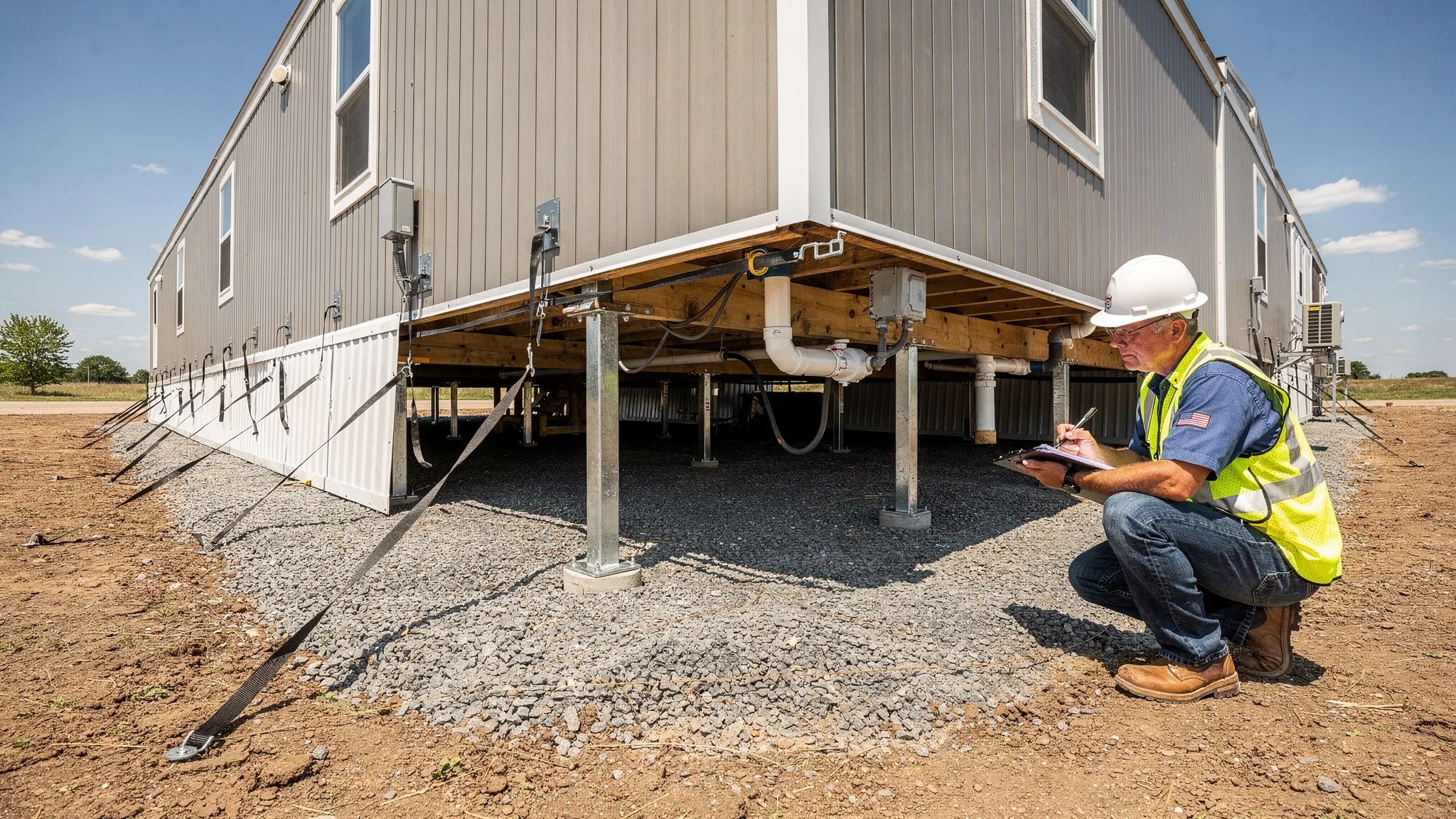
Manufactured homes rely on a support system (often piers/blocks with beams) designed to carry loads correctly.
Inspectors often look for:
- Proper pier placement and spacing (per the installation design)
- Condition and alignment of beams and supports
- Evidence of settlement or movement (doors out of square, floor slope, cracks at trim)
- Shims and blocking practices (improper materials can be a red flag)
If a home is out of level, you may see “symptoms” like doors that won’t latch, cracked drywall seams, or bouncy floors.
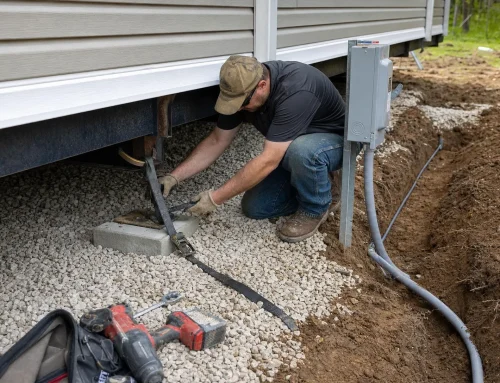
4) Anchoring and tie-downs (wind resistance)
Anchoring is a major focus because it’s a life-safety issue.
Inspectors may check:
- Presence and condition of straps/anchors
- Corrosion, looseness, or missing components
- Anchorage points and strap tension
- Compatibility with the home’s specified wind zone requirements
Even in areas that aren’t coastal, storms and straight-line winds are real, and anchoring issues are one of the most common “setup” defects that cause delays.
5) Underbelly and insulation condition
The underside of the home is where many expensive issues hide.
Inspectors commonly look for:
- Torn or sagging belly wrap
- Wet or compressed insulation
- Evidence of pests or nesting
- Ductwork condition (loose, crushed, disconnected)
- Plumbing leaks and improper repairs
Tip: If the underbelly is damaged, don’t treat it as “cosmetic.” Moisture and air leakage under the home can lead to higher utility bills and long-term deterioration.
6) Electrical system (service, panel, outlets, safety devices)
Electrical inspection items often include:
- Main panel condition and labeling
- Breaker sizing and signs of overheating
- GFCI protection where required (kitchens, baths, exterior, laundry, wet-bar areas)
- Outlet polarity/grounding checks
- Function of lights, switches, and exhaust fans
If the home is being installed new, there may also be separate checks for the electrical service equipment and meter connection depending on how your site is permitted.
7) Plumbing system (supply, drains, fixtures, water heater)
Common plumbing checks:
- Visible leaks at fixtures and shutoffs
- Drain flow and signs of backups
- Water heater installation and safety relief discharge routing
- Proper connections under sinks and behind toilets
- Exterior hose bibs and freeze protection measures where applicable
In Texas, inspectors also pay attention to any signs of prior freeze damage (cracked fittings, patchwork repairs), especially in homes that have been vacant.
8) HVAC and ventilation
Heating and cooling performance and safety is a big deal in Texas.
Inspectors often evaluate:
- HVAC operation and temperature split basics
- Filter location and return-air pathway
- Duct leaks or disconnected runs (often visible under the home)
- Bathroom fans venting correctly (not into cavities)
- Condensate drain routing and overflow risks
If your home has energy-efficient features, an inspection can also confirm basics like sealed duct connections and appropriate airflow, which directly impact comfort.
9) Interior condition: floors, walls, windows, doors
Inside the home, inspectors look for signs of movement, water, and workmanship issues.
Typical checks:
- Spongy subfloors or soft spots near tubs, toilets, and exterior doors
- Window operation, locks, and evidence of water staining
- Door alignment and latching (leveling indicator)
- Wall/ceiling cracks beyond normal settlement
10) Safety items: smoke alarms, egress, steps, and handrails
Safety checks vary based on home age and scope, but often include:
- Smoke alarm presence and basic operation
- Bedroom egress windows (openable, not painted shut)
- Steps, handrails, and landings installed securely
- Dryer venting to the exterior (where applicable)
If the home is in a land-lease community, the community may also have standards for stairs, skirting, and exterior appearance that get verified before move-in.
Common inspection “red flags” in Texas manufactured homes
These items tend to trigger renegotiations, repair requests, or re-inspections:
- Active roof leaks or widespread ceiling staining
- Evidence of chronic moisture under the home (wet insulation, mold-like odors)
- Missing or compromised tie-downs/anchors
- Out-of-level conditions that affect doors/windows throughout the home
- DIY electrical repairs (double-tapped breakers, open junctions, improvised wiring)
- Plumbing leaks that have damaged subfloors (especially around tubs)
- Ductwork disconnected under the home (comfort complaints often trace back here)
What to do before the inspection (so it goes smoothly)
A little preparation can improve the inspection outcome and reduce “cannot inspect” notes.
- Ensure access to the electrical panel, water heater, attic access (if any), and crawlspace/underbelly areas.
- Have paperwork ready if you have it: serial numbers, data plate photo, installation documents, and any repair receipts.
- Turn on utilities (power and water). Inspectors can’t fully evaluate plumbing, HVAC, or appliances without them.
- Clear simple obstructions like stored items blocking closets where the data plate may be located.
If you’re buying a pre-owned home, it’s also smart to ask whether the seller has done recent re-leveling, roof coating, plumbing repairs, or HVAC replacement, and to request documentation.
Inspection results: how to interpret the report
Most inspection reports separate findings into something like “safety,” “major,” and “minor,” but you should translate the report into decisions:
- Deal-breakers: structural instability, major moisture intrusion, unsafe electrical conditions, missing critical setup components.
- Budget items: roof end-of-life, aging HVAC, significant re-leveling work, widespread floor repairs.
- Maintenance: caulking, minor fixture repairs, small trim cracks, door adjustments.
A helpful way to frame it is: “Does this issue affect safety, financing/insurance approval, or the home’s long-term durability?” If yes, prioritize it.
Here’s a high-level summary of major inspection areas and what they often reveal:
| Inspection area | What’s typically checked | Common problems found |
|---|---|---|
| Identification | HUD labels, data plate, serial match | Missing labels, paperwork mismatch |
| Roof and moisture | Covering, flashing, stains | Leaks, prior patchwork, soft decking |
| Setup and leveling | Piers, supports, home level | Settlement, poor shimming, doors out of square |
| Anchoring | Straps, anchors, corrosion | Missing straps, loose tie-downs |
| Underbelly | Belly wrap, insulation, ducts | Wet insulation, torn wrap, duct disconnections |
| Electrical | Panel, outlets, GFCI | DIY wiring, overheating signs, missing GFCI |
| Plumbing | Leaks, drains, water heater | Under-sink leaks, damaged subfloor, improper TPR discharge |
| HVAC | Operation, ducts, condensate | Poor airflow, disconnected ducts, drain issues |
How to choose the right inspector for a manufactured home in Texas
Not every home inspector has deep experience with manufactured housing, especially the underbelly, anchoring, and setup details.
When you call, ask directly:
- “How many manufactured home inspections do you do per month or year?”
- “Do you inspect the underbelly and tie-downs, and do you document them?”
- “Will the report include photos of key setup components?”
- “Do you have a separate scope for installation versus home condition?”
If you’re buying with financing, also ask your lender whether they require a specific inspection type, add-on certification, or documentation.
Frequently Asked Questions
Is a manufactured home already inspected at the factory? Yes, manufactured homes are built under the federal HUD Code and are inspected during production. That does not replace a post-delivery inspection of installation, utilities, and real-world condition.
Do I need an inspection for a brand-new manufactured home? It’s often still a good idea. Even new homes can have transport-related issues, setup adjustments, or items that need warranty service after installation.
What’s the most common issue inspectors find in manufactured homes? Moisture-related problems and setup issues (leveling, anchoring, underbelly/duct concerns) are frequent themes, especially in pre-owned homes.
Will an inspection affect my financing? It can. Some lenders and insurers may require proof that the home is safe, properly installed, and in acceptable condition. Requirements vary by loan type and lender.
What should I fix before the inspector arrives? Focus on access and safety: clear the panel area, ensure water and power are on, replace obviously broken smoke alarms, and address active leaks if you know about them.
Need help navigating a manufactured home purchase in San Antonio?
If you’re shopping for a manufactured home and want fewer surprises, Homes2Go San Antonio can help you compare move-in ready options, understand next steps, and coordinate with financing and installation timelines.
Explore available homes and get guidance here: Homes2Go San Antonio or review financing paths on the financing page.
 Trailer House: What It Means Today (and Better Terms to Use)
 Mobile Home Setup Costs: Pad, Utilities, Permits, and Labor