
Most buyers focus on the home price, then get surprised by everything it takes to make a manufactured home truly “move-in ready.” In reality, mobile home setup costs can include site work, a pad or foundation, utility connections, permits, inspections, and the labor to deliver, set, level, and finish the home.
This guide breaks down the four biggest buckets, pad, utilities, permits, and labor, so you can build a realistic budget for San Antonio and nearby areas (Bexar County and surrounding counties).
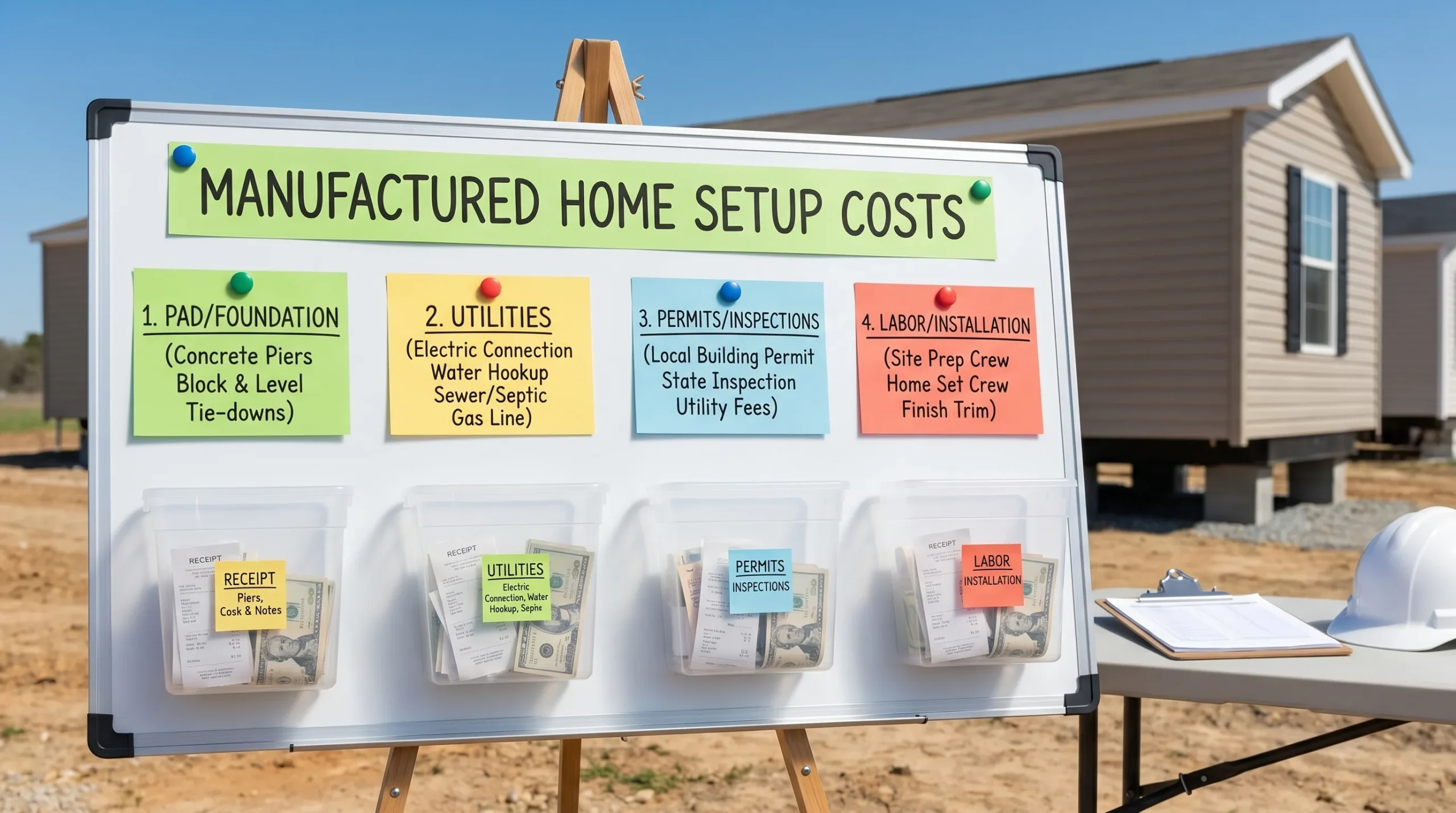
What “mobile home setup costs” usually include (and what they don’t)
Setup costs are the expenses required to place and connect a manufactured home on a specific site. They often happen in stages, and some items are paid to different parties (installer, utility providers, county, community, concrete contractor).
Common setup cost categories include:
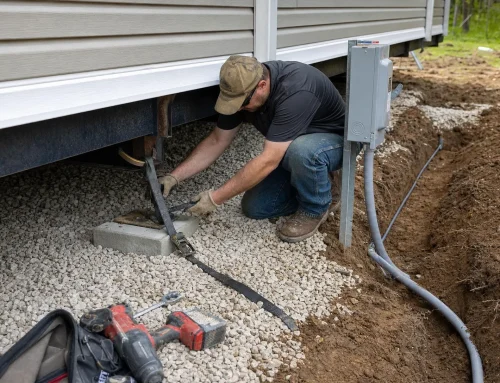
- Pad or foundation work (grading, gravel base, piers, runners, slab, tie-down anchoring)
- Utility connections (electric, water, sewer or septic, gas if applicable, sometimes trenching)
- Permits and inspections (local permits, septic permits where needed, installation inspections)
- Labor and logistics (transport, crane if required, set and level, marriage-line work on multi-section homes, trim-out)
What this article does not cover in depth (because it varies widely and can be optional): land purchase, land clearing, major driveway work, porches/decks, garages, fencing, and landscaping. Those can be significant, but they are not always required to legally set the home.
The biggest factors that change setup costs in San Antonio
Two projects can look similar on paper but have very different totals. These are the variables that most often move the number:
1) Where the home is going: community lot vs private land
- Land-lease communities may already have a prepared pad and utility stubs, which can reduce your out-of-pocket setup work.
- Private land can require more site prep and more coordination (especially if you need septic, a new driveway, or long utility runs).
If you are comparing both options, Homes2Go’s guide to land and home packages in San Antonio is a helpful companion.
2) How far utilities are from the homesite
Short runs (utilities close to the pad) are usually straightforward. Long runs can add trenching, conduit, additional materials, and sometimes upgraded service.
For local references, you can review service information from CPS Energy (electric and gas in much of San Antonio) and SAWS (water and sewer for many city locations). Exact requirements and fees depend on the address.
3) Site conditions: slope, soil, drainage, access
If the site needs significant grading, drainage work, or trucks have limited access, costs rise quickly. Access issues can also increase delivery complexity for larger multi-section homes.
4) Home size and installation type
A single-section home typically costs less to set than a multi-section home because there is less joining work (marriage line) and less on-site finishing.
5) Local rules and inspection requirements
Permitting can differ by city, county, and whether the home is in a jurisdiction that requires specific inspections or documentation.
Cost bucket #1: Pad and foundation (what you’re paying for)
“Pad” can mean anything from a properly compacted gravel base to a more engineered foundation system. The right choice depends on your site, your home, and sometimes your financing.
Typical pad and foundation components
A pad or foundation budget often includes:
- Clearing and minor grading where the home will sit
- Compacted fill or gravel base
- Concrete work (piers, runners, or slab depending on design)
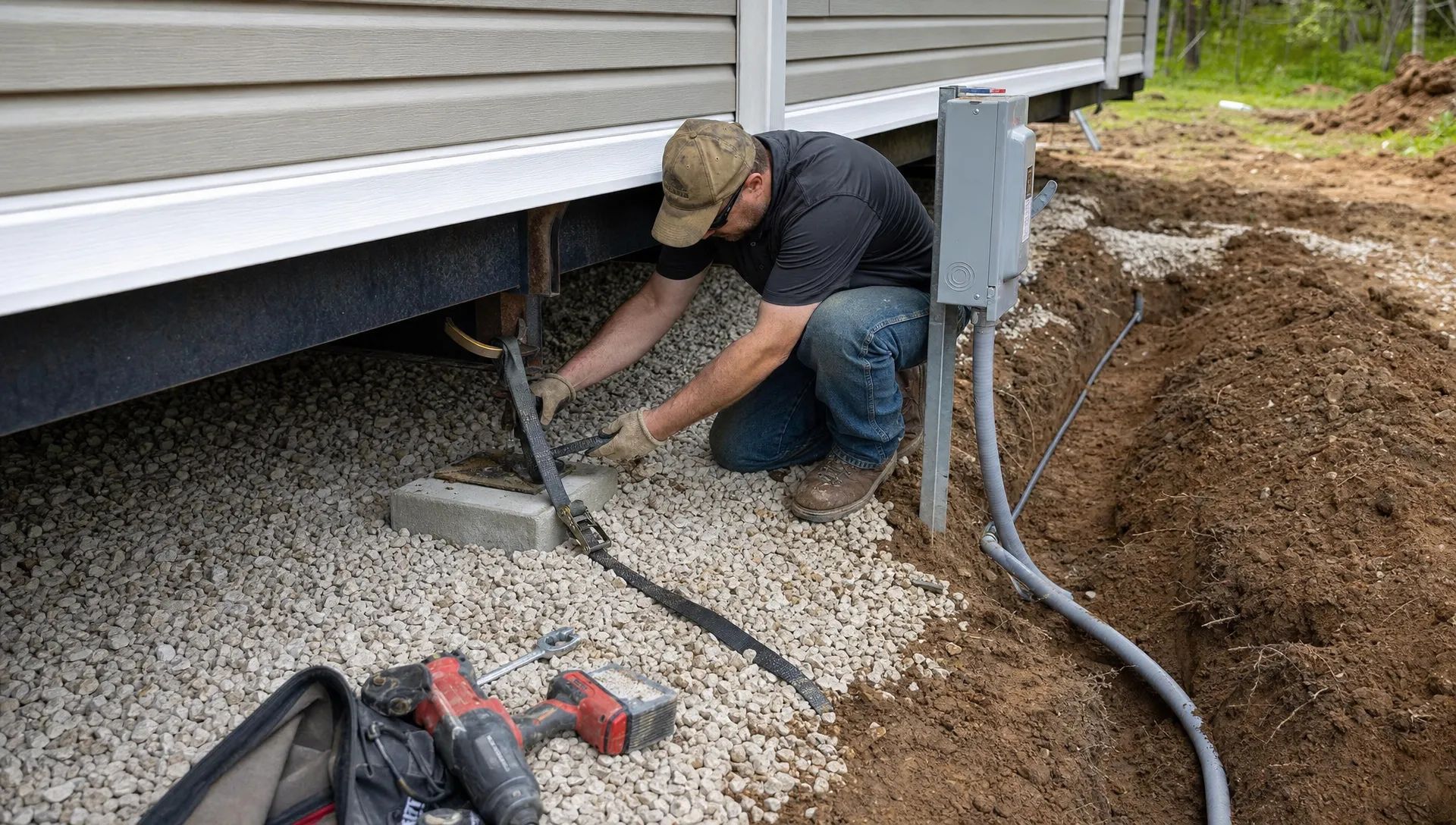
- Anchoring and tie-down system required for manufactured homes
- Drainage considerations so water does not collect under the home
Typical cost range (broad, real-world planning numbers)
Because soils and access vary, it’s best to think in ranges.
- Basic pad and prep (minor grading, compacted base): often a few thousand dollars to around ten thousand.
- More complex foundation solutions (more concrete, engineered requirements, challenging sites): can move into the five figures.
Two important notes:
- Some community lots already include parts of this work.
- Some loan types may require a foundation classification or specific tie-down and pier details.
For installation standards context, HUD’s manufactured housing program explains the basics of HUD Code homes and related requirements on the HUD Manufactured Housing page.
Cost bucket #2: Utilities (electric, water, sewer/septic, gas)
Utility costs are where many budgets blow up, not because connections are mysterious, but because distance and site readiness matter more than people expect.
Electric
Electric setup may include a meter base, panel considerations, a service drop, trenching (if underground), and inspections. If service needs upgrading (for example, higher amperage), costs can rise.
Water
Water connection costs depend on whether you are tying into a municipal line, extending a line, or using a private well (where allowed and feasible). In many areas near San Antonio, municipal connections are common, but the details are address-specific.
Sewer vs septic
- Sewer tie-in is often simpler when a tap is nearby.
- Septic can be a major cost item on private land if sewer is not available, and it requires permits and soil evaluation.
Gas (optional)
If the home uses natural gas or propane, you may need a gas line extension, regulators, and inspections.
Planning ranges for utility connections
The most accurate answer comes from a site-specific quote, but these ranges are useful for early budgeting.
| Utility item | What drives cost most | Planning range (typical) |
|---|---|---|
| Electric connection | Distance, trenching, service upgrade needs | Often $1,000 to $5,000+ |
| Water connection | Tap availability, distance, trenching | Often $1,000 to $5,000+ |
| Sewer connection | Proximity to main, excavation complexity | Often $2,000 to $10,000+ |
| Septic system (if needed) | Soil, system type, permitting | Commonly $6,000 to $20,000+ |
| Gas line/propane setup (if applicable) | Distance, provider requirements | Often $500 to $5,000+ |
These are intentionally wide because a short, ready tie-in can be far cheaper than a long trench across a property.
Cost bucket #3: Permits and inspections
Permits are usually not the biggest line item, but they are critical because missing permits can delay your installation, utility activation, or financing.
Which permits might apply?
Depending on location and site conditions, you may run into:
- Manufactured home installation permits or filings
- Electrical permits
- Plumbing permits
- Septic permits (if applicable)
- Driveway or culvert permits (in some county areas)
For Texas oversight and program information, the Texas Department of Housing and Community Affairs provides manufactured housing resources through the TDHCA Manufactured Housing Division.
If your site is within city limits, local requirements often run through development services. For example, the City of San Antonio’s permitting resources are available via San Antonio Development Services.
Typical cost range
Permit and inspection totals often land in the hundreds to a few thousand dollars, depending on how many permits apply (especially if septic is involved) and the jurisdiction.
What matters most is not the number itself, but making sure your plan accounts for:
- The right permits for the address
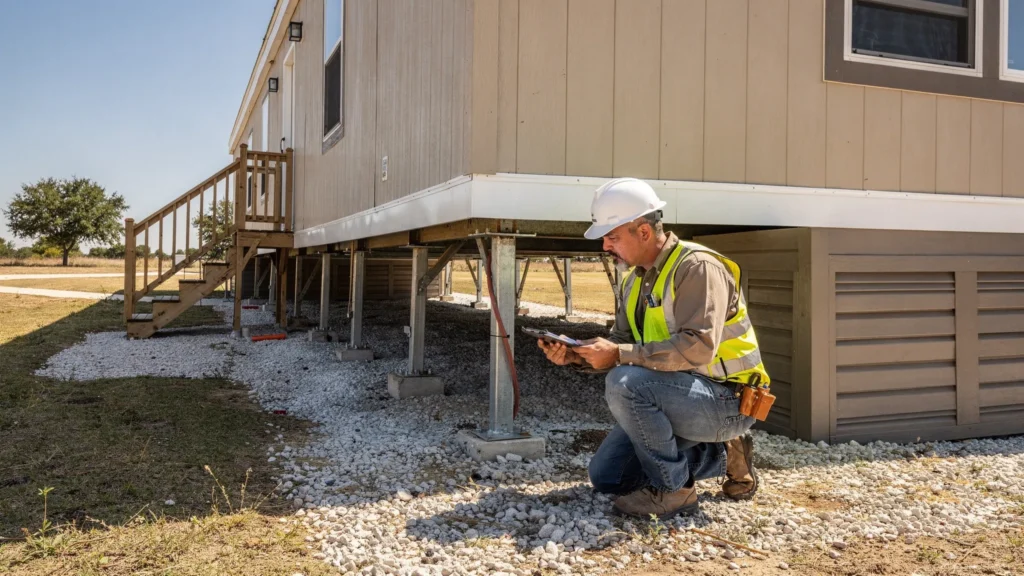
- Required inspections scheduled at the right times
- Any documentation needed by your lender
Cost bucket #4: Labor (delivery, set, level, finishing)
Labor is where manufactured home installation becomes a real project. Even when the home is “move-in ready” from the factory, on-site work still matters.
Common labor line items
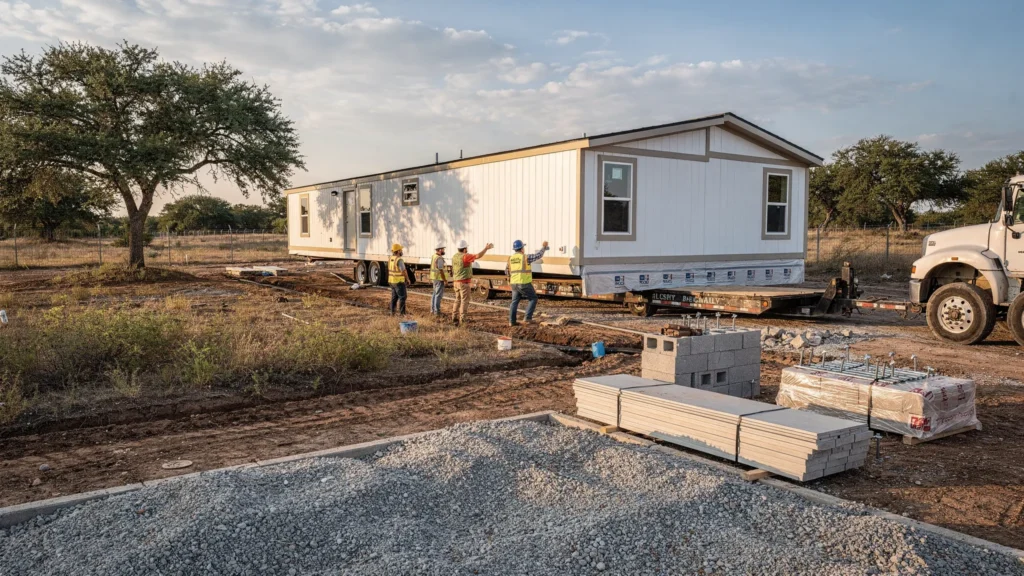
- Transport/delivery from the retailer or factory to your site
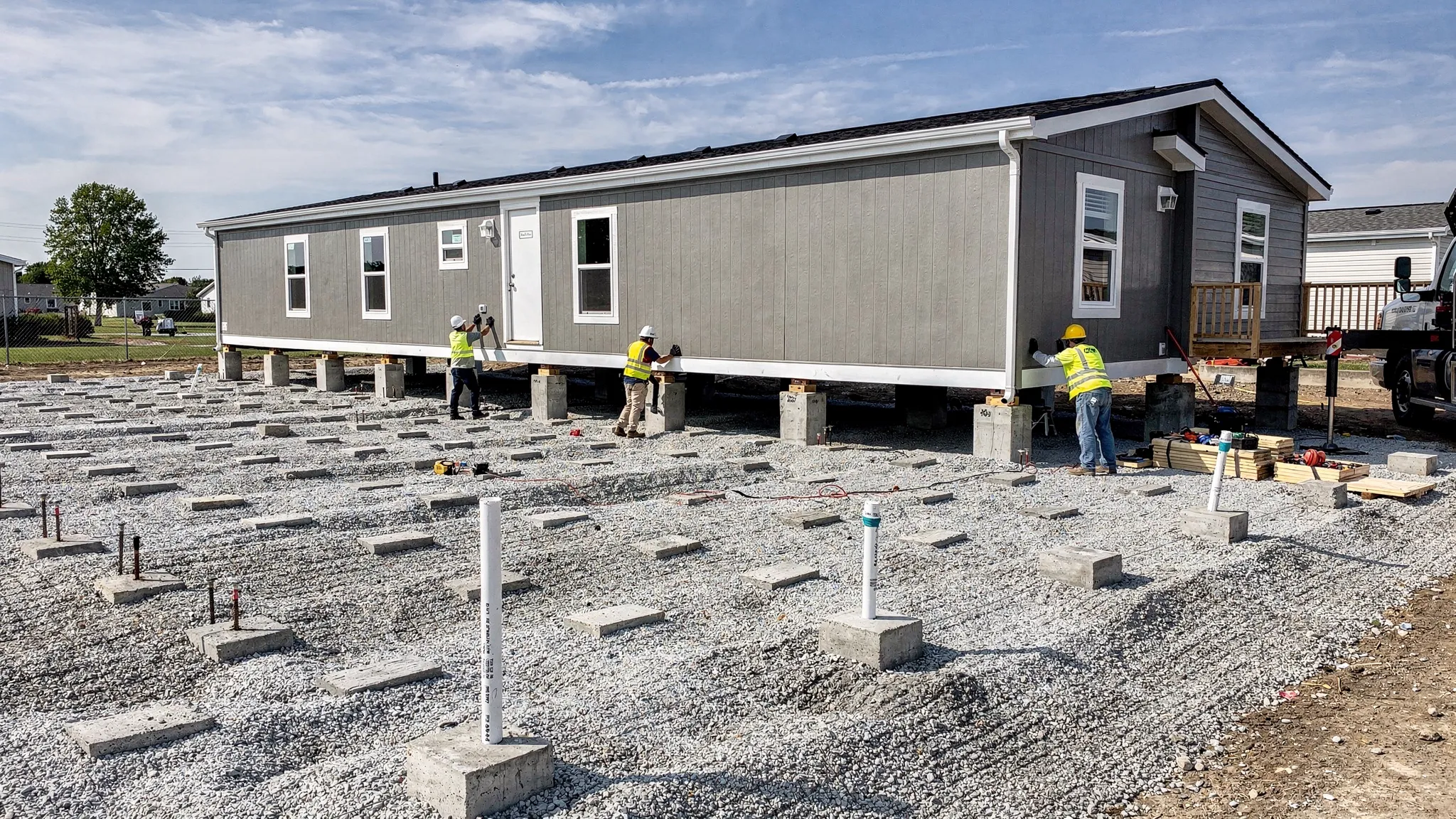
- Set and level (placing the home on piers/blocks, leveling, anchoring)
- Multi-section close-up work (joining sections, sealing, finishing marriage line)
- Skirting and steps (sometimes included, sometimes separate)
- Utility hookups by qualified trades (electrician, plumber, HVAC technician as required)
Typical cost range
For many projects, combined delivery and installation labor often falls in the mid four figures to the teens. Large multi-section homes, difficult access, crane needs, or extensive finishing can push costs higher.
A practical way to budget is to request a written scope that clearly states what is included:
- Does the price include tie-down/anchoring?
- Are steps/skirting included?
- Are utility connections included, or only “stub-outs ready”?
- Is debris haul-off included?
Putting it together: sample setup budgets (three common scenarios)
These examples are not quotes, they are planning models to help you sanity-check your own numbers.
| Scenario | Pad/foundation | Utilities | Permits/inspections | Labor | Rough total range |
|---|---|---|---|---|---|
| Community lot with pad and stubs already in place | Lower | Lower | Low to moderate | Moderate | Often $5,000 to $20,000+ |
| Private land with utilities nearby (short runs) | Moderate | Moderate | Moderate | Moderate | Often $15,000 to $40,000+ |
| Private land needing septic and longer utility runs | Moderate to high | High | Moderate to high | Moderate | Often $25,000 to $60,000+ |
If you are looking at a property where utilities and a level base pad are already prepared, that can remove a lot of uncertainty. Homes2Go’s community lots in Elmendorf (Sandy Oaks) page is an example of the kind of “site readiness” buyers often look for.
How to get an accurate setup cost estimate (without wasting weeks)
The fastest path to an accurate number is to treat setup like a mini construction project and collect the right inputs early.
Information to gather before requesting bids
- Address or GPS location of the homesite
- Photos of site access (gate width, turns, overhead lines, slope)
- Utility availability (electric, water, sewer) and approximate distances
- Whether the lot is in a community with existing pad and stubs
- Your preferred home size (single-section vs multi-section)
Questions to ask your installer or retailer
- What exactly is included in the set price (delivery, leveling, anchoring, skirting, steps)?
- What is excluded that you commonly see buyers forget?
- Who pulls permits and schedules inspections?
- Will you coordinate with the utility providers, or is that on the homeowner?
- What site conditions would trigger change orders?
If you are still deciding between home types and placement options, Homes2Go’s mobile homes quick buyer guide and the broader San Antonio options and pricing guide can help you map your decisions to the right budget.
Common mistakes that increase setup costs
A few preventable issues show up again and again:
- Assuming utilities are “available” means they are “at the pad.” A line at the street can still mean trenching and additional work.
- Underestimating drainage and soil needs. Water management under and around the home matters for long-term performance.
- Not clarifying who owns which tasks. Permits, inspections, and utility scheduling can fall into gaps if it’s not clearly assigned.
- Budgeting only for delivery and forgetting trade work. Electric and plumbing tie-ins are often separate line items.
Frequently Asked Questions
How much are mobile home setup costs in Texas? Setup costs vary widely by site readiness, utility distance, and whether septic is required. Many buyers see totals from the high four figures into the tens of thousands.
What is included in a manufactured home “set and level”? Typically placing the home on the support system, leveling it, and installing the required anchoring/tie-downs. Items like skirting, steps, and utility hookups may or may not be included.
Do I need permits to set a manufactured home near San Antonio? Often yes. Requirements depend on whether you are in city limits or county jurisdiction and whether you need electrical, plumbing, or septic permits.
Is a concrete slab required for a manufactured home? Not always. Many homes are installed on pier and beam style systems with proper anchoring. The right foundation depends on site conditions, lender requirements, and local rules.
What utility is usually the most expensive? Septic can be one of the largest costs when sewer is not available. Long trenching runs for any utility can also become expensive.
Need a clearer setup budget for your homesite?
Homes2Go San Antonio helps buyers compare home models, understand placement options, and coordinate the steps that turn a home purchase into a real move-in plan. If you want help estimating your mobile home setup costs based on your location (community lot or private land) and the home you’re considering, start by exploring available homes at Homes2Go SA or reach out through the site to talk through your next steps, including financing options and lender connections.
 Manufactured Housing Inspection: What Inspectors Check in Texas
 Setting Up a Mobile Home: Site Prep to Final Walkthrough