
Lot rent can look simple on a community’s brochure, but in Texas it often bundles (or excludes) enough line items to swing your monthly budget by a lot. If you’re buying a manufactured home and placing it in a land-lease community, understanding what lot rent for a mobile home includes is one of the fastest ways to avoid surprise fees and choose the right neighborhood for your lifestyle.
This guide breaks down what lot rent typically covers in Texas, what is commonly billed separately, and the questions to ask before you sign.
What “lot rent” means for a mobile home in Texas
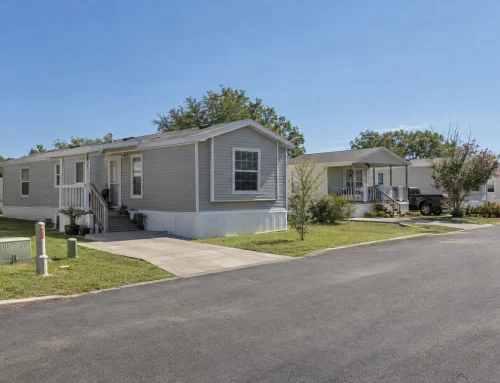
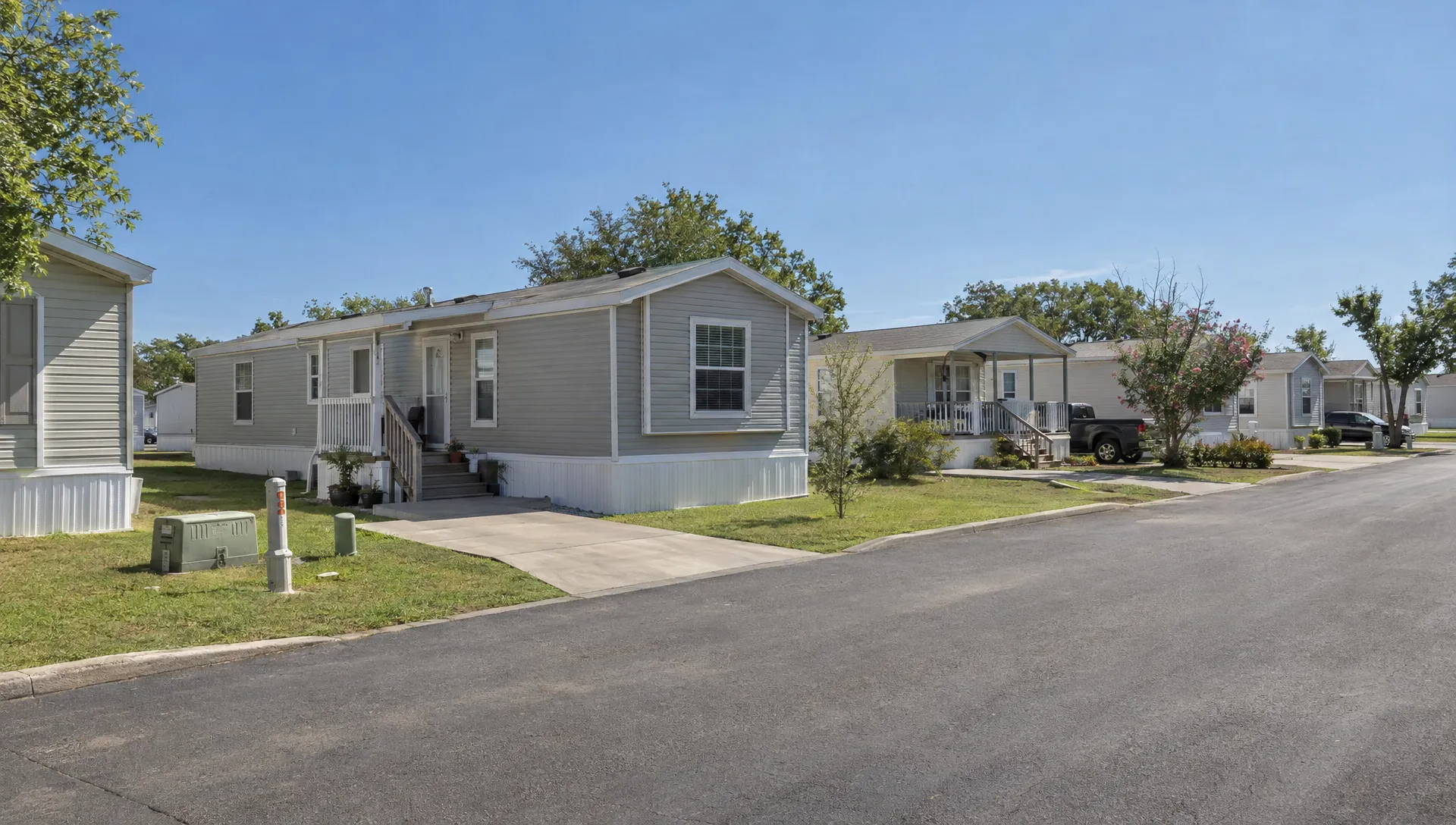
In a land-lease community (often called a mobile home park), you usually own the home (or are financing it) and rent the homesite where it sits. Your monthly housing cost is therefore typically split into:
- Your home payment (if you financed the home)
- Lot rent paid to the community owner/manager
- Utilities and pass-through charges (sometimes inside lot rent, often separate)
That structure is different from buying land with your home (a land and home package), where you typically pay a mortgage (or land loan) and handle property-related costs directly. If you’re comparing those two paths in the San Antonio area, see our guide to land and home packages.
What lot rent for a mobile home often includes in Texas
Lot rent is not standardized. Two communities with the same base rent can have very different “all-in” monthly costs depending on what’s bundled.
Here’s a practical breakdown of what’s commonly included versus commonly separate.
| Cost item | Commonly included in lot rent? | Notes to confirm before signing |
|---|---|---|
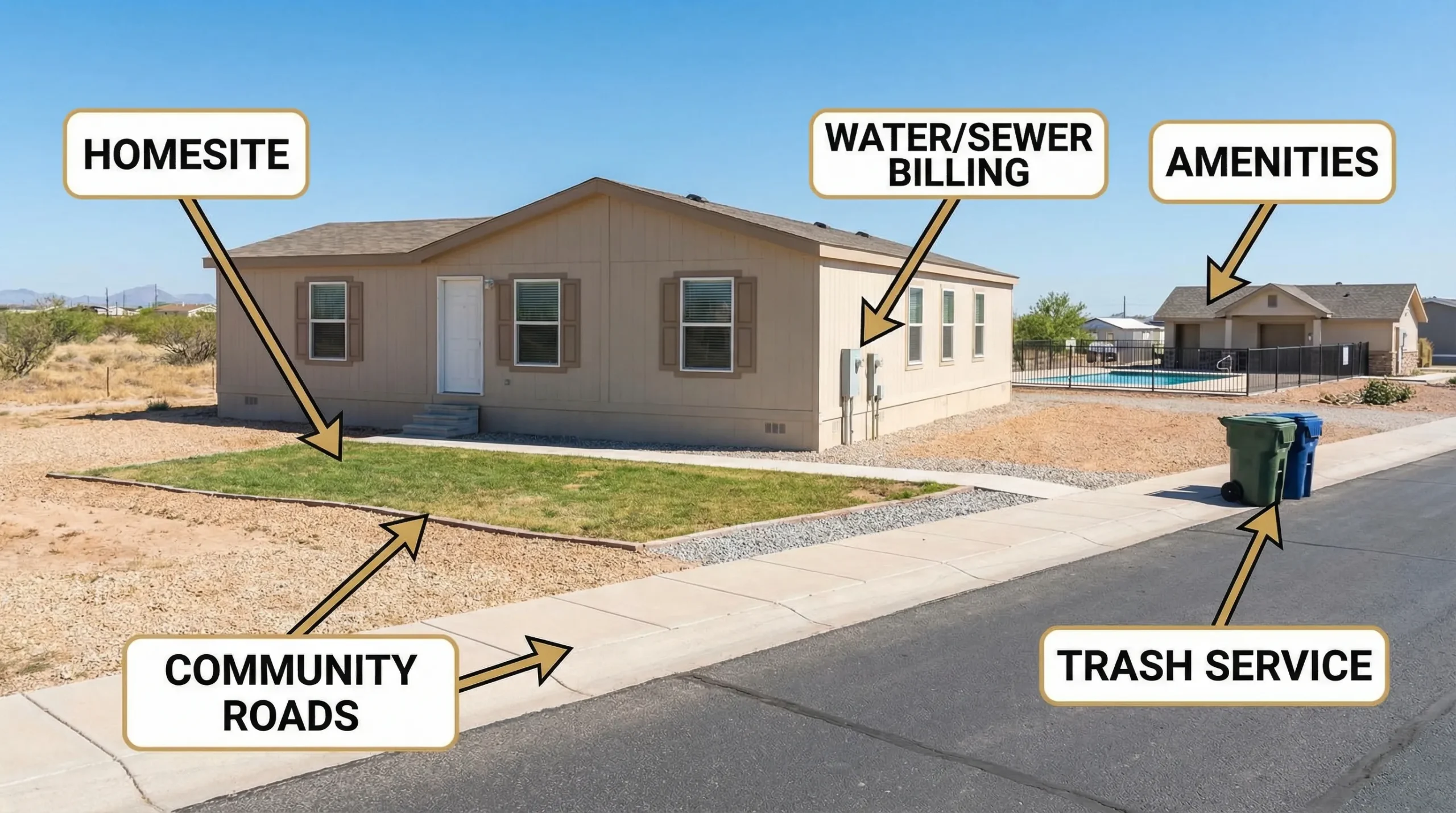
| Homesite (the land your home sits on) | Yes | Confirm lot size, parking rules, storage sheds, fences, and setbacks. |
| Community road access and common area maintenance | Often | Ask what “maintenance” covers (potholes, streetlights, drainage). |
| Trash service | Often | Confirm pickup days, bulk pickup rules, and any extra charges. |
| Amenities (clubhouse, pool, playground) | Sometimes | Ask if amenity access is included or requires an additional monthly fee. |
| Lawn care on the lot | Sometimes | Many communities maintain common areas only, not individual lots. |
| Water and sewer | Sometimes | Frequently billed separately or via submeters/allocated billing. |
| Electricity | Rarely | Usually in resident’s name with the local provider. |
| Gas | Rarely | Natural gas is location-dependent, propane is typically resident-managed. |
| Internet/cable | Sometimes | May be optional add-ons or exclusive providers in the community. |
| Property taxes on your home | No | In Texas, owners typically pay taxes on the home; the park pays taxes on the land. |
| Homeowners insurance | No | You generally insure the home separately (and the park insures its property). |
Because these categories can blur, ask for a written fee schedule (or the community’s “rules and regulations” packet) showing what is included and what is billed separately.
Utilities: the biggest “it depends” item
Utilities are where many buyers get surprised, especially water/sewer and trash.
Water and sewer
In Texas land-lease communities, water and sewer may be:
- Included in base lot rent
- Individually metered (you pay for your exact use)
- Submetered or allocated (billing based on usage and/or an allocation formula)
What to clarify:
- Who bills you (city, utility district, or the community)
- How usage is measured (individual meter, submeter, or allocation)
- Whether there are admin fees (billing, base fees, maintenance fees)
If you want to go deeper on how manufactured housing is regulated in Texas, the Texas Department of Housing and Community Affairs Manufactured Housing Division is a useful starting point.
Electricity
Electricity is most often set up in the resident’s name, billed directly by the local utility provider. In parts of Texas you may have retail choice, while other areas may be served by a co-op or municipal provider.
What to clarify:
- Whether you can choose your provider or must use a designated one
- Where the meter is located and who maintains the service pedestal
Gas (natural gas or propane)
Many communities do not include gas in lot rent.
- Natural gas (if available) is typically a separate utility account.
- Propane is commonly handled by the homeowner (tank rental/refills). Ask whether tanks are allowed, where they must be placed, and whether the community has preferred vendors.
Services and amenities that may be bundled
When a community advertises “resort-style living” or “maintenance included,” verify exactly what that means.
Common bundled items can include:
- Access to shared amenities (pool, gym, community room)
- Gated entry or controlled access (not the same as security patrol)
- Community events or on-site management
- Common-area landscaping and lighting
Important distinction: Common-area maintenance is different from maintenance on your lot and very different from home repairs.
What lot rent usually does not include
Even in communities with “all-in” pricing, these items are usually separate:
- Your manufactured home payment (if financed)
- Home insurance (and flood insurance if needed for your location)
- Repairs to the home (HVAC, roof, plumbing inside the home, appliances)
- Property taxes on the home (confirm how your home will be titled and taxed)
If you’re earlier in the buying process and still comparing home types, our mobile homes in San Antonio buyer guide explains the main ownership and cost differences in plain language.
Common extra fees to watch for (beyond base lot rent)
A community can keep base rent attractive while charging additional monthly or one-time fees. None of these are automatically “bad,” but they should be disclosed clearly.
Potential add-ons include:
- Application/background check fees
- Community move-in or set-up coordination fees
- Pet fees (one-time and/or monthly)
- Additional vehicle parking fees
- Storage fees (boats, trailers, extra sheds)
- Late fees and returned payment fees
- Utility billing/admin fees (especially for water/sewer allocations)
- Amenity fees (clubhouse, pool access, gym)
Ask for a written list of all recurring fees so you can calculate your true monthly cost.
Lease terms in Texas: what to request and read
In Texas, manufactured home community tenancies are commonly governed by a community lease and relevant parts of Texas landlord-tenant law (including provisions specific to manufactured home tenancies). Before you commit, ask for:
- The full lease (not just a one-page summary)
- The community rules and regulations
- A fee schedule showing monthly and one-time charges
- A written explanation of rent increases and how notice is provided
For reference, Texas has statutes addressing manufactured home tenancies (commonly discussed under Texas Property Code Chapter 94). You can review the text on Texas Legislature Online.
If anything is unclear, it’s worth asking the manager to explain it in writing. In housing, clarity is money.
A simple way to compare communities: “base rent” vs “all-in monthly”
When you tour parks, compare them using the same worksheet each time.
| Category | Community A | Community B | Community C |
|---|---|---|---|
| Base lot rent | |||
| Water/sewer (included, metered, or allocated?) | |||
| Trash (included?) | |||
| Electricity (provider choice?) | |||
| Internet/cable (optional or required?) | |||
| Pet fees | |||
| Parking/storage fees | |||
| Estimated all-in monthly (lot + utilities + recurring fees) |
This comparison method also makes it easier to decide whether a land-lease community or a land purchase fits better long-term.
Questions to ask before you sign (or place a home)
Most headaches can be avoided by asking a few very specific questions early.
- What exactly is included in lot rent, in writing?
- How are water and sewer billed? (metered, submetered, allocated)
- Are there monthly fees besides lot rent? (amenities, pets, billing fees)
- What are the community’s home requirements? (age limits, skirting, roof condition, exterior standards)
- Who is responsible for the lot and exterior items? (trees, stairs/ramps, driveways, irrigation)
- What is the rent increase policy and typical timing?
- Is the community all-age or 55+?
- What is the process and timeline for park approval? (important if you’re buying a home)
If you’re specifically shopping in the San Antonio area and want a starting list of neighborhoods and community types, you can also compare options in our best mobile home parks in San Antonio roundup.
How lot rent affects financing and your buying timeline
Even though lot rent isn’t part of your loan payment, it can affect your purchase in a few practical ways:
- Park approval: Many communities require approval before move-in, even if you already own the home.
- DTI planning: Lenders often evaluate your ability to afford total housing costs. If your budget is tight, a higher lot rent can limit what home price you qualify for.
- Move-in coordination: The lease start date, utility setup, and home delivery/installation schedule need to line up to avoid paying rent before the home is ready.
If you’re budgeting and comparing loan types, Homes2Go SA’s manufactured home financing overview explains common options and what they’re typically used for.
Frequently Asked Questions
Does lot rent for a mobile home include water in Texas? Sometimes. Water may be included, separately metered, submetered, or allocated. Always ask how it’s billed and whether there are admin fees.
Is lot rent the same as an HOA fee? Not usually. Lot rent is payment for the homesite and community services. Some communities may also charge separate amenity or service fees, but it’s not the same structure as a traditional HOA.
Do I pay property taxes if I rent a lot in Texas? If you own the home, you generally pay taxes on the home itself. The community owner typically pays taxes on the land. Confirm how your home will be titled and taxed in your situation.
Can a mobile home park charge fees on top of lot rent? Yes. Application fees, pet fees, utility billing fees, and other charges are common. Request a written fee schedule so you can calculate the true monthly cost.
Does lot rent include repairs to my manufactured home? Typically no. Lot rent may cover common-area maintenance, but home repairs (HVAC, roof, plumbing inside the home) are usually the homeowner’s responsibility.
What documents should I request before committing to a community? Ask for the full lease, community rules, fee schedule, and written details on utility billing and rent increase policies.
Need help estimating your true monthly cost in San Antonio?
If you’re shopping for a manufactured home and weighing community living, Homes2Go San Antonio can help you match a home to the right setup and avoid budget surprises. Explore our available homes and talk through financing options with our team, starting with the financing page or our mobile home buyer guide.
 FHA Loan for Modular Home: How It Differs From MH
 Trailer Parks Renting Near Me: A Renter’s Checklist