
Buying a manufactured home can be one of the most affordable paths to homeownership in the San Antonio area, but financing is where many shoppers get stuck. An FHA manufactured home loan can help bridge that gap, as long as you understand which FHA program applies, how rates are set, and what limits and terms you can expect.
This guide breaks down FHA Title I vs. Title II, how rates typically work, the loan limits you need to know, and the terms and requirements that commonly affect manufactured-home approvals in Texas.
What is an FHA manufactured home loan?
“FHA loan” is often used as a catch-all, but manufactured homes usually fall into one of two FHA buckets:
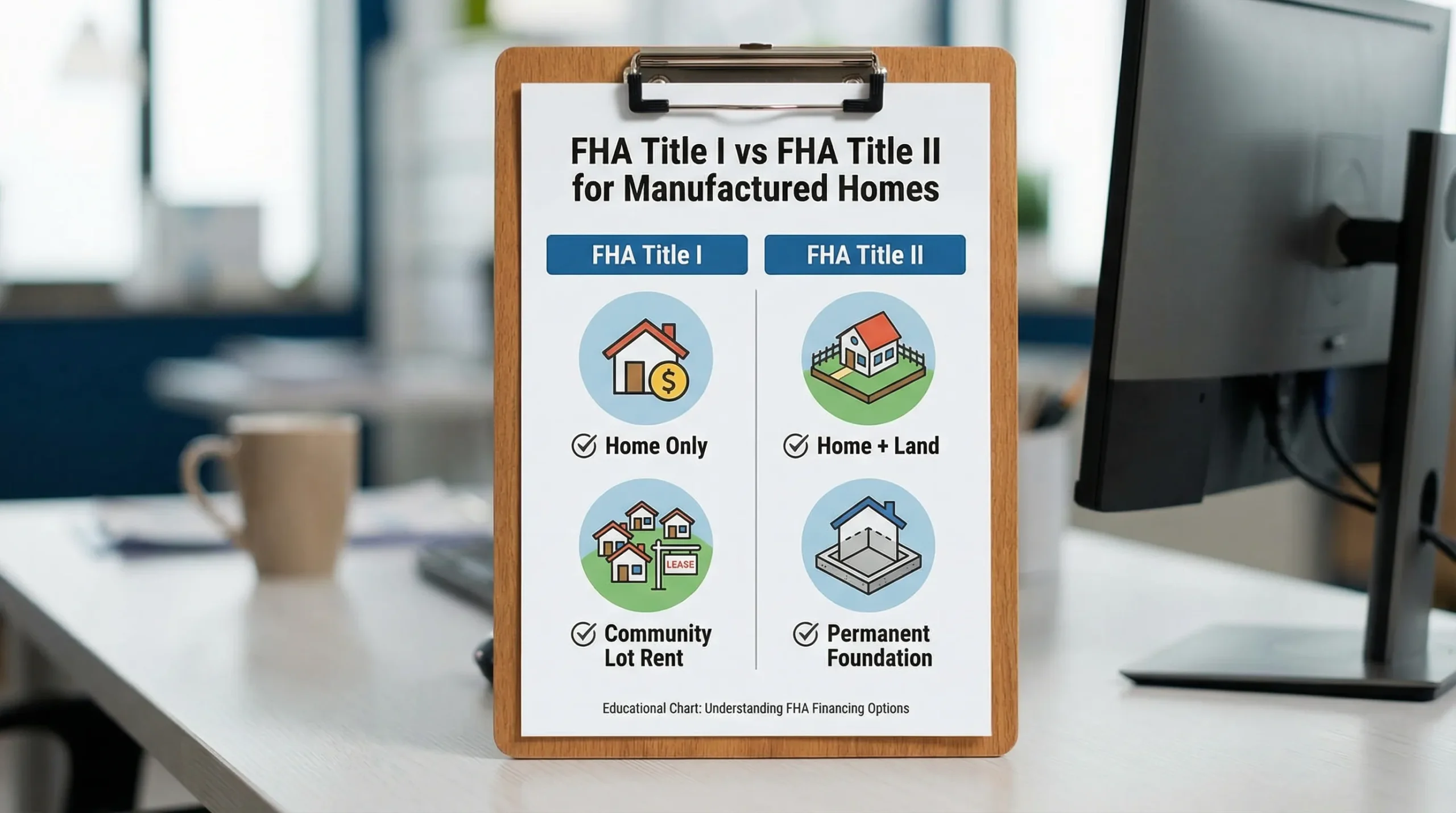
- FHA Title I: Financing for a manufactured home as personal property (often similar to a chattel-style structure), with options to finance the home, the lot, or both in some cases.
- FHA Title II: A traditional FHA mortgage for a manufactured home that is treated as real estate (home is permanently affixed and meets FHA real-property rules).
Both programs are backed by the Federal Housing Administration (FHA), which is part of HUD. The “backing” reduces lender risk, which can make approvals easier for qualified buyers compared with some non-government options.
Official program overviews are available through HUD, including the FHA Title I program and FHA single-family policy rules (see HUD Handbook 4000.1).
FHA Title I vs. Title II: which one fits your situation?
Most confusion comes from how the home is titled and installed.
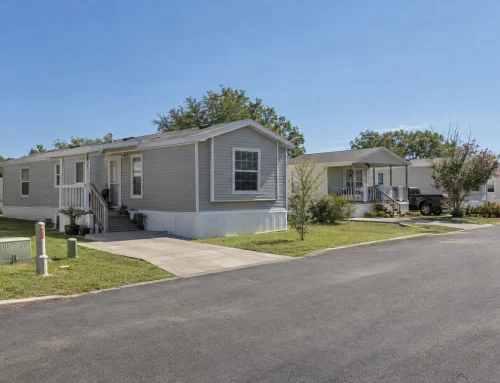
- If the home will be placed in a land-lease community (you rent the lot) or the home is not classified as real estate, Title I is often the FHA path to explore.
- If you will own the land and the home will be installed on a permanent foundation and meet FHA real-property requirements, Title II may be possible.
Here’s a clear comparison:
| Feature | FHA Title I (Manufactured Home) | FHA Title II (FHA Mortgage on Real Property) |
|---|---|---|
| Typical property type | Personal property style financing for a manufactured home (and sometimes lot) | Real estate mortgage (home and land) |
| Common use cases | Home in a community, home-only financing, or certain home+lot scenarios | Land and home packages, owned land, permanent foundation |
| Rate behavior | Often higher than Title II because it is typically not a standard real estate mortgage | Often closer to standard FHA mortgage pricing (varies by lender and borrower) |
| Terms | Program has specific maximum terms depending on what you finance | Common FHA amortization terms based on mortgage type |
| Key requirement theme | HUD Code home, lender program rules | HUD Code home, permanent foundation, real property requirements |
If you’re still deciding between community living and land ownership, Homes2Go’s guide to land and home packages in San Antonio can help you map the financing implications early.
FHA manufactured home loan rates: what to expect (and what actually moves your rate)
There is no single published “FHA manufactured home rate” that applies to everyone. Rates are set by lenders based on market conditions and your file. However, you can predict your likely pricing direction by understanding these factors.
1) Title I vs. Title II has a major impact
In many cases, Title II pricing can be more competitive because it looks like a standard mortgage on real property (home + land, permanent foundation). Title I can price differently because it is not always underwritten and secured like a typical real estate mortgage.
2) Credit score and debt-to-income still matter (even with FHA)
FHA is known for flexibility, but lenders still price risk. Your rate (and whether you get approved) can be influenced by:
- Credit score and recent payment history
- Debt-to-income (DTI)
- Down payment amount (Title II) or cash invested (Title I)
- Reserves (cash left after closing)
3) Loan amount and fees affect APR, not just the interest rate
Two lenders can quote the same interest rate but very different APR due to fees. When comparing offers, use a consistent baseline and review the official disclosures. The CFPB has a helpful primer on how to compare mortgage offers.
4) Newer homes and “clean” collateral tend to underwrite smoother
Manufactured homes that clearly meet HUD Code requirements, have complete documentation, and will be installed correctly (especially for Title II) often move through underwriting with fewer surprises.
Practical takeaway: If you want the best possible rate, focus first on choosing the right loan type (Title I vs Title II), then strengthen the file (credit, DTI, documentation) before shopping lenders.
FHA manufactured home loan limits: how limits work (and where to look them up)
Loan limits can be confusing because they come from different places depending on the FHA program.
FHA Title II limits (most commonly discussed)
For FHA Title II, the maximum loan amount is tied to FHA mortgage limits that are updated periodically and vary by county. The most reliable way to check current limits for your area is HUD’s official search tool: FHA Mortgage Limits.
In practice, that means your borrowing capacity for a land-and-home setup depends on:
- County limit (for where the property is located)
- Purchase price and appraised value
- Your down payment and FHA rules
FHA Title I limits (program-specific maximums)
For FHA Title I, limits and maximum terms depend on whether you are financing:
- The home only
- The lot only
- The home and lot together
Because these caps and details can change and lender overlays vary, it’s best to confirm current Title I maximums with a lender that actively originates FHA manufactured-home loans, or review the current HUD program guidance starting at HUD’s Title I page.
Tip for San Antonio buyers: If you are considering placing a home on private land, your land characteristics (utilities, access, flood risk, septic) can affect appraisal and lender acceptance. Build those checks into your plan early.
FHA manufactured home loan terms: down payment, mortgage insurance, and timelines
Down payment (Title II)
A common FHA advantage is a low down payment option for qualified borrowers. FHA guidelines often allow 3.5% down with stronger credit profiles (subject to FHA rules and lender overlays). Always confirm the exact requirement with your lender for your scenario.
Mortgage insurance
Most FHA financing includes mortgage insurance:
- Upfront mortgage insurance premium (UFMIP) that is typically financed into the loan
- Annual mortgage insurance premium (MIP) paid monthly
The exact cost depends on FHA rules for your loan type and terms, and those rules can change. Your lender will provide the official disclosures.
Terms and amortization
Your term depends on program type and what is being financed.
- Title II often resembles standard mortgage terms (commonly 15 or 30 years depending on the product and eligibility).
- Title I terms depend on whether you finance home only, lot only, or both.
Typical timeline
Manufactured home loans can take longer when there are documentation gaps (title status, foundation plans, missing serial/VIN data, or unclear land details). A smoother timeline usually comes from aligning the home, the site, and the loan type upfront.
Property and home requirements that commonly trip up FHA manufactured home approvals
FHA financing is not only about the borrower, it is also about the home and how it’s installed.
HUD Code compliance
In general, FHA manufactured-home financing is tied to homes built to the HUD Code (manufactured homes built after June 15, 1976). Your retailer and lender typically verify labels and data plate information.
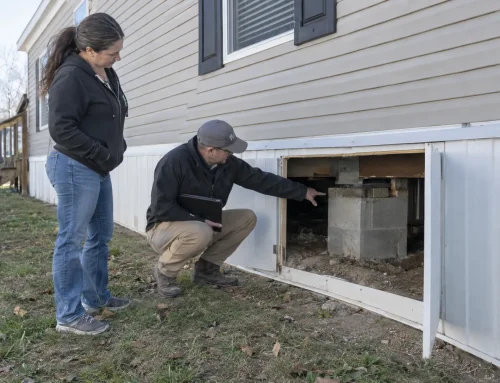
Permanent foundation (especially for Title II)
If you’re pursuing a Title II FHA mortgage, the home usually needs to be:
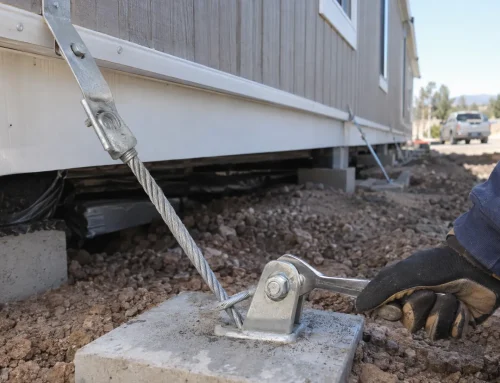
- Installed to meet FHA and HUD permanent foundation expectations
- Classified and titled as real property where required
Your installer, site contractor, and lender need to be on the same page early so you do not redesign the project midstream.
Land ownership and use
For Title II, you generally need an eligible real estate setup (home + land). For Title I, you may be able to finance the home without owning the land, depending on the transaction and lender.
Appraisal reality check
An FHA appraisal evaluates:
- The property’s condition and safety requirements
- Market value based on comparable sales
In some areas, manufactured-home comps can be limited. Choosing a home, location, and setup that appraise cleanly can matter as much as your credit.
How to improve your chances of approval (without guessing)
Most denials are avoidable when the loan type matches the plan.
Align these three items first
- Where will the home go? Private land vs. land-lease community
- How will it be installed? Permanent foundation vs. non-permanent setup
- How will it be titled? Real property vs. personal property path
When those are aligned, the rest is standard mortgage readiness.
Prep your borrower file like a lender will underwrite it
You do not need perfection, but you do need clarity.
- Stable income documentation (pay stubs, W-2s, or self-employed docs)
- A realistic budget including insurance, taxes, lot rent (if any), and utilities
- A plan for down payment and closing costs
Choose a retailer team that coordinates with lenders
Manufactured homes have more moving parts than a resale house: order timelines, delivery, setup, utility connections, permits, inspections, and title paperwork. Working with a team that does this daily reduces delays.
If you want a quick overview of all loan types (not only FHA), Homes2Go San Antonio summarizes options on its financing page.
FHA manufactured home loan in Texas: local details to keep in mind
Texas buyers commonly run into administrative steps that are unique to manufactured housing.
- Titling and ownership paperwork: Manufactured homes have a paper trail that must match the transaction structure.
- Permitting and installation: Local requirements vary by jurisdiction. If you’re inside city limits, you may interact with the City of San Antonio Development Services depending on the project.
- Site conditions: Septic, water, electric, driveway access, and flood considerations can impact feasibility and financing.
These aren’t reasons to avoid FHA. They’re reasons to plan the project in the right order.
Quick checklist: is FHA a strong fit for your manufactured home purchase?
FHA can be a good fit if:
- You want a low down payment option (Title II) and qualify under FHA rules
- You want lender flexibility compared with some conventional paths
- Your home and site plan can meet FHA property requirements
You may need a different path (or a different structure) if:
- You want to place the home in a situation that cannot meet foundation or real-property rules (for Title II)
- Your chosen lender does not originate FHA loans for manufactured homes (this is more common than buyers expect)
Frequently Asked Questions
Are FHA loans available for manufactured homes? Yes. FHA programs can finance manufactured homes, typically through FHA Title I (often personal property style) or FHA Title II (real estate mortgage) depending on how the home is titled and installed.
Are FHA manufactured home loan rates lower than chattel loan rates? It depends. Many buyers find Title II pricing more competitive because it is a real estate mortgage, while Title I can price differently. Your credit, lender, and structure matter most.
What are the FHA loan limits for manufactured homes in San Antonio? For FHA Title II, limits are county-based and updated periodically. The most accurate source is HUD’s official FHA Mortgage Limits lookup tool.
Can I use FHA if I’m putting a manufactured home in a park (land-lease community)? Possibly. Many park placements do not qualify for a Title II mortgage because you do not own the land, but Title I may be an option depending on the community, lease terms, and lender participation.
Do I need a permanent foundation for an FHA manufactured home loan? For Title II, a permanent foundation is commonly required along with other real-property conditions. For Title I, requirements differ based on the transaction. Confirm with your lender early.
Talk to Homes2Go San Antonio about FHA-friendly paths
If you’re trying to decide between FHA Title I vs Title II, or you want to understand what structure fits your budget and where you plan to place the home, Homes2Go San Antonio can help you map the financing route before you commit to a model.
Explore the options on our manufactured home financing page, or contact our team to get matched with trusted local lenders and a home that fits your plan for San Antonio and the surrounding area.
 Mobile Homes for Rent in Near Me: Search Tips That Work
 FHA Lenders for Manufactured Homes: Questions to Ask