If you have ever opened a summer electric bill in San Antonio and thought, “How is it this high?”, you are not alone. Cooling a home in South Texas is expensive, and the fastest way to lower bills is usually not a single upgrade, it is a home that is designed from day one to waste less energy.
That is the idea behind Zero Energy Ready Homes (ZERH). If you are shopping for a manufactured home, understanding what “ZERH” means can help you compare models and predict what your monthly utilities might look like after move-in.
What is a Zero Energy Ready Home (ZERH)?
A Zero Energy Ready Home is a home that meets a set of rigorous efficiency and performance requirements so it uses dramatically less energy than a typical new home. The program is led by the U.S. Department of Energy (DOE), and the goal is simple: build a home that is so efficient that adding solar later could realistically offset most or all of its annual energy use.
Key point: “Ready” does not automatically mean the home already produces as much energy as it uses. It means the home is built to a high-efficiency standard and is prepared (or easier to prepare) for features like solar.
If you want to read the program details directly, start with the DOE’s overview of the Zero Energy Ready Home program.
What ZERH usually includes (in plain English)
While exact specifications depend on program versions and climate zone requirements, ZERH homes are typically designed around:
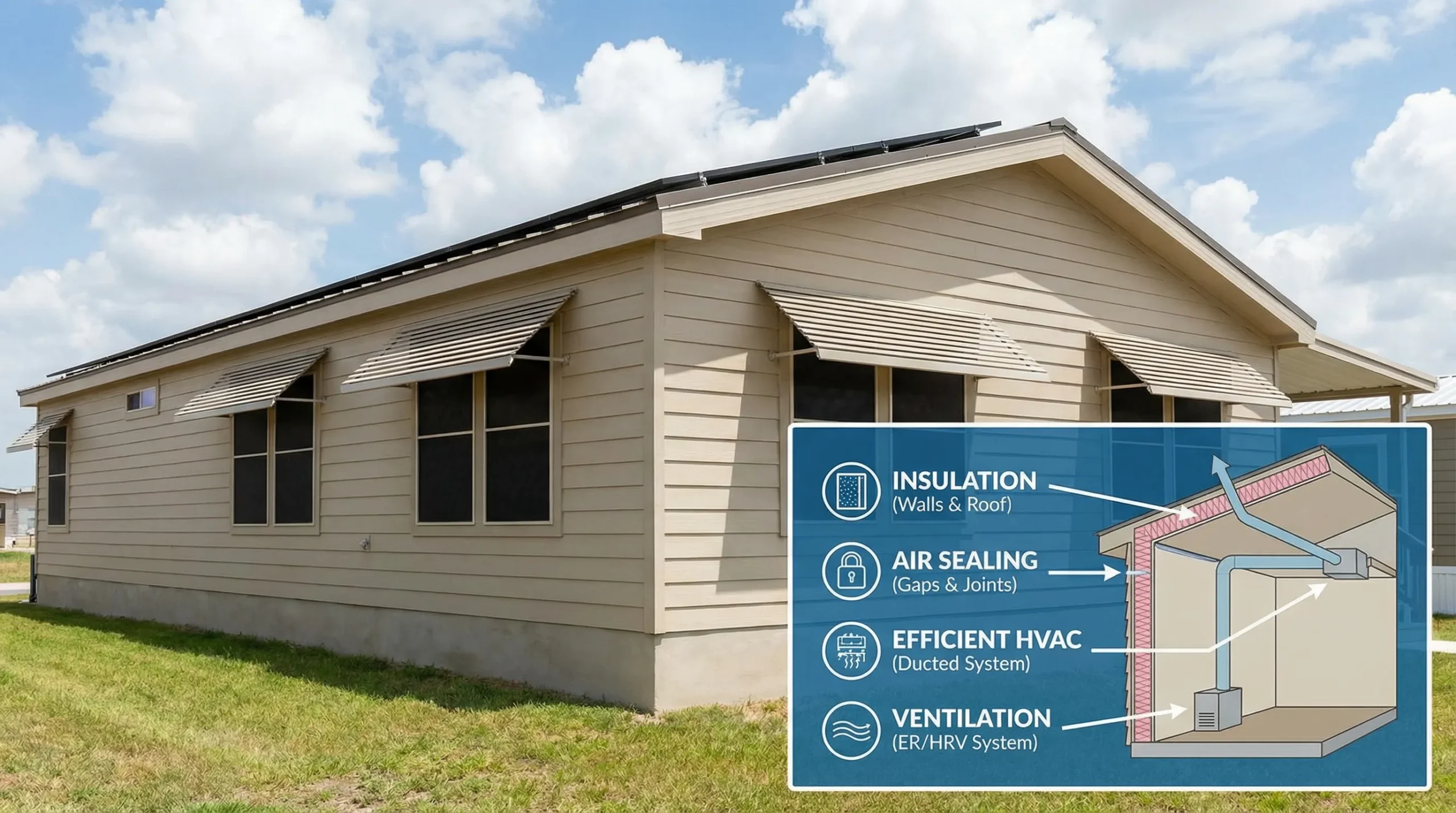
- A high-performance building envelope (insulation, windows, air sealing)
- Tested air leakage control (less hot air sneaking in, less cool air leaking out)
- Right-sized, efficient heating and cooling
- Good ventilation and humidity management (comfort plus indoor air quality)
- Efficient water heating and plumbing design
- Efficient lighting and appliances
- “Ready” elements that make solar easier (depending on the build specs)
Because the ZERH label is tied to a national program, it is also commonly associated with third-party verification and quality checks.
What “ZERH” means for your monthly bills
Your utility bill is mostly a reflection of how hard your home has to work to maintain comfort. In a hot climate, that is primarily:
- How much heat enters through the roof, walls, and windows
- How much outside air leaks in (and humid air in San Antonio matters)
- How efficiently your HVAC equipment runs
- How much hot water you use and how efficiently you heat it
A ZERH home targets all of those, so the “bill impact” comes from lower total energy use, not just one efficient appliance.
ZERH features that directly reduce costs
| ZERH-related feature | How it can lower bills | What to confirm when shopping |
|---|---|---|
| Better insulation + fewer thermal leaks | Less heat gets into the home, HVAC runs less | Insulation levels (roof, walls, floor) and whether specs are documented |
| Airtightness and air-sealing details | Less conditioned air escapes, less humid air enters | Whether the home has blower door testing or documented air leakage targets |
| High-performance windows | Reduces solar heat gain and hot spots near glass | Window performance ratings appropriate for hot climates |
| Efficient HVAC (properly sized) | Lower kWh use, better comfort, fewer “run all day” cycles | Equipment efficiency ratings (and that sizing is based on the home, not guesswork) |
| Sealed, well-designed ductwork | More cooled air reaches rooms, less lost to unconditioned spaces | Duct sealing approach and where ducts are located |
| Ventilation designed for control | Helps manage humidity and fresh air without huge energy penalties | Type of ventilation and how it is integrated with HVAC |
| Efficient water heating + hot water distribution | Less energy wasted making and moving hot water | Water heater type and whether plumbing runs are designed to reduce waste |
If you want a Texas-specific primer on efficiency features that matter most in extreme heat, Homes2Go San Antonio also has a practical guide on energy-efficient manufactured homes for Texas heat.
ZERH vs ENERGY STAR vs Net Zero: what is the difference?
These labels are often mentioned together, but they are not the same thing.
ENERGY STAR Certified Homes
ENERGY STAR is a well-known efficiency label from the U.S. Environmental Protection Agency. An ENERGY STAR certified home is designed to be more efficient than typical new construction and is verified to meet a defined standard.
More on the program here: ENERGY STAR Residential New Construction.
Zero Energy Ready Home (ZERH)
ZERH generally goes further by combining high efficiency with broader “ready for ultra-low energy” design requirements, including approaches that make solar additions more straightforward.
Net Zero (or “Zero Energy”) homes
A true net zero home is a home that, over a year, produces as much energy as it consumes, typically through onsite renewable generation like solar. You can think of ZERH as a strong foundation that makes net zero more achievable.
In other words:
- ENERGY STAR: efficient
- ZERH: very efficient, built to be “solar friendly” and performance-focused
- Net zero: very efficient plus enough onsite generation to offset annual use
Why ZERH matters in San Antonio specifically
San Antonio is a cooling-dominant market for much of the year. That means efficiency is not just about saving money, it is also about staying comfortable during long heat waves.
A ZERH-style approach helps because it emphasizes:
- Heat gain control (roof, walls, windows)
- Humidity management (comfort and reducing that sticky feeling)
- Consistent temperatures from room to room
- Resilience when the grid is stressed, because an efficient home stays comfortable longer
Even if your goal is simply “lower CPS Energy bills,” these performance basics are the same building blocks.
Can manufactured homes be Zero Energy Ready Homes?
Manufactured homes can be built to very high efficiency levels, but you should treat ZERH as a specific standard and verification path, not just a marketing phrase.
When you see a model described as “zero energy ready” (or similar wording), clarify:
- Is it DOE Zero Energy Ready Home certified, or simply designed with some “ready” features?
- Is there documentation showing the home meets the program requirements?
- Was it verified (for example, through a recognized third-party process)?
Manufactured housing is regulated under the federal HUD Code, and efficiency packages can vary by manufacturer and model. The safest approach is to ask for the home’s documentation and compare like-for-like.
If you are evaluating multiple options around San Antonio, Homes2Go can help you navigate model differences and floor plan specs, alongside the bigger decision of whether you want a community placement or private land. (For the land route, this guide to land and home packages in San Antonio is a helpful starting point.)
A buyer’s checklist: how to shop for ZERH with confidence
It is easy to get lost in buzzwords. Use questions that force clear, verifiable answers.
| What to ask | Why it matters | What a solid answer looks like |
|---|---|---|
| “Is this home DOE Zero Energy Ready Home certified?” | Distinguishes certification vs general efficiency claims | “Yes, and here is the certificate or documentation,” or a clear explanation if not certified |
| “What efficiency standard does this model meet (ENERGY STAR, other)?” | Helps you benchmark performance | A specific program name and version, not “high efficiency” |
| “What are the insulation specs for roof, walls, and floor?” | Insulation drives cooling load | Written specs on the build sheet or brochure |
| “What window performance ratings are used?” | Windows can be a major heat source | Clear ratings and climate-appropriate selection |
| “How is air leakage addressed or tested?” | Air leakage increases bills and humidity issues | Evidence of air sealing details, testing, or defined targets |
| “What HVAC equipment is included, and how is it sized?” | Oversized or undersized HVAC hurts comfort and cost | Sizing based on the home, plus listed efficiency ratings |
| “What ventilation approach is used?” | Fresh air without humidity problems | A defined ventilation strategy, not “it breathes well” |
| “What makes it solar-ready?” | “Ready” should be specific | A clear list (panel-ready space, electrical considerations, or other documented prep) |
Red flags to watch for
Be cautious if you hear:
- “It is basically ZERH,” but there is no documentation.
- “All our homes are zero energy ready,” without model-specific specs.
- Vague answers about insulation, windows, or HVAC beyond brand names.
What about cost, financing, and payback?
A higher-performance home can cost more upfront, but monthly savings and comfort improvements are the point. The smarter way to evaluate the price difference is to look at total cost of ownership:
- Estimated monthly electric use (cooling and water heating typically dominate)
- Potentially smaller HVAC runtime and less wear
- Comfort gains that reduce the temptation to “set it to 68” all summer
Financing also matters. Depending on whether the home is titled as real property (often when placed on owned land with certain setups) or financed as personal property (chattel), loan options and terms can differ.
For an overview of common loan types, see the Homes2Go San Antonio manufactured home financing page, which outlines options like chattel loans and various mortgage programs.
How Homes2Go San Antonio can help you evaluate ZERH options
Homes2Go San Antonio focuses on helping buyers find affordable manufactured homes with modern features and energy-efficient designs, paired with guidance and flexible financing paths. If you are comparing models, a housing specialist can help you:
- Review floor plans and build specs side-by-side
- Identify which efficiency upgrades will actually matter in San Antonio
- Match the home to a community or land plan that fits your budget
If you are specifically looking for a place to set a home near San Antonio, you can also review the Elmendorf area community details on the Homes2Go property page.
Frequently Asked Questions
Does “Zero Energy Ready” mean my electric bill will be zero? Not automatically. ZERH means the home is built to be highly efficient and positioned to add solar more easily. Your bill depends on usage, rates, and whether you install solar.
Is ZERH the same as net zero? No. Net zero generally means the home produces as much energy as it uses over a year. ZERH is a high-performance standard that can make net zero achievable with solar.
Are zero energy ready homes worth it in San Antonio? They can be, especially if you plan to stay in the home for several years and you care about lower cooling costs and better comfort during long hot seasons.
What should I ask a retailer or builder to prove a home is ZERH? Ask if it is DOE ZERH certified and request the documentation, then confirm key specs like insulation, windows, HVAC efficiency, and any testing or verification.
Can a manufactured home be built to ZERH standards? It may be possible depending on the manufacturer, model, and the exact certification pathway, but you should verify with documentation rather than relying on “ready” wording alone.
If I do not get ZERH, what efficiency upgrades matter most for bills? In hot climates, prioritize the building envelope (insulation, air sealing, windows) and HVAC efficiency and sizing. Those usually drive the biggest cooling-related savings.
Talk to Homes2Go about high-efficiency, lower-bill home options
If you are shopping for zero energy ready homes (or want the closest practical alternative for your budget), Homes2Go San Antonio can help you compare models, understand the real spec differences, and explore financing options.
Browse information at Homes2Go San Antonio or start with their financing options to see what homeownership could look like with a payment and utility costs you can actually live with.
 Double Wides for Rent Near Me: What You’ll Pay and What to Ask
 Trailer Park Homes for Rent Near Me: Tour Checklist and Red Flags