

Rental listings for “trailer park homes” can look like a budget win, especially when the monthly number is far below nearby apartments or single-family rentals. The catch is that manufactured home rentals in land-lease communities often come with a separate set of charges, add-ons, and rule-based fees that are not always obvious in the ad.
If you’re searching “trailer park homes near me for rent”, this guide breaks down where hidden fees usually show up, what to ask for before you apply, and how to compare listings on an apples-to-apples basis.
Why hidden fees are so common in trailer park home rentals
A “trailer park home for rent” can be structured in more than one way:
- Home-only rent: You rent the home from a private owner, but lot rent and utilities may be handled separately.
- Home-and-lot bundle: The community (or a management company) rents you the home and charges a monthly amount that may or may not include the lot.
- Park model vs manufactured home: Some listings use “trailer” as a catch-all, but the rules, utilities, and responsibilities can differ based on the home type and who owns it.
Because of these variations, two listings with the same advertised rent can have very different real monthly costs.
The hidden fees renters most often miss (and how they’re described)
Hidden fees are not always “secret.” They’re often buried in the application portal, the community rules packet, or a lease addendum. Here are the most common ones to watch for.
Application, screening, and “admin” fees
Many properties charge per adult applicant, and some add separate fees for processing, identity verification, or third-party screening services.
Where it hides: “Non-refundable processing fee,” “resident screening,” “administration fee,” “lease preparation.”
What to ask: Whether the fee is per person, per household, or per application, and whether it’s refunded if the home is no longer available.
Holding deposits and “reservation” payments
Some communities require money to take a home off the market while your application is reviewed.
Where it hides: “Holding fee,” “unit reservation,” “good-faith deposit.”
What to ask: Whether it becomes part of your security deposit, and under what conditions you lose it.
Security deposits that scale with risk factors
Deposit amounts can change based on credit score, rental history, pets, or the home’s condition at move-in.
Where it hides: “Conditional approval,” “additional deposit,” “risk mitigation.”
What to ask: The deposit amount in writing before you pay, and what documentation is required for a full refund.
Utilities billed through the community (and extra billing fees)
Trailer park home rentals commonly involve utility setups that differ from apartments. Even when you pay your own utilities, you might not pay the city or utility provider directly.
Common patterns include:
- Submetered utilities: Usage is measured and billed by the park or a third-party billing company.
- Flat monthly charges: A set amount for water, sewer, or trash.
- “RUBS” allocations: The community allocates utility costs using a formula (for example, based on occupants), not always on your exact meter.
Where it hides: “Utility billing fee,” “service fee,” “account setup,” “monthly admin,” “convenience charge.”
For Texas renters, it’s worth reviewing the Texas Attorney General’s landlord-tenant resources so you know what to document and what questions to ask about charges and repairs.
Trash, valet trash, bulk pickup, and pest control add-ons
These are common “mandatory extras” that may not be mentioned in the headline rent.
Where it hides: “Community service package,” “required services,” “benefit package.”
What to ask: What’s mandatory vs optional, and whether you can opt out.
Pet fees, pet rent, and one-time “DNA” or registration programs
Pet costs can include:
- One-time non-refundable pet fee
- Refundable pet deposit
- Monthly pet rent
- Breed/weight restrictions that can force you into higher deposits or denial
Where it hides: Pet addendum, community rules.
What to ask: Total pet-related costs over 12 months, not just the move-in fee.
Parking, storage, and “extra vehicle” charges
Some parks include one parking space and charge for additional cars, commercial vehicles, trailers, or boat/RV storage.
Where it hides: “Parking pass,” “vehicle registration,” “storage yard fee.”
What to ask: What counts as an “extra vehicle” and whether visitor parking is limited.
Maintenance responsibility (and the fees that come with it)
In many apartment rentals, maintenance is clearly the landlord’s job. In manufactured home rentals, responsibilities can be split in ways that surprise renters.
Examples:
- You handle yard care, the community enforces it, and violations trigger fees.
- You handle minor repairs, but only if you report issues through a specific portal.
- The park handles repairs, but charges a service-call fee for certain items.
Where it hides: Lease maintenance section, community rules, “resident responsibilities.”
Rule-based fines and compliance fees
Land-lease communities typically have detailed rules on noise, pets, yard condition, exterior appearance, and guests.
Where it hides: “Rules and regulations” packet, compliance policy.
What to ask: Whether warnings are given before fines, and whether there’s an appeal process.
Payment processing fees, late fees, and “returned payment” charges
Online payment portals can charge convenience fees. Late fees can be triggered by “received by” rules (for example, payment must clear by a date, not just be submitted).
Where it hides: Payment portal terms, lease fine print.
For background on fee transparency and financial products, the CFPB is a useful reference point, even though rental fees are governed largely by state law and your lease.
Move-out charges you didn’t plan for
Even renters who keep a home clean can face charges tied to:
- Carpet cleaning or floor treatments
- Landscaping restoration
- Haul-away or bulk trash
n- Replacing missing blinds, screens, smoke detectors, or appliance parts
Where it hides: Move-out instructions, “make-ready standards,” security deposit terms.
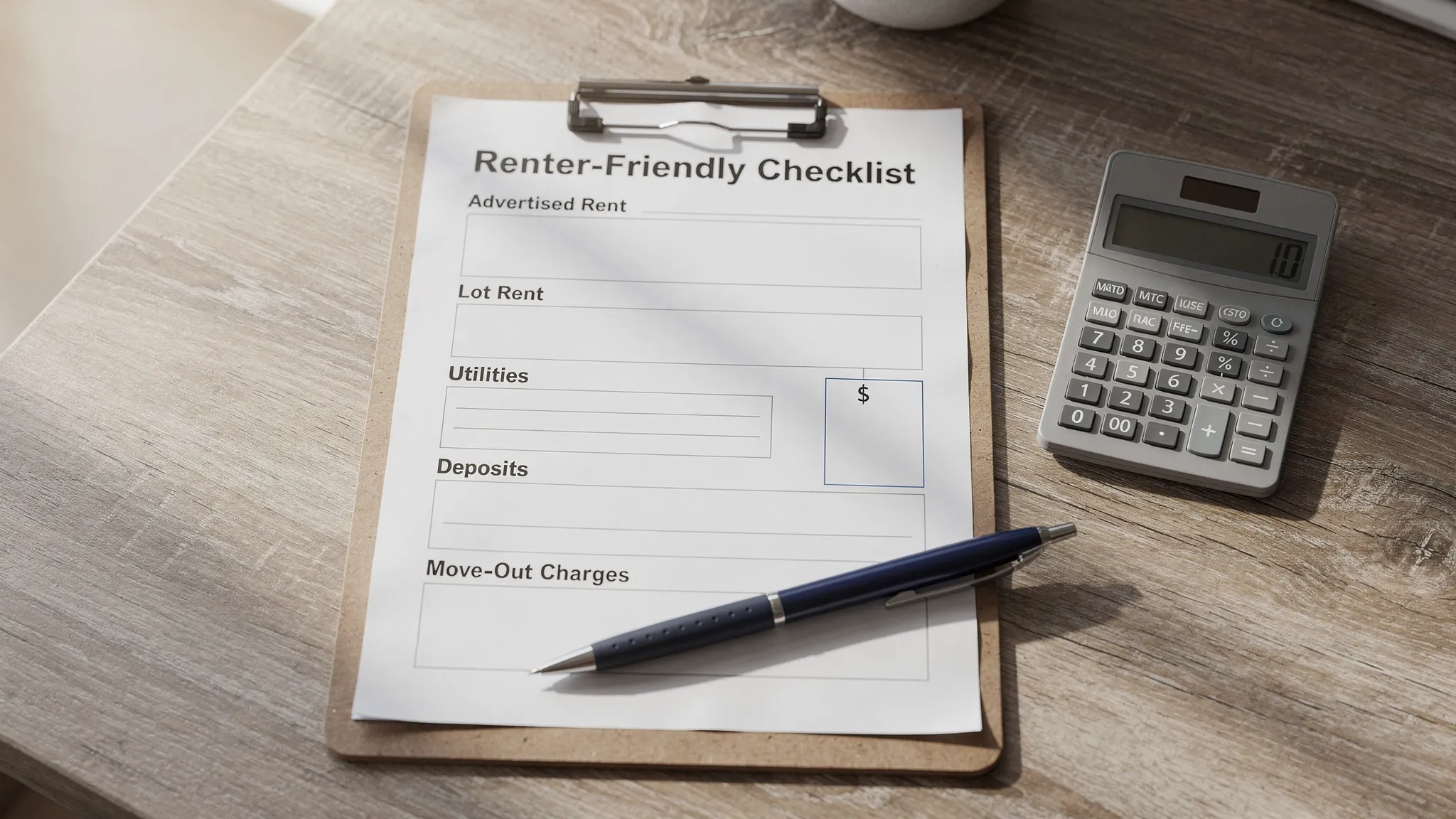
A quick “real cost” checklist before you apply
Before you pay an application fee, try to get three documents (or screenshots) in writing:
- A full fee schedule (one-time and monthly)
- The utilities arrangement (who bills what, how, and when)
- Community rules and lease addenda (especially pets, vehicles, yard, guests)
If a listing agent will not share these until after you apply, treat that as a risk signal. You can still proceed, but you should assume the advertised rent is incomplete.
Questions that surface hidden fees fast
Use these questions on the phone or during a tour. They’re designed to produce yes/no clarity and force itemization.
| Question to ask | Why it matters | What you want to hear (in plain English) |
|---|---|---|
| “Is the advertised rent the total monthly payment, or are there required monthly fees?” | Separates marketing rent from real rent | “Here is the rent plus the required monthly fees, itemized.” |
| “Does rent include lot rent?” | Some rentals separate the home and the lot | “Yes, it’s included,” or “No, lot rent is separate and costs X.” |
| “How are water, sewer, trash, and electricity billed?” | Avoids billing surprises and admin charges | “You set up service directly,” or “We submeter and bill monthly with these fees.” |
| “What do I pay at move-in, line by line?” | Catches holding fees, deposits, proration | “Application, admin, deposit, first month, and these extras.” |
| “Are there fees for pets, parking, or extra occupants?” | Common add-ons that change the monthly cost | “Yes, and here are the amounts and rules.” |
| “Who handles repairs, and are there service-call fees?” | Prevents unexpected maintenance costs | “We do repairs, and there’s no charge unless it’s resident-caused,” or details. |
Build a simple move-in cost worksheet (so you can compare listings)
When you’re comparing multiple “trailer park homes near me for rent” results, it helps to write every listing into the same template.
| Category | Line item examples | Amount (fill in) |
|---|---|---|
| Due at application | Application fee, screening, admin | |
| Due to hold the home | Holding deposit, reservation fee | |
| Due at lease signing | Security deposit, pet deposit | |
| Due at move-in | First month, prorated rent, required service packages | |
| Monthly housing cost | Rent, lot rent (if separate) | |
| Monthly utilities and services | Water/sewer/trash, billing fee, pest control | |
| Monthly add-ons | Pet rent, extra parking, storage | |
| “If I’m late” costs | Late fee policy, payment processing fee |
This worksheet also gives you a script: “I’m comparing a few places. Can you confirm each line item for me?”
Red flags that often predict surprise charges
None of these automatically means “scam,” but they do correlate with unpleasant billing surprises.
- “Rent is X, call for details” with no written fee schedule offered.
- Pressure to pay a holding fee immediately before you see the lease and rules.
- Vague utility language like “utilities billed separately” without explaining submetering, RUBS, or billing fees.
- No clear maintenance responsibility (or a statement like “tenant responsible for all repairs” without limits).
- Rules packet is treated as optional even though it’s enforceable.
If something feels off, step back and request everything in writing. In Texas, keeping a paper trail is especially important if disputes arise.
San Antonio and Texas-specific tips that reduce fee surprises
If you’re renting in the San Antonio area, two practical steps help you avoid “I didn’t know” costs:
Confirm the utility setup before you tour
Ask which utilities are:
- Set up directly with the provider
- Billed by the community or a third-party utility billing company
Even within the same metro, utility arrangements vary widely by community, and the billing method can change your monthly total.
Ask whether the home is in a land-lease community and who owns the home
Ownership affects who sets rent, who approves tenants, and how repairs work.
- If the community owns the home, lease terms and fees are usually standardized.
- If a private owner rents you the home inside a community, you may have one agreement for the home and a separate set of community rules and charges.
If you’re tired of fee surprises, consider whether buying is a better fit
Some renters start with “trailer park homes near me for rent” because they want a lower monthly payment and a more home-like space. If that’s you, it can be worth comparing the rental total (rent plus lot rent plus fees) against the cost of owning a manufactured home, especially if you plan to stay put for a while.
Homes2Go San Antonio focuses on manufactured homes for buyers, including move-in ready options and guidance through the process. If you want to explore ownership paths in the area, these resources can help:
- Understanding loan options on the manufactured home financing page
- A practical overview in the mobile homes San Antonio buyer guide
- Comparing community living in the best mobile home parks San Antonio roundup
- If you’re considering a specific community setup, review the local development details on the Homes2Go property page

The bottom line
The best way to avoid hidden fees is to treat the advertised rent as only the starting point. Ask for the fee schedule and utility billing method early, get the rules in writing, and force every listing into the same comparison worksheet.
Doing that once takes an extra 15 minutes, but it can save you months of frustration and hundreds of dollars in surprise charges.
 Trailer Park Homes for Rent Near Me: Tour Checklist and Red Flags