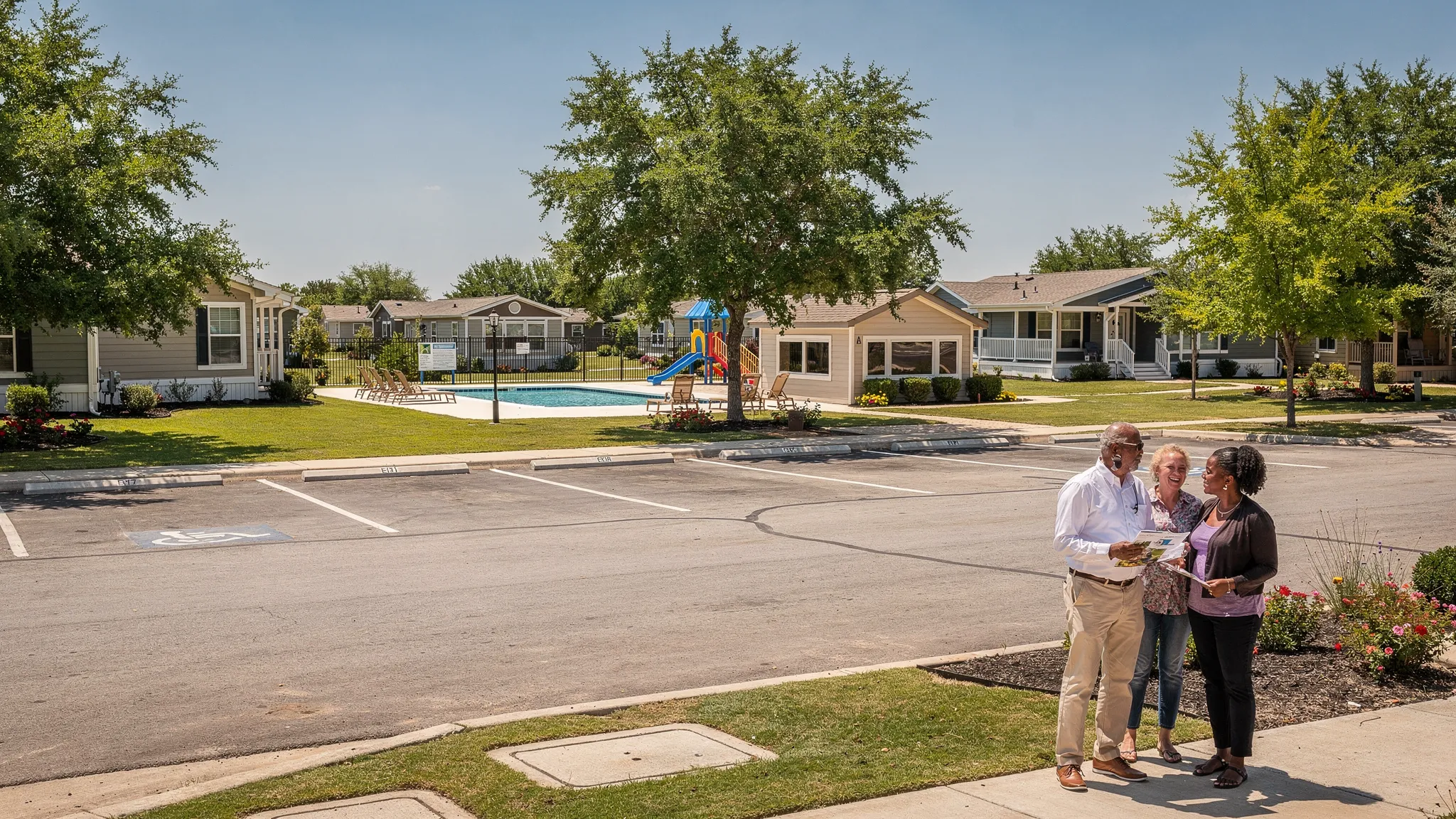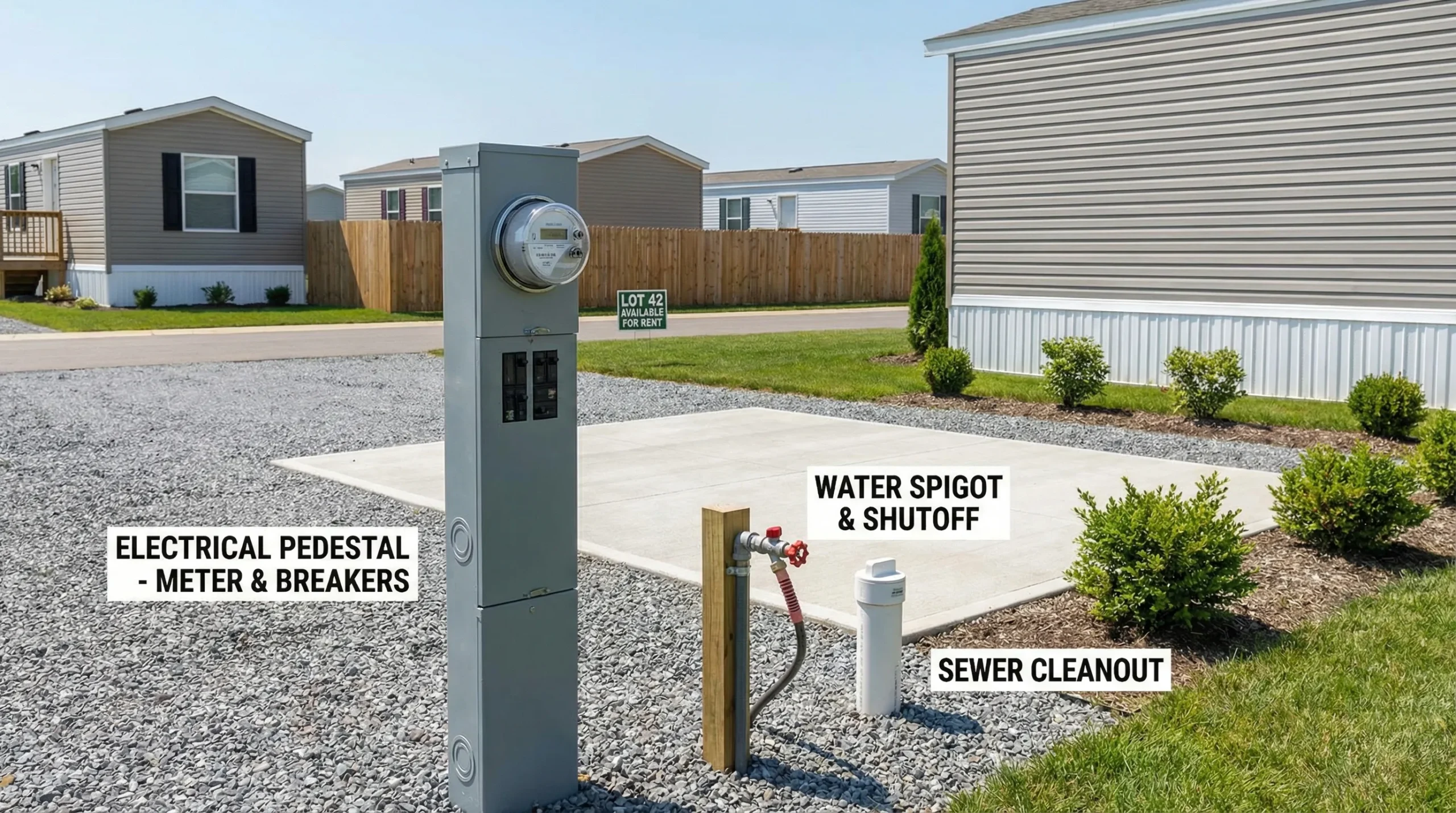

Renting a trailer park home can be a smart way to get more space, a yard, and a neighborhood feel without the price tag of a site-built rental. But “trailer park homes for rent” come with a twist: you are evaluating two things at once, the home itself and the community it sits in. A quick walkthrough is not enough.
This guide focuses on what to inspect before move-in so you can avoid surprise repair issues, high utility bills, and lease headaches.
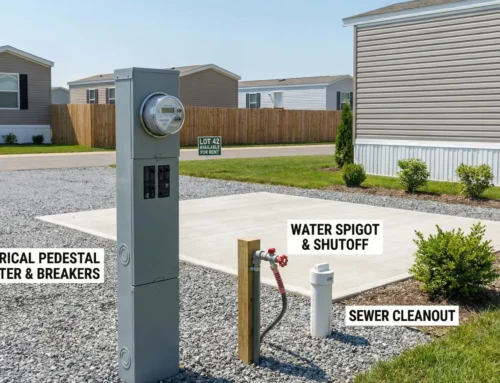
First, confirm what you are actually renting (home, lot, utilities, rules)
Before you look at countertops and paint, get clarity on the basics. In manufactured home communities, listings can mean different arrangements:
- Home-only rent (you rent the home, the community owns the lot)
- Home plus utilities (some parks bundle water, trash, or sewer, others do not)
- Rent-to-own or long-term lease options (terms and responsibilities may shift)
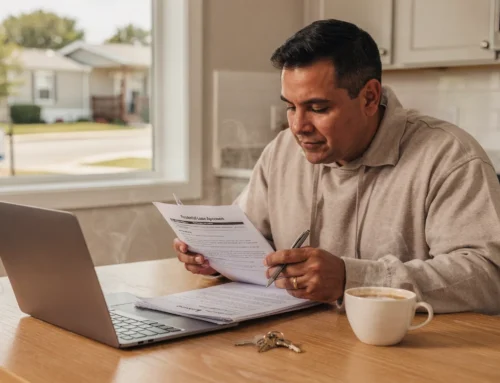
Ask the manager to put key details in writing before you pay an application fee. You want to know the true monthly number and what can change.
| What to clarify before touring | Why it matters | What to request |
|---|---|---|
| Total monthly payment | Some communities advertise base rent but add fees | Written fee sheet (rent, pet, parking, trash, admin) |
| Utility responsibility | Big swing in monthly cost | Which utilities are submetered, average bills (if available) |
| Maintenance boundaries | Who fixes what affects your risk | Lease language on HVAC, plumbing clogs, pest control, skirting |
| Community rules | Restrictions can be strict | Park rules (pets, guests, quiet hours, parking, grills) |
| Move-in requirements | Avoid last-minute delays | ID requirements, deposits, proof of income, insurance requirements |
If you are finding homes through social media, responsiveness can be a practical screening tool. A manager who answers quickly and clearly is often easier to work with after move-in. Some businesses even use AI-powered lead response tools like Orsay to reply fast and consistently, which can reduce back-and-forth when you are trying to schedule a tour or confirm requirements.
Inspect the community and lot first (it affects your day-to-day life)
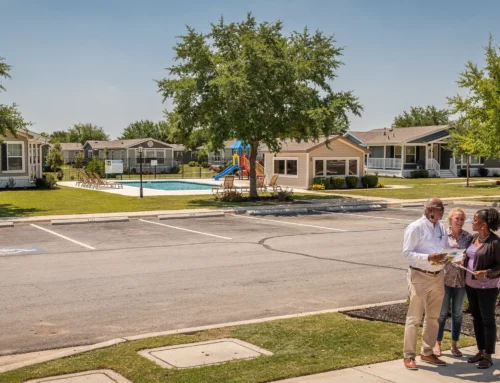
Even a well-kept home can feel stressful if the property is poorly maintained. Walk the community like you would any neighborhood.
Pay attention to:
- Roads and drainage: Potholes, standing water, muddy lots, and clogged ditches can signal flooding or maintenance neglect.
- Lighting and visibility at night: If you can, drive through after dark to gauge lighting and noise.
- Trash and common-area upkeep: Overflowing dumpsters and scattered debris often correlate with pest problems.
- Parking reality: Confirm where you can park, how guest parking works, and whether towing is enforced.
- Rule enforcement and management tone: Notice how staff communicates. Clear and respectful is a good sign, hostile or vague can become a problem later.
If you are in the San Antonio area, also consider flood risk. You can check the address on the official FEMA Flood Map Service Center. Flooding can affect skirting, subfloors, HVAC ducting, and access roads.
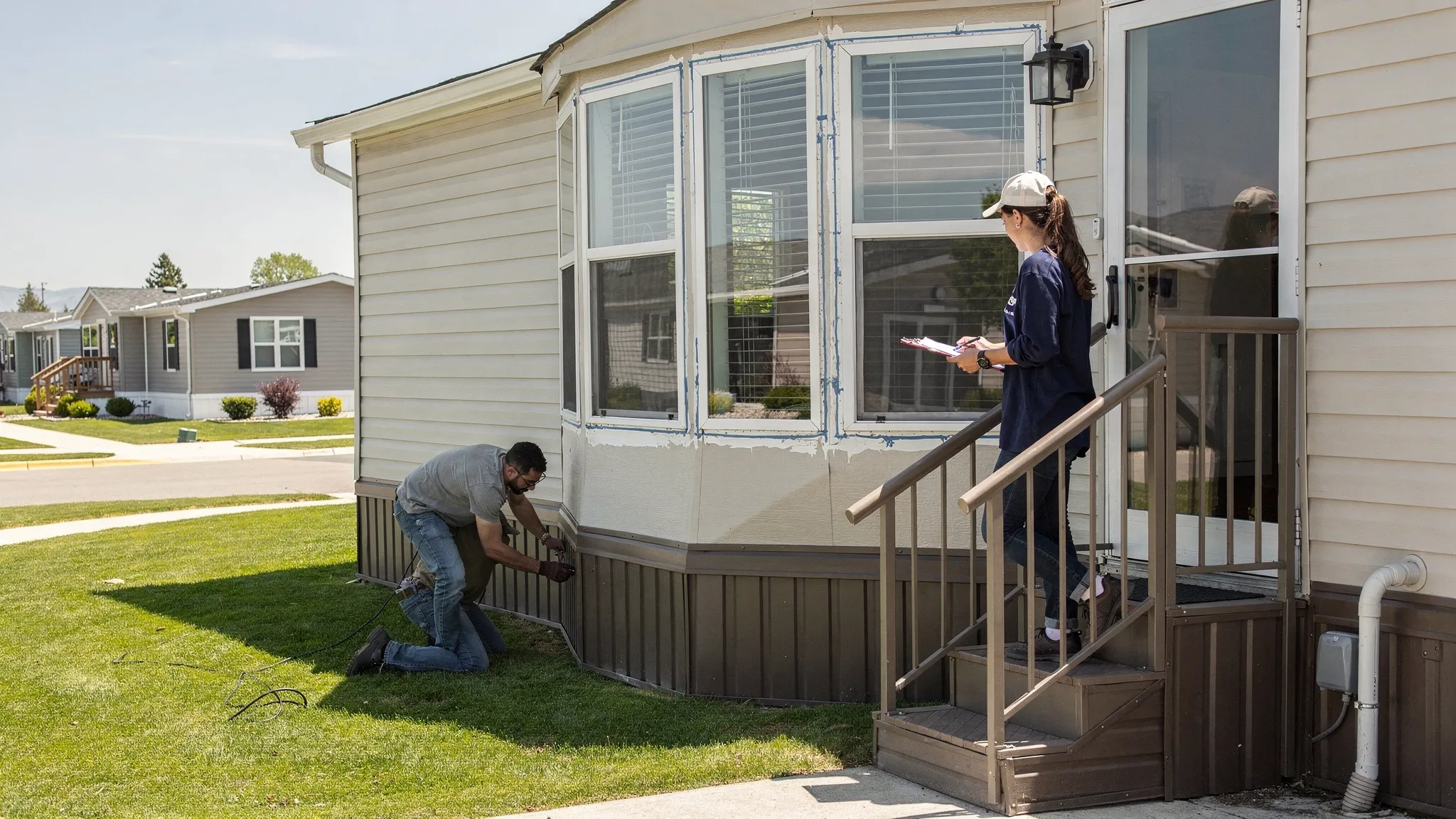
Exterior walkaround: rooflines, skirting, steps, and signs of water
Start outside, because water intrusion and structural movement often show up there first.
Look for obvious red flags:
- Soft spots near entry steps or decking: Bounce or sag can indicate rot.
- Skirting damage or missing panels: This can invite animals and moisture under the home.
- Gutters and downspouts: Missing or clogged gutters can dump water right next to the home.
- Window trim and caulking: Failed caulk and gaps can lead to leaks and higher cooling costs.
- Roof edge condition: You may not be able to get on the roof, but you can still look for uneven lines, damaged fascia, and staining.
If the home has a covered porch or awning, check attachment points for rust, loose bolts, or wobble. Also check that handrails are secure.
Interior inspection: “feel” tells you a lot (floors, doors, windows, odors)
Inside, you are looking for signs of moisture, movement, and deferred maintenance.
Walk slowly and use your senses:
- Floors: Step around toilets, tubs, sinks, and exterior doors. Soft or spongy flooring can signal leaks.
- Doors and windows: Do they open smoothly and latch? Sticking can mean shifting, swelling from moisture, or poor installation.
- Walls and ceilings: Look for stains, bubbling paint, patched spots, or ripples.
- Smell: Heavy fragrance can mask smoke, mold, or pet odors.
Do not be shy about opening cabinets under every sink. A quick peek can reveal active drips, past leaks, or mildew.
Plumbing checks that take two minutes (and can save you big headaches)
Plumbing issues are among the most common move-in surprises because a unit can sit vacant, then leaks show up once water is running daily.
Run simple tests during the tour:
- Turn on two faucets at once (for example kitchen and bathroom) to gauge water pressure.
- Flush each toilet and listen for refilling that never stops.
- Check for slow drains and gurgling.
- Look for water damage at the base of toilets and around tub edges.
If the home has a water heater closet, look for rust on the tank, staining at the pan, and signs of past overflow.
For general water damage and cleanup guidance, the EPA’s mold resource is a solid reference for what to take seriously and when to escalate.
Electrical and safety: outlets, GFCIs, smoke alarms, and egress
Manufactured homes can be very safe, but you should still verify basics before you sign.
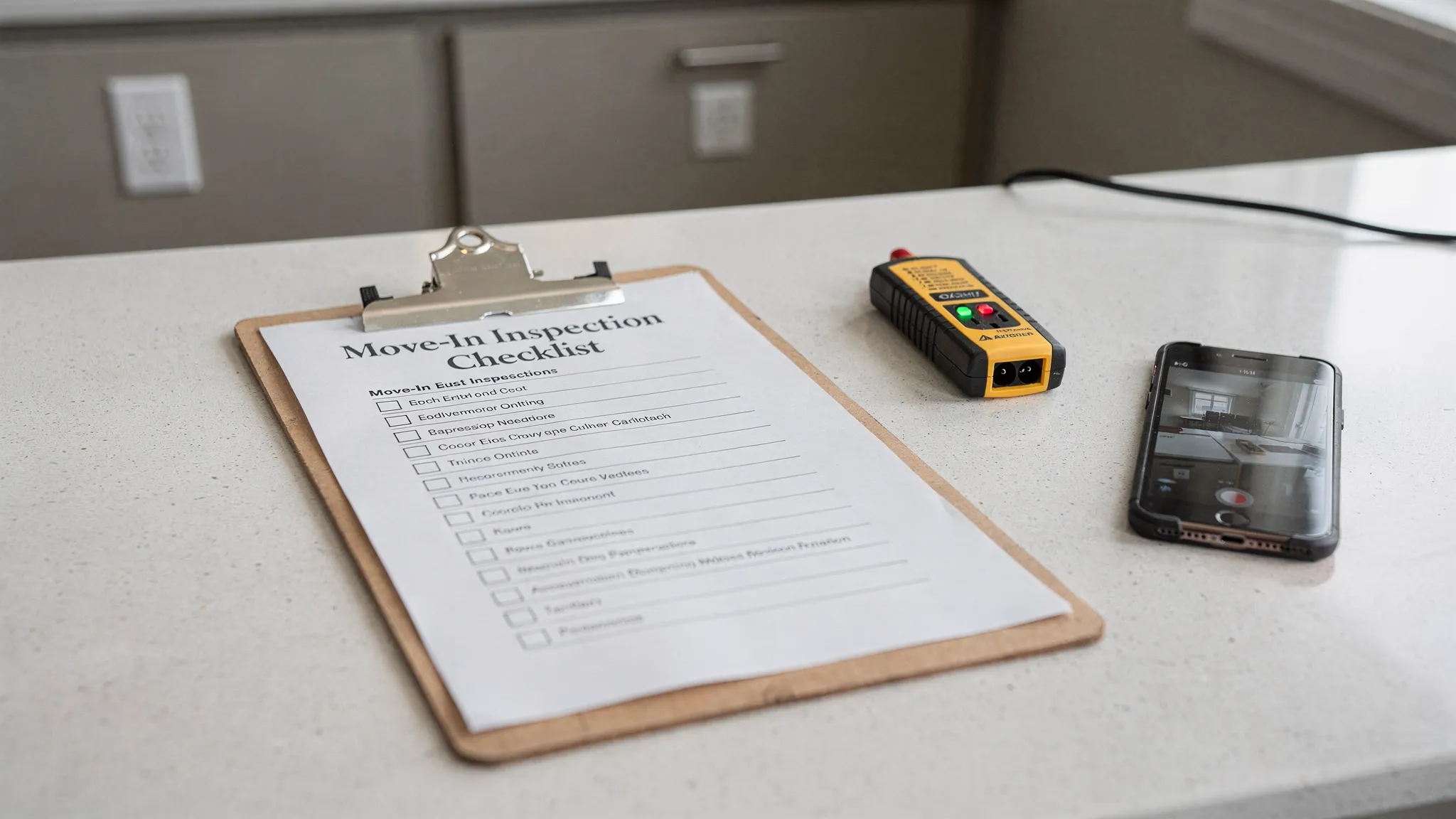
Bring a small outlet tester if you have one (they are inexpensive), and check:
- GFCI outlets in kitchens, bathrooms, and exterior locations (press “test” and “reset”).
- Outlet and switch stability: Loose outlets can be a safety concern.
- Smoke alarms: Confirm they exist and appear properly installed.
- Carbon monoxide alarms: Especially important if the home has gas appliances or an attached garage (if applicable).
- Bedroom egress: Bedrooms should have a window that opens adequately for emergency exit.
For CO safety basics, the CDC guidance on carbon monoxide is a reliable overview.
HVAC and comfort: the inspection points renters forget (until summer)
In Texas, HVAC performance is not a “nice to have.” It is a livability requirement during peak heat.
During the tour:
- Turn cooling on and make sure it actually blows cold within a reasonable time.
- Check supply vents for airflow in each room.
- Look at the return air filter location and ask when it was last changed.
- Inspect around vents for dark streaking that can indicate dust buildup or duct leakage.
Also ask whether the home is all-electric or uses gas for heat, and whether the community has any utility provider restrictions.
If you want context on what makes certain homes cheaper to cool, this Homes2Go article on energy-efficient manufactured homes in Texas heat explains the features that tend to matter most.
Pest and moisture risk: look under sinks, around skirting, and in closets
Pest issues are easier to prevent than to solve after move-in.
During your walkthrough, check:
- Droppings or nesting material in cabinets and closets
- Gaps around plumbing penetrations under sinks
- Chewed corners on baseboards or cabinet edges
- Insect activity around windowsills and exterior doors
Moisture and pests often go together. If you see repeated staining on the same ceiling area, or swelling around window frames, ask what caused it and what repairs were done.
Document the condition before you move a single box
Your best protection is a thorough, timestamped condition record.
Before move-in day (or on move-in day before unloading), do a final walkthrough and:
- Take wide-angle photos of every room plus close-ups of any damage.
- Get a written move-in condition form signed (or acknowledged by email).
- Confirm how to submit maintenance requests, and what counts as an emergency.
Pay special attention to flooring damage, appliance condition, and any existing wall marks. These are common deposit disputes.
A practical move-in inspection checklist (room by room)
Use this checklist during the tour, then repeat it during your move-in walkthrough.
| Area | What to inspect | Quick test |
|---|---|---|
| Entry / steps | Stability, handrails, soft wood | Put weight on steps, check wobble |
| Living room | Floors, windows, ceiling stains | Walk corners, open and lock windows |
| Kitchen | Under-sink leaks, outlets, appliances | Run faucet, test GFCI, start stove/oven fan |
| Bathrooms | Toilet base, caulk lines, exhaust fan | Flush, run shower, check fan works |
| Bedrooms | Window operation, closet odors, outlets | Open window fully, sniff for mustiness |
| Laundry area | Water hookups, drain pan, venting | Inspect hoses, check for rust or staining |
| HVAC | Filter access, vent airflow | Turn AC on, feel airflow in multiple rooms |
| Water heater | Rust, pan overflow, shutoff access | Look for staining, confirm shutoff is reachable |
| Exterior / skirting | Gaps, damage, standing water nearby | Walk perimeter, look for moisture or burrows |
| Community | Lighting, trash areas, rules signage | Drive through, note condition and noise |
Lease and cost “gotchas” to read twice before signing
Most move-in regrets are paperwork problems, not paint color problems.
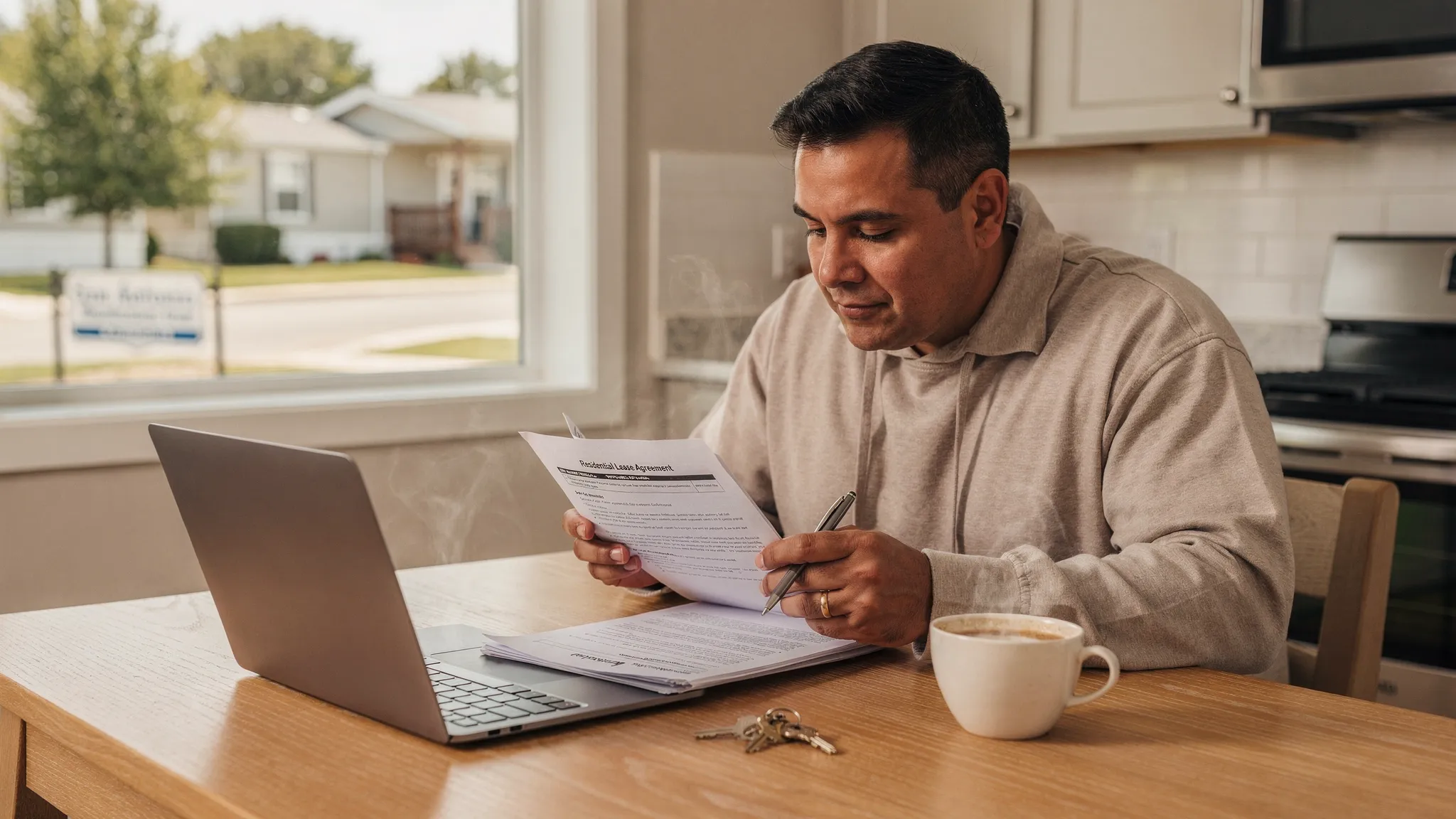
Read the lease for:
- Fee triggers: late fees, admin fees, lockout fees, returned payment fees.
- Rent changes: how increases are handled at renewal.
- Maintenance responsibility: who pays for plumbing clogs, HVAC service calls, pest treatments, and appliance repair.
- Rules enforcement: guest limits, pet policies, vehicle restrictions, and eviction clauses.
- Insurance: whether renters insurance is required and what it must cover.
If anything is unclear, ask for clarification in writing. Avoid relying on verbal promises.
When to walk away (even if the rent looks perfect)
Some issues are negotiable, but others are signs the unit will be a constant problem.
Consider walking away if you see:
- Persistent musty odor plus visible staining or active leaks
- Soft floors near bathrooms or exterior doors
- Non-working smoke alarms, missing GFCIs in wet areas, or unsafe wiring signs
- HVAC that cannot maintain temperature during a normal test
- Unclear lease terms about fees and maintenance responsibilities
- A community that looks consistently neglected (trash overflow, severe road damage, standing water)
A great deal is only a great deal if the home is safe, dry, and supported by clear management.
Need help comparing options in San Antonio?
If you are weighing trailer park homes for rent versus buying a move-in ready manufactured home, it helps to talk to someone who knows local communities, typical costs, and what to look for during walkthroughs.
Homes2Go San Antonio helps shoppers explore affordable manufactured home options and provides guidance through the process. If you are still deciding where you want to live, this roundup of the best mobile home parks in San Antonio can help you compare communities and touring priorities.
 Chattel Loans for Mobile Homes: When They Make Sense