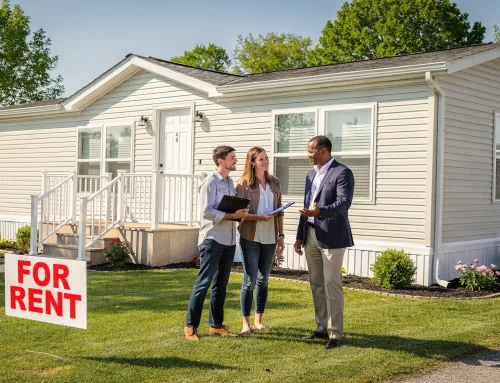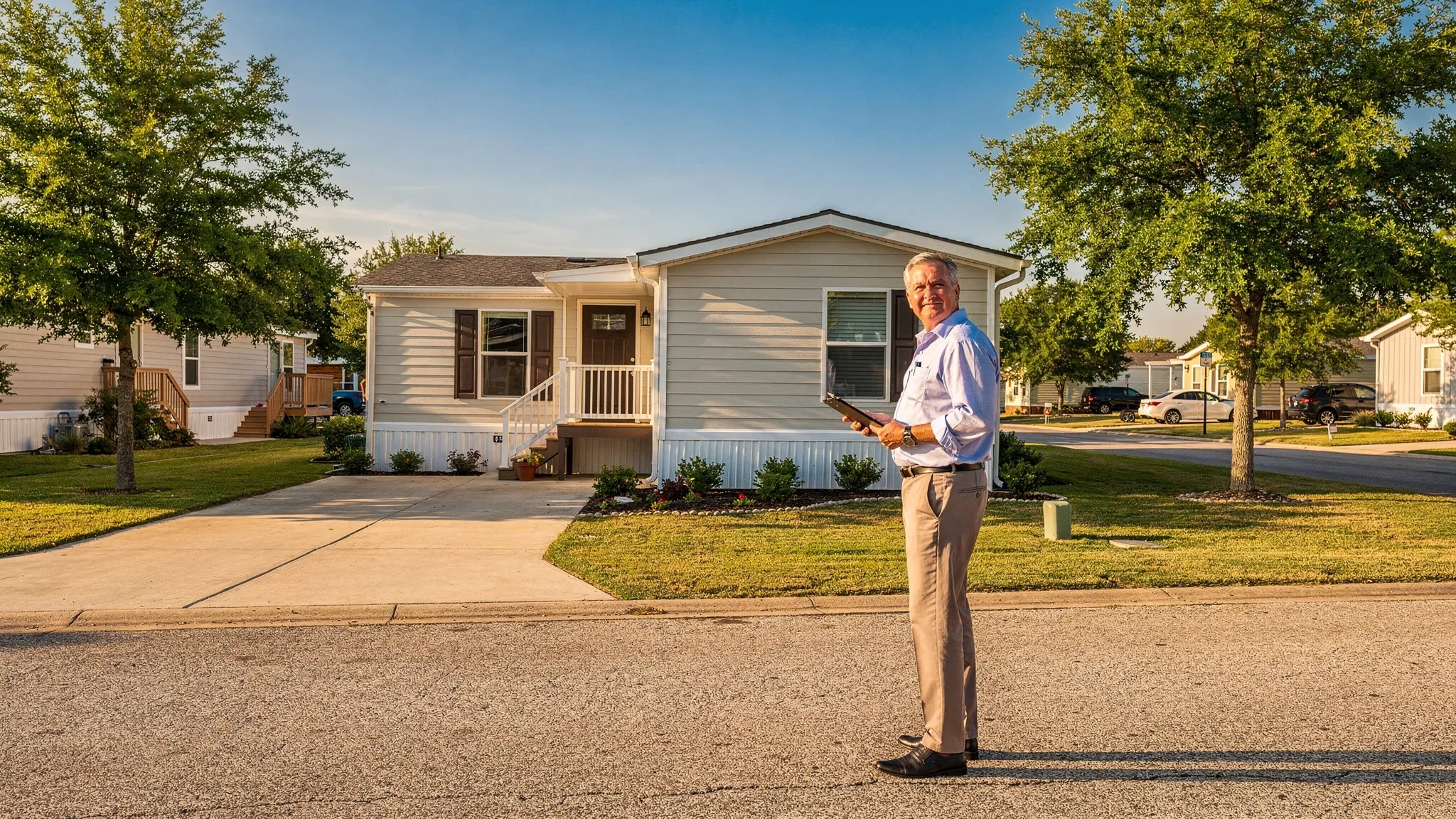

When you search “mobile homes community near me”, the photos usually show the clubhouse, the pool, and the model home. What you cannot see in a listing is the one factor that affects your daily life the most: management.
Good management keeps the property safe, enforces rules fairly, maintains infrastructure, and communicates clearly. Poor management can mean surprise fees, slow repairs, inconsistent rule enforcement, and stressful renewals.
This guide gives you a practical, repeatable way to vet community management before you apply, sign a lease, or move your home.
Why management matters more than amenities
In manufactured home communities, you typically own (or finance) the home and lease the lot. That setup makes management quality especially important because:
- The community controls the land and common infrastructure (roads, drainage, streetlights, mail area, water systems, community rules).
- Your ongoing costs depend on policies (rent increases, utility billing, late fees, maintenance responsibilities, add-on fees).
- Your experience depends on consistency (how rules are enforced, how complaints are handled, how quickly repairs happen).
A nice pool does not fix a manager who ignores maintenance tickets or changes policies without clear notice.
Step 1: Do a fast pre-screen before you tour
Spend 20 to 30 minutes researching the community before you invest time touring.
Confirm who actually manages the community
Many parks are owned by one entity and managed by another. Ask:
- Who is the owner?
- Is management on-site or off-site?
- Is there a professional property management company, or a local operator?
Why it matters: if you cannot easily identify who is responsible, resolving issues later can be harder.
Read reviews like an investigator (not a shopper)
Online reviews are imperfect, but patterns are valuable. Look for:
- Repeated themes (billing disputes, maintenance delays, towing complaints, pest issues)
- Recency (problems from 6 years ago matter less than trends from the last 6 months)
- Management responses (professional and specific, or defensive and vague)
Tip: one angry review is normal. Ten reviews describing the same fee or the same communication issue is a signal.
Check for public “friction points”
Depending on your area, you may be able to find:
- Local code enforcement activity
- Court records (eviction filings and disputes)
You are not looking for perfection. You are looking for whether management appears proactive, transparent, and consistent.
Step 2: Use a “tour test” that reveals management quality
A tour should be more than a drive-through. You are evaluating how the place is run.
Watch the entry, roads, and infrastructure
Infrastructure is expensive, and it is often where poor management shows first.
Look for:
- Standing water after rain, eroded areas, or persistent potholes
- Broken streetlights, overflowing dumpsters, or neglected common areas
- Clear signage for rules and speed limits (a sign of basic operational discipline)
Evaluate the office experience
Your first interaction is a preview of how future issues will go.
Notice:
- Are they willing to explain policies calmly, or do they rush you?
- Do they provide printed or emailed documents, or do they “summarize verbally”?
- Do they give direct answers about fees, utilities, and renewals?
If the office cannot clearly explain the rules before you move in, it rarely improves after.
Ask one maintenance question that requires specifics
Try:
- “What is the typical response time for urgent repairs vs. non-urgent repairs?”
Then follow up with:
- “How do residents submit requests, and how are requests tracked?”
You are listening for a real process (ticketing, call line, vendor schedule, escalation path), not “we handle it.”

Step 3: Request the documents that expose hidden costs
A well-run community can usually provide documents up front. Hesitation is not always a red flag, but refusal is.
Ask for these in writing (paper or email) before you apply:
| Document | What to look for | Common red flags |
|---|---|---|
| Lot lease (or rental agreement) | Term length, renewal language, rent payment rules, late fees, notice periods | Vague fee language, unclear renewal terms, “management may change fees at any time” wording |
| Community rules and regulations | Noise, pets, parking, guests, exterior upkeep, storage sheds, fences | Rules that are overly broad or inconsistently enforceable |
| Written fee schedule | Application fees, admin fees, trash, pest, parking, storage, amenities | Fees described as “as needed” without amounts |
| Utility billing explanation | Who bills you, how usage is measured, base charges, fees | Unclear submetering approach, unexplained “service” add-ons |
| Maintenance responsibility list | What management handles vs. resident handles | Shifting responsibility for infrastructure-related items |
If you want help understanding what you are signing, consider having a qualified attorney review the lease terms. Looking at how firms outline dispute-resolution work (for example, Henlin Gibson Henlin describes litigation and arbitration capabilities) can help you identify what type of counsel to look for, then choose an attorney licensed in Texas for local advice.
Step 4: Ask management questions that are hard to “sales talk”
Instead of “Is it a good community?” ask questions that force operational detail.
Rent increases and renewals
Ask:
- “How often has lot rent increased in the last few years?”
- “How are increases communicated, and how much notice is typical?”
You are not just asking for a number. You are evaluating whether management is transparent and consistent.
Rules enforcement
Ask:
- “How do you handle complaints between neighbors?”
- “What happens first: warning, notice, fine?”
Good management has a clear, documented, fair escalation process.
Resident screening and approvals
Ask:
- “What are the approval criteria (income, credit, background)?”
- “If someone is denied, do you provide a written reason?”
Clear criteria reduces arbitrary decision-making and confusion.
Utilities and services
Ask:
- “Who provides water, sewer, and trash, and who sets the rates?”
- “Are there monthly admin fees related to utility billing?”
A common pain point in communities is not the utility itself, but the add-on charges and billing practices.
Step 5: Talk to residents, and listen for the “management story”
If you can, talk to two or three residents when management is not standing next to you.
Try neutral prompts:
- “How long have you lived here?”
- “If you could change one thing about management, what would it be?”
- “How are repairs handled?”
- “Any surprise fees since moving in?”
Pay attention to whether residents describe:
- Predictable communication (good)
- Fear of retaliation or inconsistent enforcement (bad)
- Long unresolved maintenance issues (bad)
One resident can be disgruntled anywhere. Multiple residents telling the same story is data.
Step 6: Know the basics of Texas rules for manufactured home communities
This article is not legal advice, but Texas residents should know that manufactured home communities have specific rules in state law. A starting point is Texas Property Code Chapter 94, which covers many landlord-tenant topics for manufactured home communities.
You can review the text via Texas Legislature Online.
Even if you do not read every section, understanding that there are defined notice requirements and regulated practices can help you ask better questions and spot vague answers.
Step 7: Use a simple scorecard to compare communities
When you tour multiple options, it is easy to forget details. A scorecard keeps decisions objective.
Rate each category from 1 (poor) to 5 (excellent):
| Category | What “5” looks like | What “1” looks like |
|---|---|---|
| Fee transparency | Written fee sheet, clear utilities explanation | “We’ll go over that later,” unclear add-ons |
| Maintenance process | Clear request method, reasonable timelines | No process, repeated complaints in reviews |
| Communication | Written policies, professional responses | Vague answers, hard to reach office |
| Property condition | Roads, lighting, trash areas consistently maintained | Deferred maintenance, visible infrastructure issues |
| Fairness and consistency | Rules applied evenly with documented steps | Arbitrary enforcement, frequent conflicts |
If two communities are similar on location and price, management quality is often the tie-breaker that saves you money and stress.
Where Homes2Go San Antonio fits in
If you are considering a community in the San Antonio area, Homes2Go San Antonio can help you match a home to your budget and lifestyle while keeping community requirements and approvals in mind.
You can also explore:
- A broader overview of shopping options in Manufactured Homes San Antonio: Options, Prices, and Tips
- Financing pathways on the Homes2Go financing page
- A community-focused roundup in Best Mobile Home Parks in San Antonio (2025 Roundup)
Frequently Asked Questions
What are the biggest red flags for mobile home community management? The biggest red flags are unclear fees, refusal to provide lease documents up front, repeated complaints about maintenance delays, and inconsistent rule enforcement.
Should I get everything in writing before moving into a community? Yes. Request the lease, rules, fee schedule, and utility billing explanation in writing. If a cost or policy matters to your budget, do not rely on verbal summaries.
How can I tell if online reviews are reliable? Focus on patterns, not individual ratings. Multiple recent reviews describing the same issue (fees, repairs, towing, communication) are more meaningful than one extreme review.
Can a community raise lot rent whenever they want? Rent increases are typically controlled by the lease terms and notice requirements. Ask for the renewal language and review Texas Property Code Chapter 94 for general context, then seek local guidance for your situation.
Is it better to buy a home first or pick the community first? Often, picking the community first helps because each community can have size limits, age requirements, and approval rules. Then you can shop for a home that fits those requirements and your financing plan.
Next step: Get help narrowing your best options
If you are comparing communities and want help selecting a manufactured home that fits community requirements, budget, and timeline, Homes2Go San Antonio can guide you through the process with local experience and flexible financing options.
Browse homes and reach out through Homes2Go San Antonio to talk through your plan.
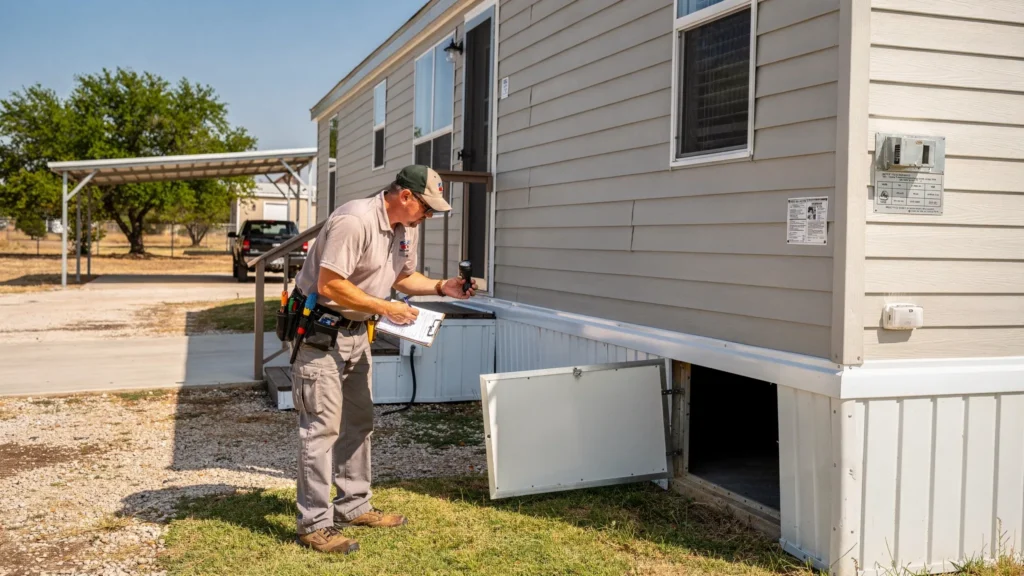 Trailer Home Inspection: What Inspectors Check in Texas
 Low Cost Manufactured Homes: Where to Cut Costs Safely