
If you’re shopping for a “mobile home,” you’ll quickly notice that listings, lenders, and dealers often use the words mobile and manufactured interchangeably. The catch is that, legally and technically, they are not the same thing. Understanding the difference affects financing, insurance, safety standards, resale value, and even what paperwork you need at closing.
This guide explains what “manufactured mobile homes” usually means in everyday conversation, the real definitions behind the terms, and the most practical buying tips to help you choose the right home with fewer surprises.
Manufactured vs. mobile homes: the real difference
The biggest dividing line is June 15, 1976.
- Mobile home (technical/legal use): A factory-built home constructed before 6/15/1976.
- Manufactured home: A factory-built home constructed on or after 6/15/1976 and built to the federal HUD Code (the Manufactured Home Construction and Safety Standards).
HUD explains its manufactured housing program and standards here: HUD Manufactured Home Standards.
Why 1976 matters
The HUD Code created a national baseline for:
- Structural design and durability
- Fire safety
- Energy and ventilation requirements (including regional climate zones)
- Transportability requirements (since these homes are delivered to site)
- Quality control and inspection processes
So while older “mobile homes” can still be perfectly livable, they were not built under the same unified federal construction standard. That difference often shows up in loan options, insurance availability, and inspection requirements.
A quick comparison table
| Category | Mobile home (pre-1976) | Manufactured home (1976+) |
|---|---|---|
| Governing standard | No HUD Code | Built to HUD Code |
| Identification | No HUD certification label | HUD label (tag) and data plate |
| Financing availability | Often limited | Typically wider range of lender options |
| Insurance options | Can be harder to insure | Usually easier than pre-1976 |
| Typical buyer risk | Higher (unknown upgrades, older systems) | Lower (standardized baseline + newer materials) |
“Manufactured mobile homes”: what sellers usually mean
In most real-world listings, “manufactured mobile homes” is shorthand for factory-built housing overall, not a strict legal category. It can refer to:
- New HUD Code manufactured homes
- Used HUD Code manufactured homes
- Occasionally, true pre-1976 mobile homes
Because the wording can be loose, your job as a buyer is to verify what you’re actually purchasing.
How to confirm whether a home is manufactured (HUD Code)
When you tour a home, you want to identify two things:
1) HUD certification label (HUD tag)
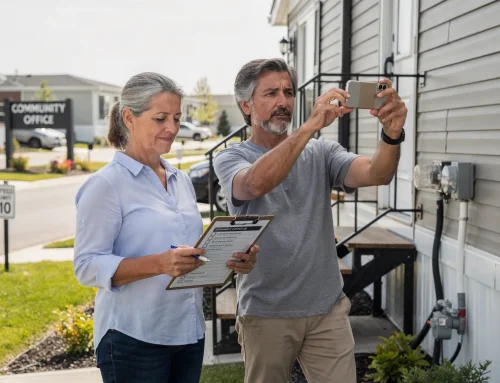
Manufactured homes have a small metal HUD label affixed to the exterior of each section (often near the back). It includes an identification number.
2) Data plate (paper label)
Inside the home (commonly in a kitchen cabinet, utility area, or master bedroom closet), the data plate includes details like:
- Manufacturer
- Date of manufacture
- Serial/VIN information
- Wind zone and thermal zone
If the seller cannot locate the data plate or the HUD tags are missing, it does not automatically mean the home is “bad,” but it does mean you should slow down and verify identification and title status before you spend money on inspections, transport, or lender fees.
For Texas-specific verification and consumer guidance, the Texas Department of Housing and Community Affairs Manufactured Housing Division is a helpful reference point.
Manufactured vs. modular vs. site-built (don’t mix these up)
Shoppers often compare manufactured homes to modular homes, and they are both factory-built, but they follow different codes.
- Manufactured homes are built to the HUD Code and are designed to be transported on their own frame.
- Modular homes are built in sections to a state/local building code (commonly based on the IRC) and are set on a permanent foundation like many site-built homes.
- Site-built homes are constructed entirely on the property under local building codes.
Here’s a practical side-by-side:
| Feature | Manufactured home | Modular home | Site-built home |
|---|---|---|---|
| Built to | HUD Code | State/local building code | State/local building code |
| Transport | Delivered on chassis | Delivered in modules | Materials delivered, built on-site |
| Typical placement | Land-lease communities or private land | Usually private land | Private land |
| Financing path | Chattel or mortgage (depends on setup) | Often mortgage | Mortgage |
| Paperwork focus | HUD labels, title, installation | Permits + certificate of occupancy | Permits + certificate of occupancy |
Buying tips that save you money and stress
Most buyer regret comes from two things: misunderstanding the category of the home, or underestimating the “all-in” cost to place and live in it. These tips are designed to prevent both.
Tip 1: Budget the total cost, not just the home price
A manufactured home purchase can involve costs beyond the home itself, especially if you’re placing it on private land.
Common cost categories to ask about early:
- Transportation and delivery
- Installation and setup (including tie-downs/anchoring)
- Foundation type (varies by site and lender requirements)
- Utility connections (water, sewer/septic, electric)
- Permits, inspections, and site prep (grading, driveway)
- Steps, skirting, and exterior add-ons
- Insurance and taxes
Even if you’re buying a move-in ready home, confirm what “move-in ready” includes for your specific placement plan.
Tip 2: Decide where the home will live before you pick the model
Your placement choice affects size, layout, and financing.
Land-lease community (mobile home park)
This can be attractive if you want a neighborhood feel and fewer land-related variables.
Key questions:
- What does lot rent include (trash, water, amenities)?
- Are there age or occupancy rules?
- Are there restrictions on home size, roof pitch, exterior siding, or skirting?
- What is the application process and timeline?
Private land
This path can offer more control, but it adds complexity.
Key questions:
- Is the land properly zoned for a manufactured home?
- Are utilities available at the site?
- What foundation or installation standards apply for your lender?
- Are there access issues for delivery (turn radius, overhead lines, road conditions)?
If you’re in the San Antonio area and comparing both routes, Homes2Go SA has local context in its buyer resources, including a guide to land and home packages and community considerations.
Tip 3: Match financing to the home’s classification and setup
Financing is one of the biggest reasons buyers should be precise with terminology.
In broad terms:
- Chattel loans are commonly used when the home is titled as personal property (often in land-lease communities).
- Mortgage-style loans may be available when the home is treated as real property (often when placed on owned land and meeting lender requirements).
Eligibility depends on multiple factors (home age, condition, where it’s installed, and how it’s titled). Instead of guessing, get guidance early from specialists who do manufactured housing financing every day.
Homes2Go San Antonio summarizes common options and when they fit on its financing page. If you’re a first-time buyer, a simple win is to ask for a pre-qualification range before you fall in love with a floor plan.
Tip 4: Treat the title, labels, and serial numbers as “deal-critical”
For used homes especially, paperwork problems can delay or derail a purchase.
Before you commit to non-refundable costs, confirm:
- The home’s identification (HUD label and data plate, if applicable)
- The seller’s legal ability to sell (clear title status)
- Whether the home has liens that must be satisfied
If something looks off, it does not always mean “walk away,” but it does mean you should require clarity in writing.
Tip 5: Inspect the home like a systems checklist (not just cosmetics)
A clean interior matters, but major costs hide in systems. Whether you’re buying new or used, focus your walkthrough on:
- Roofing condition and any signs of past leaks
- Floors for soft spots (especially near bathrooms and exterior doors)
- Windows and door seals
- HVAC performance and duct condition
- Electrical panel and visible wiring condition
- Plumbing signs (water pressure, slow drains, under-sink leaks)
For used homes, water intrusion is one of the most expensive issues to correct. If you smell persistent mustiness or see staining, ask direct questions about repairs and documentation.
Tip 6: Shop energy efficiency like it’s a monthly bill
In hot climates, efficiency is not just a feature, it’s comfort and operating cost. Ask about:
- Insulation levels appropriate for the region
- Window performance (double-pane, low-E)
- Duct sealing and HVAC sizing
- Air sealing and ventilation approach
If you want a deeper checklist for Texas heat, Homes2Go SA breaks down practical efficiency specs and shopping questions in its post on energy-efficient manufactured homes.
Tip 7: Plan the installation timeline (and who owns each step)
Manufactured homes move through phases, and delays are usually caused by coordination gaps. Clarify:
- Who is responsible for site prep and utility readiness
- Who schedules delivery and setup
- What inspections are required before move-in
- Warranty coverage (and what voids it)
If multiple vendors are involved (seller, transporter, installer, utility contractors), get the handoffs documented. A simple written timeline can prevent “everyone thought someone else handled it.”
Common red flags (especially in used “mobile home” listings)
You do not need to panic if you see one of these, but you should investigate thoroughly:
- The home is advertised as “manufactured” but the build date appears pre-1976
- Missing HUD tags or missing data plate with no explanation
- Unpermitted additions or questionable structural modifications
- Evidence of chronic leaks or repeated ceiling stains
- “Cash only” language with no clear reason (sometimes legitimate, often not)
- Seller cannot explain titling status or outstanding liens
How Homes2Go San Antonio can help you buy with confidence
If you’re shopping for manufactured mobile homes in the San Antonio area, the goal is to make your decision based on clear facts: the home’s category, its condition, and the true monthly and upfront costs.
Homes2Go San Antonio supports buyers with:
- A wide selection of manufactured and mobile home models
- Expert guidance from selection through purchase steps
- Flexible financing pathways through trusted local lenders
- Floor plans and move-in ready options (availability varies by home)
To keep researching with local context, you can also explore Homes2Go SA’s detailed guide on mobile homes in San Antonio or browse current options directly on the site.
If you want help narrowing down the right home for your budget and placement plan, start with financing clarity and a realistic all-in budget, then match the home model to the site and lifestyle you actually want.
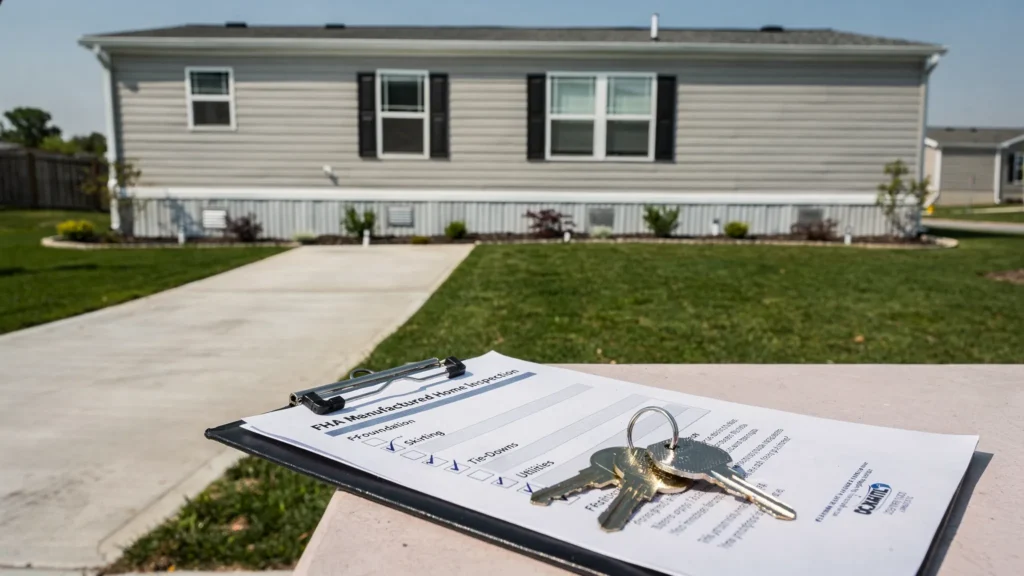 FHA Requirements for Manufactured Homes: 2026 Checklist
 Modular Home for Rent Near Me: What to Know Before Signing