
If you’re searching “lot rent for mobile home near me,” you’re usually trying to answer one practical question: What will my monthly payment really be if I live in a manufactured home community (a land-lease park)? Lot rent can be a great value, but it’s also one of the most misunderstood parts of the budget because communities include different things in the rent and price very differently depending on location, rules, and amenities.
Below is a clear, realistic way to think about typical price ranges, what drives them up or down, and how to compare two communities apples-to-apples, especially around San Antonio.
What “lot rent” actually means (and what it doesn’t)
Lot rent (also called space rent or site rent) is the monthly fee you pay to lease the land your home sits on in a manufactured home community.
Typically, lot rent covers:
- The right to place your home on a specific homesite
- Use of community roads and common areas
- Community management and maintenance of shared infrastructure
Lot rent typically does not include your manufactured home loan payment (if you’re financing the home), homeowners insurance, or your personal utilities unless the community bundles them.
In Texas, your relationship with a community is governed by your lease and applicable state rules. If you want to understand tenant protections and required disclosures, a good starting point is Texas Property Code, Chapter 94 (Manufactured Home Tenancies) on the Texas Legislature Online site.
Lot rent for mobile home near me: typical price ranges
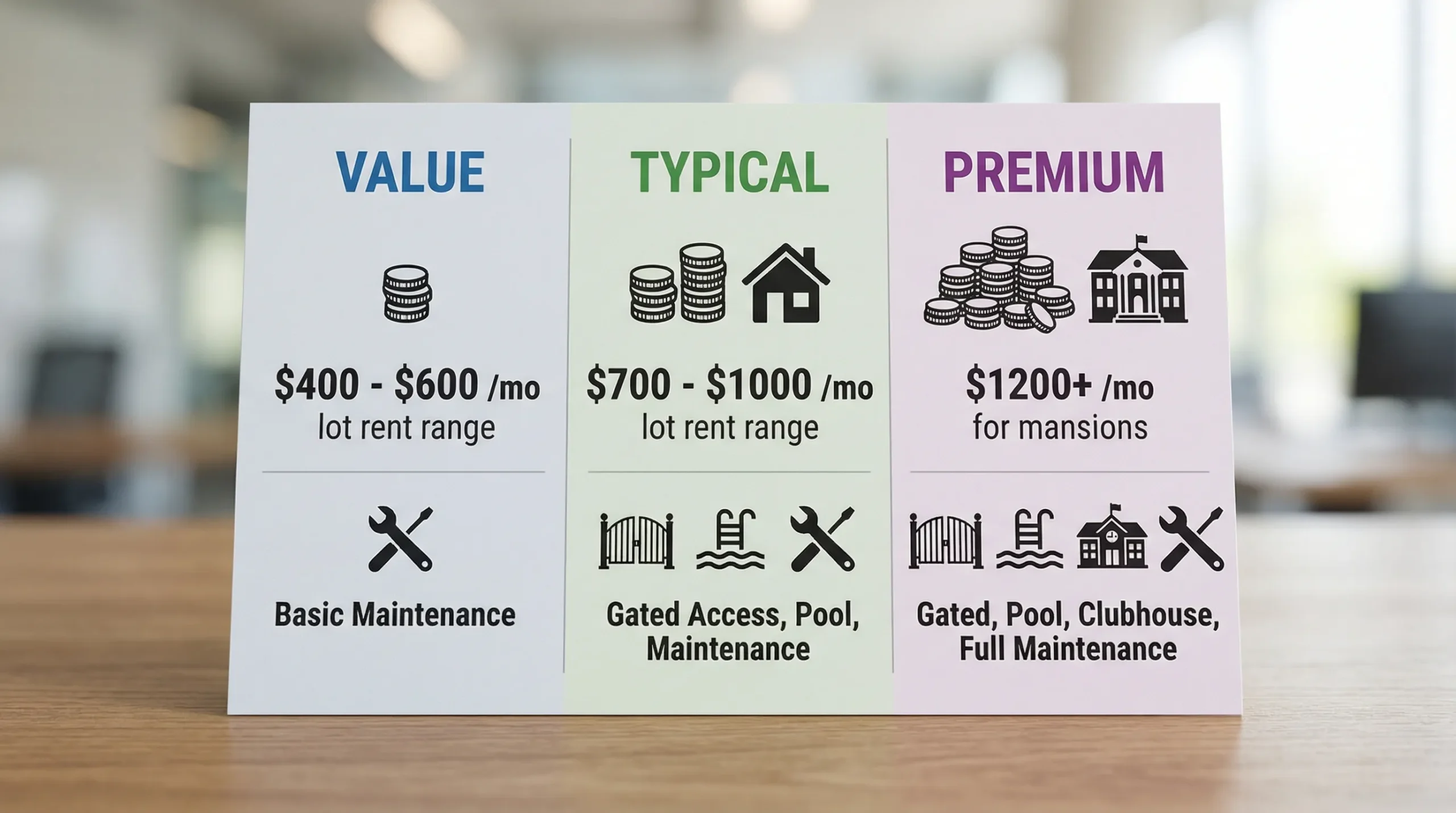
Lot rent varies so much by market that no single number is “the” rate, but you can usually bucket pricing into value, typical, and premium bands.
Here’s a practical range table you can use as a starting point when calling communities and scanning local listings.
| Lot rent band | Typical monthly lot rent range | What you often see in this band |
|---|---|---|
| Value | $300 to $550 | Smaller communities, fewer amenities, older infrastructure, limited bundled utilities |
| Typical | $550 to $850 | Standard all-age communities, predictable rules, some amenities, may include trash or basic common-area maintenance |
| Premium | $850 to $1,200+ | Newer or renovated communities, stronger amenity packages, prime location, tighter standards, sometimes bundled services |
How to interpret these ranges:
- They reflect commonly advertised pricing across many U.S. markets, not a guaranteed rate for your exact neighborhood.
- In and around major metros (including San Antonio), it’s common to see communities cluster in the typical band, with premium communities reaching $1,000+.
- The only accurate number is the one in the community’s current fee sheet and lease.
Why lot rent varies so much (even within the same zip code)
Two communities can be five minutes apart and still be hundreds of dollars different per month. That usually comes down to these drivers.
1) Location and land value
This is the biggest lever. Communities closer to major job corridors, shopping, and medical services tend to price higher because demand is higher and land is more expensive.
In San Antonio, “near me” could mean anything from central neighborhoods to suburban loops to more rural edges, and each has its own pricing pressure.
2) Community type (all-age vs 55+ vs resort-style)
A quiet 55+ community with strict rules and a clubhouse may price differently than a family community with playgrounds, a pool, and on-site staff.
Amenities don’t automatically mean better value, but they do affect operating costs, and those costs are reflected in rent.
3) What’s included (trash, water, sewer, lawn, cable)
A big reason shoppers get surprised is that lot rent is not standardized.
For example:
- One community may advertise $650 lot rent but add $120 for water, sewer, and trash.
- Another may advertise $775 lot rent but include those services.
The second option can be cheaper in practice.
4) Utilities setup (submetering vs flat fees)
Some communities bill water and sewer based on usage via submeters or allocated formulas. Others charge a flat monthly utility fee. Ask which approach they use and whether rates change seasonally.
5) Lease term, rules, and rent increases
Lot rent is also about risk and predictability.
- Month-to-month or shorter terms can change faster.
- Longer lease terms may offer more stability, but you still need to read the rent increase language.
In Texas, pay close attention to what the lease says about increases, notices, and pass-through charges. If you want broader manufactured housing education (separate from any community’s rules), the Consumer Financial Protection Bureau has general housing resources that can help you think through total monthly costs.
What lot rent often includes in San Antonio area communities
Every community is different, but these are common inclusions you’ll encounter when shopping around San Antonio:
- Trash service (sometimes)
- Basic common-area maintenance
- Road maintenance within the community
- Access to amenities (pool, playground, clubhouse) when available
Common “not included” items:
- Electricity
- Internet and cable
- Homeowners insurance
- Your manufactured home payment
- Property taxes (this depends on whether you own the land, how the home is titled, and local taxation)
Because manufactured housing can be titled and taxed differently depending on whether it’s classified as real property or personal property, it’s smart to ask how the home is treated in your situation. For Texas-specific manufactured housing administration and documentation, you can review resources from the Texas Department of Housing and Community Affairs (TDHCA) Manufactured Housing Division.
Fees that can make “cheap” lot rent expensive
When someone says, “This park is only $499,” your next question should be: What are the other monthly charges and one-time fees?
Here are common add-ons to ask about before you apply:
- Application and background check fees
- Pet rent, pet fees, and breed restrictions
- Water, sewer, and trash (if not included)
- Stormwater or community maintenance fees
- Lawn care or lot maintenance requirements (and penalties)
- Parking fees (extra vehicles, reserved spots)
- Storage fees (boats, trailers)
- Late fees and returned payment fees
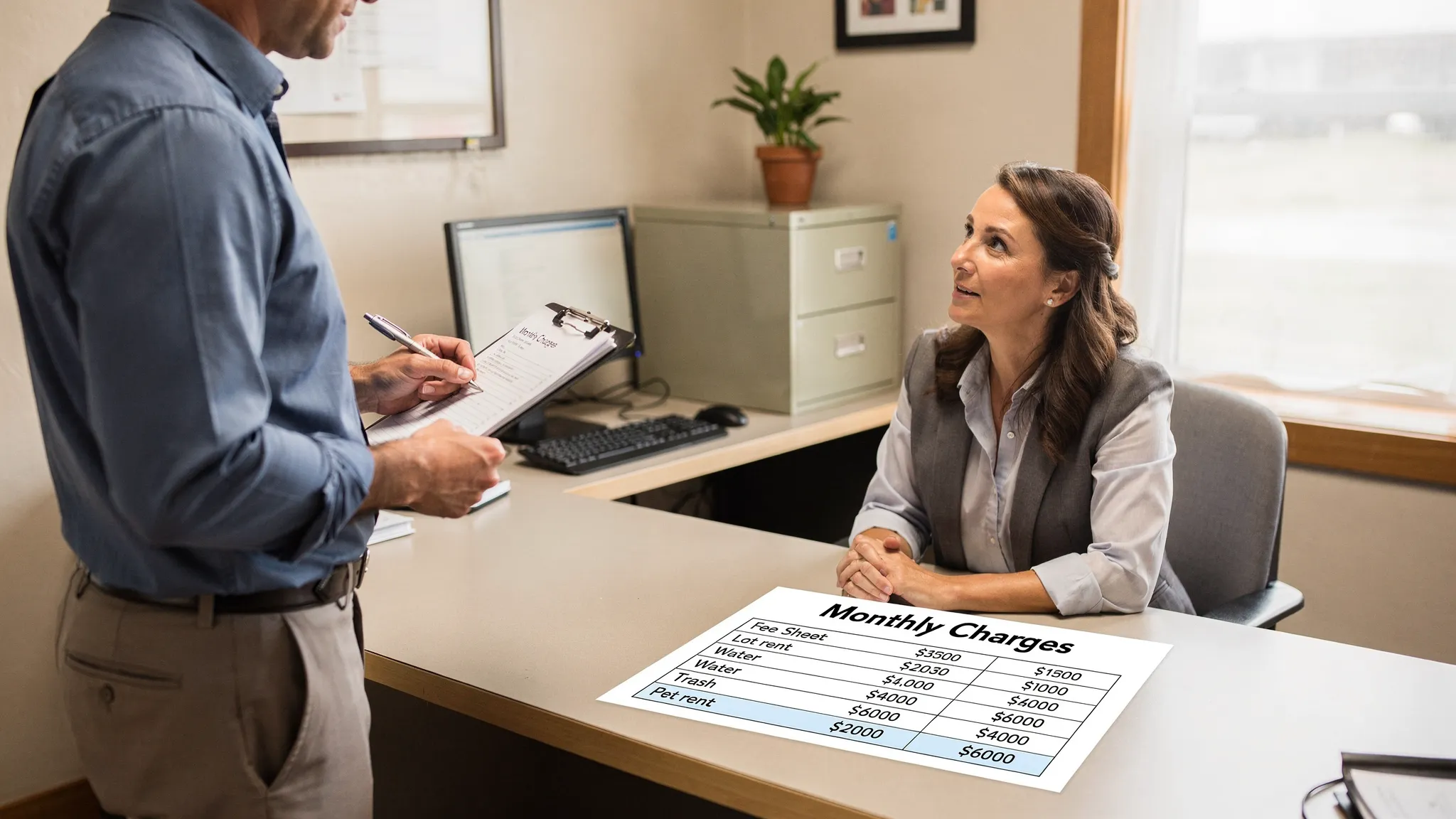
Ask the office for a written fee sheet and a copy of the lease you would sign. If they cannot provide it until after you pay, treat that as a red flag.
A simple way to compare communities: total monthly site cost
To compare two places fairly, calculate a single number: Total Monthly Site Cost.
Use this formula:
Total Monthly Site Cost = advertised lot rent + required monthly fees + average monthly utilities you pay to the community
Then separately estimate your personal utilities paid to outside providers (electric, internet), plus your home payment and insurance.
Example comparison (hypothetical numbers)
| Item | Community A | Community B |
|---|---|---|
| Advertised lot rent | $625 | $740 |
| Required monthly fees | $45 | $0 |
| Water/sewer/trash billed by community | $120 | Included |
| Total Monthly Site Cost | $790 | $740 |
Community B looks higher at first glance, but can come out lower once you include bundled services.
Questions to ask a community office (copy/paste checklist)
A fast phone call can save you hours of touring the wrong options. Ask:
- What is the current lot rent for the specific homesite?
- What fees are required every month (itemized)?
- Which utilities are included, and which are billed separately?
- How are water and sewer billed (flat, submetered, allocated)?
- What is the lease term, and how do rent increases work?
- Are there move-in specials, and when do they expire?
- What are the community rules for pets, parking, and exterior upkeep?
- Are there age restrictions (all-age vs 55+)?
- What are the requirements for home age, skirting, roof condition, and approvals if you’re moving in a home?
If you’re buying a manufactured home and placing it in a community, also ask about community approval and whether they have preferred installation requirements.
Buying a home in a land-lease community vs buying land: how lot rent changes your budget
Your path to homeownership usually falls into one of two buckets:
Option 1: Own the home, rent the lot
This is the classic community model. Your monthly housing cost can be lower than many apartments, but it includes two big pieces:
- Your home payment (if financed)
- Lot rent and community fees
Financing can also differ depending on whether the home is titled as personal property and whether land is included. If you want a clear overview of loan types people use, Homes2Go San Antonio’s financing guide breaks down common options like chattel, FHA, VA, USDA, and conventional, with plain-English pros and cons: Manufactured home financing options.
Option 2: Own the home and the land (no lot rent)
If you purchase land (or a land and home package), you may eliminate lot rent, but you take on different costs:
- Mortgage or land loan
- Taxes on the land
- Septic/well (if applicable)
- Site work and long-term maintenance of your property
For many buyers, the tradeoff is worth it if they want more control and long-term stability. Homes2Go San Antonio also has a detailed explainer on this route here: Land and home packages in San Antonio.
What to expect when searching “near me” in San Antonio
A useful way to frame your search is by your must-haves:
- Commute time and preferred side of town
- All-age or 55+ preference
- Pet rules
- Budget ceiling for Total Monthly Site Cost
Once you know those, it’s much easier to narrow down communities and avoid wasting time on places that will never fit.
If you want a community-first way to shop, Homes2Go has a local roundup designed to help people compare parks and what lot rent tends to include (plus touring tips and red flags): Best mobile home parks in San Antonio (roundup).
How to keep lot rent manageable (without sacrificing safety)
Lot rent is one line item, but it’s also connected to quality-of-life factors. The goal is not just “cheap,” it’s predictable and livable.
Prioritize transparency over the lowest advertised price
A well-run community that provides clear paperwork, consistent rules, and itemized fees can be a better deal than a low advertised rent that comes with constant add-ons.
Ask about utilities early
In Texas heat, electricity is often the swing cost, but water and sewer billing can also vary widely. Make sure you understand what you pay to the community vs outside providers.
Factor in energy efficiency if you’re buying a newer home
A more energy-efficient manufactured home can reduce your monthly power bill, which makes a higher lot rent easier to afford. If you’re comparing homes, this Homes2Go SA guide is a strong checklist for Texas: Energy-efficient manufactured homes (Texas heat guide).
Next step: get a realistic monthly estimate before you commit
If you’re deciding between buying a manufactured home in a community or placing a home on your own land, the best move is to build a simple monthly budget with real numbers:
- Estimated home payment (if financing)
- Total Monthly Site Cost (lot rent + fees + community-billed utilities)
- Electric and internet
- Insurance
If you’re shopping in San Antonio and want help comparing options, Homes2Go San Antonio can guide you through available homes, floor plans, and financing paths while you evaluate communities: Browse manufactured homes in San Antonio.
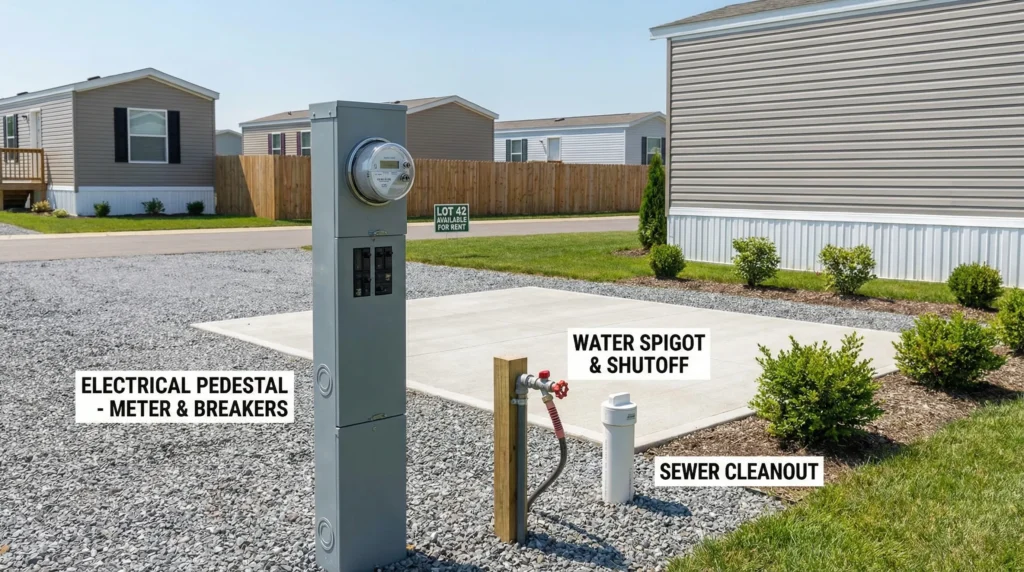 Mobile Home Lot for Rent Near Me: Utilities to Confirm
 Mobile Parks for Rent: Lease Terms You Should Know