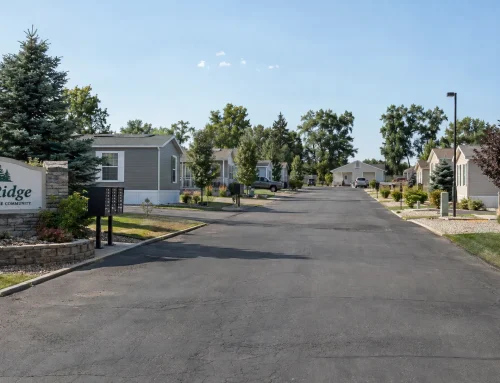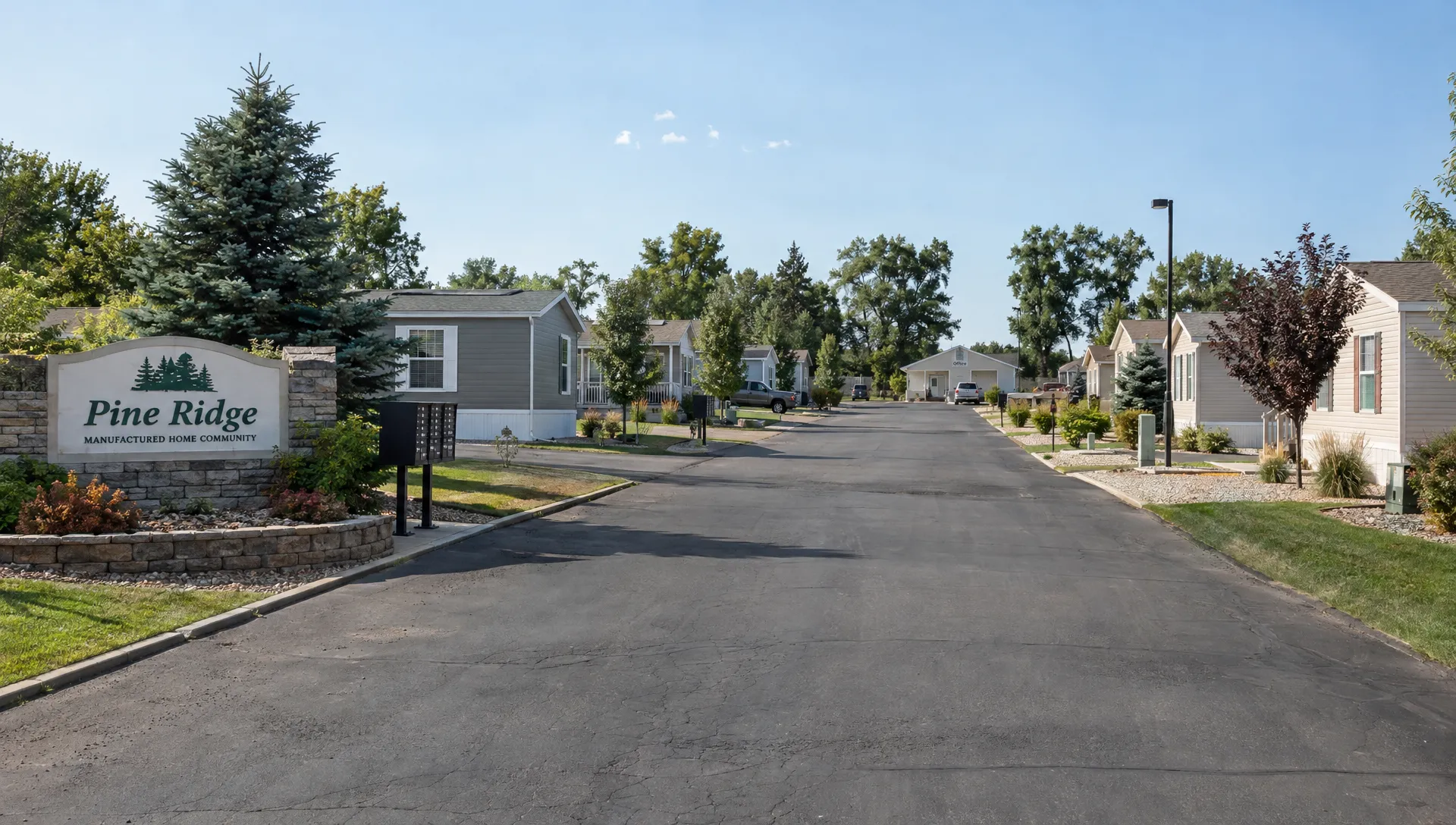

A clean entrance and well-kept homes do not tell you how a community will perform during severe weather. When comparing mobile home parks in the area, look for evidence of reliable drainage, safe shelter access, properly installed homes and an emergency plan residents can actually follow.
For San Antonio buyers and renters, that means checking flash-flood exposure as carefully as wind and tornado precautions. Storm readiness involves both the individual home and the surrounding property. Strong anchors cannot fix an evacuation road that floods, and a community clubhouse is not automatically a tornado shelter.
Use the following checks before paying a deposit, signing a lot lease or committing to a home purchase.
Screen the address for flooding before your visit
Start with the exact home site, not just the community’s street address. A large property can include lots with different elevations, drainage patterns and access conditions.
Look up the location through the Centro de Servicio de Mapas de Inundación de FEMA. Identify mapped flood hazards, then examine the entrance roads and any nearby creek crossings. Being outside a mapped high-risk flood area does not eliminate flood risk, particularly from intense rainfall and overwhelmed drainage systems.
When researching mobile home parks in the area, ask management whether water has entered homes, covered roads or isolated residents during previous storms. Request dates, affected locations and descriptions of repairs rather than accepting “we don’t usually flood.”
Ask whether the community has drainage studies, flood-related notices or records of corrective work available for review. Missing records do not prove a problem, but they leave an important question unanswered.
Finally, check whether your intended route to work, school or shelter crosses low-water crossings. A dry home site offers limited protection if the only practical exit becomes impassable. Never drive through floodwater to test a route.
Verify where residents can shelter during a tornado
A manufactured home is not a safe place to remain during a tornado, even when properly anchored. el National Weather Service’s tornado safety guidance directs mobile-home residents to a sturdy building or appropriate storm shelter.
Ask management to identify the actual refuge residents are expected to use. “The clubhouse” is not a sufficient answer without more information. Determine whether it is a documented tornado safe room or storm shelter, or simply a conventional building that may offer better protection than a manufactured home.
For a claimed safe room or storm shelter, request documentation identifying its design criteria and intended capacity. For any refuge, verify who controls entry, whether it opens overnight and whether residents need a key, code or staff member to unlock it.
Shelter access should be a deciding factor when assessing mobile home parks in the area, especially for households with children, mobility limitations or no dependable vehicle.
Check the route from the specific lot and ask about wheelchair access, service animals, pets and available space. A nearby building is not a workable plan if your household cannot enter it.
Plan to relocate before conditions become dangerous. If a warning is issued, take shelter immediately according to official instructions rather than waiting for management to contact you. Do not rely on starting a long drive through an approaching tornado.
Walk the drainage system and exit routes
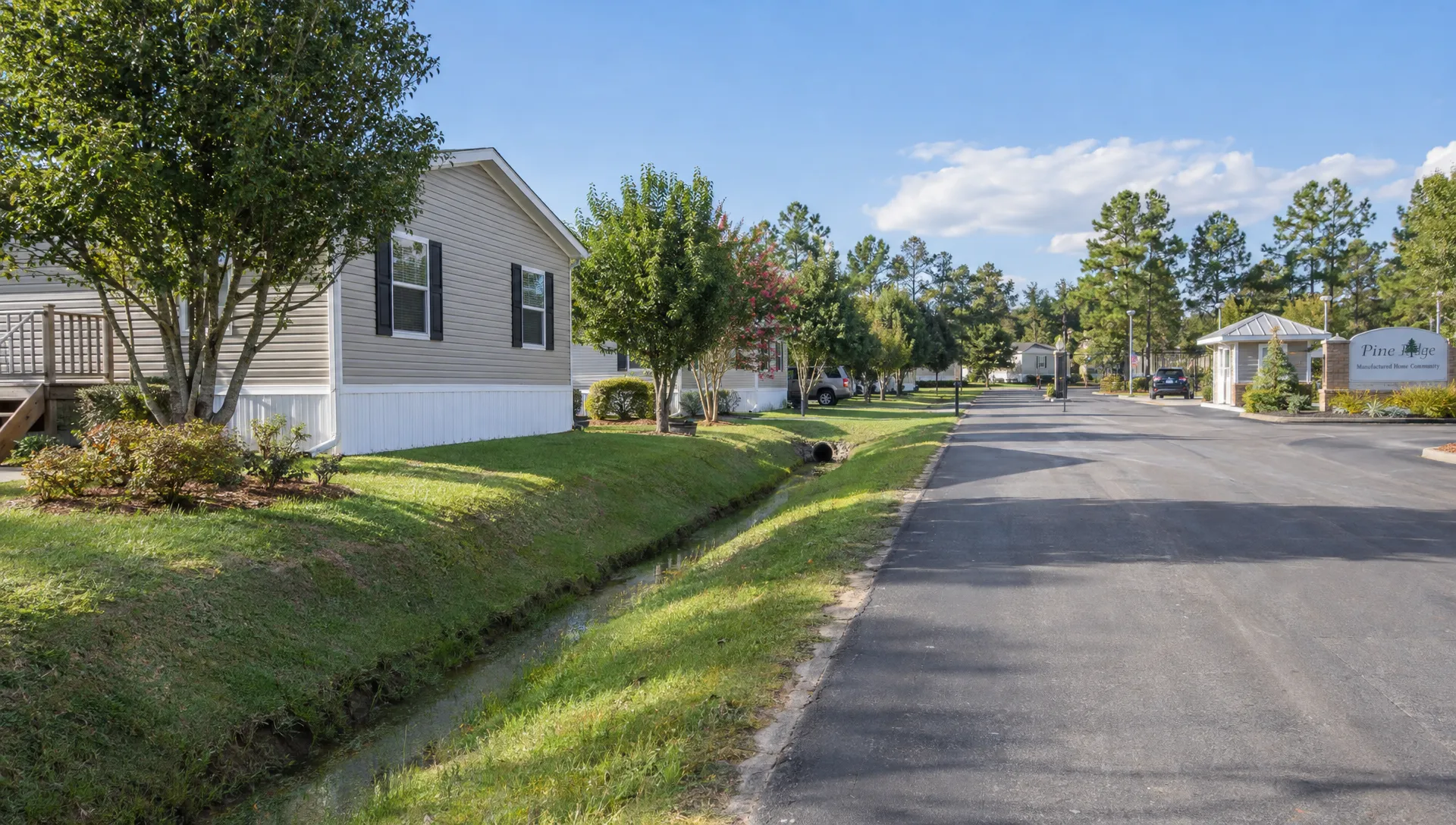
Tour the property in dry weather first. If possible, return after ordinary rain when travel is safe. Never enter a flooded area or visit during an active severe-weather event just to inspect drainage.
Look for sediment lines, erosion channels, recurring mud, standing water beneath homes and debris caught along fences. These observations warrant questions, although none alone establishes the severity or cause of a drainage problem.
Check whether ditches, culverts and drain inlets are clear. Ask who maintains them and how residents report blockages. Water should drain away from the home rather than collect around its supports. Do not assume adding soil or digging a trench is an acceptable fix without proper review.
As you walk mobile home parks in the area, trace the route from your prospective lot to the public road. Look for low spots, narrow bottlenecks, dead-end sections and gates that require electricity.
Ask how gates operate during outages and whether an alternate exit is legally available, maintained and usable by residents. An informal opening through neighboring land should not count as an evacuation route.
Also note leaning trees, damaged limbs and visibly compromised utility equipment. Keep away from electrical hazards and ask management how qualified crews address them. For the connection between grading, foundations and utilities, review the site-preparation steps involved in setting up a manufactured home.
Request installation and anchoring records
Storm readiness depends partly on how the individual home was installed and maintained. An attractive interior cannot tell you whether its support and anchoring systems are appropriate for the site.
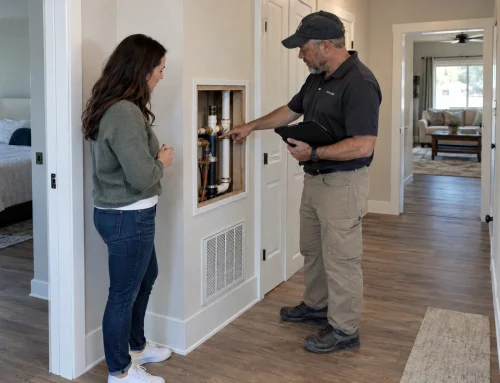
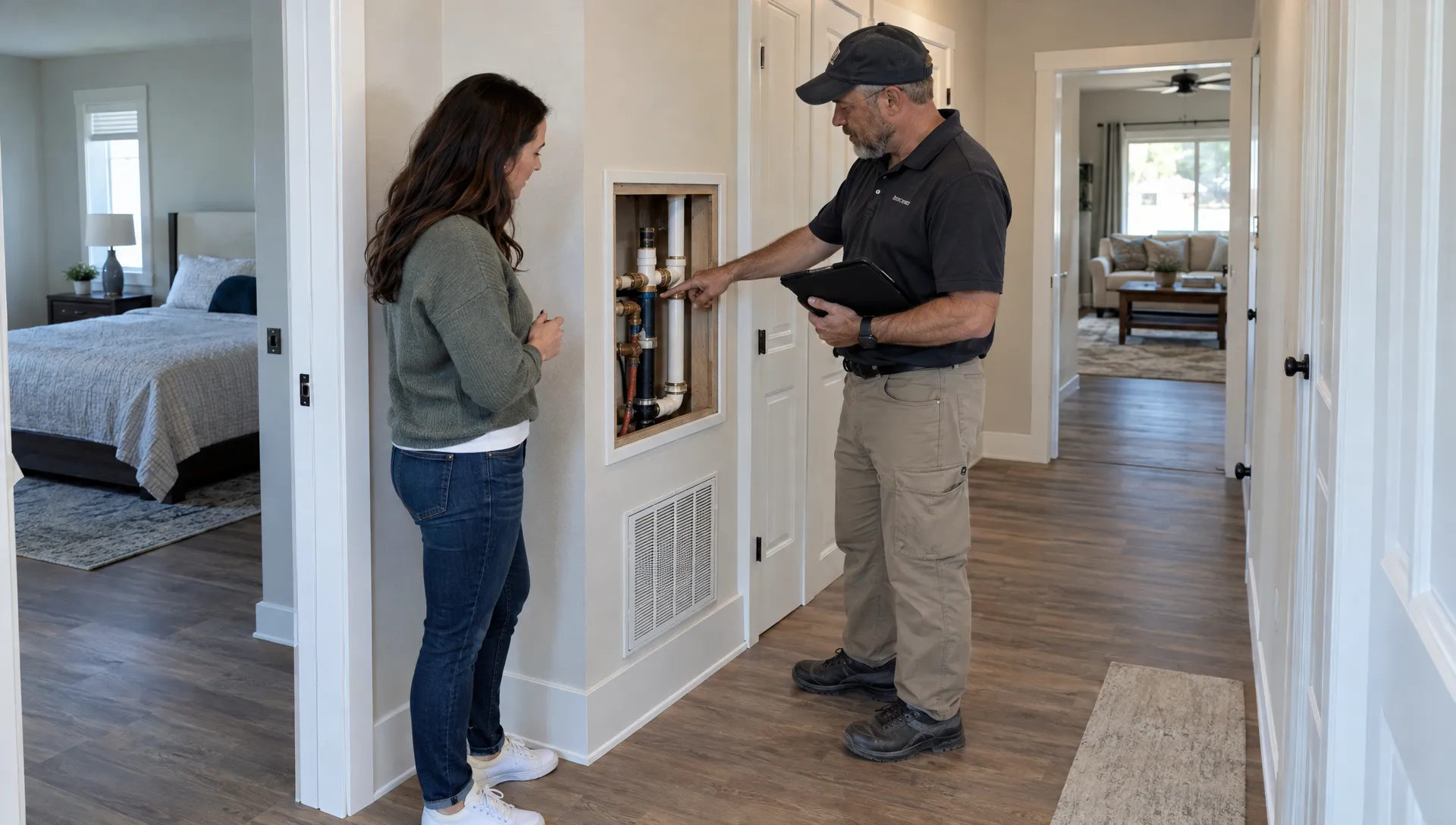
Ask for available installation permits, inspection records and documentation of later repairs or relocation. Have a qualified professional evaluate the foundation, supports and anchoring against applicable requirements and the home’s installation instructions.
From outside, visible corrosion, damaged straps, leaning supports or washout beneath the home are reasons to request professional review. Do not crawl underneath a home or tighten anchors yourself during a tour. Some defects are concealed, and visual checks cannot establish compliance.
When comparing mobile home parks in the area, separate management’s responsibility for the land from the owner’s responsibility for the home. If you are renting both, ask who arranges inspections and repairs. If you own the home but lease the lot, obtain the responsibility split in writing.
Porches, carports, awnings and additions also deserve attention. Ask whether they were permitted where required and whether their connections were evaluated. Poorly designed attachments can create additional hazards during strong winds.
The Homes2Go guide to a inspección de amarre de casa móvil explains components and documentation worth discussing with an installer. Proper installation matters, but it does not make a manufactured home tornado-safe.
Test how mobile home parks in the area handle emergencies
Request the current written emergency plan and walk through a realistic scenario: severe storms are forecast overnight, power fails and the manager is off-site.
Who sends notifications? Who opens the shelter, if one exists? Who checks the gate? What happens if the primary contact cannot be reached? Clear answers should identify responsible people or roles, not simply promise that someone will handle it.
Ask how new residents receive instructions and how management communicates changes. Confirm whether messages are available in languages your household understands. Residents who need assistance should be able to discuss arrangements in advance without assuming staff can provide medical care or transportation.
Written procedures make mobile home parks in the area easier to compare because they reveal whether emergency tasks have actually been assigned.
Your household still needs independent alerts. Use more than one method, such as Wireless Emergency Alerts and a NOAA Weather Radio with battery backup. Outdoor sirens are not a dependable indoor warning system. The National Weather Service Austin/San Antonio office provides local forecasts and weather advisories.
A tornado watch means conditions are favorable for tornadoes. A tornado warning means one has been indicated by radar or reported. Establish your shelter destination and early departure trigger before warnings begin, and follow local emergency instructions.
Check outage arrangements and recovery procedures
A community’s emergency planning should extend beyond the storm itself. Ask what happens when electricity, water service or sewer equipment stops working.
If management advertises backup power, request specifics: which equipment it serves, how it is maintained and whether it powers any resident-accessible refuge. A generator for an office does not mean homes, gates or water pumps will remain operational.
Households using powered medical equipment should arrange their own backup and relocation plans with their healthcare providers. Never use a portable generator indoors, in a carport or near doors, windows or vents.
Comparing mobile home parks in the area also means checking what happens after damage: who receives urgent reports, who isolates unsafe areas and how residents learn whether they may return.
Ask whether management has procedures for downed trees, exposed wiring, damaged utility connections and blocked roads. Do not enter a damaged home until authorities or appropriate professionals say it is safe. Photograph damage only when you can do so without approaching hazards.
Clarify repair costs, lease duties and insurance
Emergency planning has financial consequences. Before signing, distinguish renting a home from owning one while leasing its lot. The party responsible for the roof may differ from the party responsible for drainage, trees or shared utility lines.
Request written clarification of storm-related responsibilities. Ask who handles debris removal, repairs to shared infrastructure and damage caused by falling community trees. Also ask how damage is reported and what lease provisions address temporary displacement or a home that cannot be occupied. Do not assume the community provides alternate housing.
When budgeting for mobile home parks in the area, consider potential deductibles and temporary lodging costs alongside lot rent, home payments and utilities. Confirm any additional community charges rather than assuming advertised rent covers them.
Review the specific insurance policy with a licensed agent. Ask about wind and hail coverage, deductible calculations, personal property and additional living expenses. A percentage deductible can represent a substantial dollar amount, so request an example using your insured value.
Standard homeowners and renters policies generally do not cover flood damage. Explore separate coverage through an insurance professional or FloodSmart, including coverage for a renter’s belongings where applicable. Insurance is a financial safeguard, not a substitute for a safe evacuation and shelter plan.
Use an evidence-based comparison, not a safety score
Keep notes for each community and mark important answers as verified, unresolved or unacceptable for your household. Do not average away a critical problem: attractive amenities cannot compensate for an unusable shelter plan.
| Readiness issue | Evidence to request or observe | Reason to pause |
|---|---|---|
| Flood exposure | Flood-map review, drainage history and access-route conditions | Repeated road flooding without a credible alternative |
| Tornado refuge | Identified location, access arrangements and supporting documentation | A clubhouse is called a shelter without explanation |
| Home installation | Available permits, inspection records and professional evaluation | Damaged anchors, unstable supports or unresolved washout |
| Emergency communication | Written procedures and a current contact process | No clear after-hours responsibility |
| Utility outages | Defined backup arrangements and reporting instructions | Broad promises without equipment or operating details |
| Recovery obligations | Lease terms and insurance clarification | Conflicting verbal answers about repairs or displacement |
Use the same questions at each visit so comparisons remain consistent. Ask management to confirm material promises in writing and resolve important gaps before making a nonrefundable commitment.
The strongest candidates among mobile home parks in the area are not necessarily those claiming they have never had storm damage. Look instead for transparent records, maintained infrastructure and practical answers about what residents should do when conditions deteriorate.
Preguntas frecuentes
Are newer manufactured homes safe during tornadoes? Newer construction and proper installation can improve performance under applicable design conditions, but manufactured homes are not safe tornado shelters. Plan to use an appropriate storm shelter or sturdy building and follow National Weather Service guidance.
Does every community have to provide a storm shelter? Do not assume one is required or available. Requirements can depend on jurisdiction and the property’s circumstances. Verify the community’s actual provisions with management and ask the relevant local authority about applicable requirements.
Can a community outside a mapped flood zone still flood? Yes. Heavy rainfall, blocked drainage and runoff can cause flooding outside mapped high-risk areas. Review the lot, nearby roads and drainage history as well as the FEMA map.
What if management will not provide an emergency plan? Treat the missing information as an unresolved risk. Ask for specific shelter, notification and evacuation arrangements in writing. If you cannot establish a workable plan for your household, consider another community before committing.
Match your home search with a workable storm plan
Before choosing a community, verify three essentials: where your household will shelter, how you will leave safely and who maintains the systems your home depends on. Then resolve installation, lease and insurance questions.
Si está comprando una casa manufacturada en San Antonio, Homes2Go San Antonio can help you explore home models, floor plans and financing options. Use this checklist alongside that search, and verify each community’s storm arrangements directly with management and qualified local professionals.
 Why Chattel Loan Interest Rates Differ From APR