

If you are shopping for a manufactured home in the San Antonio area, Champion Homes is a name you will see often, and for good reason. Champion has a long history in factory-built housing, and their homes tend to hit a sweet spot for buyers who want modern layouts, solid everyday features, and upgrade paths that can improve comfort without drifting into custom-home pricing.
This guide breaks down what matters most when evaluating Champion Homes: how to think about floor plans, which features actually change day-to-day livability in Texas, and how to judge overall value (not just the sticker price).
A quick refresher: what “Champion Homes” means in manufactured housing
Champion is a major manufactured housing brand that produces HUD Code manufactured homes (the national building code for manufactured homes administered by the U.S. Department of Housing and Urban Development). If you want to verify the basics of HUD Code standards, HUD keeps an overview here: Manufactured home construction and safety standards.
In practical terms, “Champion Homes” can refer to a broad portfolio of models and configurations that vary by region, factory, and retailer inventory. That is why the best approach is to evaluate:
- The floor plan fit (how you will actually live in it)
- The spec level (insulation, windows, HVAC readiness, materials)
- The install and site context (land, community rules, setbacks, utilities)
Homes2Go San Antonio can walk you through current Champion availability and share detailed floor plans so you can compare layouts side by side.
Champion Homes floor plans: the layouts buyers ask for most
Floor plan is usually the biggest satisfaction driver after move-in. The “right” plan reduces daily friction: noise, hallway bottlenecks, not enough storage, awkward kitchen flow, or bedrooms that feel too close together.
Here are the most common floor plan categories to consider when looking at Champion Homes.
Single-section (often called single-wide) floor plans
Single-section homes are typically chosen for affordability, easier placement on tighter sites, or certain communities with size limitations.
Common single-section layout patterns include:
- Open kitchen and living room with a straight-line or L-shaped kitchen
- 2-bedroom split (primary on one end, second bedroom on the other)
- Compact 3-bedroom (works best when storage is planned carefully)
The key tradeoff is usually room size and storage. If you are considering a single-section, pay extra attention to closet depth, pantry space, and laundry placement.
Multi-section (double-wide) floor plans
Multi-section homes are the most popular choice for buyers who want a more “site-built” feel: wider rooms, better furniture layouts, and clearer separation between private and shared spaces.
Look for these common patterns:
- Split-bedroom plans (privacy for the primary bedroom)
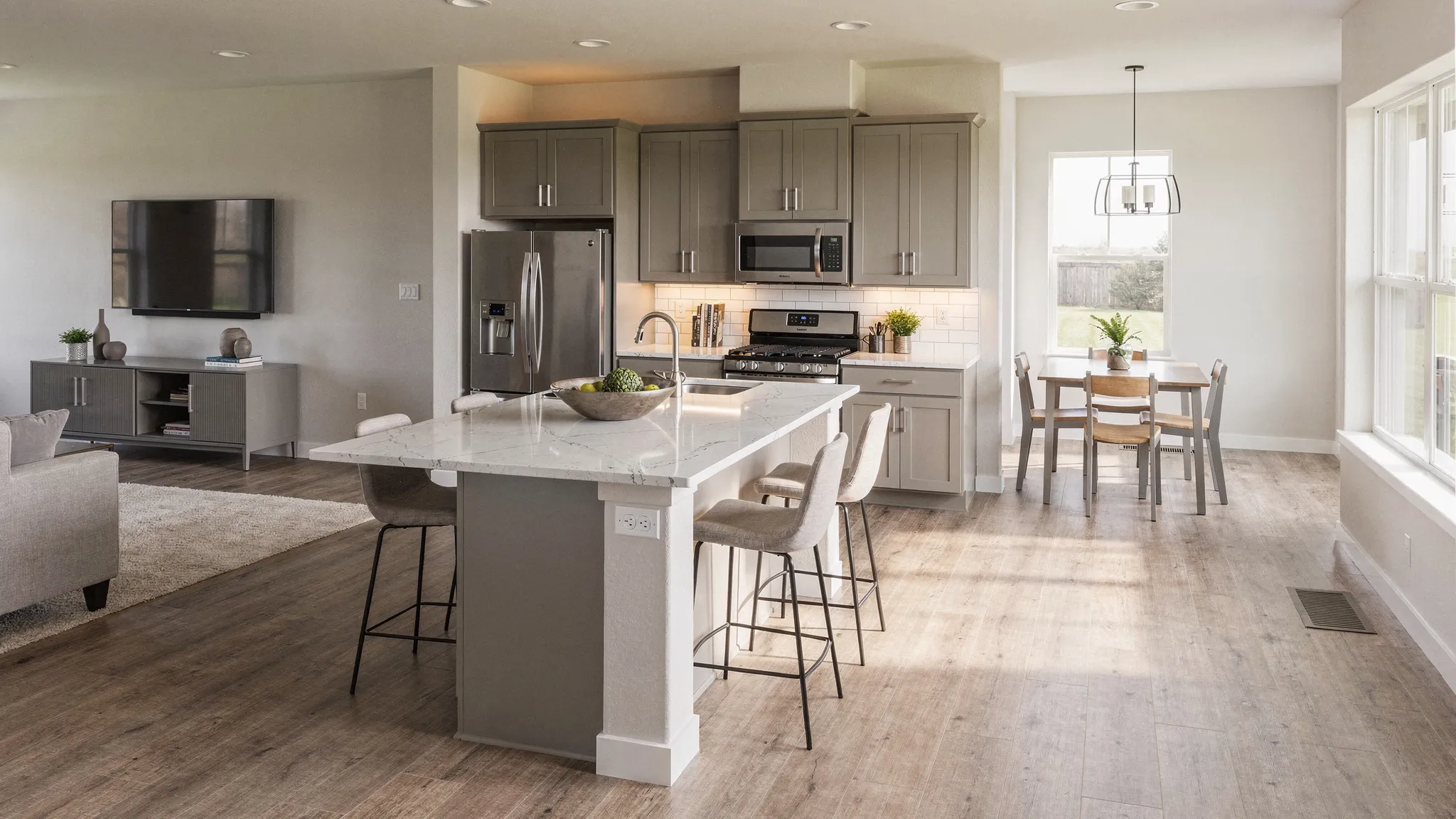
- Open-concept great room (kitchen, dining, living connected)
- Dedicated utility room (laundry with storage and a drop zone)
In Texas heat, the comfort difference between a cramped layout and one with better airflow and sensible HVAC zoning can be noticeable, so “feel” matters just as much as square footage.
Larger family layouts (3 to 5 bedrooms)
If you need more bedrooms, don’t just count rooms. Evaluate whether the plan supports your actual routine.
Examples of “value” layout features to prioritize:
- A third bathroom (or at least a second full bath) for busy mornings
- A hallway that can handle foot traffic without cutting through living space
- A real dining zone if you host or eat together often
Home office or flex-room options
Many manufactured home buyers now want a flex room for remote work, hobbies, or guests. When comparing Champion Homes floor plans, check:
- Door placement (can you close it off for calls?)
- Natural light (window location)
- Distance from the main living area (noise control)
How to compare floor plans like a pro (beyond the brochure)
A floor plan image can look perfect and still function poorly once you move in. Here is a practical way to evaluate Champion Homes layouts before you commit.
Measure your real life, not just the rooms
Bring your “daily-use” checklist:
- Sofa length and TV wall needs
- Dining table size (or whether you will use an island)
- Bed sizes and dresser clearance
- Entry storage (shoes, bags, backpacks)
If the floor plan does not show furniture, ask for dimensions and map your key pieces.
Watch the “paths” people walk
The best layouts have clear circulation paths that do not cut through the kitchen work triangle or block the laundry.
Ask yourself:
- Can someone get from the bedrooms to the kitchen without cutting through the living room seating?
- Is the laundry reachable without walking through a bedroom?
- Do bathroom doors open into a tight hallway pinch point?
Check storage early (it is expensive to add later)
In manufactured homes, storage is often what separates “looks good on day one” from “still works well in year five.”
Look specifically for:
- Pantry depth (not just a tall skinny cabinet)
- Linen storage near bathrooms
- Bedroom closet size and placement
- Utility room shelving potential
Use a comparison table to make decisions faster
| What to compare | Why it matters | What to look for on the plan |
|---|---|---|
| Bedroom separation | Privacy, noise, guest comfort | Split-bedroom layouts, hallway buffers |
| Kitchen workflow | Daily convenience | Island clearance, fridge placement, pantry access |
| Laundry location | Routine efficiency | Utility room near entry, not through bedrooms |
| Storage | Long-term livability | Pantry, linen, coat closet, utility shelving |
| Bathroom count | Peak-time stress reduction | Second full bath, optional half bath |
Champion Homes features to pay attention to (especially in South Texas)
Features can be marketed heavily, but only a handful truly influence comfort, durability, and monthly costs.
Energy and comfort features
Even if you love the floor plan, ask what energy-efficiency packages or specifications are included or available. For Texas conditions, the most meaningful items typically relate to the building envelope and HVAC readiness.
Focus on:
- Insulation levels in roof/ceiling and walls
- Window performance (quality, fit, and solar heat management)
- Duct sealing and airflow balance
- Thermostat controls (programmable or smart options)
If you want a deeper Texas-specific checklist, Homes2Go covers what to look for in their guide to energy-efficient manufactured homes for Texas heat.
Kitchen and bath features that improve resale and daily use
Buyers often fixate on surface upgrades, but there is a “value order” that tends to hold up.
High-impact features include:
- Cabinet construction and storage design (drawers, pantry, tall uppers)
- Countertop durability (ask what material is included vs optional)
- Ventilation (kitchen hood, bath fans)
- Shower size and bathroom storage (vanity drawers, linen space)
Build quality cues you can actually verify on a walk-through
When touring a Champion home model, look for cues that reduce maintenance headaches:
- Doors and drawers align cleanly and operate smoothly
- Flooring transitions are flush and secure
- Trim is consistent (no big gaps or rushed caulk work)
- Windows open and lock properly
Small details can reveal whether the home was finished carefully.
Understanding value: what Champion Homes cost is not the full story
When shoppers compare manufactured homes, it is easy to focus on base price and miss the “all-in” budget. Real value is what you get for the total cost of ownership.
What typically affects total cost most
Your overall budget can include:
- Home price (base plus chosen options)
- Transportation and set
- Foundation or support system (based on site requirements)
- Utility connections (water, sewer or septic, electric)
- Permits, inspections, and site prep (grading, driveway, access)
Homes2Go’s San Antonio buyer resources explain these cost buckets in more detail in their manufactured homes options, prices, and tips.
“Good value” often means the right upgrades, not the most upgrades
If you are deciding between two Champion Homes, value is usually maximized by prioritizing upgrades that are hard to change later, such as:
- Energy-related specs (insulation, windows, HVAC readiness)
- Kitchen layout and storage (changing later is expensive)
- Bathroom count and placement
Cosmetic items (fixtures, paint tones, some finishes) can be easier to update over time.
Community placement vs private land changes the math
Where you place the home changes what you should prioritize.
- In a land-lease community, approvals and rules (size, roof pitch, exterior materials, skirting standards) can impact which Champion floor plans and elevations are eligible.
- On private land, your biggest variables are utilities, septic, driveway access, and local requirements.
If you are considering land plus home together, Homes2Go’s land and home packages guide is a helpful next step.
Financing considerations for Champion Homes buyers
Financing affects affordability just as much as home selection. Manufactured homes can be financed in different ways depending on whether the home is titled as personal property or real property, and whether land is included.
Homes2Go outlines common paths like chattel loans and mortgage options on their financing page. The right route depends on your land situation, credit profile, and long-term plan.
If you are early in the process, a practical move is to get a basic prequalification first, then shop floor plans with a monthly payment target in mind.
A simple process to pick the right Champion floor plan at Homes2Go
You do not need to memorize model numbers to make a smart decision. A clean process beats endless browsing.
Step 1: Define your non-negotiables
Examples:
- Minimum bedroom and bathroom count
- Split-bedroom requirement
- Dedicated utility room
- Pantry and storage needs
Step 2: Choose the best footprint for your site or community
Your placement option can narrow your choices quickly. If you are looking for a homesite opportunity, Homes2Go also shares local options like their Sandy Oaks subdivision information (availability and requirements can change, so confirm details with the team).
Step 3: Compare two to three floor plans side by side
Ask for detailed floor plans and focus on flow, storage, and room usability. If two plans feel similar, the “winner” is often the one with better kitchen function and a smarter utility room.
Step 4: Select upgrades that protect comfort and long-term cost
In South Texas, it is usually wise to prioritize the building envelope and HVAC-related features, then choose interior upgrades that support durability.
Frequently Asked Questions
Are Champion Homes good quality? Champion is a major manufactured housing brand, and quality can vary by model, options, and how the home is installed and maintained. The best approach is to tour homes, review specifications, and prioritize proven comfort and durability features (insulation, windows, HVAC readiness).
Can I customize Champion Homes floor plans? Many manufactured home lines offer configurable options (finishes, appliances, some layout choices). Availability depends on the specific model and what the retailer and factory can support in your region. Ask Homes2Go for current options and detailed floor plans.
What is the most popular Champion Homes layout for families? Many families prefer multi-section homes with an open kitchen and living area, split bedrooms for privacy, and at least two bathrooms. The best fit depends on your daily routine, storage needs, and whether you want a flex room.
Do Champion Homes come with energy-efficient options for Texas? Many modern manufactured homes offer energy-focused specifications or packages. Instead of relying on labels, request the actual specs (insulation, windows, HVAC) and compare them across models.
Can I place a Champion manufactured home in a San Antonio area community? Often yes, but communities typically have approval requirements (size, exterior standards, age limits, and more). Homes2Go can help you match an eligible home to a community and coordinate approvals.
Find the right Champion Home for your budget in San Antonio
If you are comparing Champion Homes floor plans and want help narrowing down the best layouts, features, and financing path, Homes2Go San Antonio can guide you from selection to move-in.
Explore available homes and resources at Homes2Go San Antonio, or start with their manufactured home buyer guide and financing options to plan your next step with confidence.
 Mobile Park Homes for Rent: Avoid These Common Fees