
Choosing a mobile home park (often called a manufactured home community or land-lease community) can be a smart path to affordable homeownership, but the details matter. Amenities can change your day-to-day comfort, rules can affect how you live (and what you can do with your home), and fees can turn a “great deal” into a budget surprise.
This guide breaks down the most common amenities, rules, and fees you will encounter, plus the questions to ask so you can compare communities clearly, especially if you are shopping around San Antonio.
What a “mobile home park” really means today
Most modern communities work like this:
- You own (or finance) the home.
- The community owns the land and infrastructure.
- You pay lot rent for the homesite, plus any utilities or services not included.
Some parks also offer park-owned homes for rent, or rent-to-own options, but many buyers looking for long-term stability focus on owning the home and leasing the lot.
If you want a deeper San Antonio specific buying walkthrough (financing, permits, total cost of ownership), see the Homes2Go SA buyer guide: Mobile Homes San Antonio: A Quick Buyer Guide.
Mobile home park amenities, what they are and what to verify
Amenities are not just “nice extras”. In many communities, amenities reflect how much the operator invests in safety, maintenance, and resident experience.
Amenities typically fall into three buckets: infrastructure, services, and lifestyle.
Infrastructure amenities (the ones that protect your comfort and budget)
These are the big-ticket items that directly affect reliability, utility costs, and quality of life.
- Roads and parking: Condition, lighting, drainage after heavy rain.
- Water and sewer: City services vs. private systems, who maintains what.
- Utility hookups: Power pedestals, meter setup, any restrictions on providers.
- Stormwater management: Important in flood-prone areas, ask about past issues.
- On-site maintenance response: How requests are handled, typical turnaround.
Service amenities (convenience and predictability)
Services may be included in lot rent or billed separately.
- Trash pickup or dumpsters
- Bulk pickup rules (mattresses, furniture, yard debris)
- Lawn care standards (your responsibility vs. community service)
- Security features (gates, patrols, cameras, lighting)
Lifestyle amenities (great value if you will actually use them)
These can be a real quality-of-life upgrade, but only if you confirm access, hours, and any extra fees.
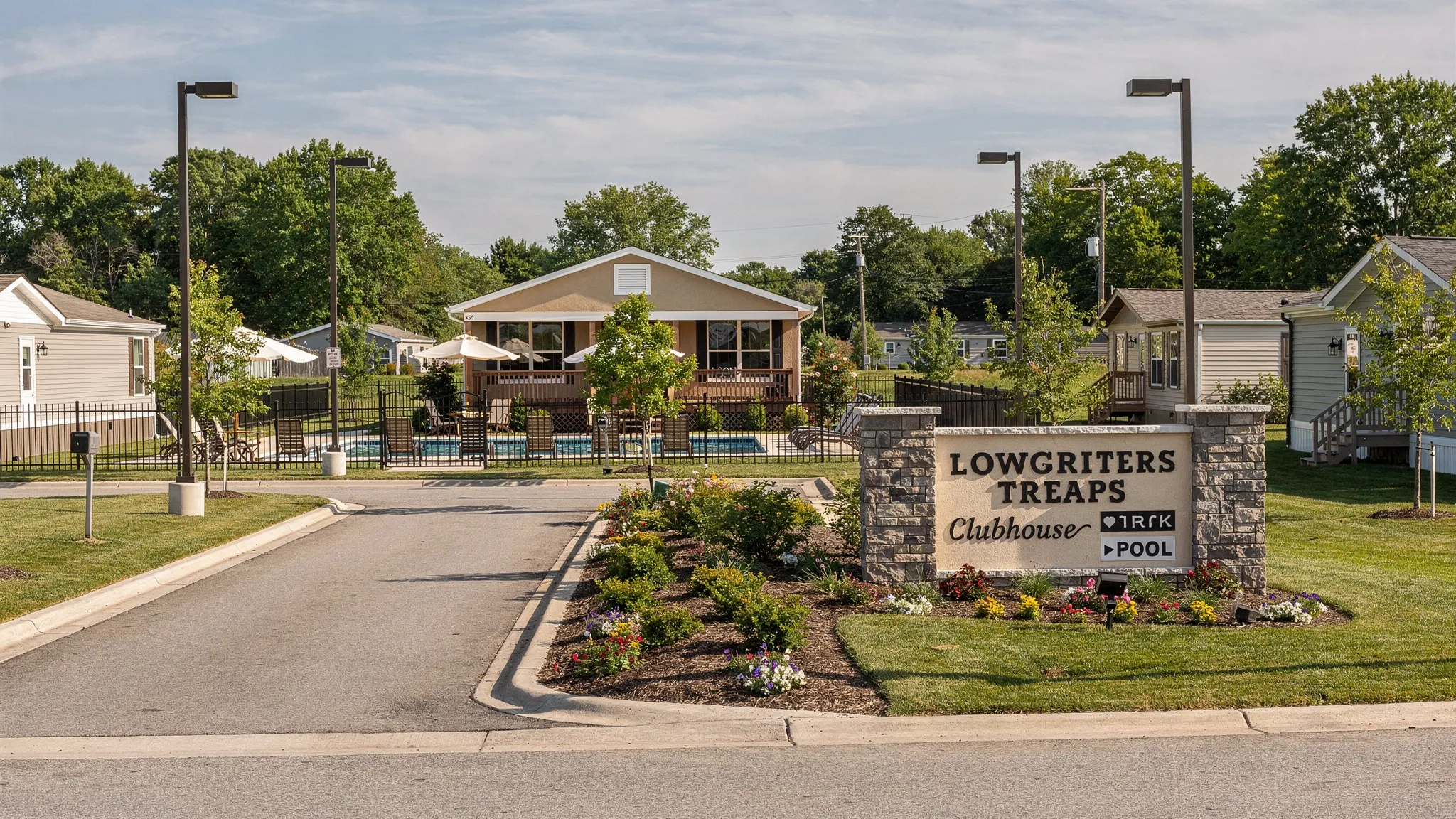
- Pool, clubhouse, fitness room
- Playground, dog park, walking trails
- Community events (common in 55+ communities)
To compare communities quickly, use a simple “verify before you value” framework.
| Amenity type | Examples | Why it matters | What to ask on tour |
|---|---|---|---|
| Infrastructure | Roads, lighting, drainage, water/sewer | Impacts safety, flooding risk, outages, day-to-day hassle | “Who maintains this, and how are issues reported and resolved?” |
| Services | Trash, common-area upkeep, on-site maintenance | Determines what is included vs. billed separately | “Is this included in lot rent, and where is it listed in writing?” |
| Lifestyle | Pool, clubhouse, playground | Value varies by household | “Are there guest rules, key fees, or seasonal closures?” |
Common mobile home park rules (and why they exist)
Every community has rules. The key is whether rules are clear, written, consistently enforced, and compatible with how you actually live.
You should expect the park to provide:
- Community rules and regulations (sometimes called a rulebook)
- A lease (or lot rental agreement) that explains rent, fees, and renewal terms
If you are pressured to rely on “verbal promises,” slow down and ask for everything in writing.
Occupancy and guest policies
Most parks limit how many people can live in a home and may set guest stay limits. This is often framed as safety, infrastructure capacity, and neighborhood stability.
What to check:
- Maximum occupants by bedroom count
- Long-term guest rules
- Whether additions like a roommate require approval
Age restrictions (all-age vs. 55+)
Some communities are designed for retirees (55+). Others are open to all households.
If a community is 55+, ask how they define eligibility and what documentation they require.
Pet rules
Pet policies commonly regulate:
- Number of pets
- Breed or size restrictions
- Leash requirements
- Pet deposits and monthly pet fees
If you have a service animal or assistance animal, rules can be different under fair housing standards. For a general overview of fair housing protections, see HUD’s Fair Housing resources: HUD Fair Housing.
Vehicles, parking, and work trucks
This is a frequent surprise area.
Communities may limit:
- Number of vehicles per household
- Street parking vs. driveway-only parking
- Commercial vehicles, trailers, or RV storage
If you have a work truck or trailer, confirm the policy before applying.
Home appearance, outdoor items, and additions
Many parks have standards for:
- Skirting condition
- Steps, railings, porches, sheds
- Fence types
- Exterior paint, roofing, or siding
- Holiday decor time windows
This can protect property values, but it also limits personalization. Ask what approvals are required and whether you can use your own contractor.
Quiet hours and nuisance rules
Rules typically cover noise, yard cleanliness, and prohibited behavior. The biggest “real world” issue is consistency: ask residents (politely) whether rules are enforced evenly.
Fees in mobile home parks: what you may pay (and when)
For most buyers, the decision comes down to the true monthly cost and the upfront move-in cost.
A park’s advertised lot rent may only be part of the picture, so request a full fee schedule.
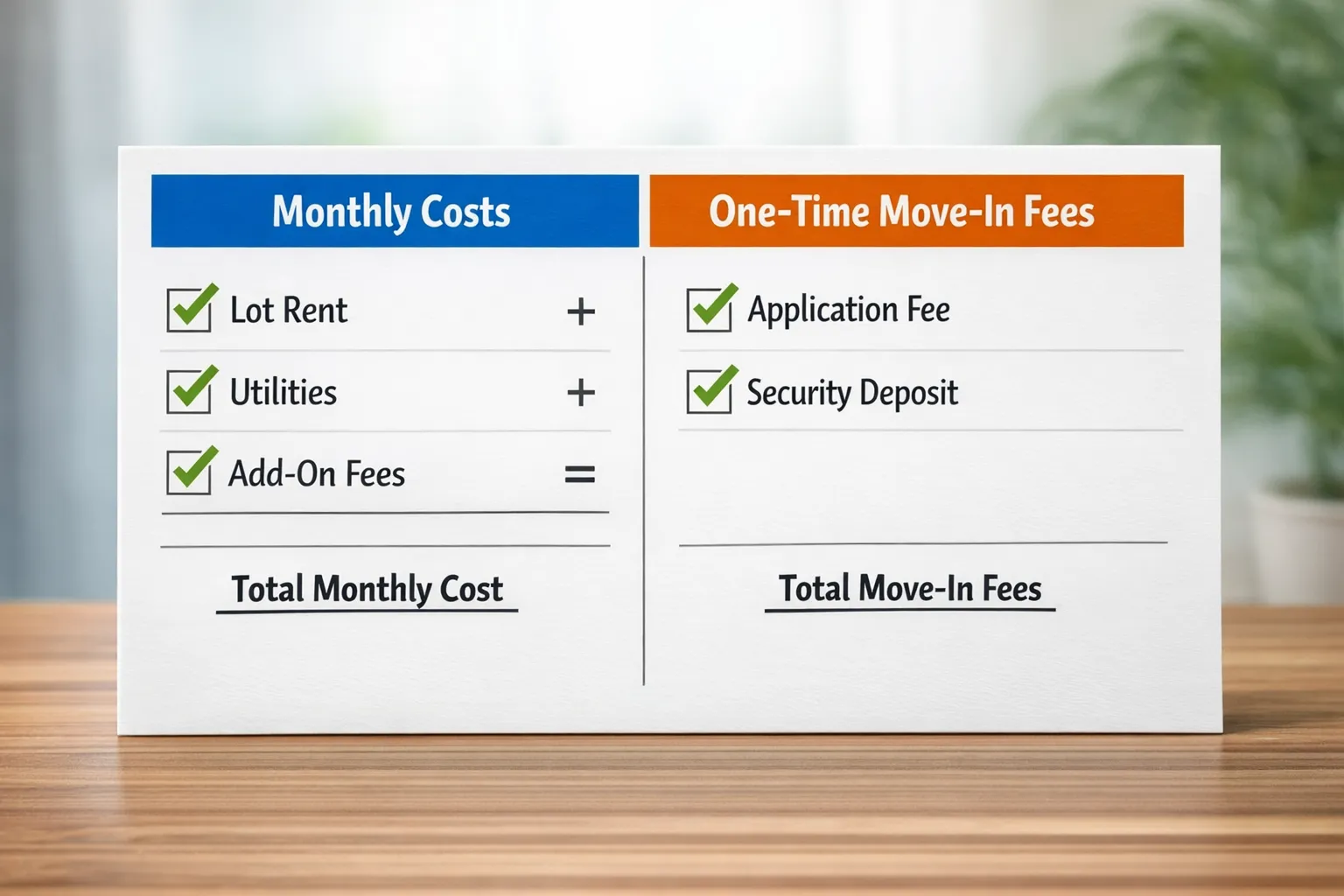
Recurring monthly costs
These commonly include:
- Lot rent: Base rent for the homesite.
- Utilities: Water, sewer, trash, electric, gas (sometimes bundled, sometimes separate).
- Pass-through fees: Admin, billing, infrastructure, or community fees (names vary).
- Pet rent (if applicable).
If utilities are billed through the park, ask whether the home is individually metered/submetered and how rates are set.
One-time and occasional fees
These may appear at application, move-in, or later.
- Application fee (and background/credit screening)
- Security deposit for the lot lease
- Home setup-related requirements (for example, skirting standards or tie-down inspections, depending on the community)
- Late fees and returned payment fees
- Maintenance violation fines (only if defined in writing)
Here is a practical way to categorize fees so you can compare parks apples to apples.
| Fee category | Examples | How it usually shows up | What to request in writing |
|---|---|---|---|
| Base housing | Lot rent | Monthly | Lease amount, due date, how increases are handled |
| Utilities | Water, sewer, trash, electric | Monthly | Who bills, how usage is measured, any fixed monthly charges |
| Add-ons | Pet rent, amenity fee | Monthly | Amounts and conditions for changes |
| Move-in | Application, deposit | One-time | Refundability, timeline, what triggers forfeiture |
| Penalties | Late fees, rule violations | Occasional | Exact amounts, grace periods, enforcement process |
How lot rent increases usually work
Lot rent can change at renewal and sometimes during longer leases, depending on the agreement. The lease should spell out:
- When increases can happen
- How you will be notified
- Whether the lease is month-to-month or term-based
Because lease terms are legally meaningful, consider having a qualified professional review anything you do not understand.
For general consumer guidance on manufactured housing and financing, the CFPB has helpful resources: CFPB manufactured housing information.
What to ask before you choose a community
Treat your park tour like a due diligence appointment. The goal is to leave with documents, not just impressions.
- What exactly is included in lot rent? Ask for a written list.
- How are utilities billed? Individually metered, submetered, or allocated.
- What are the move-in requirements for a home? Skirting, steps, driveway, exterior condition.
- Are there home age restrictions? Some communities limit the year or condition of homes.
- What is the approval process? Timeline, criteria, and what could cause a denial.
- Who handles maintenance? What is resident responsibility vs. community responsibility.
- Can you rent out the home later? Subleasing rules matter for future flexibility.
- What insurance is required? Many parks require proof of coverage.
If you are evaluating parks specifically around San Antonio, this roundup can help you plan tours and comparisons: Best Mobile Home Parks in San Antonio (2025 Roundup).
Red flags (and green flags) you can spot quickly
Some issues are minor inconveniences. Others are signs you may be walking into unstable costs or constant conflict.
Red flags
- You cannot get a full fee schedule in writing.
- Staff makes promises like “we never raise rent,” but it is not in the lease.
- The rules feel vague, or enforcement seems inconsistent.
- Poor drainage, potholes, broken lighting, and neglected common areas.
- Residents mention frequent management turnover.
Green flags
- Clear documents, provided early, with time to review.
- Well-maintained roads, lighting, and community areas.
- Transparent utility billing and a clear process for maintenance requests.
- Rules that are specific and reasonable (not overly subjective).
A simple budgeting worksheet for comparing parks
A fast way to avoid surprises is to estimate both your upfront cash needed and steady monthly total.
| Cost item | Park A | Park B | Park C |
|---|---|---|---|
| Lot rent | |||
| Water/sewer | |||
| Trash | |||
| Electric (estimate) | |||
| Other monthly fees | |||
| Pet fees (if any) | |||
| Total monthly | |||
| Application/screening | |||
| Security deposit | |||
| Other move-in costs | |||
| Total upfront |
If you are also comparing community living vs. placing a home on private land, Homes2Go SA covers land-and-home planning here: Land and Home Packages in San Antonio: Complete Guide.
How Homes2Go San Antonio can help you choose the right park
Mobile home park shopping is not just about finding a nice neighborhood. It is about matching:
- Your budget to the true monthly costs
- Your lifestyle to the community rules
- Your home choice to what the community allows (size, layout, exterior requirements)
Homes2Go San Antonio helps buyers explore manufactured home models, understand the buying process, and navigate flexible financing options through trusted local lenders, while also guiding buyers who plan to place their home in a community.
If energy bills are a major concern in Texas heat, you may also want to review what to look for in a more efficient home: Energy-Efficient Manufactured Homes: Save More in Texas Heat.
Frequently Asked Questions
What amenities are most important in a mobile home park? Infrastructure amenities usually matter most, including road condition, drainage, lighting, and reliable water and sewer service. Lifestyle amenities like pools or clubhouses are a bonus if you will use them, but they should not replace good maintenance and clear management.
What fees are typically included in lot rent? It depends on the community. Some include trash service or certain utilities, while others charge most items separately. Always ask for a written list of what is included and a full fee schedule.
Can a mobile home park charge extra fees besides lot rent? Yes. Communities may charge for utilities, pets, amenities, administrative items, late payments, or rule violations, as long as these charges are disclosed and allowed under your agreement and applicable laws. Get all recurring and one-time fees in writing before you commit.
Do mobile home parks have rules about the age or condition of homes? Many do. Some communities restrict older homes or require inspections and exterior upgrades before move-in. Ask for the policy early, especially if you are moving an existing home into the park.
How do I compare two parks with different fee structures? Compare the total monthly cost, not just the advertised lot rent. Add estimated utilities, monthly add-ons (pet rent, amenity fees), and any recurring pass-through fees. Also compare the lease terms and how rent increases are handled.
What should I ask for before signing a lot lease? Request the lease, written rules and regulations, a full fee schedule, and utility billing details. If anything is unclear, ask questions until you can explain the costs and rules back in your own words.
Explore San Antonio communities with confidence
If you are considering a manufactured home in a San Antonio area community and want help matching your budget, timeline, and home preferences to the right options, Homes2Go San Antonio can guide you through the process.
Browse available homes and reach out to the team at Homes2Go San Antonio to discuss models, financing paths, and the next best step for your situation.
 Rent to Own Manufactured Homes: What to Expect
 New Mobile Homes for Sale San Antonio: Top Picks